The Water House Project



A Michelin Plate-recognised tasting menu restaurant on a graffiti-lined side street in Bethnal Green, The Water House Project operates at the intersection of fine-dining technique and supper club informality. An 11-course discovery menu built on British ingredients, a communal-table format, and bespoke drinks pairings place it firmly outside London's stiff-formality tier, and well inside the city's most interesting Modern British conversation.
- Address
- 1 Corbridge Cres, Cambridge Heath, London E2 9DT, United Kingdom
- Website
- thewaterhouseproject.com
- Directions
- Get directions
Where Fine Dining Shed Its Formality
The Water House Project is a restaurant in Cambridge Heath, London, serving a Modern British Seasonal Tasting Menu at ££££. That dissonance is, in part, the point. London's Modern British tier has spent the better part of a decade splitting into two distinct camps: heritage-formal rooms like The Ritz Restaurant and technically exacting haute-cuisine counters like CORE by Clare Smyth, versus a smaller, quieter cohort that took the same level of sourcing and technique and stripped out the ceremony. The Water House Project sits firmly in the second camp, and has been refining that position since opening in Bethnal Green's E2 postcode.
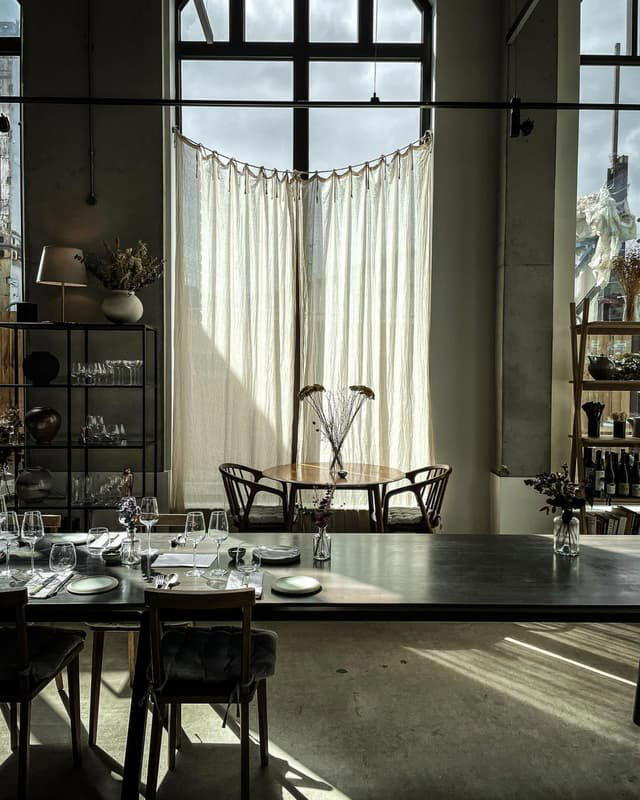
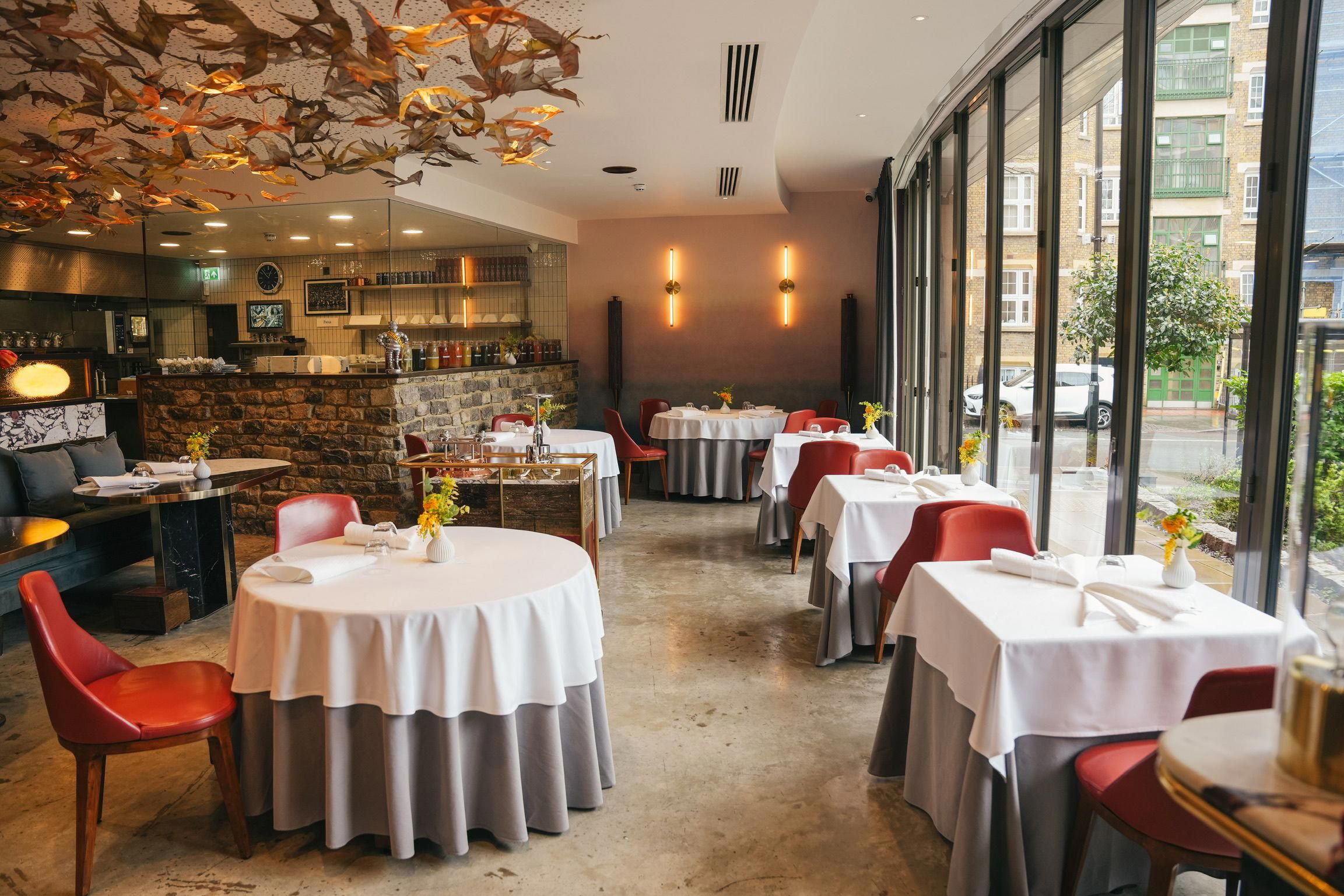
The room signals its intent immediately: high ceilings, concrete walls, exposed ventilation, wooden furniture, and a kitchen with no boundary between the cooks and the guests. The communal table format means the guest list on any given night is partly shared.
The Evolution of the Discovery Menu
The trajectory of The Water House Project is best understood as a deliberate pivot away from what fine dining is assumed to require. Chef Gabriel Waterhouse trained at Galvin La Chapelle, a setting defined by classical rigour and formal service, before reimagining that foundation in a format that prioritises accessibility and sociability over the traditional codes of the genre. That pivot is not a loosening of standards; the 11-course discovery menu is architecturally complex and ingredient-led in a way that benchmarks against the city's most serious kitchens.
Modern British tasting menus across London broadly organise themselves around either seasonally rotated ingredient showcases or producer-led narratives. The restaurant leans into the latter. Native seafood from Orkney, foraged coastal ingredients, and seaweed as a recurring structural element place the menu in a lineage that runs from L'Enclume in Cartmel and Moor Hall in Aughton to younger London kitchens working British terroir seriously. The difference here is that the container, the room, the arrival time, the communal seating, is calibrated to lower the psychological temperature of that ambition.
A celeriac and kohlrabi broth infused with koji oil, paired with a chestnut and cep parfait between wafers of rye bread, signals a menu that uses fermentation and umami-building as structural tools rather than trend gestures. Cured lobster with carrot escabèche and Madeira, Roscoff onion with sunflower and miso paste and three-cornered leeks, roasted Orkney scallop with koji emulsion and celeriac braised in seaweed stock: these are dishes that require technical fluency and long preparation. The fact that they arrive in a room that feels like a dinner party is the result of a deliberate editorial decision, not a relaxed one.
That assessment, from a sustainability-focused lens, sits alongside Michelin Plate recognition in two consecutive years: a combination that positions the kitchen as serious, developing, and not yet fully defined in its final form.
Drinks as a Parallel Narrative
London's premium tasting menu circuit has increasingly treated the drinks pairing as a second layer rather than a revenue line. The restaurant pushes this further by offering both a curated wine pairing and a homemade non-alcoholic option, a choice that acknowledges the range of guests arriving at a communal table without creating a two-tier experience.
A white Rioja (Solar de Randez 2023) against oysters with green-chilli yoghurt and cold apple-cucumber-sorrel granita, and a 1909 Wilding Cider from the 2022 vintage against the Orkney scallop with seaweed-braised celeriac, suggest a pairing program designed to illuminate the food rather than perform alongside it. For rooms at this price point (££££), that kind of considered restraint in the cellar is relatively rare in London.
The non-alcoholic pairing, homemade rather than sourced, reflects the kitchen's broader approach.
Where It Sits in the Modern British Conversation
The wider Modern British tasting menu category in the UK runs from formal country house restaurants to pub-adjacent formats, with ingredient-obsessed rural kitchens occupying a category of their own. Within London, the Modern British tasting menu is still largely concentrated in Mayfair and Notting Hill postcodes, where rooms like CORE and Cornus operate at or near stronger examples from the market.
Water House Project's E2 address is not incidental geography. It places the kitchen in a neighbourhood whose restaurant culture was built on informality, value, and a DIY ethic rather than proximity to hotel money. That context makes the ££££ price point legible: the room does not perform luxury, but the sourcing, technique, and sequential menu structure place it in the same spending bracket as rooms that do. The implicit proposition is that you are paying for the food and the drinks, not the postcode or the decor.
For London dining specifically, this positions the restaurant alongside a small set of restaurants that treat British ingredient sourcing as an intellectual project rather than a branding exercise.
Planning Your Visit
The restaurant is at 1 Corbridge Crescent, Cambridge Heath, London E2 9DT, within walking distance of Cambridge Heath rail station. Fixed seatings at 1pm for lunch and 7pm for dinner mean arrival time is not flexible. The communal table format should be treated as confirmed rather than conditional, a solo diner or pair will share space with other guests. At ££££ pricing for an 11-course menu with optional drinks pairings, the total spend sits in line with comparable London tasting menus at the Michelin Plate tier. Bookings at this level of recognition in an intimate East London room warrant advance planning; given the Michelin Plate in both 2024 and 2025, demand has increased ahead of the restaurant's physical capacity.
Cuisine Context
Comparable venues nearby, for context on price, style, and recognition.
| Venue | Cuisine | Price | Awards | Notes |
|---|---|---|---|---|
| The Water House ProjectThis venue — the venue you are viewing | Modern British Seasonal Tasting Menu | $$$$ | Michelin Plate | Not listed |
| The Twenty Two | Modern British with Mediterranean influences | $$$$ | Michelin Plate | Mayfair |
| Rules | Traditional British Fine Dining | $$$$ | Michelin Plate | Covent Garden |
| Three Darlings | Modern British Bistro | $$$ | Michelin Plate | Sloane Square |
| Lasdun | Modern British Brasserie | $$$ | Michelin Plate | South Bank |
| Kitty Fishers | Modern British Wood-Fired | $$$$ | Not listed | Mayfair |
Recognition history
Dated appearances from independent guides and award organizations, with the underlying list record or original source where available.
Michelin Plate
Michelin
Michelin Plate
Michelin
The Good Food Guide GFG Very Good
The Good Food Guide
We're Smart World 4 Radishes
We're Smart World
Michelin Plate
Michelin
Continue exploring
More in London
Restaurants in London
Browse all →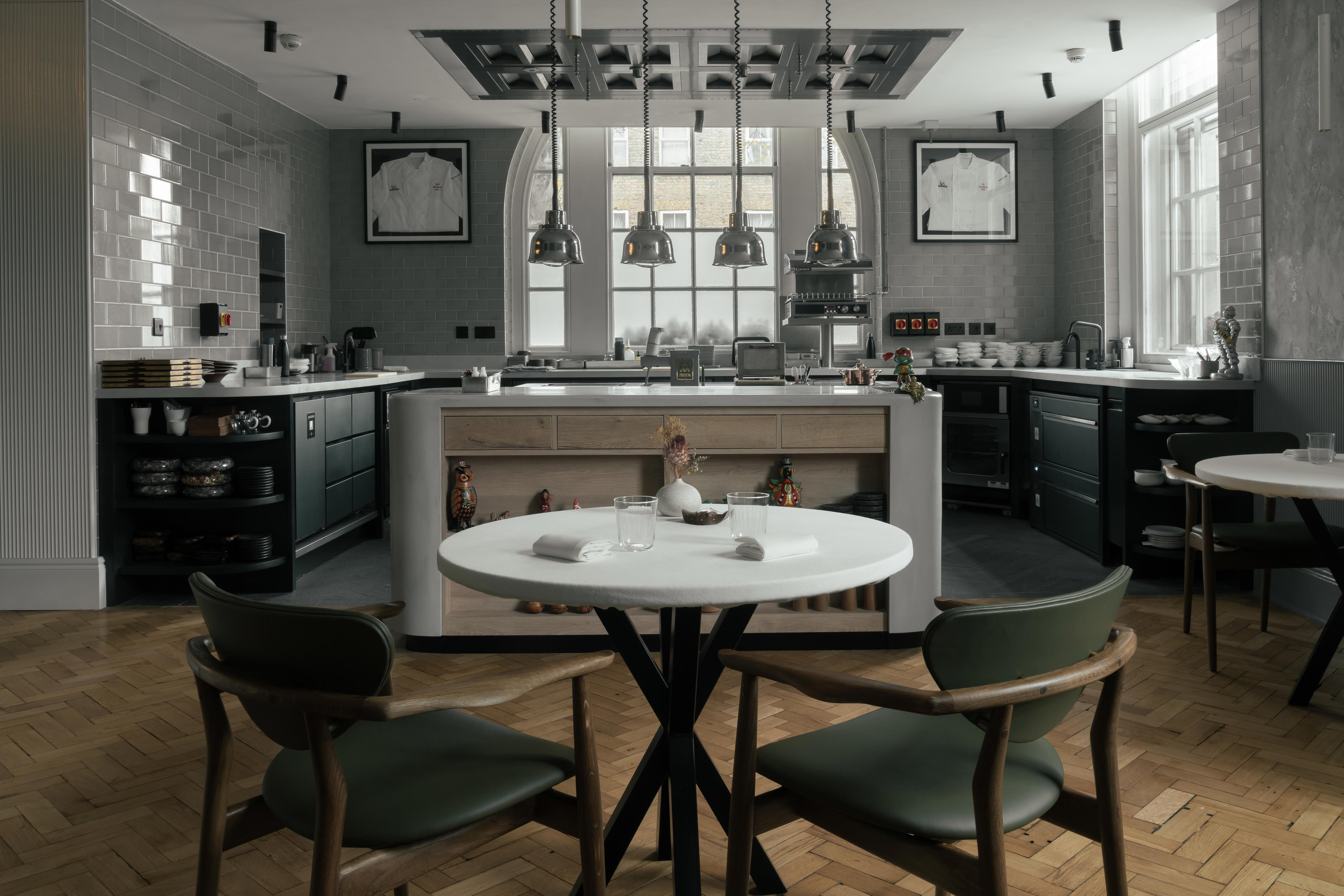
Bars in London
Browse all →
Hotels in London
Browse all →

At a Glance
- Elegant
- Sophisticated
- Intimate
- Modern
- Special Occasion
- Celebration
- Date Night
- Group Dining
- Open Kitchen
- Standalone
- Natural Wine
- Sommelier Led
- Zero Proof
- Local Sourcing
- Farm To Table
- Biodynamic
Current opening hours
- Monday
- Closed
- Tuesday
- Closed
- Wednesday
- 7–11 PM
- Thursday
- 7–11 PM
- Friday
- 7–11 PM
- Saturday
- 7–11 PM
- Sunday
- Closed
Hours can change for holidays and private events. Last verified .
Calm, Nordic-style restaurant with bright double-height ceilings and huge windows flooding the space with natural light; relaxed yet refined atmosphere with an open kitchen creating an engaging, theatrical dining experience.