Our verdict
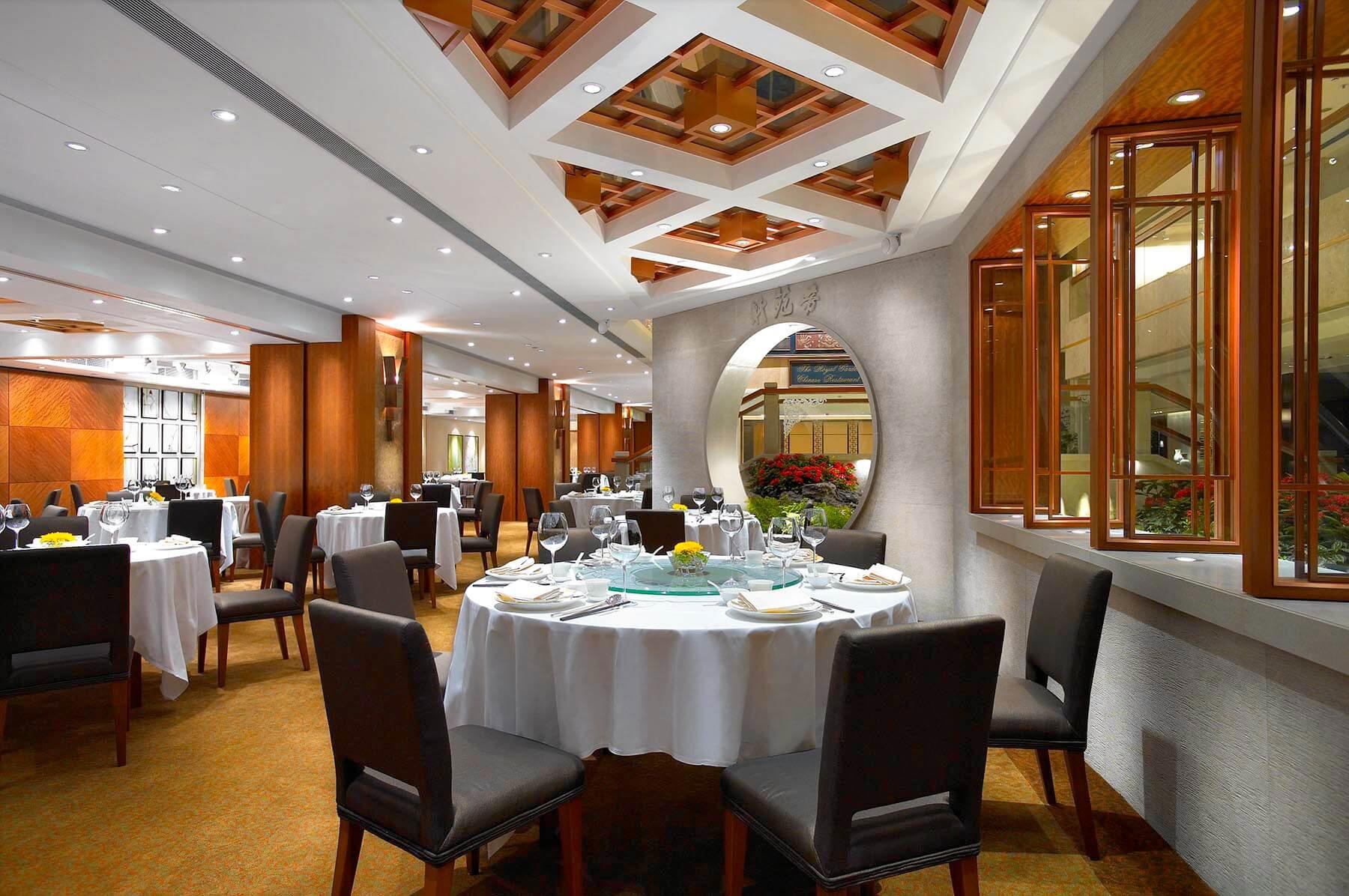
Inside The Royal Garden hotel in Tsim Sha Tsui East, this Cantonese restaurant occupies a considered position between neighbourhood comfort and refined technique. Forbes Travel Guide recognition places it within Hong Kong's mid-to-upper tier of hotel dining, where the emphasis falls on Cantonese tradition rather than cross-cultural experimentation. A reliable address for classic dim sum and full-service dinner in a part of Kowloon that rewards deeper exploration.

Pearl is the En Primeur Club membership app, where members save venues, book tables and use the concierge.
The menu
What to order
- Steam pork patty with salted fish
- Roasted pork
- Crispy grass carp
Cantonese Dining in Tsim Sha Tsui East: Where Hotel Restaurants Hold Their Ground
Hotel restaurants in Hong Kong carry more weight than their equivalents in most cities. With commercial rents making standalone fine-dining difficult to sustain, the hotel dining room has long served as a structurally sound platform for serious Cantonese cooking. Tsim Sha Tsui East, the quieter stretch of Kowloon that runs east of Nathan Road toward the waterfront, hosts a cluster of established hotels that have maintained kitchen programs across decades, a different proposition from the churn of newer openings in Central or Wan Chai. The Royal Garden Chinese Restaurant, located on the basement level of The Royal Garden hotel at 69 Mody Road, sits within that tradition.
Forbes Travel Guide's Recommended designation for The Royal Garden hotel provides a calibration point. The Forbes system is specific in what it rewards: service consistency, physical standards, and operational reliability across departments. A restaurant operating inside a Forbes-recognised property inherits that standard as a baseline, which in practical terms means front-of-house training and room maintenance are held to a measurable criterion. In Hong Kong's hotel dining tier, where properties like those housing Caprice or Amber occupy the upper end of that scale, the Forbes Recommended level positions The Royal Garden as a reliable mid-to-upper property rather than a trophy address.
The Cantonese Framework: Comfort and Technique as a Continuum
Cantonese cuisine operates across a wider register than its international reputation suggests. At one end sits the refined, produce-led cooking of Michelin-starred houses; at the other, the everyday economy of congee shops and cha chaan teng. The more interesting territory is the middle ground, where a kitchen holds both traditions simultaneously, cooking that reads as familiar and accessible but is technically grounded enough to reward attention. That is the space The Royal Garden Chinese Restaurant is described as occupying, balancing home-style comfort with more considered preparation.
In Cantonese cooking, that balance is harder to maintain than it sounds. The cuisine's technical demands are substantial: precise timing on steamed fish, controlled heat for stir-fries, patience with braised meats that require hours of preparation for results that appear effortless. The discipline required to execute both registers, the comforting and the refined, within the same kitchen points to a team that understands the cuisine's internal logic rather than simply reproducing its surface forms. For comparison, Forum in Wan Chai has built its reputation at the more rarefied end of Cantonese technique; The Royal Garden Chinese Restaurant positions itself at a point where that tradition is more approachable without being diluted.
The Team Dynamic in a Cantonese Context
The editorial angle that defines serious Cantonese restaurants is rarely a single chef operating as a solitary auteur. The cuisine is inherently collaborative: the dim sum kitchen and the main kitchen often run as separate operations with distinct skill sets, while the floor team carries the practical work of guiding guests through a menu that may be extensive and written primarily in Traditional Chinese. The interaction between kitchen, service staff, and in larger operations, a beverage program shaped to Cantonese food, determines how much of the cooking's nuance reaches the table.
In hotel Cantonese restaurants specifically, the front-of-house dimension is particularly visible. Guests range from local families who know the menu in detail to international visitors encountering the cuisine for the first time. A competent floor team reads that gap and adjusts: pacing a table of regulars through a familiar sequence, while explaining the logic of a preserved egg dish or a roast-meat selection to someone without the reference points. This is service as culinary transmission, and it is one of the more underacknowledged skills in Hong Kong's dining culture. The hotel setting at Mody Road, which draws both Kowloon residents and visitors staying in the hotel, creates exactly that mixed-clientele dynamic.
Within Hong Kong's broader dining picture, the contrast with innovation-led formats is instructive. Restaurants like Ta Vie and 8 1/2 Otto e Mezzo Bombana operate in registers where the chef's individual vision is the primary currency, and the team structures itself around communicating that vision. In a Cantonese house focused on tradition, the dynamic runs differently: the cuisine itself is the reference point, and the team's job is to execute and transmit it faithfully rather than to express individual interpretation.
Tsim Sha Tsui East as a Dining Neighbourhood
Tsim Sha Tsui East rewards visitors who move beyond the main shopping corridor along Nathan Road. The area's hotel cluster, built up substantially in the 1980s and 1990s, has produced a concentration of dining rooms that operate with the consistency that extended local patronage demands. Unlike the more volatile retail-driven restaurant scene in Causeway Bay or the prestige-flag concentration in Central, this part of Kowloon functions on repeat business from nearby offices, resident hotels guests, and families in the surrounding residential catchment. That structural reality shapes what the kitchens here produce: depth of repertoire over novelty, familiarity alongside technique.
For visitors arriving from Central or Wan Chai, the MTR's Tsim Sha Tsui station provides direct access, with Mody Road a short walk east from the East Tsim Sha Tsui exit. The hotel's basement location means the restaurant is accessible directly from within The Royal Garden property. For those building a broader Kowloon evening, the neighbourhood sits close enough to the waterfront promenade to combine dinner with the harbour view without requiring significant transit.
Where It Sits in Hong Kong's Restaurant Picture
Hong Kong produces a wide range of serious Cantonese addresses, from the technically ambitious to the resolutely traditional. At the high-investment end, dedicated fine-dining rooms command prices and attention that draw international comparison with operations like Alain Ducasse at Louis XV in Monaco or Alinea in Chicago in terms of the seriousness of their culinary ambition. The Royal Garden Chinese Restaurant occupies a different position in that spectrum: a hotel Cantonese room where Forbes-standard service infrastructure, Cantonese breadth across both dim sum and dinner formats, and a Kowloon location that draws genuine local patronage combine into a proposition that is more grounded than glamorous. That is not a qualification; for a large portion of what Hong Kong's dining culture actually does well, it is precisely the point. For a fuller picture of the city's restaurant range, see our full Hong Kong restaurants guide.
Those planning a broader trip should consult our full Hong Kong hotels guide, our full Hong Kong bars guide, and our full Hong Kong experiences guide for additional context across categories. Hong Kong's wine culture, shaped by the territory's zero-tariff wine import policy introduced in 2008, is also worth exploring through our full Hong Kong wineries guide.
Planning Your Visit
The Royal Garden Chinese Restaurant is located at B2/F, The Royal Garden, 69 Mody Road, Tsim Sha Tsui East, Kowloon. The hotel is accessible from East Tsim Sha Tsui MTR station. Given that hotel Cantonese restaurants in this bracket attract both walk-in lunch trade for dim sum and pre-booked dinner parties, contacting the hotel directly to confirm table availability is advisable, particularly for groups or weekend evenings. Specific pricing, current hours, and menu details should be confirmed at the time of booking, as these details are subject to change.
Frequently asked questions
What's the signature dish at The Royal Garden Chinese Restaurant?
Do I need a reservation for The Royal Garden Chinese Restaurant?
What has The Royal Garden Chinese Restaurant built its reputation on?
Is The Royal Garden Chinese Restaurant good for vegetarians?
Cuisine-First Comparison
Comparable venues nearby, for context on price, style, and recognition.
| Venue | Cuisine | Price | Awards | Notes |
|---|---|---|---|---|
| The Royal Garden Chinese RestaurantThis venue (the venue you are viewing) | Authentic Cantonese | $50–100 | Not listed | Not listed |
| Tim's Kitchen | Traditional Cantonese | $50–100 | Not listed | Wan Chai |
| Old Bazaar Kitchen - 老巴剎廚房 | Southeast Asian Chinese Classics | $50–100 | Not listed | Wan Chai |
| Rú | Modern Cantonese Fine Dining | $50–100 | SCMP 100 Top Tables Restaurants | Tsuen Wan |
| Moon Bay | Traditional Cantonese Chinese | Not listed | Not listed | Wan Chai |
| Fu Rong Wu Shuang | Modern Hunanese Fine Dining | $100–150 | SCMP 100 Top Tables Restaurants | Central |
Continue exploring
More in Hong Kong
Restaurants in Hong Kong
All restaurants in Hong Kong →
Bars in Hong Kong
All bars in Hong Kong →
Hotels in Hong Kong
All hotels in Hong Kong →
Wineries in Hong Kong
All wineries in Hong Kong →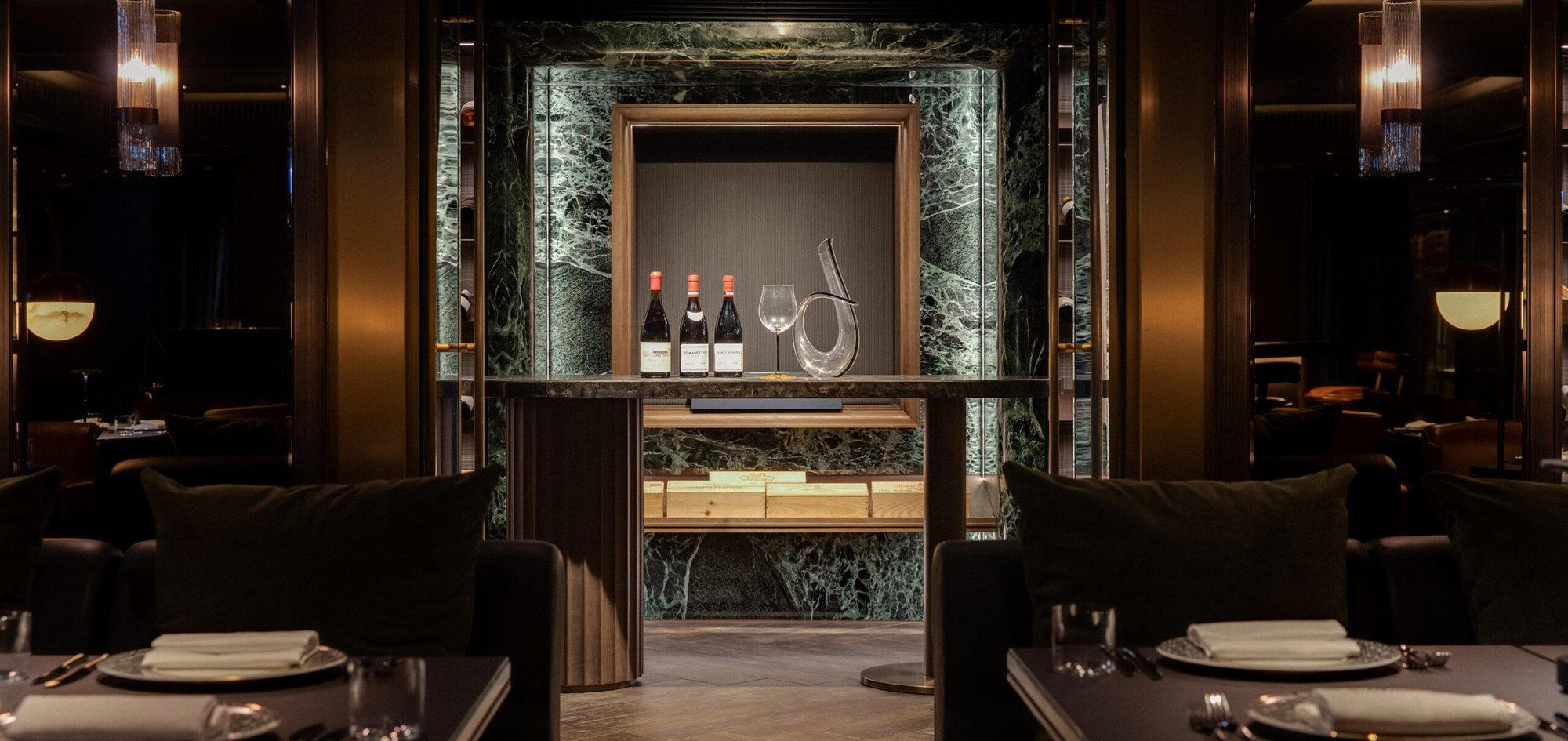
Details
- Elegant
- Cozy
- Intimate
- Business Dinner
- Group Dining
- Family
- Hotel Restaurant
- Private Dining
- A La Carte
Cozy and intimate ambience in a spacious restaurant with elegant decor.