The Mary Lane
On Bank Street in the West Village, The Mary Lane occupies a dining tier where neighbourhood intimacy and considered cooking converge. The address places it among a cohort of lower-Manhattan restaurants that trade on specificity rather than scale, making it a reference point for anyone tracing the evolution of New York's quieter, more deliberate dining scene.
Pearl is the En Primeur Club membership app — saves, bookings, and concierge access live there. Same editors, same standards.
- Address
- 99 Bank St, New York, NY 10014
- Phone
- +12125979099
- Website
- themarylanenyc.com
- Directions
- Get directions
 Saves & bookings on Pearl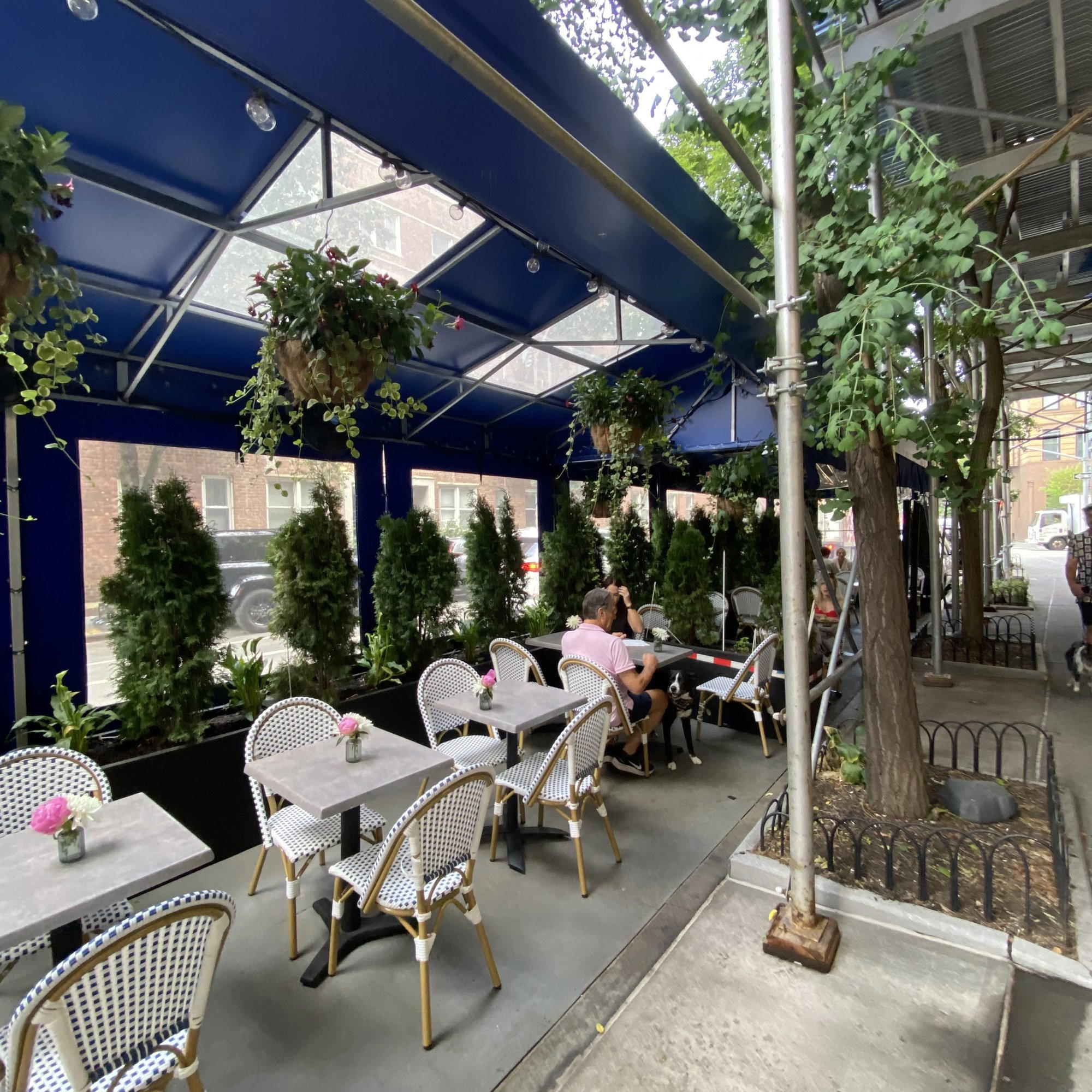
West Village, Deliberate Pace
Bank Street in the West Village sits at a remove from the kind of dining-district density that defines the Flatiron corridor or the stretch of restaurants along the far West Side. The neighbourhood's residential character sets expectations before you arrive: smaller rooms, less theatre, more attention to the table in front of you. The Mary Lane, at 99 Bank Street, sits inside that pattern. This part of lower Manhattan has long supported a particular kind of restaurant, one that earns its reputation through consistency and kitchen discipline.
New York's fine-dining tier has bifurcated sharply over the past decade. On one side sit the flagship tasting-menu rooms, Le Bernardin, Per Se, Masa, where the format, price, and institutional weight are inseparable from the experience. On the other sit smaller rooms that operate at a different register: fewer covers, a closer relationship between kitchen and dining room, and a sense that the meal has been shaped for this address rather than exported from a brand. The Mary Lane belongs to this second cohort.
The Shape of the Meal
Multi-course dining in New York increasingly comes with a declared structure, a stated number of courses, a price fixed in advance, a sequence designed to carry the diner from opening moves through to close. The tasting-progression format, now standard at rooms like Atomix and Jungsik New York, creates a clear structure for the meal. It also shifts curation from the diner to the kitchen.
What separates a well-executed tasting progression from a formulaic one is pacing and proportion. The early courses should orient rather than overwhelm, lighter preparations that establish the kitchen's register without front-loading richness. The middle sequence carries the meal's weight: this is where technique becomes legible and where the kitchen's sourcing decisions become visible on the plate. The close should provide resolution without redundancy, a final course that lands with intention rather than obligation. Restaurants that manage this arc well, Alinea in Chicago, Lazy Bear in San Francisco, Single Thread Farm in Healdsburg, do so because the sequence was designed as a whole, not assembled from a menu of strong individual dishes.
The Mary Lane's position on Bank Street, in a neighbourhood where the dining room is rarely the loudest thing on the block, suits this format. The pace that tasting-progression dining demands, the willingness to let a course settle before the next arrives, is easier to sustain in a room that isn't competing with ambient noise or the energy of a packed bar programme. West Village dining rooms can sustain that pace more easily than Midtown flagships.
Neighbourhood Context and Competitive Position
The West Village has been the address of choice for a particular kind of serious New York restaurant for decades. It lacks the institutional weight of Columbus Circle or the critical density of the East Village's bar-and-natural-wine scene, but it has continuity. Restaurants that open here tend to stay. The neighbourhood's dining character rewards operators who are building something for the long run rather than the opening-week reservation rush.
Within that setting, the restaurant occupies an address with clear identity. Bank Street is a residential block; the restaurant functions as a neighbourhood anchor in the way that the leading local-serious restaurants do in cities like San Francisco or Washington. For a parallel in a different market, consider how Blue Hill at Stone Barns functions relative to Tarrytown's broader dining scene, or how Bacchanalia in Atlanta holds its position as an address locals return to across years rather than seasons. These are restaurants that earn their place in the urban fabric rather than disrupting it.
Nationally, the benchmark for this kind of cooking at a high level includes addresses like Providence in Los Angeles, Addison in San Diego, Emeril's in New Orleans, and The Inn at Little Washington, all rooms where locality informs the menu and the dining room is built for return visits rather than singular occasions. Internationally, the equivalent discipline shows up in rooms like 8½ Otto e Mezzo Bombana in Hong Kong and Alain Ducasse at Louis XV in Monte Carlo, where the weight of a specific address shapes the cooking as much as the kitchen's training does.
For New York specifically, the relevant comparable set for Bank Street sits below the three-Michelin-star tier and above the casual neighbourhood bistro. It is the middle register of serious New York dining, the bracket where technique is assumed and the question is what the kitchen does with it.
The French Laundry Lineage and American Fine Dining
The broader tradition that West Village tasting-menu rooms draw from runs through The French Laundry in Napa and the generation of chefs it trained, who carried a particular approach to sequence, sourcing, and pacing into dining rooms across the country. That lineage is legible across American fine dining in the prioritisation of the multi-course format, the sourcing narrative, and the relationship between the room's size and its ambition. Smaller rooms in residential neighbourhoods, the West Village being one of New York's clearest examples, inherited this approach and adapted it to a more intimate scale.
The restaurant is located at 99 Bank Street, New York, NY 10014, in the West Village. Advance booking is recommended.
Accolades, Compared
Comparable venues nearby, for context on price, style, and recognition.
| Venue | Cuisine | Price | Notes |
|---|---|---|---|
| The Mary LaneThis venue — the venue you are viewing | Seasonal New American | $$$ | Not listed |
| The Warren | Modern New American Gastropub | $$$ | West Village |
| 44 & X Hell's Kitchen | Modern New American | $$$ | Hell's Kitchen |
| The Corner Store | Playful Nostalgic American | $$$ | SoHo-Little Italy-Hudson Square |
| City Vineyard | New American with Seafood | $$$ | Tribeca-Civic Center |
| Big Apple Brunch | Multi-cultural Brunch | $$$ | Hell's Kitchen |
Continue exploring
More in New York City
Restaurants in New York City
Browse all →
Bars in New York City
Browse all →
Hotels in New York City
Browse all →

Wineries in New York City
Browse all →


At a Glance
- Cozy
- Modern
- Trendy
- Date Night
- Brunch
- Casual Hangout
- Open Kitchen
- Terrace
- Craft Cocktails
- Farm To Table
- Local Sourcing
- Street Scene
Current opening hours
- Monday
- Closed
- Tuesday
- 12–10 PM
- Wednesday
- 12–10 PM
- Thursday
- 12–10 PM
- Friday
- 12–10 PM
- Saturday
- 10 AM–10 PM
- Sunday
- 10 AM–10 PM
Hours can change for holidays and private events. Last verified .
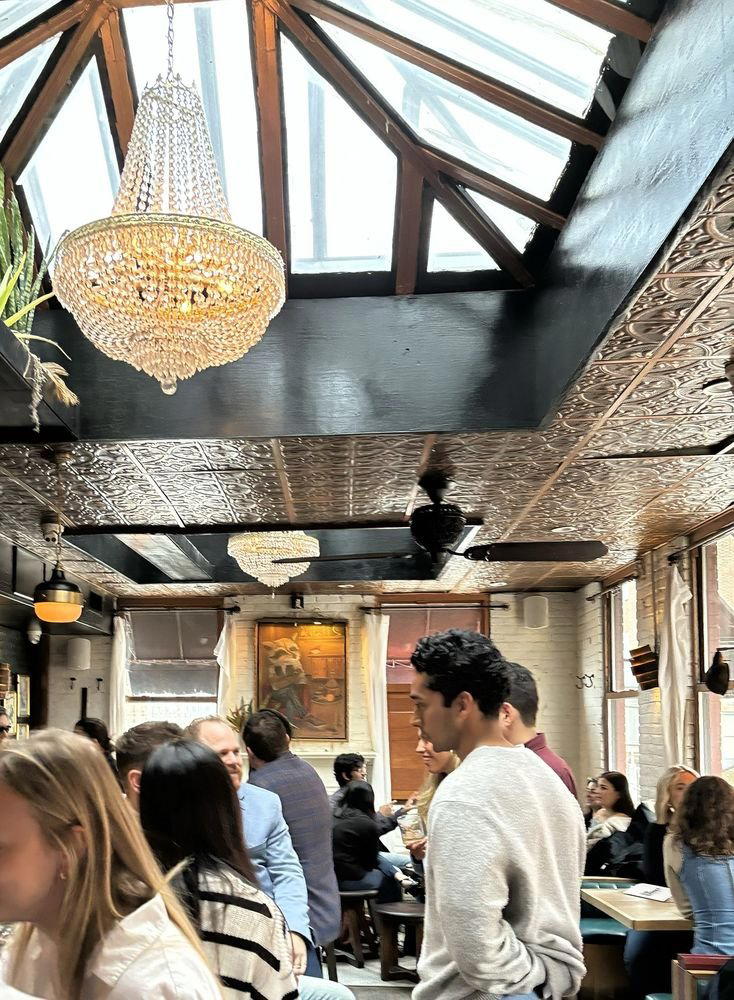
Bright and airy dining room surrounded by floor-to-ceiling windows, creating an inviting and warm neighborhood atmosphere.