The Greek Kitchen
On the western edge of Hell's Kitchen, The Greek Kitchen at 889 10th Avenue occupies a neighbourhood where Greek-American cooking has long punched above its critical recognition. The restaurant draws on the sourcing traditions of Hellenic cuisine, where the provenance of olive oil, seafood, and legumes shapes a dish as much as technique. For those tracking New York's broader turn toward ingredient-led Mediterranean cooking, it belongs on the shortlist.
Pearl is the En Primeur Club membership app — saves, bookings, and concierge access live there. Same editors, same standards.
- Address
- 889 10th Ave, New York, NY 10019
- Phone
- +12125814300
- Website
- greekkitchennyc.com
- Directions
- Get directions
 Saves & bookings on Pearl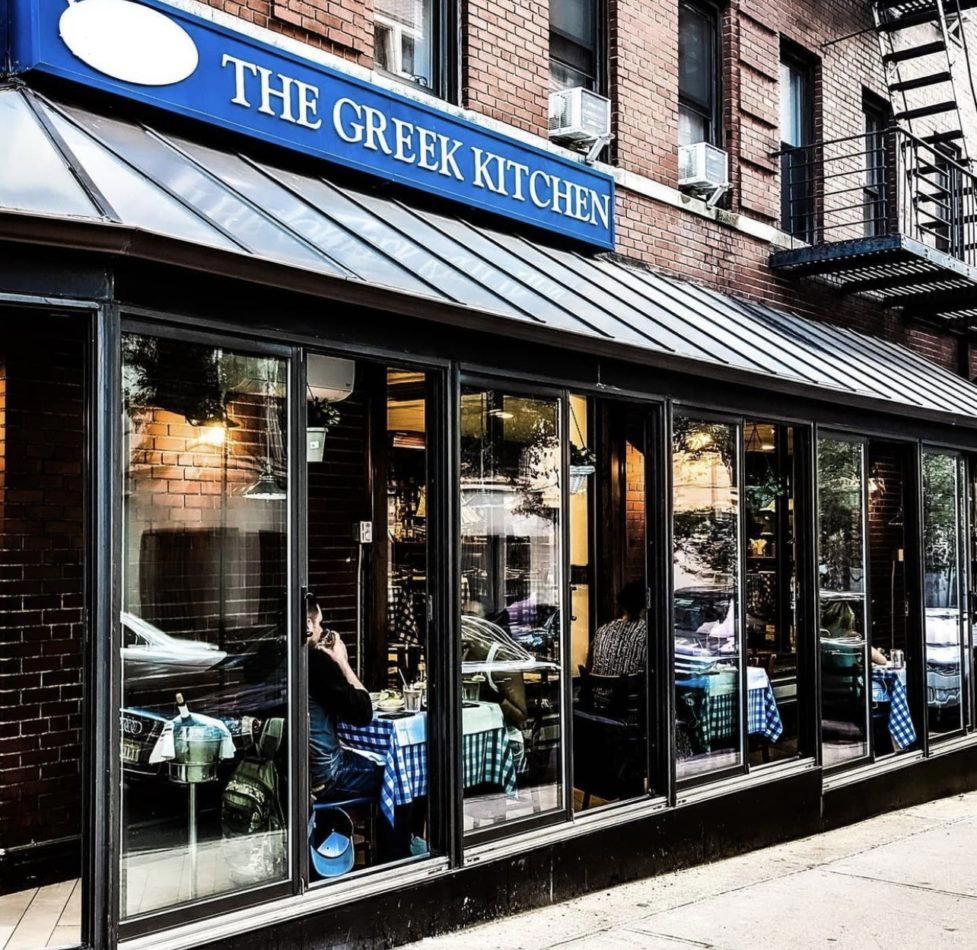
Hell's Kitchen and the Greek Pantry
The Greek Kitchen is a traditional Greek restaurant at 889 10th Ave in Hell's Kitchen, New York City, with. While the city's dining conversation has rotated through Japanese omakase counters like Masa, progressive Korean tasting menus at Atomix and Jungsik New York, and French-rooted seafood precision at Le Bernardin, Hellenic cooking has largely operated outside that awards circuit. The result is a tier of Greek restaurants that define themselves through the quality of what they source rather than through tasting-menu architecture or critical positioning.
The Greek Kitchen sits at 889 10th Avenue, on the western stretch of Hell's Kitchen, a corridor that has historically housed working-class Greek-American families and their restaurants. That geography matters: the neighbourhood's culinary character was built by immigrant communities who brought specific sourcing habits with them, favouring Kalamata olives over generic black, importing dried legumes from specific Greek regions, and treating good olive oil as a non-negotiable rather than an upgrade. Those habits, once commercial necessities for an immigrant population maintaining food culture in a foreign city, have become the foundation on which serious Greek cooking in New York now rests.
Where the Food Comes From
The central argument of Hellenic cuisine, repeated across every serious Greek kitchen from Athens to Thessaloniki, is that the raw material does more work than the cook. This is not false modesty. Greek olive oil production alone spans over 30 distinct varieties, each with measurable differences in polyphenol content, acidity, and flavour profile. The gap between a bottle of mass-market blended Mediterranean oil and a single-estate Koroneiki or Manaki is not subtle; it is the difference between a dish that reads as background and one that reads as the point.
Same logic extends to seafood. The Aegean and Ionian Seas produce specific species, octopus and sea bream among them, that carry flavour profiles tied to the salinity and temperature of those particular waters. Greek restaurants that import or source carefully within that tradition are making a different dish than those that substitute with whatever regional catch is available. Across the United States, from Providence in Los Angeles to Blue Hill at Stone Barns in Tarrytown, the sourcing-first argument has become a central editorial frame for serious ingredient-driven restaurants. Greek cuisine, with its ancient pantry logic, fits that frame as naturally as any farm-to-table American concept.
Legumes form the third pillar. Fava from Santorini, gigantes from Macedonia, lentils from Thessaly: these are not interchangeable with their generic equivalents. The volcanic soil of Santorini, for instance, produces a yellow split pea fava with a mineral quality that no other terroir replicates. Restaurants that source these ingredients specifically are making a claim about authenticity that is verifiable in the eating, not just in the marketing copy.
The Hell's Kitchen Context
Hell's Kitchen, stretching along 10th Avenue between the upper 40s and lower 50s, has undergone significant demographic change over the past two decades, but its Greek-American culinary thread remains intact in pockets. The neighbourhood sits west of the main Midtown dining corridor, which means it operates slightly outside the tourist and corporate expense-account circuits that drive covers at restaurants like Per Se. That positioning tends to reward regulars over one-time visitors, and regular-driven restaurants often maintain sourcing standards more consistently because their audience notices when quality slips.
Comparing across American cities, the sourcing-first ethos at play in Hell's Kitchen Greek cooking parallels what drives the menus at Single Thread Farm in Healdsburg, The French Laundry in Napa, and Lazy Bear in San Francisco, restaurants where provenance is the organising principle, not a marketing afterthought.
What to Order and How to Think About the Menu
The menu is centered on meze, grilled seafood, and legume dishes. What can be said with confidence is that any serious Greek kitchen in this tradition will have a meze section worth anchoring a meal around, and that the olive oil used at the table is one of the clearest signals of how seriously a restaurant takes its sourcing commitments. Order the dips. Order the grilled seafood if the day's catch looks right. Treat the legume dishes as the test of whether the kitchen is buying well or buying conveniently.
For context on how ingredient sourcing at this level compares across American fine dining, restaurants like Addison in San Diego, Alinea in Chicago, Bacchanalia in Atlanta, Emeril's in New Orleans, and The Inn at Little Washington all operate with explicit sourcing narratives. Greek cuisine's sourcing logic is no less rigorous; it simply operates in a different critical vocabulary.
Planning Your Visit
The Greek Kitchen is located at 889 10th Avenue, in the Hell's Kitchen neighbourhood of Manhattan. The restaurant is casual, reservations are recommended, and it is open daily from 11 AM to 10 PM.
Quick reference: 889 10th Avenue, New York, NY 10019. Verify hours and booking directly with the venue before visiting.
A Quick Peer Check
Comparable venues nearby, for context on price, style, and recognition.
| Venue | Cuisine | Price | Notes |
|---|---|---|---|
| The Greek KitchenThis venue — the venue you are viewing | Traditional Greek | $$ | Not listed |
| Tinos | Authentic Greek Seafood | $$ | Upper East Side-Yorkville |
| Souvlaki GR | Authentic Greek Taverna | $$ | Midtown-Times Square |
| Medusa The Greek | Modern Greek Taverna | $$ | Park Slope |
| Taverna by Gyro Project | Modern Greek Taverna | $$ | Chelsea-Hudson Yards |
| Village Taverna | Traditional Greek Grill | $$ | Greenwich Village |
Continue exploring
More in New York City
Restaurants in New York City
Browse all →
Bars in New York City
Browse all →

Hotels in New York City
Browse all →







At a Glance
- Cozy
- Classic
- Family
- Casual Hangout
- Group Dining
- Extensive Wine List
- Street Scene
Current opening hours
- Monday
- 11 AM–10 PM
- Tuesday
- 11 AM–10 PM
- Wednesday
- 11 AM–10 PM
- Thursday
- 11 AM–10 PM
- Friday
- 11 AM–10 PM
- Saturday
- 11 AM–10 PM
- Sunday
- 11 AM–10 PM
Hours can change for holidays and private events. Last verified .
Bright and airy main dining room with cheerful, casual atmosphere.