Village Taverna
Our verdict
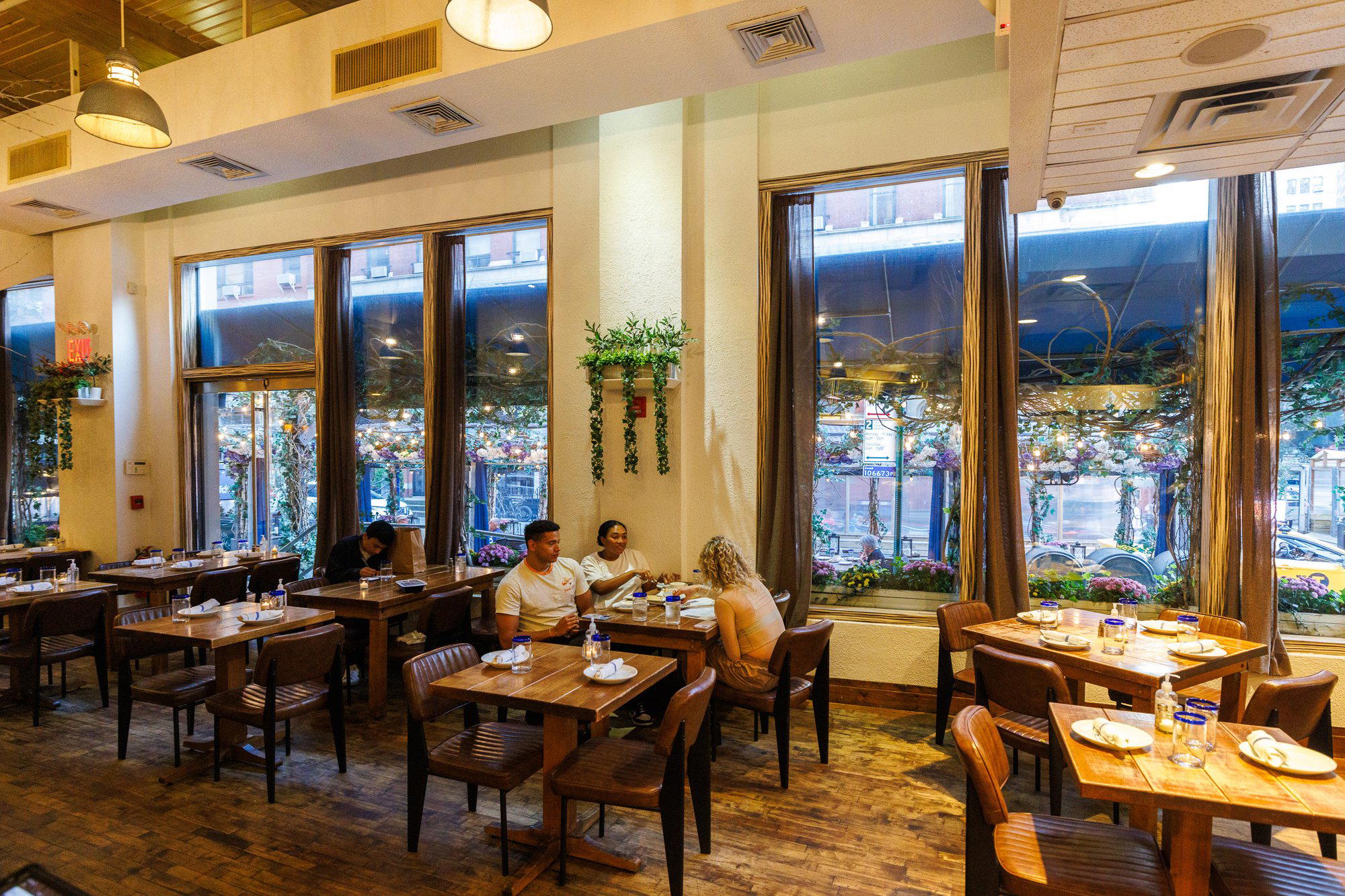
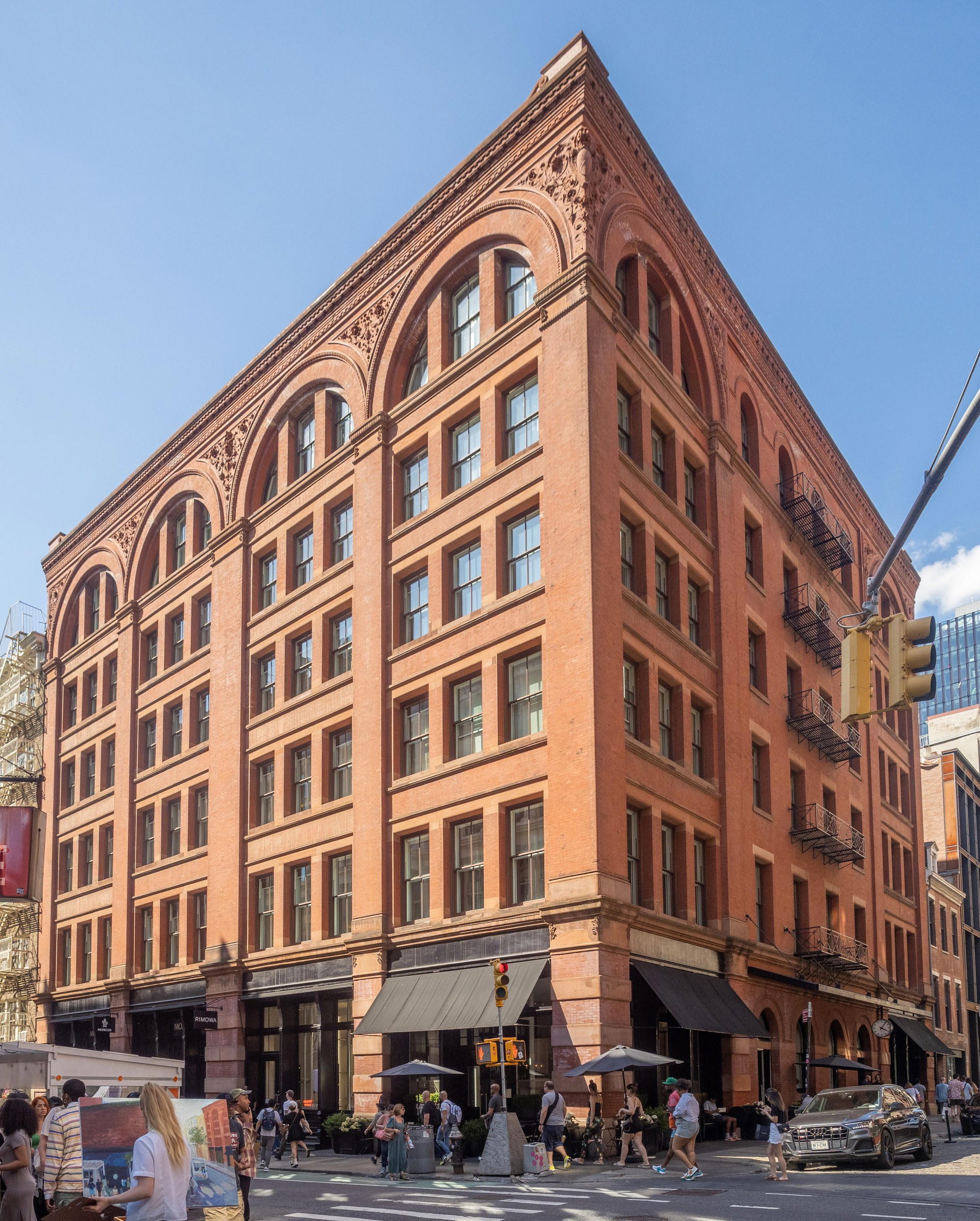
Village Taverna occupies a well-worn corner of Greenwich Village at 81 University Place, where the neighbourhood's appetite for straightforward, convivial dining has sustained Greek-inflected taverna cooking for decades. The space reads as a room that has been lived in rather than designed, which in this part of Manhattan carries its own credibility. For the area's mix of NYU faculty, downtown regulars, and first-time visitors, it functions as a reliable anchor in a block dense with options.

Pearl is the En Primeur Club membership app, where members save venues, book tables and use the concierge.
The menu
What to order
- Gyro platter
- Chicken souvlaki
- Lamb shank
- Octopodi
A Room That Earns Its Place on University Place
Greenwich Village has always sorted its restaurants into two categories: the ones that arrive with concept decks and PR campaigns, and the ones that simply persist because the neighbourhood keeps returning. The stretch of University Place running south from Union Square belongs firmly to the second tradition. The buildings are narrow, the foot traffic is dense, and the dining rooms that survive more than a decade here tend to do so because they read correctly to the street: not too formal, not too casual, the kind of space where the physical environment does the work before a single dish arrives.
Village Taverna at 81 University Place sits in that lineage. The address places it at one of downtown Manhattan's more functionally interesting intersections, within walking distance of Washington Square Park and the NYU campus, yet far enough from the tourist corridors of SoHo and the West Village's premium restaurant row to maintain a distinctly neighbourhood character. In a city where dining rooms are routinely stripped back and relaunched under new identities, a taverna format that has settled into its physical container rather than fighting it carries a specific kind of authority.
The Physical Container as Editorial Statement
The design logic of a taverna format is worth understanding on its own terms before mapping it to this specific room. Across the Greek dining tradition, from Athenian neighbourhood institutions to the whitewashed rooms of the Cyclades, the taverna interior communicates through deliberate understatement: tiled or dark-wood floors that can take decades of use, close-set tables that encourage the ambient noise levels associated with genuine occupation, walls that accumulate rather than curate. The format signals longevity and a certain indifference to trend cycles, which in the context of New York City dining reads as a considered editorial stance.
On University Place, this spatial grammar intersects with Greenwich Village's own architectural character. The Village's streetscape is among the most preserved in Manhattan, with low-rise Federal and Greek Revival buildings that create a human scale absent from Midtown. A dining room that matches that scale, where the room does not attempt to visually compete with the neighbourhood outside, tends to integrate more successfully than a high-concept interior dropped into a nineteenth-century building. The physical environment of a well-calibrated taverna operates in the same register as the architecture around it.
Compare this with the dominant visual language of New York's current high-end tier, where rooms like those at Atomix or Jungsik New York are constructed with explicit design intent, each material choice legible as part of a larger curatorial programme. Or consider the formal grandeur deployed at Per Se and Le Bernardin, where the room prepares you for a specific transactional register before a menu is opened. The taverna sits at the opposite end of that spectrum, and in Greenwich Village, that positioning is not a concession but a competitive advantage.
What the Greenwich Village Dining Scene Expects
The Village has historically supported a wider range of price points and formats than the neighbourhoods that now draw more editorial attention. The Meatpacking District and the West Village's Bleecker Street corridor have consolidated around a premium casual register, where main courses at many restaurants price in the $30 to $50 range without approaching the formal tasting-menu tier occupied by Masa. University Place and the streets immediately surrounding Washington Square have remained somewhat more varied, partly because NYU's institutional presence anchors a population that eats out frequently but distributes spending across a broader range.
Greek cooking in New York occupies a particular position within that range. The cuisine has genuine depth in the city, from the ambitious fish preparations at a handful of Midtown and Flatiron addresses to the more direct mezze and grilled formats associated with neighbourhood tavernas. The taverna model specifically draws on a tradition of abundance and sharing, where the ordering experience is meant to produce a table of small and medium plates rather than a linear progression of individual courses. That format tends to perform well in rooms where the table configuration encourages it, and where the service rhythm is calibrated to manage multiple arrivals without the formality of a tasting sequence.
Across the United States, comparable neighbourhood-anchor formats have demonstrated longevity in cities with strong local dining cultures. Bacchanalia in Atlanta and Emeril's in New Orleans represent the end of that spectrum where the anchor restaurant has accumulated institutional status over decades. At the other end, the Village's own dining history includes dozens of rooms that have functioned as neighbourhood constants for twenty, thirty, or forty years, sustained not by awards cycles but by repeat custom from a geographically stable population.
Where Village Taverna Sits in the New York Context
New York's restaurant map currently offers more options at the extreme ends of the price spectrum than at the middle. The tasting-menu tier, represented by addresses like Blue Hill at Stone Barns in nearby Tarrytown or the destination-restaurant model exemplified by The French Laundry in Napa, requires commitment in both time and expenditure. The fast-casual and delivery-optimised tier has expanded substantially since 2020. The middle ground, where a meal in a proper dining room with table service costs what a meal in a proper dining room should cost, has in some neighbourhoods contracted.
University Place is one of the areas where that middle tier has held, in part because the neighbourhood generates consistent local demand rather than relying on destination traffic. A taverna at this address competes primarily with other mid-range full-service restaurants in the immediate area, not with the tasting-menu tier of Alinea in Chicago or the ambitious West Coast formats like Lazy Bear in San Francisco or Providence in Los Angeles. That is a different competitive conversation, and the taverna format is well-suited to win it on its own terms.
For a fuller picture of where Village Taverna sits within downtown Manhattan's dining geography, see our full New York City restaurants guide.
Planning Your Visit
Address: 81 University Place, New York, NY 10003. Neighbourhood: Greenwich Village, within walking distance of Washington Square Park and the Union Square subway hub (4, 5, 6, L, N, Q, R, W trains). Reservations: Dress: The neighbourhood standard applies: smart casual is appropriate and consistent with the room's character. Budget: Hours: Verify current service hours directly with the venue before visiting.
Frequently asked questions
Where do I go for Village Taverna?
Village Taverna is located at 81 University Pl, New York, NY 10003, New York City.
Is Village Taverna in Greenwich Village good for a group dinner in New York City?
The taverna format has historically suited group dining in New York's neighbourhood restaurant tier, where shared-plate ordering and flexible table configurations accommodate parties more naturally than prix-fixe or counter-format venues. Village Taverna's address at 81 University Place places it within walking distance of Washington Square Park, making it a practical anchor for groups already spending time in the Greenwich Village area. For larger parties, confirming capacity and reservation options directly with the restaurant is worth doing in advance.
What should I order at Village Taverna?
The taverna format across the Greek dining tradition is built around shared plates ordered in rounds rather than individual entrées, which means the table's appetite tends to drive the meal more than any single dish. When visiting 81 University Place, asking staff which preparations are coming off strongest that day is the approach most in keeping with how tavernas are meant to work.
Do they take walk-ins at Village Taverna?
University Place draws consistent foot traffic from NYU students, faculty, and Greenwich Village residents, which puts mid-evening walk-in availability at pressure during peak hours. Calling ahead or checking directly with the restaurant at 81 University Place is the practical move before arriving without a reservation.
What's the defining dish or idea at Village Taverna?
The taverna format itself is the organising idea. In the Greek dining tradition, a taverna is not structured around a signature showpiece dish but around a rhythm of sharing: multiple plates arriving across the table, portions sized for the group rather than the individual. On University Place in Greenwich Village, that model connects to a neighbourhood that has historically supported communal, mid-format dining over the kind of composed tasting-menu experience that now dominates uptown and downtown press coverage.
How does Village Taverna handle allergies?
New York City requires food service establishments to follow Department of Health allergen disclosure standards, so staff at 81 University Place are the reliable point of contact for specific dietary needs before you order. Calling ahead of a visit is advisable if your requirements are complex.
Comparable Venues
Comparable venues nearby, for context on price, style, and recognition.
| Venue | Cuisine | Price | Notes |
|---|---|---|---|
| Village TavernaThis venue (the venue you are viewing) | Traditional Greek Grill | $30–50 | Not listed |
| Ovelia | Modern Greek Grill | $30–50 | Astoria (Central) |
| Dionysos Restaurant | Traditional Greek and Cypriot | $20–30 | Astoria (North)-Ditmars-Steinway |
| Molyvos | Modern Greek with Mediterranean Influences | $50–100 | Hell's Kitchen |
| Kellari Taverna | Authentic Greek Seafood Taverna | $50–100 | Midtown-Times Square |
| Souvlaki GR | Authentic Greek Taverna | $30–50 | Midtown-Times Square |
Continue exploring
More in New York City
Restaurants in New York City
All restaurants in New York City →
Bars in New York City
All bars in New York City →



Details
- Cozy
- Lively
- Classic
- Group Dining
- Casual Hangout
- Family
- Open Kitchen
- Extensive Wine List
- Street Scene
- A La Carte
- Vegetarian Friendly
- Vegan Options
- Gluten Free Options
Current opening hours
- Monday
- 11 AM–10 PM
- Tuesday
- 11 AM–10 PM
- Wednesday
- 11 AM–10 PM
- Thursday
- 11 AM–10 PM
- Friday
- 11 AM–10 PM
- Saturday
- 11 AM–10 PM
- Sunday
- 11 AM–10 PM
Hours can change for holidays and private events. Hours as of .
Airy and inviting with wide-open space and natural light from large windows.