The Grand Atrium at The Brown Palace
Few dining rooms in the American West carry architectural weight comparable to The Grand Atrium at The Brown Palace, Denver's landmark hotel at 321 17th St. The nine-story atrium, completed in 1892, frames afternoon tea and formal dining against cast-iron balconies and stained glass. Positioned above Denver's mid-range dining tier but below the city's tasting-menu specialists, it occupies a specific niche: historic grandeur with hotel-dining formality.
Pearl is the En Primeur Club membership app — saves, bookings, and concierge access live there. Same editors, same standards.
- Address
- 321 17th St, Denver, CO 80202
- Phone
- +1 720 709 2006
- Website
- brownpalace.com
- Directions
- Get directions
 Saves & bookings on Pearl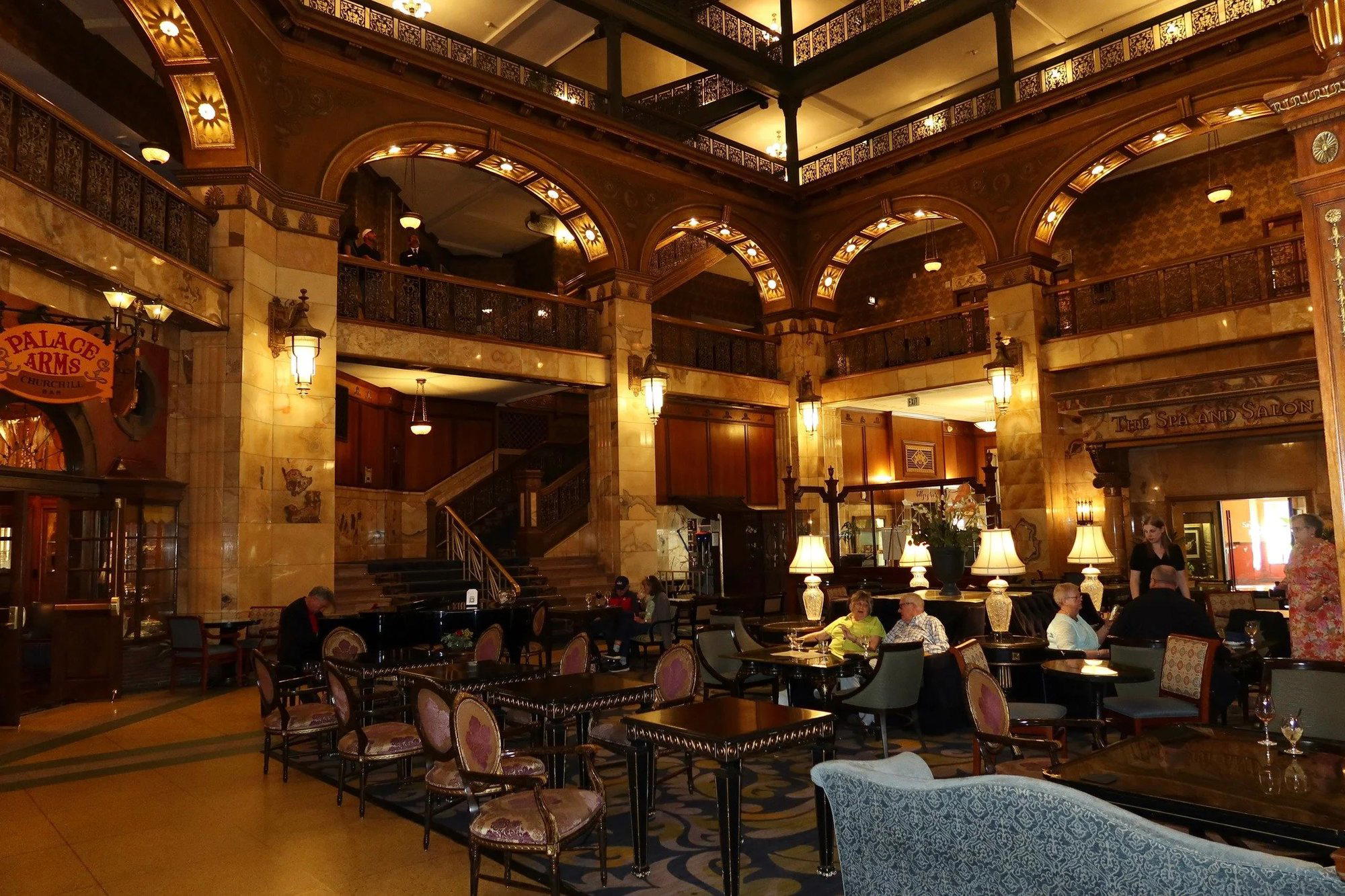
A Room That Precedes the Menu
Denver's fine-dining conversation has tilted hard toward the contemporary over the past decade. Tasting-menu counters like Beckon and ingredient-driven kitchens like Brutø now define the city's upper tier on terms set by technique, sourcing provenance, and chef lineage. Against that backdrop, The Grand Atrium at The Brown Palace operates on an older logic entirely: the room is the argument. The nine-story atrium that rises above the dining floor was completed in 1892, its cast-iron balconies and onyx-panelled walls constructed before Colorado had been a state for even two decades. The stained-glass ceiling filters afternoon light in a way that no renovation has replicated elsewhere in Denver, because nothing else was built this way. That physical fact sets the terms of the experience before a single plate arrives.
The Brown Palace itself occupies the triangular block at 321 17th St in the heart of downtown, a site chosen precisely for its visibility at the junction of 17th Street and Broadway. Approaching on foot, the Romanesque Revival facade reads as something closer to a European civic building than an American hotel, which is the point: when Henry Brown commissioned the structure, Denver was making a case for itself as a city of consequence. That civic ambition is still legible in the stonework. Inside, the atrium functions as the hotel's central organizing space, with dining set against the full vertical spectacle of the building's interior architecture.
Where the Grand Atrium Sits in Denver's Dining Tier
Denver's restaurant market has stratified clearly. At the accessible end, places like Alma Fonda Fina and Annette deliver precision cooking at price points that keep the room full and the reservation window short. At the opposite end, The Wolf's Tailor and Brutø run the kind of tightly edited programs that attract national critical attention. The Grand Atrium occupies a different bracket: hotel dining with formal service standards and a room that functions as destination in itself, drawing both hotel guests and locals who treat a reservation here as an occasion rather than a meal. Reservations are recommended. That positioning is not a criticism; it reflects a distinct and defensible category within the city's hospitality infrastructure.
Compared to the broader canon of landmark hotel dining in the United States, The Inn at Little Washington, Le Bernardin in New York City, or The French Laundry in Napa, the Grand Atrium is not rated by Michelin. Its competitive comparable set is defined instead by architectural heritage, afternoon tea tradition, and the social function that landmark hotel dining has served in American cities since the late nineteenth century. Within that comparable set, the 130-year-old atrium is a primary credential.
The Sustainability Question in Historic Kitchens
Sustainability in fine dining has become a structuring principle at the forward edge of the American restaurant scene. Operations like Single Thread Farm in Healdsburg and Blue Hill at Stone Barns in Tarrytown have built their entire identities around farm integration and closed-loop sourcing, while Smyth in Chicago and Lazy Bear in San Francisco have each made waste reduction and regional procurement central editorial points of their menus. Even in European contexts, operations like Atelier Moessmer Norbert Niederkofler in Brunico have demonstrated that fine dining and rigorous ecological accountability are compatible at the highest levels.
For a hotel dining room operating within a 132-year-old building, the sustainability conversation looks structurally different. The embodied carbon in the Brown Palace's construction is already sunk; the building's continued use is, by definition, more efficient than new construction. Large hotel groups have increasingly adopted formal sustainability reporting, supplier traceability programs, and energy reduction targets across their properties. Whether the Brown Palace's kitchen programs reflect current sourcing standards, what proportion of ingredients come from Colorado's agricultural region, or how food waste is managed are questions that the venue's public record does not currently answer in specific terms. That gap is worth noting for readers who treat sourcing transparency as a dining criterion, because the city's most sustainability-forward kitchens, including several on our full Denver restaurants guide, publish that information explicitly.
What the atrium's physical permanence does represent is a form of durability that the restaurant industry rarely achieves: a room that has been in continuous hospitality use for over a century is, in its own way, a counter-argument to the disposability that characterizes much of the contemporary dining scene. The case for historic preservation as a sustainability argument is imperfect but not trivial.
The Afternoon Tea Tradition
The Grand Atrium is most closely associated, in Denver's hospitality culture, with afternoon tea service. The atrium format, with its vertical height and tiered balconies, creates the specific acoustic and visual conditions that afternoon tea requires: a sense of occasion without the pressure of a tasting-menu pace, and a room large enough to feel public while the service remains attentive. The Brown Palace's tea service has been a Denver institution for decades, drawing both local regulars and visitors who treat it as the appropriate way to experience the building. For context, similarly positioned hotel tea services in American cities, at properties like Addison in San Diego's broader hospitality ecosystem or Providence in Los Angeles's neighborhood, have found that the tea format sustains a specific audience that does not overlap cleanly with the evening tasting-menu crowd. The Grand Atrium operates on similar logic: tea service is a format with its own attendance pattern and its own set of expectations, and the room suits it well.
Planning a Visit
The Brown Palace sits at 321 17th St in downtown Denver, walkable from the 16th Street Mall and within a short distance of the Colorado Convention Center. As a hotel property, the Grand Atrium dining is accessible to both hotel guests and outside reservations, though booking approach and current hours are best confirmed directly with the hotel given that operational details are not publicly indexed through third-party platforms. Afternoon tea, the format most associated with the atrium, is best booked in advance. For visitors building a broader Denver dining itinerary, the atrium sits at a different register than the city's contemporary tasting-menu tier, pairing a tea here with dinner at Beckon or an evening at The Wolf's Tailor covers the full range of what Denver's serious dining scene currently offers. See also Emeril's in New Orleans and Atomix in New York City for comparable landmark-hotel-adjacent dining contexts in other American cities.
A Tight Comparison
Comparable venues nearby, for context on price, style, and recognition.
| Venue | Cuisine | Price | Notes |
|---|---|---|---|
| The Grand Atrium at The Brown PalaceThis venue — the venue you are viewing | Not listed | $$$$ | Not listed |
| Corinne Denver | Not listed | $$$ | Central Business District, Contemporary American Bistro |
| Rougarou | Curtis Park, Shapeshifting Southern | $$$ | Not listed |
| Corridor 44 | LoDo, Modern American Champagne Bar | $$$ | Not listed |
| BEZEL | Not listed | $$$ | Central Business District, Contemporary American Small Plates & Cocktails |
| Ollie & Park's | City Park West, Modern American Tapas | $$$ | Not listed |
Continue exploring
More in Denver
Restaurants in Denver
Browse all →
Bars in Denver
Browse all →
Hotels in Denver
Browse all →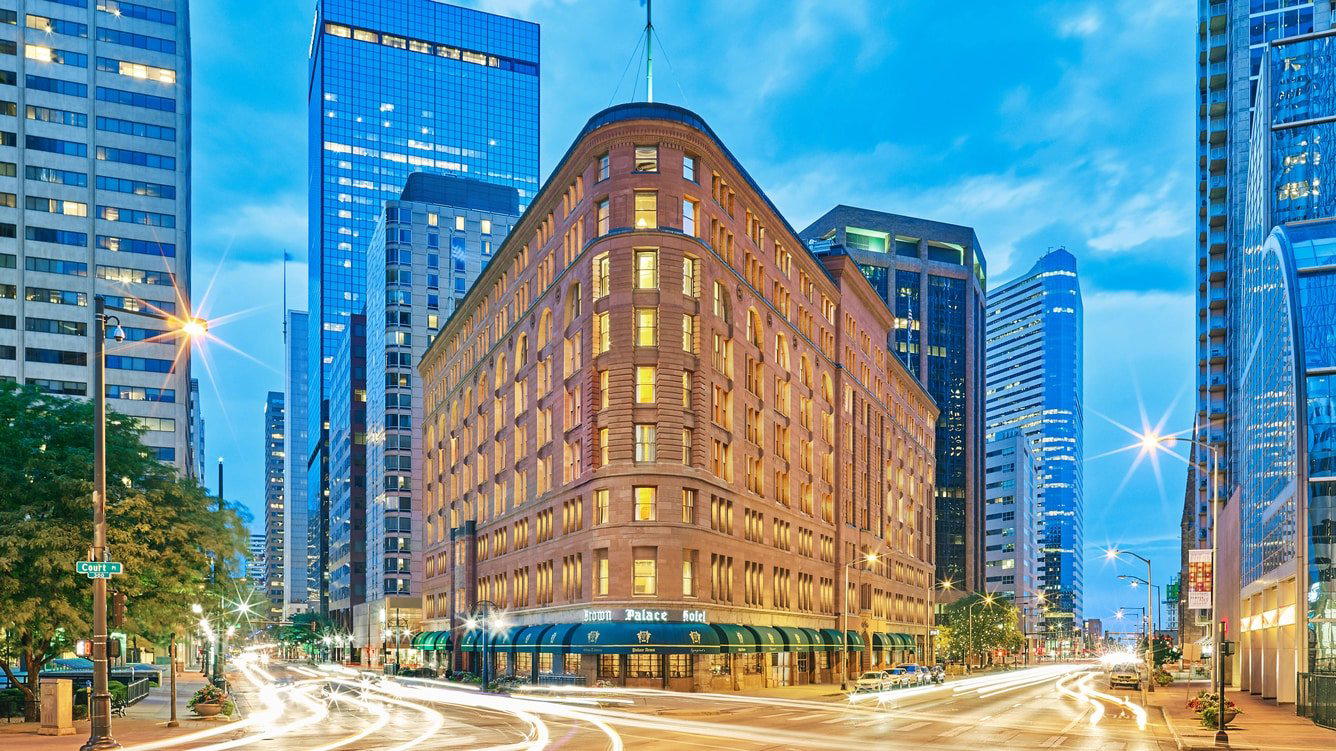

At a Glance
- Elegant
- Classic
- Well Known
- Sophisticated
- Ornate
- Special Occasion
- Celebration
- Brunch
- Live Music
- Historic Building
- Hotel Restaurant
- Craft Cocktails
Current opening hours
- Monday
- 12–4 PM
- Tuesday
- 12–7:30 PM
- Wednesday
- 12–7:30 PM
- Thursday
- 12–7:30 PM
- Friday
- 12–7:30 PM
- Saturday
- 11 AM–7:30 PM
- Sunday
- 11 AM–4:30 PM
Hours can change for holidays and private events. Last verified .
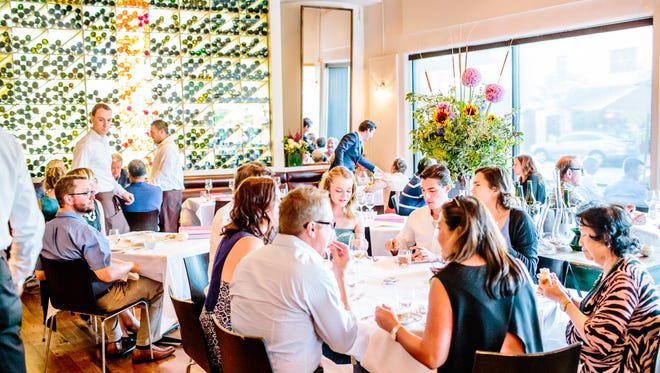
Refined and elegant with soaring ceilings, stained-glass canopy, crystal chandeliers, and melodic piano or harp music creating a timeless, sophisticated atmosphere.