The Good Earth
Our verdict
In a stretch of London where European fine dining dominates, it occupies a distinct position as a long-established address for considered Chinese cooking.

Pearl is the En Primeur Club membership app, where members save venues, book tables and use the concierge.

The menu
What to order
- Aromatic Duck
- Crispy Duck
- Sweet and Sour Chicken
If You Eat Chinese Food Once in Chelsea, Eat It Here
London's fine dining map tilts heavily European. The addresses that command long-term loyalty in SW3 tend to serve French technique, modern British produce, or some considered hybrid of the two. Peers like CORE by Clare Smyth, The Ledbury, and Dinner by Heston Blumenthal represent the dominant mode: rigorous European frameworks with strong local identity. In a category where London's top-end options are concentrated in the West End and Mayfair, its SW3 postcode is a point of distinction all by itself.
The Room Before the Menu
Chinese restaurants in London occupy a wide range of registers, from the roast-meat canteens of Gerrard Street to the high-ceilinged contemporary rooms in Mayfair that price against European fine dining. This is not the neon-lit, high-turnover format that defines much of London's Chinese casual dining. It reads more like a neighbourhood European restaurant that happens to serve Chinese food, and that particular tone has historically worked well in Chelsea, where the clientele expects a certain quietude alongside quality.
That positioning matters when considering how the meal unfolds. Tablecloths, attentive service, and a room calibrated for conversation rather than spectacle are not incidental features, they shape the pace of eating, and pace is central to how a multi-course Chinese meal lands. When courses have space to breathe, the sequencing of flavours becomes more legible: the transition from lighter, brighter preparations to deeper, more savoury dishes reads more clearly. In higher-volume settings, that arc gets compressed or lost entirely.
The Arc of the Meal: How Chinese Sequencing Works at This Level
Chinese tasting progression follows a different logic from the French-derived European model that underpins most of London's premium dining. There is no fixed amuse-bouche-to-mignardise arc. Instead, the structure tends to move between textural and temperature contrasts, with dishes arriving in a sequence designed to prevent any single flavour register from dominating. Cold starters open proceedings without the richness that would dull the palate early. Soups and lighter braises follow, building depth before meatier preparations arrive. The meal typically resolves through carbohydrate, fried rice or noodles, and finishes with cleaner, lighter desserts that reset rather than amplify.
This sequencing discipline is where a restaurant at The Good Earth's level earns its position. Anyone can serve the individual dishes. The craft lies in proportion and order: how much of the early course sets up the middle, whether the kitchen paces the table correctly, and whether the progression builds without becoming monotonous. At premium addresses like Atomix in New York City, where Korean tasting menus apply similarly rigorous sequencing, the arc of the meal is the primary argument for the price point. The same principle applies here, within a less formal structure.
London's Cantonese-adjacent fine dining has always prized technique in specific preparations: the accuracy of a wok hei finish, the collagen-to-gelatin balance in a braised dish, the precision of dim sum pleating. These are not decorative choices. They are calibration points that indicate how seriously a kitchen takes its craft. In Chelsea's price bracket, the expectation is that these calibration points are consistently met, not occasionally, but across the full run of a dinner. That consistency, over years and for a loyal local clientele, is what converts a restaurant from a good option into a reference point.
Chelsea's Chinese Dining Position in London's Wider Map
Most of London's serious Chinese dining concentrates in a band from Chinatown through Fitzrovia and into Mayfair. Addresses like Hakkasan and Yauatcha set the template for high-specification Chinese dining in London from the early 2000s onward, and Mayfair has since absorbed several more in the premium bracket. Chelsea operates differently. The neighbourhood's restaurants serve a residential clientele first and a destination-seeking one second, and the Chinese addresses that survive long-term in that environment do so by earning the trust of repeat diners rather than by generating first-visit buzz.
That dynamic creates a different kind of dining culture than you find in Mayfair or the West End. A Chelsea regular returning to The Good Earth is making a considered choice to come back, not a first-time tourist making a single decision. That asymmetry matters: it demands reliability above spectacle, and it rewards depth of menu over novelty. For visitors, this context is worth understanding before you book. You are not entering a destination restaurant that performs for newcomers. You are stepping into a room with its own established rhythm, and the better you understand the menu structure, the more you will get from it.
| Venue | Cuisine | Neighbourhood | Price Tier | Format |
|---|---|---|---|---|
| The Good Earth | Chinese | Chelsea (SW3) | Premium | A la carte / set |
| CORE by Clare Smyth | Modern British | Notting Hill | ££££ | Tasting menu |
| Restaurant Gordon Ramsay | Contemporary European, French | Chelsea | ££££ | Tasting menu |
| Sketch, The Lecture Room and Library | Modern French | Mayfair | ££££ | Tasting menu |
| Dinner by Heston Blumenthal | Modern British | Knightsbridge | ££££ | A la carte |
In the wider British context, London's premium Chinese dining occupies a different category from the tasting-menu-led addresses at The Fat Duck in Bray, L'Enclume in Cartmel, or Moor Hall in Aughton. Those are destination-led, structured around a single chef's progressive vision. The Good Earth operates in a more classical mode: a fixed address with a settled menu, serving a neighbourhood over decades rather than engineering a one-night theatrical experience. For visitors who want to anchor their London itinerary in European fine dining, the full London restaurants guide covers the complete field. For context on Knightsbridge and Chelsea specifically, consider also London hotels, London bars, and the London experiences guide for broader neighbourhood planning.
For those building a broader UK itinerary, country-house addresses like Gidleigh Park in Chagford, Le Manoir aux Quat' Saisons in Great Milton, and Hand and Flowers in Marlow represent a parallel tier of serious cooking outside London, and frame the capital's dining identity by contrast. The London wineries guide is also useful for pre- or post-dinner planning in the premium bracket. Book in advance, particularly for weekend evenings, when Chelsea's residential dining trade fills the room consistently. Arriving with a considered approach to the menu, allowing the kitchen to sequence the meal rather than ordering everything at once, will produce a better result than treating it as an order-as-you-go canteen.
Frequently asked questions
What do regulars order at The Good Earth?
What is the ideal way to book The Good Earth?
What has The Good Earth built its reputation on?
Is The Good Earth in Chelsea comparable to London's Mayfair Chinese dining scene?
Same-City Peers
Comparable venues nearby, for context on price, style, and recognition.
| Venue | Cuisine | Price | Notes |
|---|---|---|---|
| The Good EarthThis venue (the venue you are viewing) | Classic Chinese | $50–100 | Not listed |
| House of Ming | Sichuan & Cantonese Chinese with Modern London Twist | $50–100 | Victoria |
| Dalongyi hot pot | Authentic Sichuan Hot Pot | $30–50 | Fitzrovia |
| Three Gorges | Modern Cantonese & Hubei | $50–100 | Fitzrovia |
| Hutong London | Modern Northern Chinese Fine Dining | $50–100 | Borough |
| Phoenix Palace | Authentic Cantonese Dim Sum | $50–100 | Lisson Grove |
Continue exploring
More in London
Restaurants in London
All restaurants in London →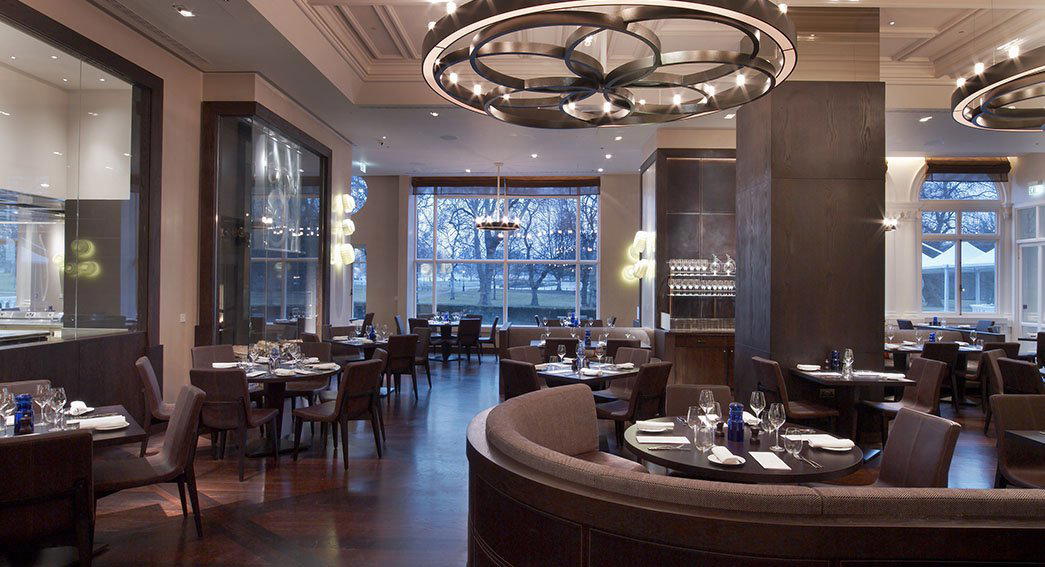
Bars in London
All bars in London →
Hotels in London
All hotels in London →

Details
- Lively
- Classic
- Family
- Group Dining
- Celebration
- Standalone
- A La Carte
- Vegetarian Friendly
Current opening hours
- Monday
- 12–10:30 PM
- Tuesday
- 12–10:30 PM
- Wednesday
- 12–10:30 PM
- Thursday
- 12–10:30 PM
- Friday
- 12–10:30 PM
- Saturday
- 12–10:30 PM
- Sunday
- 12:30–10 PM
Hours can change for holidays and private events. Hours as of .
Lively atmosphere with efficient service, comfortable seating, and a welcoming feel suitable for families and groups.