See No Evil Slice
In a city where the gap between a $400 omakase counter and a $5 slice has rarely felt wider, See No Evil Slice at 11 Waverly Place operates in the no-reservation, cash-and-carry tier that defines New York's street-level pizza culture. The format is direct: large 20-inch thin-crust slices, sides, and appetizers, sold from a corner address where Greenwich Village meets SoHo's northern edge.
 Discover on Pearl
Pearl is the En Primeur Club membership app — saves, bookings, and concierge access live there. Same editors, same standards.
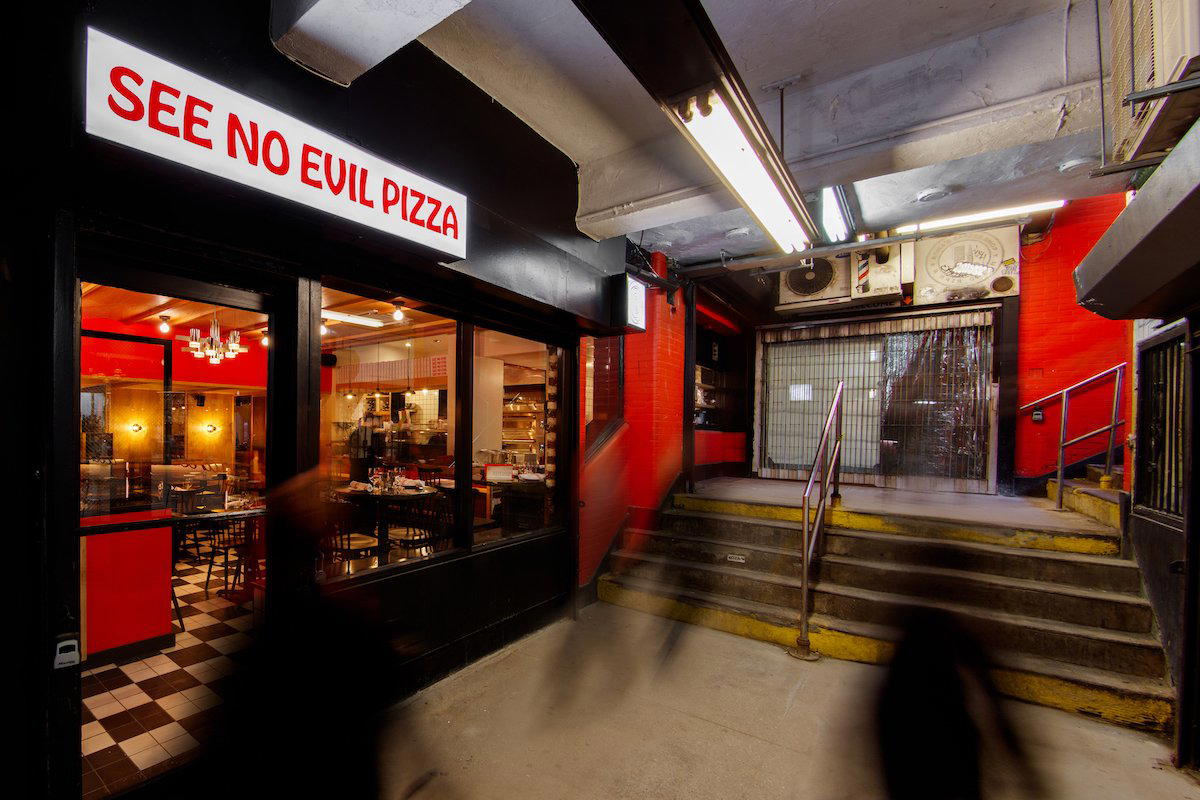
Where the Slice Fits in New York's Pizza Continuum
New York's pizza scene has always operated on two parallel tracks. At one end sit destination pizzerias drawing reservations, national press coverage, and arguments about wood-fire technique. At the other end, the by-the-slice counter persists as the city's most democratic dining format, requiring nothing from the customer except presence and a few dollars. See No Evil Slice, positioned at the intersection of 11 Waverly Place and Mercer Street, occupies that second track.
That address matters more than it might initially appear. Greenwich Village has historically anchored some of the city's most-discussed pizza addresses, and the pocket between Waverly Place and West 4th has generated foot traffic capable of sustaining counter-service formats across decades. A slice shop here competes not just on product but on location logic: proximity to students, to commuters, to tourists navigating between the High Line and the West Village, and to a neighbourhood that still treats the sidewalk as an extension of the dining room.
The Format and What It Implies
The 20-inch thin-crust slice is a specific commitment. In New York's ongoing taxonomy of pizza styles, thin-crust by-the-slice sits in a distinct tier from the coal-fired Neapolitan pies at the city's destination restaurants and the grandma-style square formats that have gained traction over the past decade. The large format (20 inches is at the upper register for a single slice) signals portion logic: this is food designed for eating while walking, for a quick lunch between classes, or for the 2am decision that New York uniquely makes viable.
The menu extends to sides and appetizers, which pushes See No Evil Slice slightly past the pure slice-and-leave model. That range gives it a longer visit profile than a one-item counter, suggesting customers willing to occupy the space for a full informal meal rather than a 90-second transaction. In that respect, it shares structural DNA with the counter-service casual tier that has proven durable across New York neighbourhoods regardless of fine dining cycles. While Le Bernardin, Masa, and Per Se represent the city's tasting-menu apex, the slice counter represents something the fine dining tier cannot: genuine spontaneity.
The Neighbourhood Frame
Waverly Place is one of those New York addresses that operates at multiple registers simultaneously. By day it channels the academic energy of NYU and the professional density of the blocks north toward Union Square. By evening it draws restaurant-goers heading into the Village's side streets, and later still it absorbs the Washington Square crowd. A slice counter at this address is therefore not a neighbourhood specialist in the way that a single-cuisine restaurant might define a block in Flushing or Arthur Avenue. It is a format that responds to volume, variability, and the need for something immediate.
That context matters when comparing the city's pizza tiers. The destination Neapolitan counter in the West Village, the Sicilian-focused address in Midtown, and the by-the-slice storefront in Greenwich Village are not competing for the same customer at the same moment. They occupy different decision contexts entirely. See No Evil Slice sits in the spontaneous-decision tier, where the competitive set is defined by proximity and speed rather than by reputation or reservation access.
Pizza as a New York Cultural Constant
It is worth placing the by-the-slice format in its broader American context. Cities like Chicago, Los Angeles, and San Francisco each have their own relationship to the casual pizza format. Alinea in Chicago and Lazy Bear in San Francisco represent the formal dining pole of those cities, but neither city has replicated New York's specific culture of the sidewalk slice. That culture is tied to the density of the street grid, the absence of widespread car culture in Manhattan, and decades of immigration history that produced a particular dough-and-sauce tradition. The 20-inch thin slice is not simply large pizza; it is a format shaped by the physics of a city where eating while walking is a practical necessity rather than a novelty.
Restaurants at the French Laundry end of the spectrum, or the Single Thread Farm model in Healdsburg, represent the planned-experience pole of American dining. The slice counter represents the opposite organisational principle: no booking, and a price point that makes the decision essentially frictionless. Both poles are valid; they serve entirely different functions in the lives of the people who use them.
Planning Your Visit
Know Before You Go
- Address: 11 Waverly Place at Mercer Street, Greenwich Village / NoHo border, New York City
- Format: Counter-service, no reservations, walk-in only
- Menu scope: Large 20-inch thin-crust slices, sides, and appetizers
- Booking: No reservation required or available
- Leading approach: Walk-in; peak periods align with NYU class schedules and Washington Square Park foot traffic
- Nearby: Washington Square Park (two blocks), NYU campus, lower Fifth Avenue
For those building a wider New York itinerary, Saga and César represent the mid-to-upper tier of the city's contemporary dining scene, while Providence in Los Angeles, Emeril's in New Orleans, and Alain Ducasse at Louis XV in Monte Carlo offer useful reference points for how other cities and countries handle the formal end of the dining spectrum. The contrast sharpens what makes the New York slice counter its own distinct institution. For the complete picture of what's available across categories, see our New York City wineries guide and the Otto e Mezzo Bombana review for a global-city comparison on how dining formats diversify at scale.
The Quick Read
Comparable venues nearby, for context on price, style, and recognition.
| Venue | Cuisine | Price | Notes |
|---|---|---|---|
| See No Evil SliceThis venue — the venue you are viewing | $$$ | ||
| Alaluna | West Village, New Italian Seafood | $$$ | |
| Bond 45 | $$$ | Midtown-Times Square, Italian Kitchen & Bar | |
| Bar Rocco | $$$ | Midtown-Times Square, Italian American Brasserie | |
| Serafina - 777 Third Ave | $$$ | East Midtown-Turtle Bay, Classic Italian Trattoria | |
| Marcellino | $$$ | SoHo-Little Italy-Hudson Square, Authentic Italian Wood-Fired Pizza and Pasta |
Continue exploring
More in New York City
Restaurants in New York City
Browse all →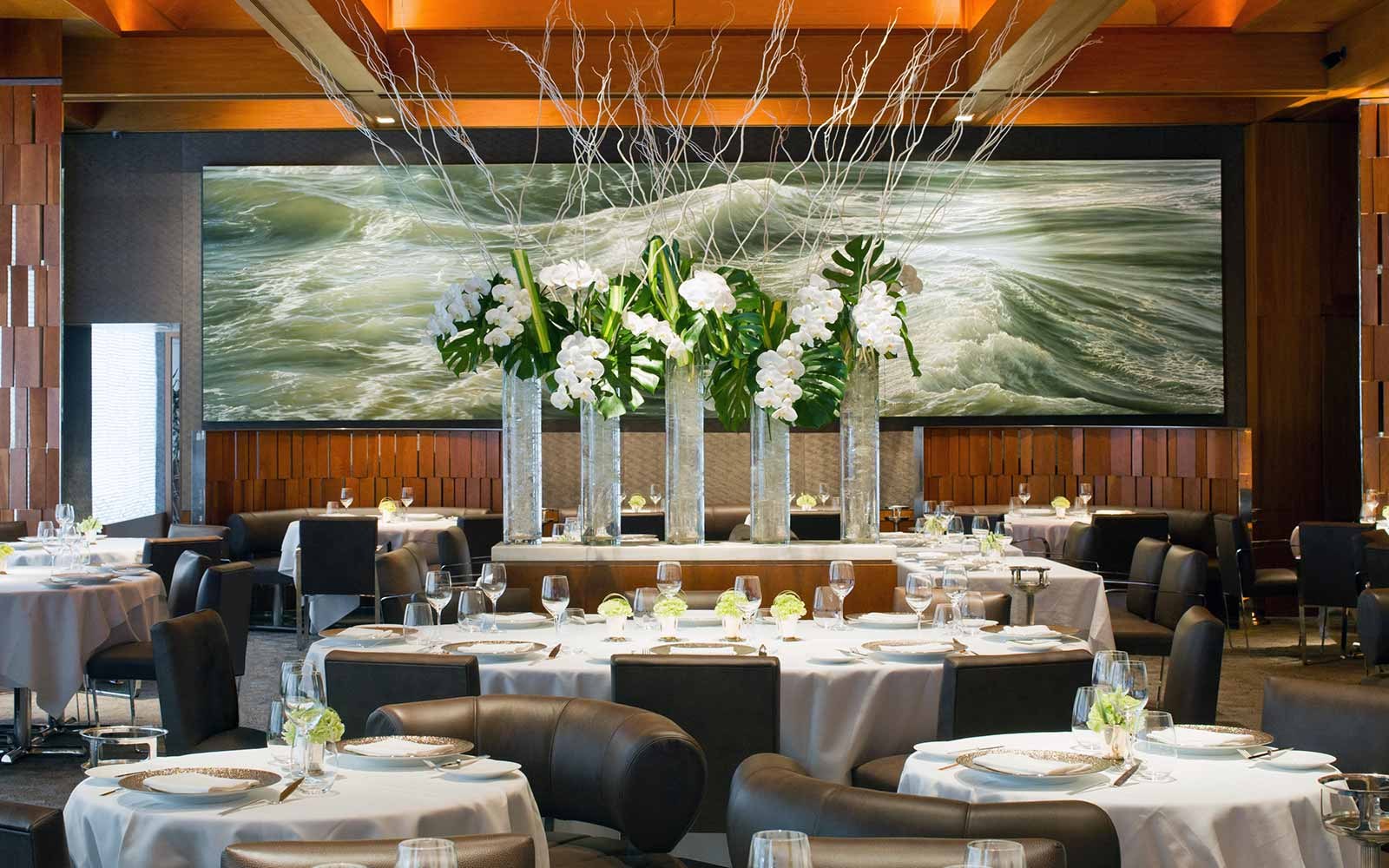
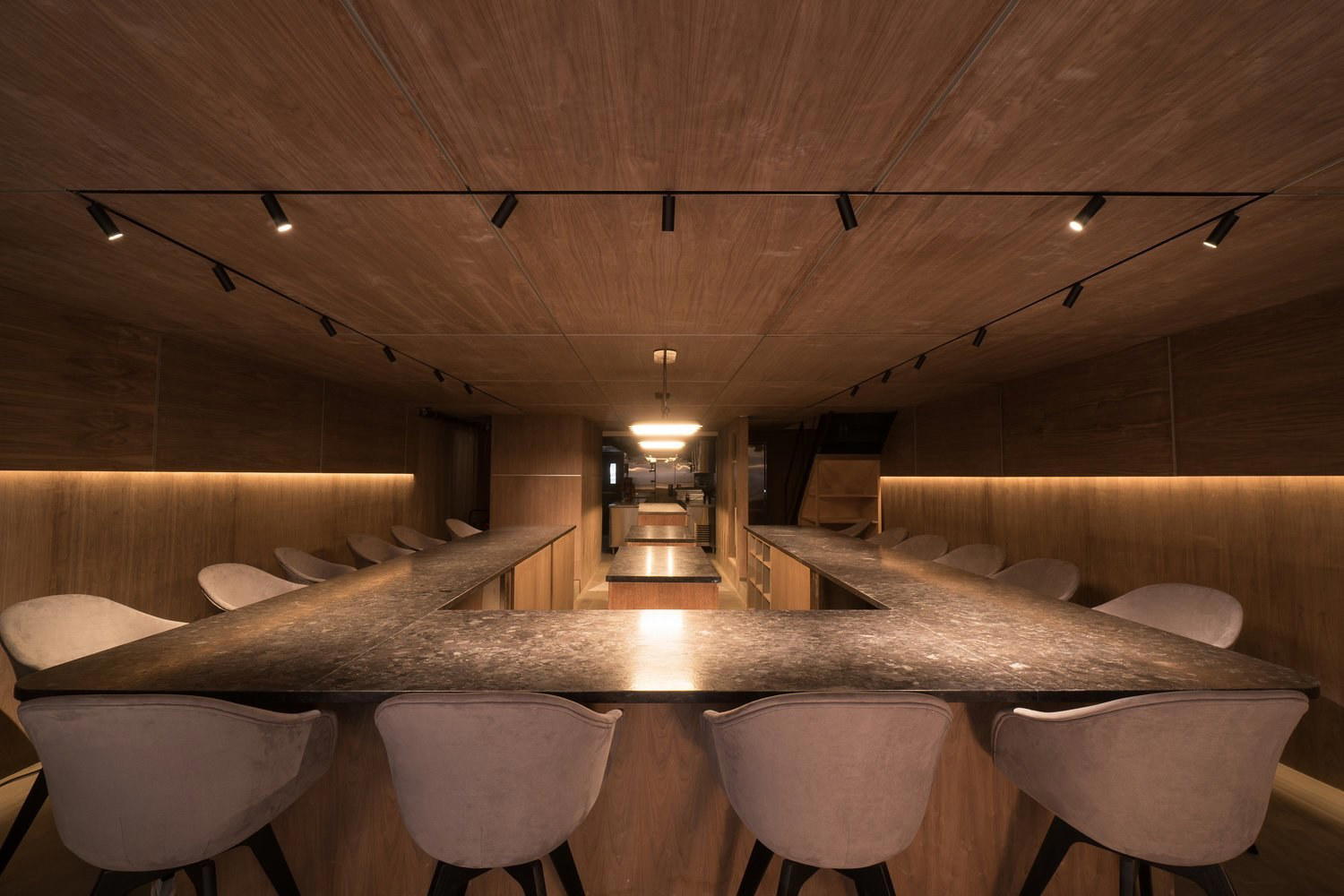
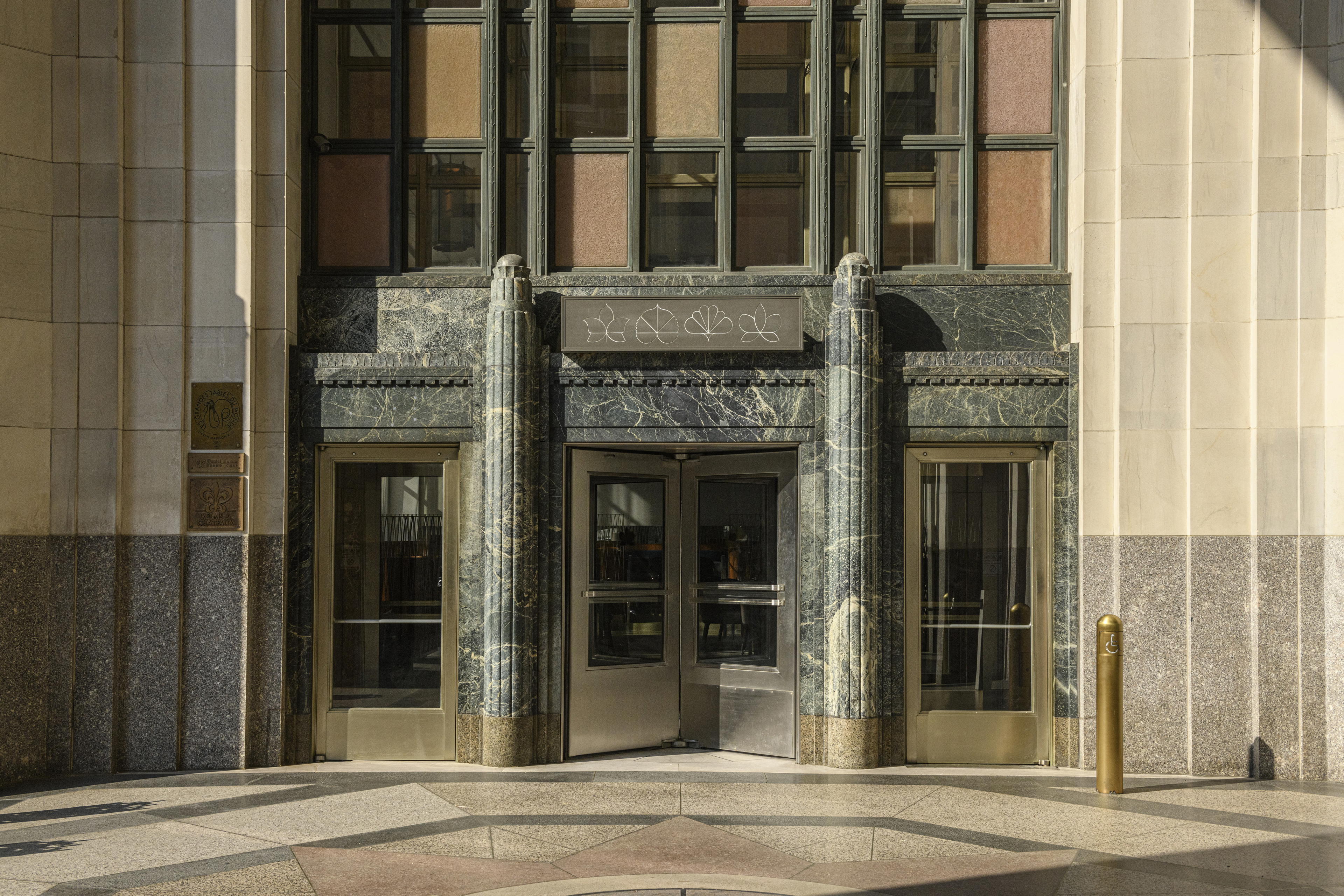
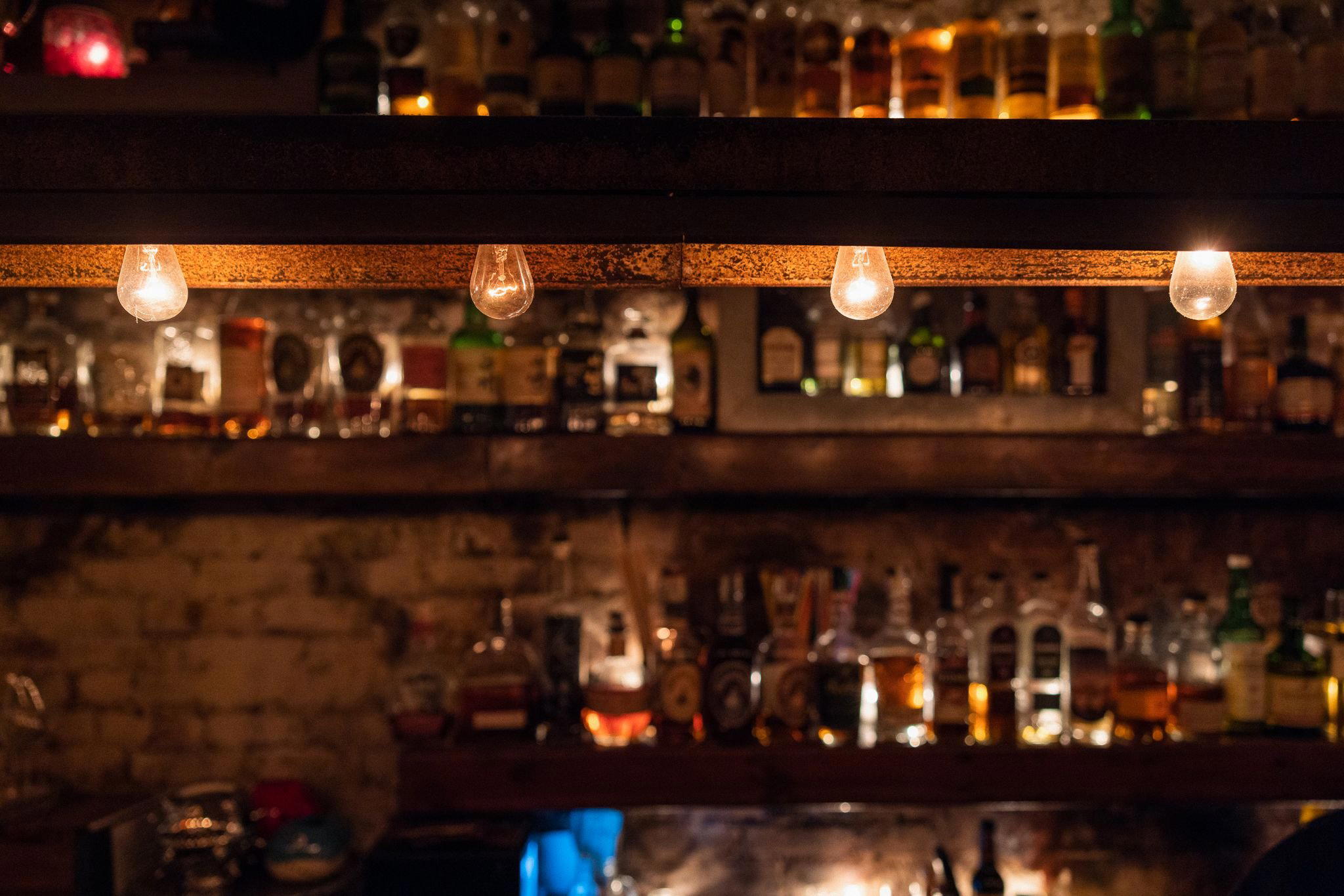
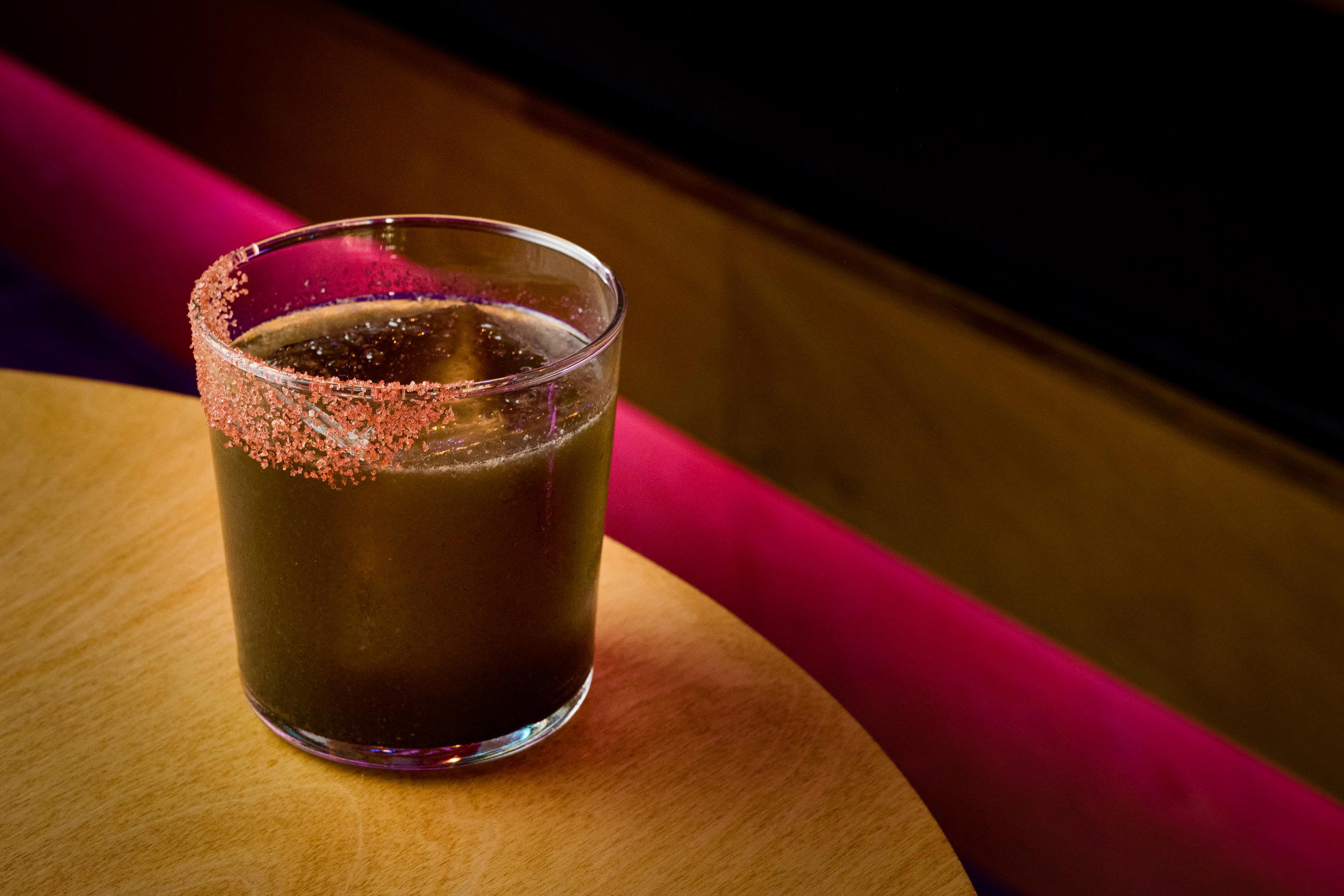
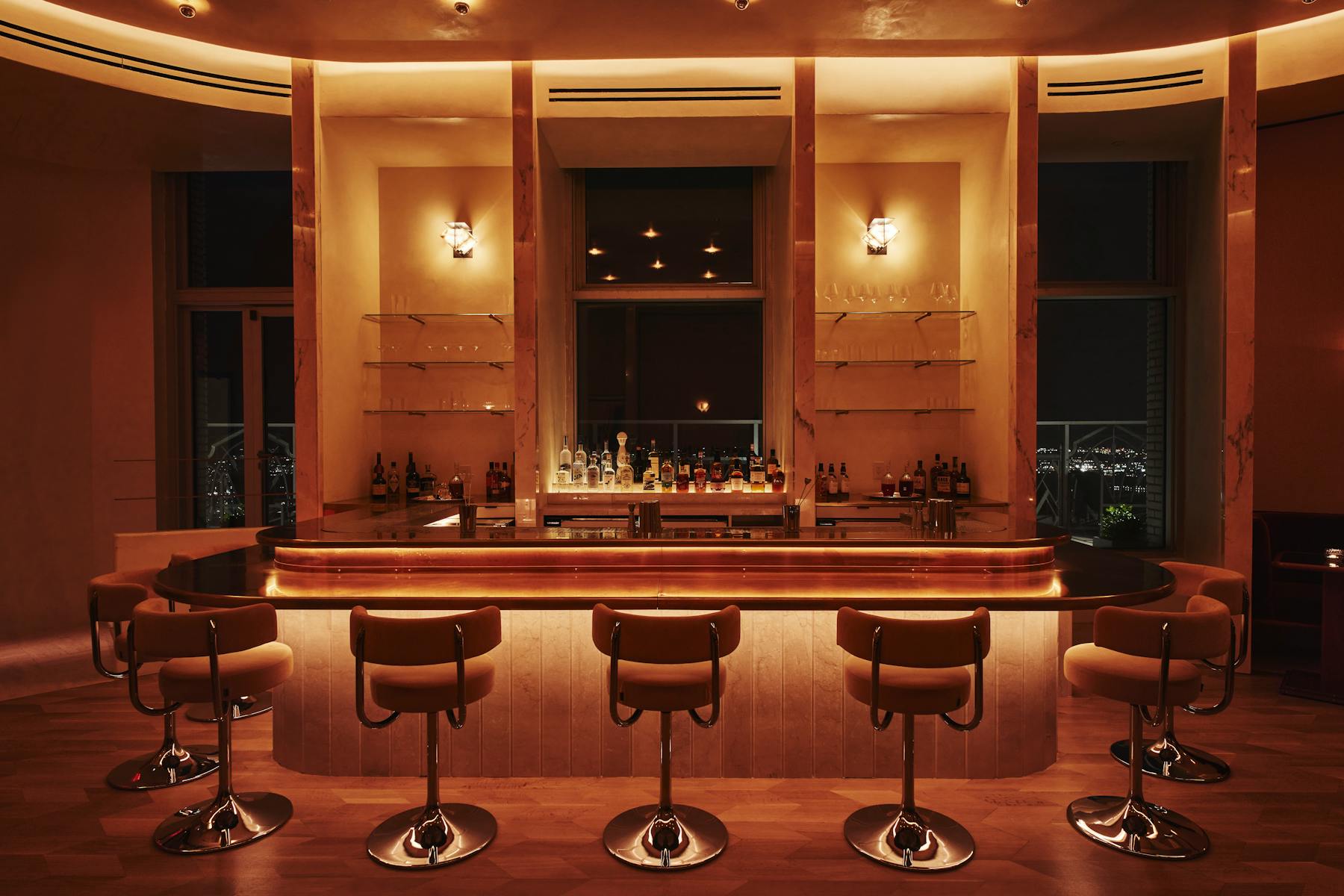
Bars in New York City
Browse all →
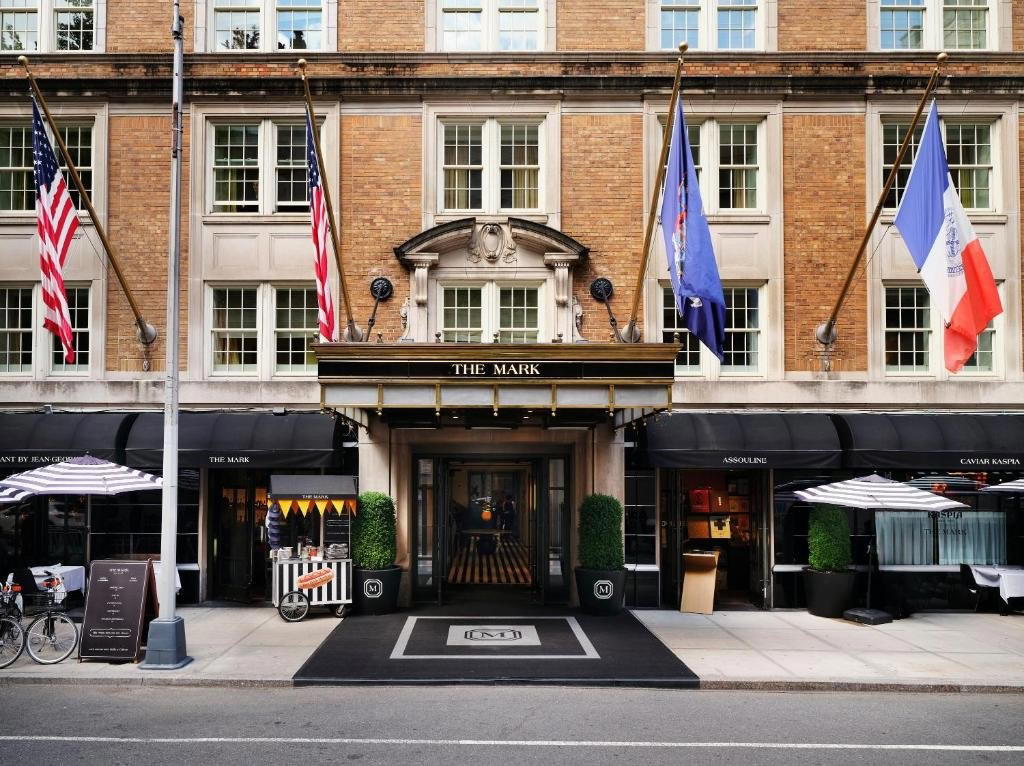
Hotels in New York City
Browse all →

Wineries in New York City
Browse all →
At a Glance
- Hidden Gem
- Trendy
- Energetic
- Industrial
- Casual Hangout
- Group Dining
- After Work
- Open Kitchen
- Standalone
- Craft Cocktails
- Beer Program
- Local Sourcing
Underground subway station setting with low ceilings, open kitchen views, neon accents inspired by 1970s-80s NYC punk scene, cozy yet energetic with packed tables and industrial charm.