
Teppanyaki Iwakura places the teppan counter inside Kagurazaka’s quieter dining register, where Japanese cuisine, steak, seafood, sake and wine sit closer to kappo restraint than hotel-grill theatre. Its Tabelog 100 Japanese cuisine Tokyo selection in 2025 and 2020 Bronze recognition put it in a serious local bracket, while the 22-seat format keeps the experience compact.
Pearl is the En Primeur Club membership app — saves, bookings, and concierge access live there. Same editors, same standards.
- Address
- Japan, 〒162-0825 Tokyo, Shinjuku City, Iwatocho, 1 3F
- Phone
- +81 3-5946-8798
- Website
- iwakura-teppanyaki.com
 Saves & bookings on Pearl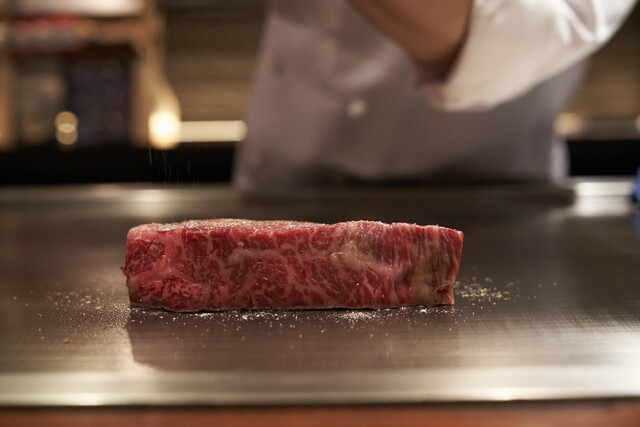
In Kagurazaka, the approach to dinner often feels edited before the first plate arrives: narrow streets, low-rise buildings, small signs, and a neighbourhood rhythm that belongs more to old Tokyo than to the glass-and-steel dining corridors of Marunouchi or Roppongi. Teppanyaki, in this setting, changes character. The format is not just beef on iron; it becomes a conversation between heat, timing, Japanese ingredients, and the kind of controlled intimacy that Tokyo does particularly well.
Teppanyaki Iwakura sits in that quieter register. Its category line reads Japanese cuisine, steak, and teppanyaki, which matters because Tokyo’s stronger teppan rooms increasingly operate less like international steak houses and more like counter-led Japanese restaurants with a grill at the centre. The 2025 Tabelog 100 Japanese cuisine Tokyo selection places it within a competitive local field defined by specialist craft rather than spectacle, and the earlier Tabelog Award 2020 Bronze recognition reinforces that this is not a newcomer riding a trend.
Kagurazaka gives teppanyaki a more Japanese grammar
Kagurazaka has long carried a different dining accent from Ginza or Azabu. Its old geisha-district associations, French expatriate presence, and compact side streets have produced a restaurant culture comfortable with small rooms and hybrid cues. That context suits teppanyaki when the kitchen treats the iron plate as a precision tool rather than a stage prop. The point is not pyrotechnics; it is temperature control, pacing, and the sequencing of seafood, meat, vegetables, rice, and drink within a Japanese meal structure.
This is where the restaurant’s fish emphasis becomes useful evidence. In Tokyo, serious teppanyaki is rarely only about wagyu. Seafood gives the format range, and it also pulls the meal closer to washoku logic: seasonality, texture, and restraint before richness. The drinks list, covering sake, shochu, wine, and cocktails, also signals a room built for different dining modes, from a sake-led Japanese progression to a wine pairing around grilled beef and seafood.
Compared with nearby Tokyo references, the position is distinct. Washoku Ebihara and Ebihara point toward more conventional Japanese dining in the same broader city conversation, while Hatou represents sushi’s counter discipline. Yoshokudo Budo Kagurazaka Kagurazaka works in a lower dinner band, and Indian Omoi no Ki occupies a different cuisine category altogether. Teppanyaki Iwakura is better understood as part of Kagurazaka’s compact, reservation-minded dinner culture: a small-format room where the counter, the table, and the semi-private room each change the social pitch of the meal.
The counter matters, but the room is not only for counter diners
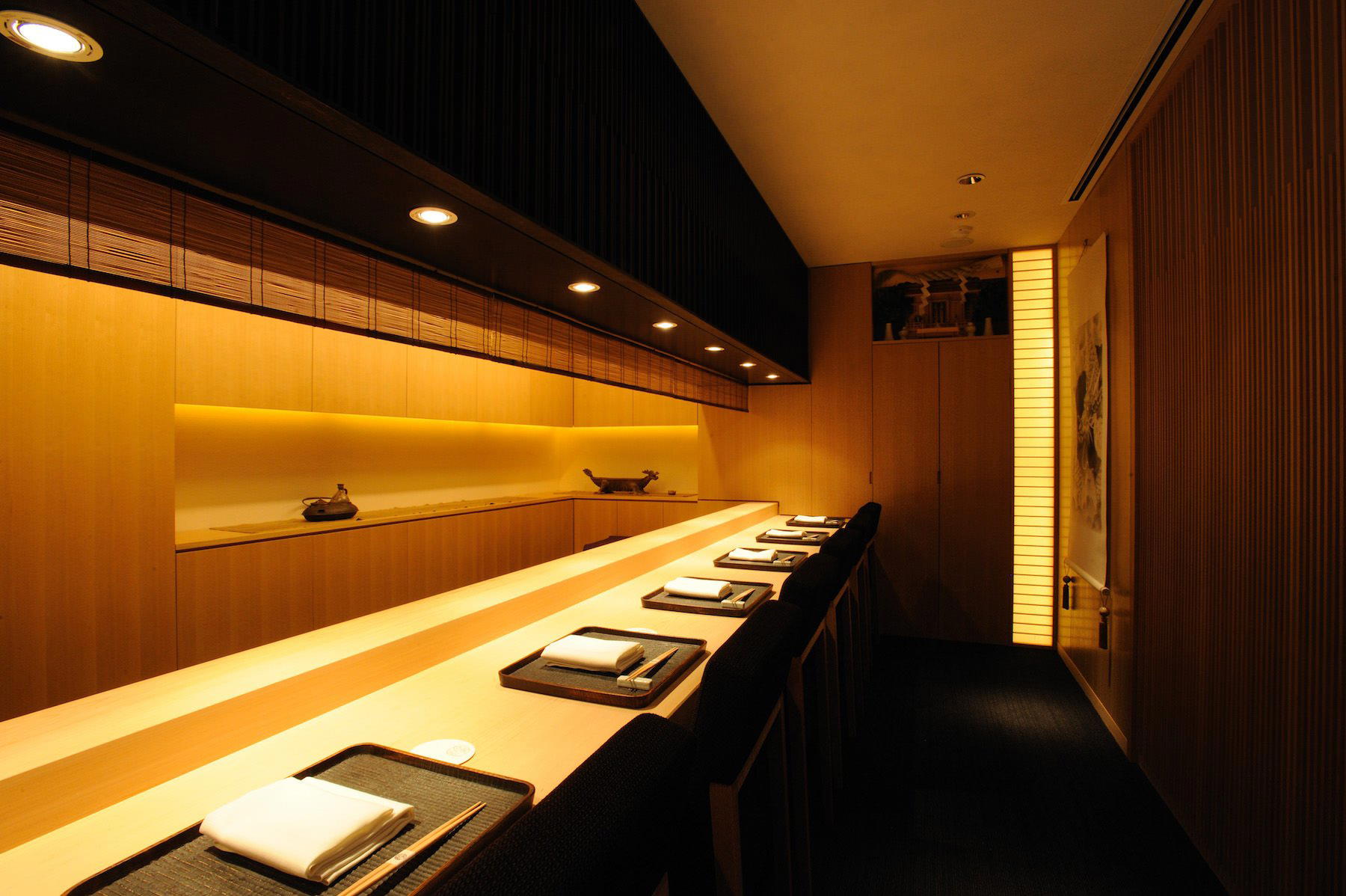
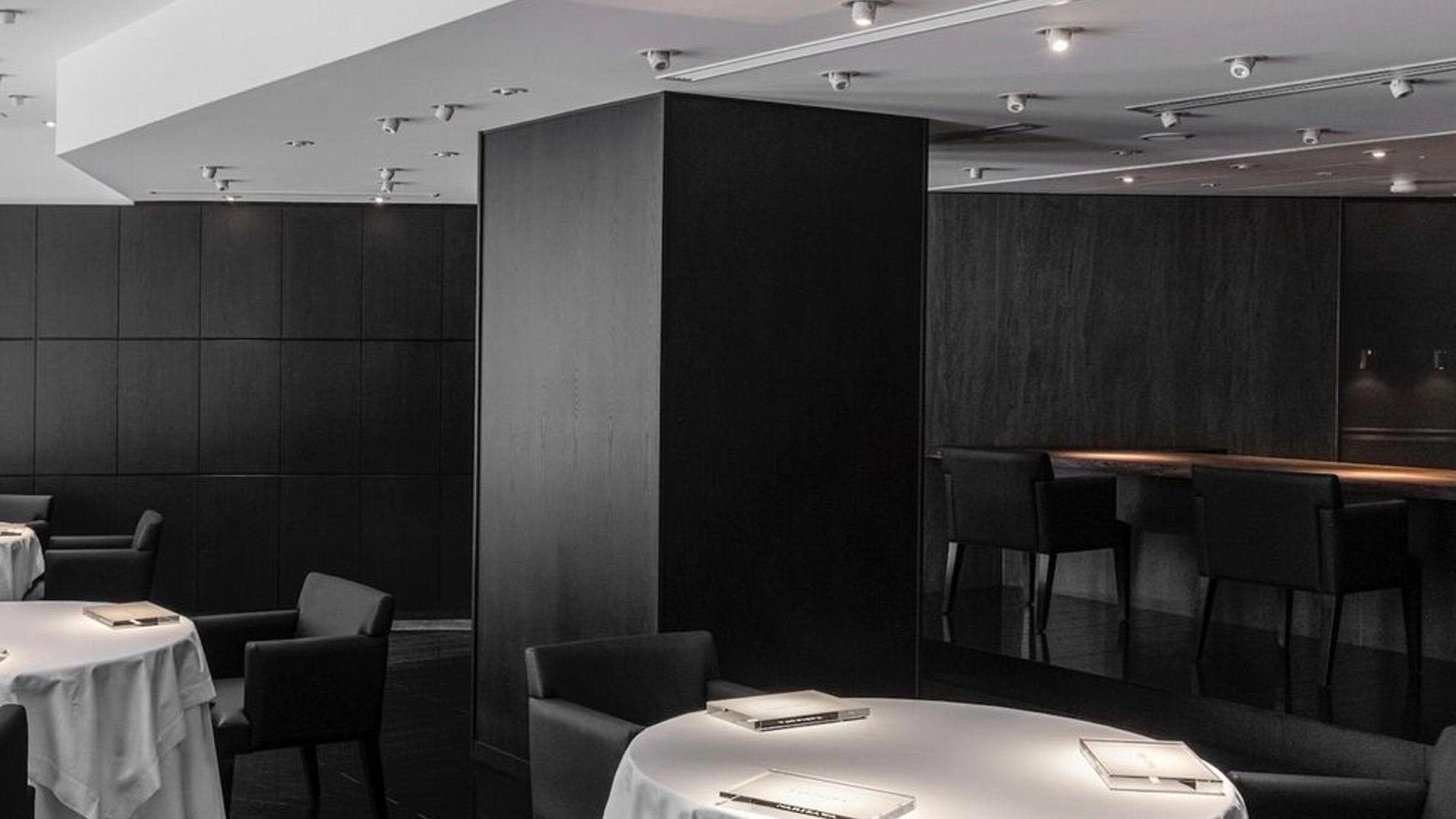
Tokyo’s counter culture often rewards diners who want to watch technique closely, yet not every occasion wants the full concentration of six seats facing the chef’s station. Here, the room’s 22-seat structure gives the format flexibility: six counter seats, eight table seats, and eight semi-private seats. That composition is meaningful in a city where many serious restaurants force a binary choice between hushed counter ritual and larger private dining. Teppanyaki can handle both, because the cooking format offers enough theatre for the counter while the meal structure travels well to tables.
The semi-private configuration also explains why the restaurant reads differently from Ginza’s expense-account teppan rooms. Kagurazaka meals often carry a local social function: family dinners, small celebrations, and business meals that prefer discretion over display. School-age children are welcomed, while infants and preschoolers require prior coordination, a useful sign of a room with adult pacing but not an absolute ban on family dining. The no-smoking interior and request to avoid excessive perfume fit the broader Japanese dining etiquette around shared air, heat, and aroma.
The price band sits in the JPY 15,000 to JPY 19,999 dinner range, with a review-based spending range listed higher. In Tokyo terms, that places it above casual teppan and below the extreme luxury counters where beef provenance and wine cellars can push the bill sharply upward. The 10 percent service charge should be read as part of the final calculation, not a footnote. Credit cards are accepted, while electronic money and QR payments are not, which remains a practical distinction for travellers used to phone-first payments.
How to place it within a Tokyo dining itinerary
For travellers building a Tokyo dining week, this is a useful counterpoint to sushi, yakitori, ramen, and kappo because teppanyaki makes technique visible without reducing dinner to performance. It also sits well in a Kagurazaka evening, where the neighbourhood rewards slower pacing before and after the meal. Diners comparing areas should treat it as Shinjuku-adjacent rather than Shinjuku-brash; Ushigome-Kagurazaka and Kagurazaka stations bring the area into easy reach, but the mood is smaller, older, and less neon-driven.
The restaurant’s opening in 2016 gives it enough tenure to have moved beyond launch curiosity, and the 2023 and 2025 Tabelog 100 Japanese cuisine Tokyo selections show sustained local recognition. In a market as dense as Tokyo, repeated selection carries weight because it reflects performance inside a deep category rather than a single viral moment. The better editorial read is not “flashy teppanyaki,” but a Japanese-cuisine room using the teppan to connect seafood, steak, sake, wine, and small-room hospitality.
Readers planning broader Tokyo meals can use Our full Tokyo restaurants guide for the city view, then compare nearby or category-adjacent options such as 124. KAGURAZAKA (Yakitori), 12/10 Shinjuku ten, 2D Cafe, 3 Chome no Curry Ya San, and. 鮪と炭火焼き うお炭 秋葉原店. For a wider Japan lens, contrast the beef theme with -Grilled beef Sukiyaki- KAMAKURA TANUKIAN 鎌倉 たぬき庵 in Kamakura, or map casual and specialist formats through.cafe in Osaka.know in Kumamoto, (Shoku) Vietnam in Kawasaki, [Curry Senmon Ten] Maruyama Kyoju. in Sapporo, and [ki:] in Kyoto. City planning can extend beyond restaurants through Our full Tokyo hotels guide, Our full Tokyo bars guide, Our full Tokyo wineries guide, and Our full Tokyo experiences guide; for sake culture outside Japan, Jōdo Saké Bar in Los Angeles and Onigiri Time in Pasadena show how Japanese formats translate abroad.
Where It Fits
Comparable venues at similar price and category levels.
| Venue | Cuisine | Price | Notes |
|---|---|---|---|
| Teppanyaki IwakuraThis venue — the venue you are viewing | Japanese Teppanyaki | $$$ | Not listed |
| Iruka Tokyo Roppongi | Modern Ramen | $$$ | Roppongi |
| Akasaka Totoya Uoshin | Traditional Seasonal Japanese Kaiseki | $$$ | Minato |
| Toranomon Yakitori Kuniyoshi | Yakitori & Chicken Dishes | $$$ | Minato |
| Tenmo | Traditional Edomae Tempura Omakase | $$$ | Chūō |
| Ningyocho Imahan Nihombashi Takashimaya S.C. Restaurant | Traditional Japanese Wagyu Sukiyaki & Shabu-Shabu | $$$ | Chūō |
Recognition history
Dated appearances from independent guides and award organizations, with the underlying list record or original source where available.
Tabelog 100 #40 · No. 40
Tabelog · Tabelog 100 - Japanese cuisine - TOKYO - 2025






At a Glance
- Romantic
- Intimate
- Sophisticated
- Elegant
- Quiet
- Date Night
- Business Dinner
- Celebration
- Special Occasion
- Group Dining
- Chefs Counter
- Open Kitchen
- Standalone
- Extensive Wine List
- Sommelier Led
Current opening hours
- Monday
- 5–11 PM
- Tuesday
- 5–11 PM
- Wednesday
- 5–11 PM
- Thursday
- 5–11 PM
- Friday
- 5–11 PM
- Saturday
- 5–11 PM
- Sunday
- Closed
Hours can change for holidays and private events. Last verified .
An intimate, counter-focused space with an upscale but relaxed mood, suited to date nights and refined dinners.