
Occupying the vaulted wine cellars of a 16th-century palazzo on Pacentro's Piazza Umberto I, Taverna dei Caldora holds consecutive Michelin Bib Gourmand recognition for 2024 and 2025, delivering Abruzzese regional cooking at prices well inside the single-euro bracket. Saffron and truffle appear together in the pasta, an arrangement that signals where this kitchen's ingredient sourcing sits relative to the surrounding hills.
Pearl is the En Primeur Club membership app — saves, bookings, and concierge access live there. Same editors, same standards.
- Address
- Piazza Umberto I°, 67030 Pacentro AQ, Italy
- Phone
- +39 0864 41139
- Website
- facebook.com
- Directions
- Get directions
 Saves & bookings on Pearl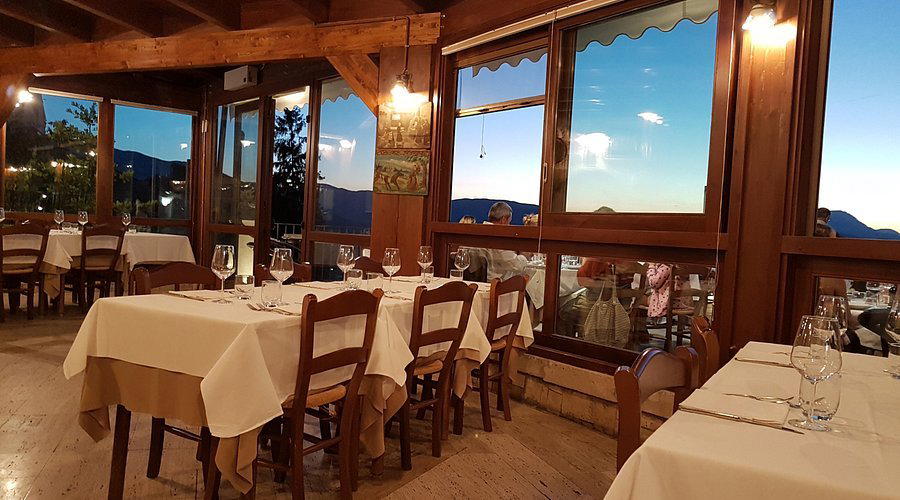
Stone Cellars and the Logic of a Mountain Kitchen
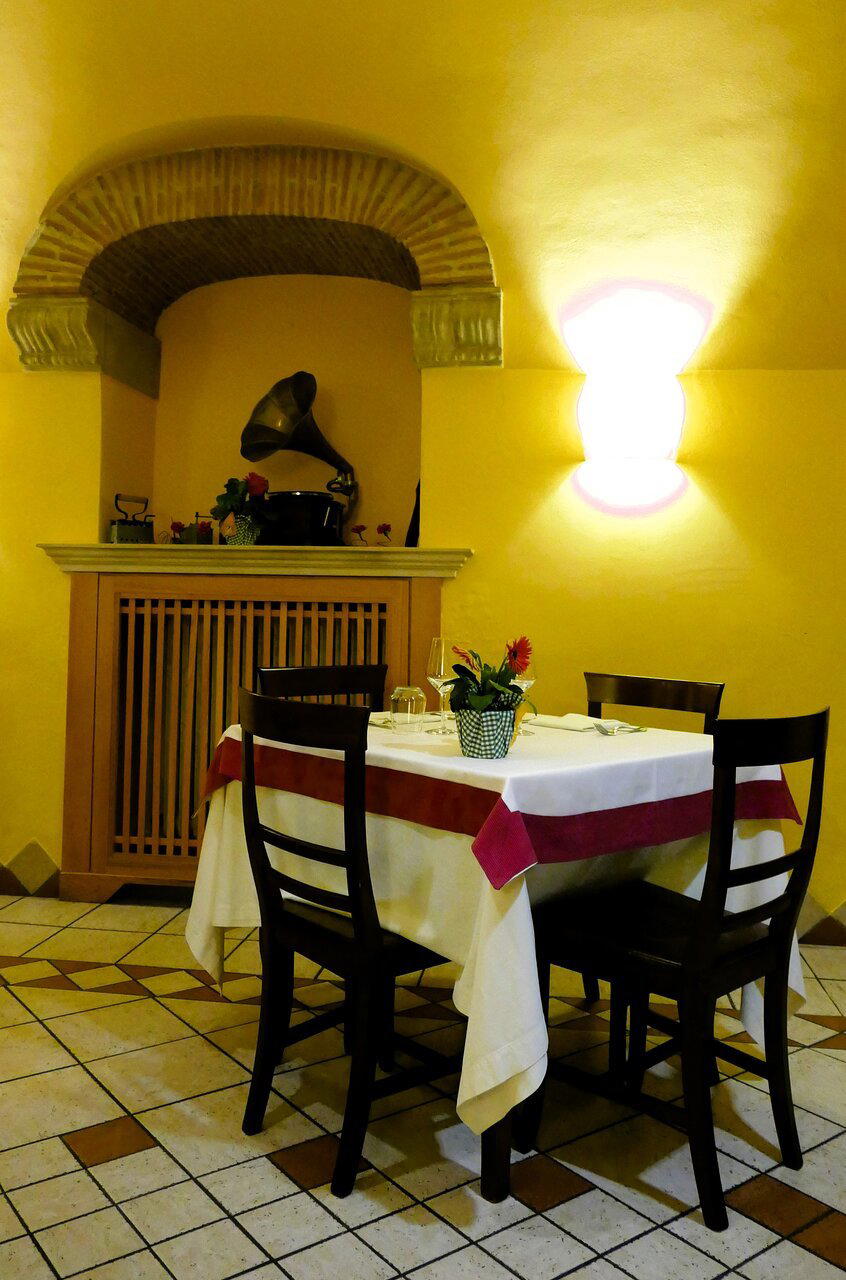
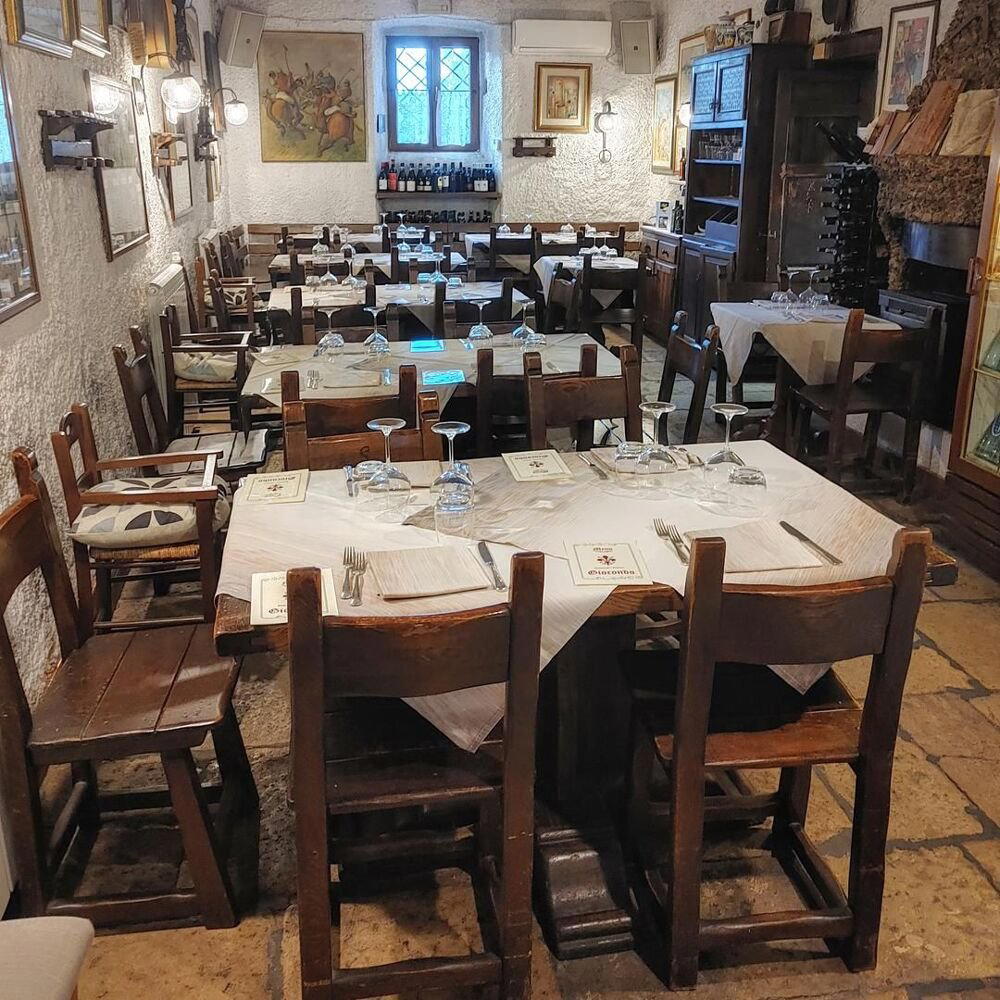
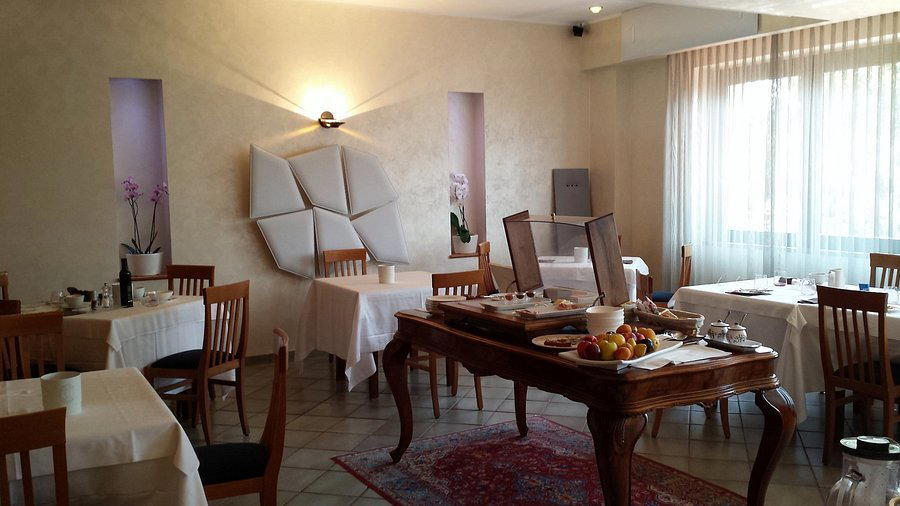
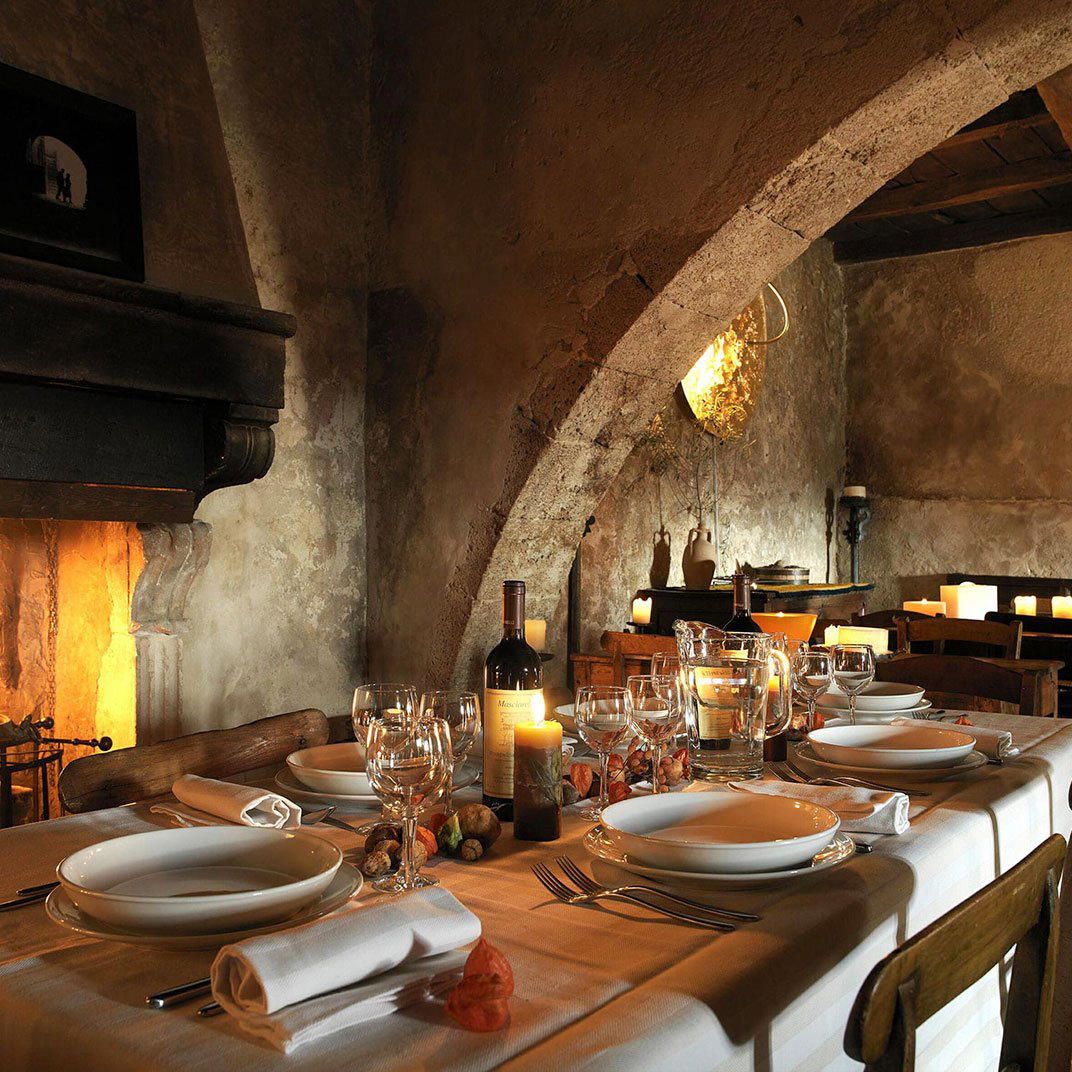
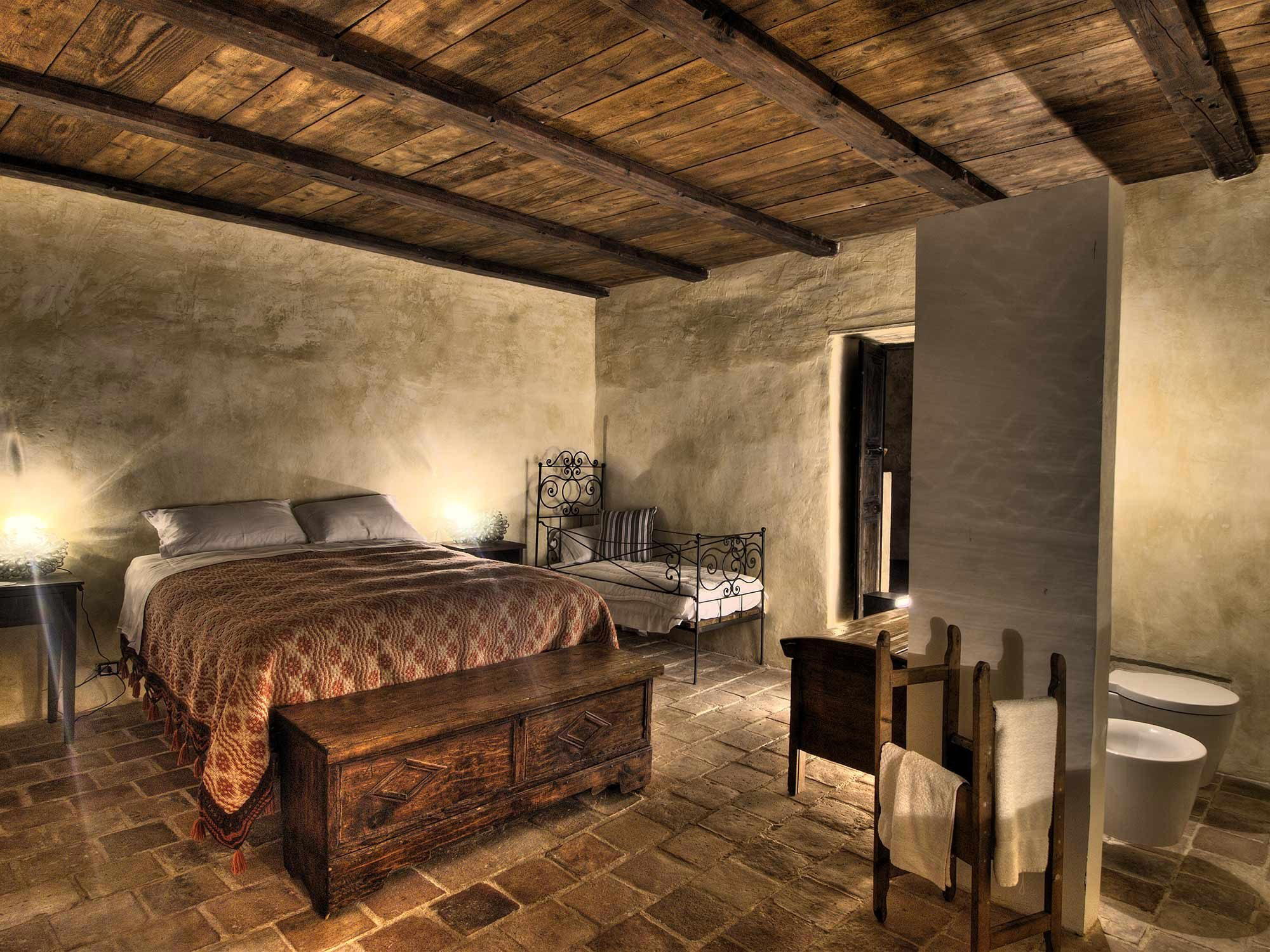
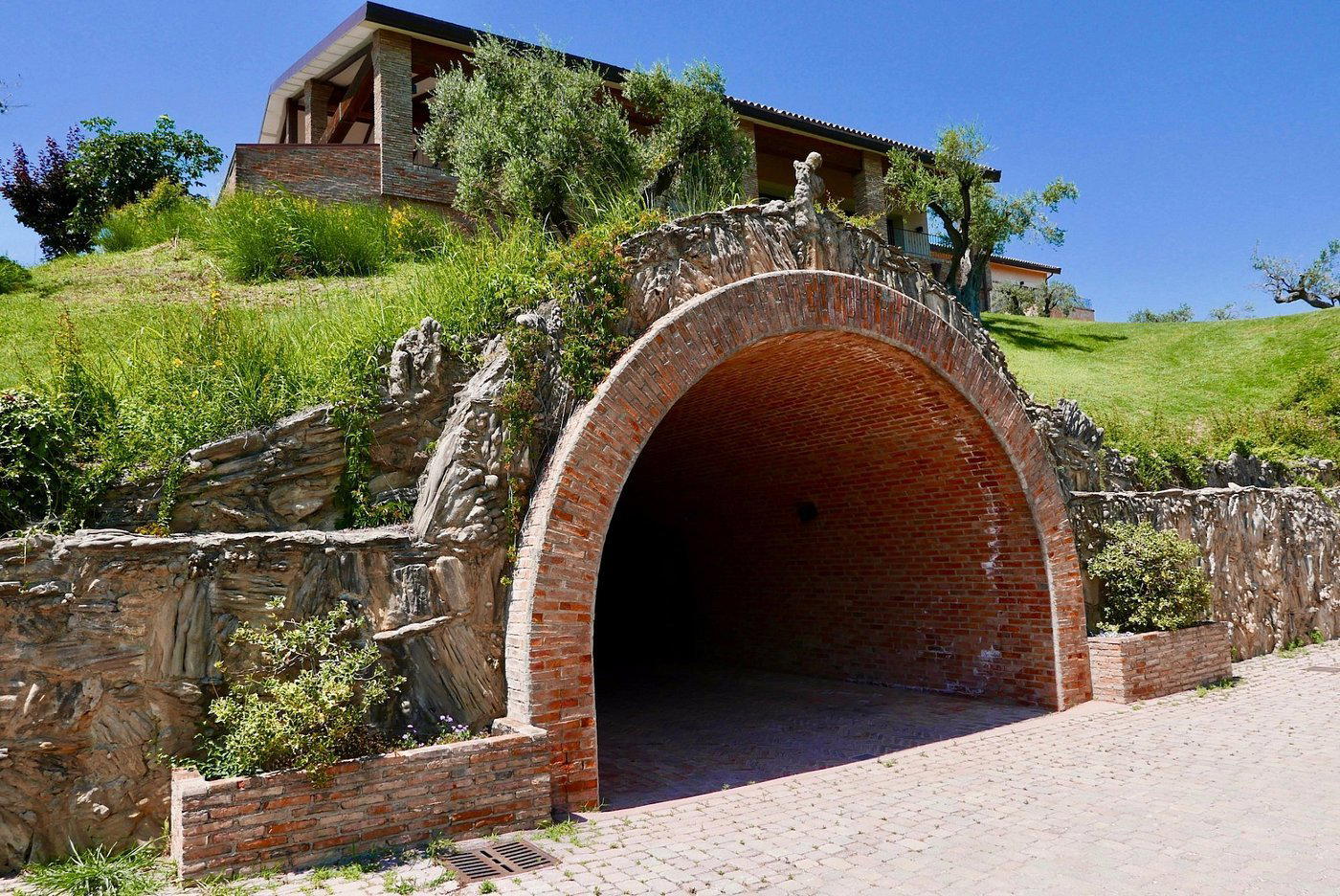
Approach Pacentro on foot and the village gives itself away slowly: a medieval tower above the roofline, then an arcade, then the tight grid of the old town opening onto Piazza Umberto I. The palazzo that anchors the square is 16th-century stonework, and the restaurant occupies its wine cellars below street level. The descent into that space sets the register for what follows. Barrel-vaulted ceilings, walls that have absorbed several hundred winters, and a quietness that the surrounding alleyways enforce. Abruzzo's mountain restaurants often carry this kind of physical weight, where the architecture is not a design choice but an inheritance, and where cooking in that context implies a certain obligation to the region rather than to fashion.
Taverna dei Caldora sits squarely in that tradition. Its Michelin Bib Gourmand recognition in 2024 and 2025 places it in a category the guide reserves for kitchens delivering regional quality at accessible prices, a distinction that matters more in a village of this size and altitude than it might in a city. Pacentro is not a dining destination with infrastructure to support multiple tiers of ambition. A single kitchen doing this consistently, year on year, is the story here.
Where the Ingredients Come From
The Gran Sasso massif and the Majella plateau frame the valleys around Pacentro from two sides, and both shapes the supply that reaches kitchens here. Abruzzo's interior produces some of Italy's most documented saffron, centred on the L'Aquila plateau where the Crocus sativus harvest runs through October and November. The crop is labour-intensive, altitude-dependent, and traceable to a defined geographic zone, which is why it carries DOP protection and commands prices that have historically put it among the more expensive agricultural products by weight in Europe. When it appears in pasta at a Bib Gourmand price point, the kitchen is either sourcing shrewdly or accepting margin compression that other restaurants would not.
Truffle in this context means black truffle from the central Apennines, a product with its own seasonal logic and a supply chain that runs through local networks rather than wholesale distributors. The combination of saffron and black truffle in a single pasta dish is not a decoration exercise. It is a statement about what the surrounding terrain produces and a commitment to using two high-value ingredients without adjusting the price category upward to match. That positioning is the editorial point about Bib Gourmand recognition: it rewards restraint in margin as much as quality in execution.
Abruzzo's broader agricultural base adds further context. The region produces lamb from the transhumance tradition that once moved flocks between the Apennines and the Adriatic plains, pork products with protected status, and a range of legumes and cereals adapted to the altitude. A kitchen rooted in this supply is working with ingredients that have shaped local cooking for centuries, and the Caldora's approach to regional cuisine draws from that depth. For comparison, the Abruzzo kitchen at Bacucco d'Oro in Mutignano and Borgo Spoltino in Mosciano Sant'Angelo represent a coastal and lowland take on the same regional larder, which underlines how much the interior mountain context shapes what Taverna dei Caldora does differently.
Price Tier and What It Signals
The price designation places Taverna dei Caldora at the accessible end of a spectrum that, in Italy's fine-dining circuit, extends to the €€€€ bracket occupied by Osteria Francescana in Modena, Enoteca Pinchiorri in Florence, and Enrico Bartolini in Milan. Those kitchens operate in urban markets with corresponding overheads and clientele expectations. Pacentro's economy and visitor base are different, and the price point here reflects a genuinely village-scale operation rather than a positioning exercise. The Bib Gourmand is precisely the mechanism Michelin uses to mark this category: cooking that merits recognition but prices that do not require justification. For readers who have visited Reale in Castel di Sangro and want to understand where Abruzzo's dining range sits at its other end, the restaurant provides the reference point.
Volume at that level, from a village restaurant in a town with limited tourist infrastructure, suggests a local and regional audience returning consistently, not a spike driven by one viral moment. Consistency over time is what Bib Gourmand recognition rewards, and the review data supports that reading.
Pacentro in the Wider Abruzzo Context
Italy's high-recognition restaurant circuit concentrates in the north and in coastal settings: the Veneto kitchens like Le Calandre in Rubano and Casa Perbellini 12 Apostoli in Verona, the Piedmontese kitchens around Piazza Duomo in Alba, Ligurian and Campanian coastal operators like Quattro Passi in Marina del Cantone, and the Lombard traditions represented by Dal Pescatore in Runate. The Adriatic and Apennine corridor that includes Abruzzo sits outside that cluster. Uliassi in Senigallia and the Alpine kitchens like Atelier Moessmer Norbert Niederkofler in Brunico gesture toward adjacent geographies, but Abruzzo's interior remains relatively uncharted in international dining coverage. That gap is partly logistical: the region lacks a major hub airport and its mountain towns require deliberate routing. Pacentro is the kind of place you plan toward, not through.
That planning effort is worth making for readers already oriented toward the region. The village itself, the medieval street grid, the Caldora tower visible from the piazza, and the surrounding national park terrain form a coherent argument for a longer stay. Our full Pacentro restaurants guide covers the wider dining picture, while guides to hotels, bars, wineries, and experiences in Pacentro map the rest of what the area offers.
Planning a Visit
The restaurant sits on Piazza Umberto I in the old town centre, inside the wine cellars of the 16th-century palazzo, which makes it direct to find once you are in the village. Pacentro is accessible by road from Sulmona, approximately ten kilometres to the west, which is the nearest town with rail connections. A full meal here operates within a moderate daily budget, and the Bib Gourmand recognition holds for 2025, confirming the kitchen's current consistency. Reservations are recommended.
How It Stacks Up
Comparable venues nearby, for context on price, style, and recognition.
| Venue | Cuisine | Price | Awards | Notes |
|---|---|---|---|---|
| Taverna dei CaldoraThis venue — the venue you are viewing | Traditional Abruzzese Trattoria | $$$ | Bib Gourmand | Not listed |
| Il Ritrovo d'Abruzzo | Traditional Abruzzese Italian | $$$ | Bib Gourmand | Civitella Casanova |
| Estrò | Modern Italian Bistro | $$$ | Bib Gourmand | Pescara center |
| Materia Prima | Modern Italian Creative | $$$ | Michelin Plate | Castel di Sangro |
| Bottega Culinaria | Modern Italian Creative | $$$ | Michelin Plate | San Vito Chietino |
| Mammaròssa | Modern Abruzzo Italian | $$$ | Michelin Plate | Avezzano |
Recognition history
Dated appearances from independent guides and award organizations, with the underlying list record or original source where available.
Michelin Bib Gourmand
Michelin
Michelin Bib Gourmand
Michelin
Michelin Bib Gourmand
Michelin
At a Glance
- Rustic
- Cozy
- Historic
- Intimate
- Special Occasion
- Date Night
- Family
- Historic Building
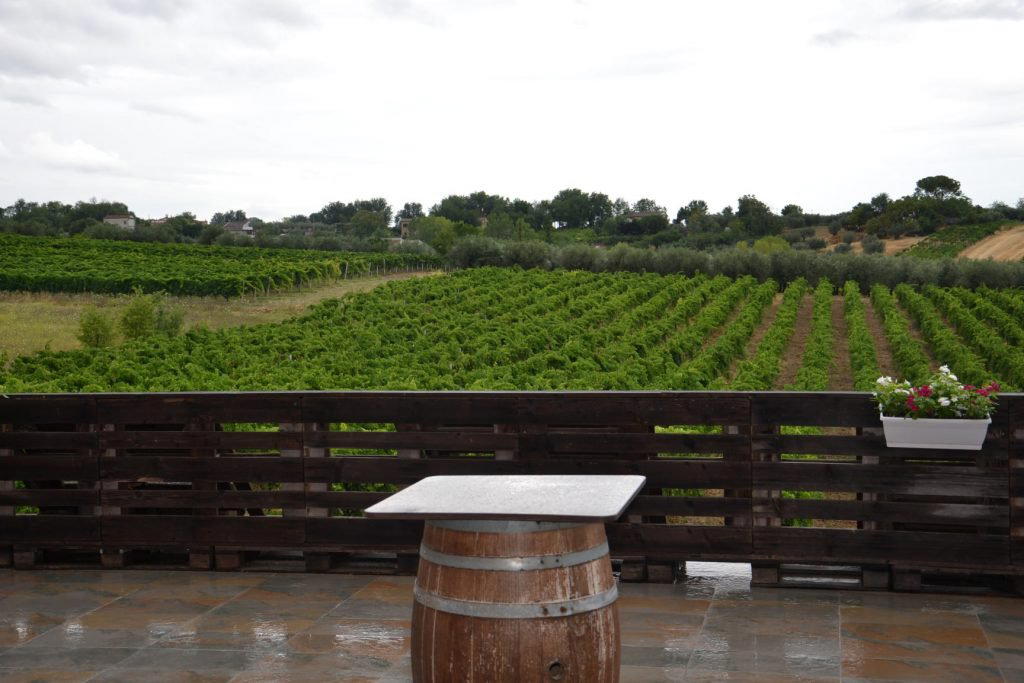
- Terrace
- Panoramic View
- Extensive Wine List
- Local Sourcing
- Mountain
Current opening hours
- Monday
- Closed
- Tuesday
- Closed
- Wednesday
- 1–2:30 PM, 7–11:30 PM
- Thursday
- 1–2:30 PM, 8–11:30 PM
- Friday
- 1–2:30 PM, 8–11:30 PM
- Saturday
- 1–2:30 PM, 7–11:30 PM
- Sunday
- 1–2:30 PM
Hours can change for holidays and private events. Last verified .
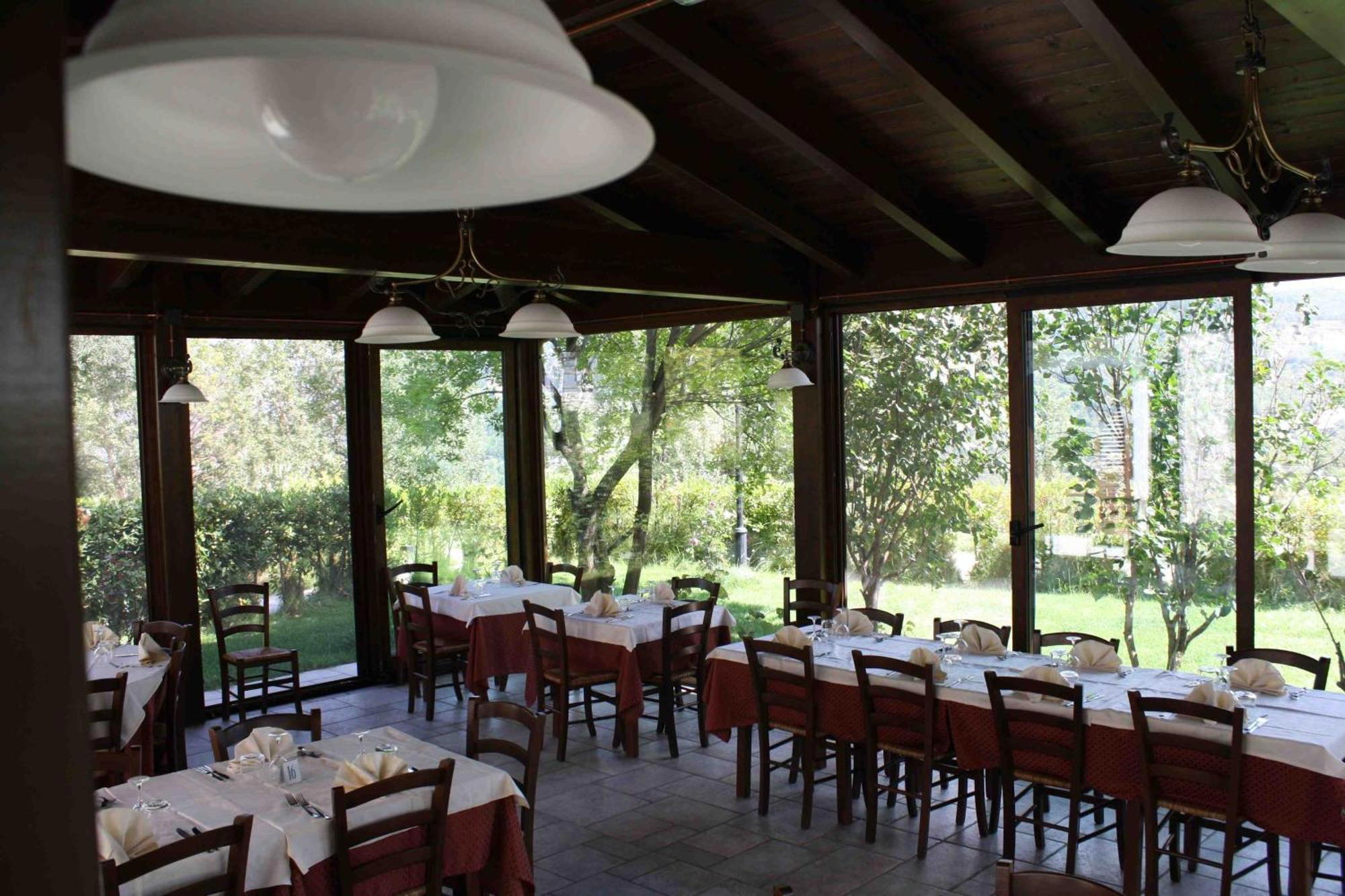
Warm, inviting medieval-style atmosphere in a noble palace cellar with quiet, fairytale charm.