
Tatsu is a compact Hiroshima okonomiyaki counter with Tabelog 100 Okonomiyaki selections in 2023, 2024, and 2025. Its appeal sits in the city’s everyday grill culture rather than ceremony: a small-room, teppan-led format where okonomiyaki, stir-fried noodles, and teppanyaki remain close to their working-city roots.
Pearl is the En Primeur Club membership app — saves, bookings, and concierge access live there. Same editors, same standards.
- Address
- 7-33 Higashikaniyacho, Higashi Ward, Hiroshima, 732-0055, Japan
- Phone
- +81 82-258-1982
- Website
- japoncompany.business
 Saves & bookings on Pearl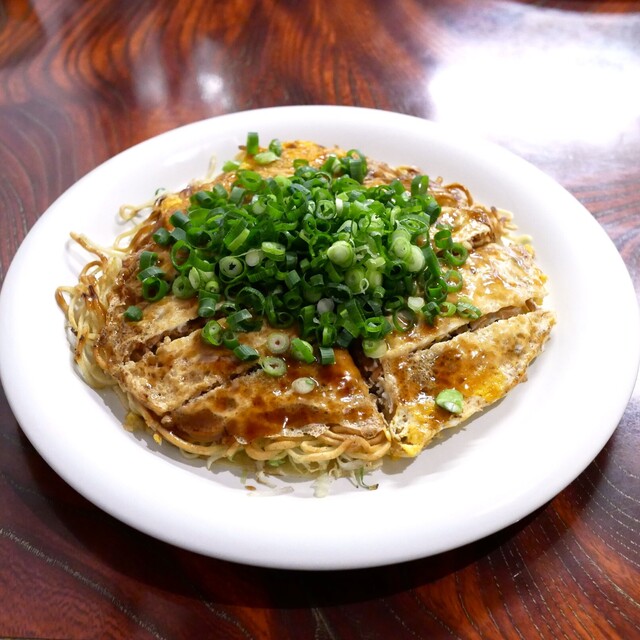
Approaching a small Hiroshima okonomiyaki room is unlike entering a formal restaurant. The cues are domestic and immediate: low-key frontage, hot-plate proximity, and a city rhythm where lunch and dinner can feel equally local. Tatsu belongs to Hiroshima’s compact dining end, where the grill is not visitor theatre but the meal’s organising principle.
Hiroshima-style okonomiyaki has a civic identity few regional Japanese dishes match. Osaka’s version folds batter and fillings into a thicker pancake; Hiroshima’s usually layers batter, cabbage, noodles, egg, and sauce into something taller, more architectural, and more tied to the teppan. For travellers, that changes the meal’s centre of gravity: the skill lies not only in seasoning but in timing, compression, heat control, and noodle handling on metal.
Tabelog’s Okonomiyaki 100 selections in 2023, 2024, and 2025 place Tatsu among specialist shops rather than Hiroshima’s broader casual-dining field. Its Tabelog score is 3.76, useful in Japan’s conservative rating culture, where scores above the mid-threes often indicate steady local approval. This is not the same proposition as a high-budget destination restaurant such as Chinese Sai Kichijitsu, nor a broader station-friendly okonomiyaki format such as Denkō Sekka Ekie Hiroshima ten. The relevant comparison is narrower: small-format Hiroshima grill cooking consistent enough to earn repeat category recognition.
Hiroshima okonomiyaki as working-city craft, not spectacle
Okonomiyaki in Hiroshima is often called comfort food, but that can flatten what is happening on the plate. The city’s version is quietly labour-intensive. Layers must hold, noodles need texture, and the final build has to eat as one composition, not separate components. In a nine-seat room with counter and tatami seating, attention returns naturally to the grill rather than décor or pacing rituals.
The menu category tells its story: okonomiyaki, stir-fried noodles, and teppanyaki. That trio is central to Hiroshima’s casual dining grammar and gives the room a narrower brief than multi-course Japanese restaurants. A specialist okonomiyaki shop succeeds through repetition, heat discipline, and comfort with close-quarters volume. Tatsu’s Tabelog category recognition matters because it rewards that focused competence.
For a broader read on the city’s dining range, Our full Hiroshima restaurants guide shows how grill rooms sit beside creative kitchens, bakeries, sweets counters, and sake-led dining. Akai (Creative Cuisine) occupies another register of Hiroshima cooking, while ANDERSEN and Butter Cake no Nagasaki Do reflect the city’s café and confectionery habits. Bishu Bikou Hamai and CHILAN broaden the map again, showing why Hiroshima is richer when read through neighbourhood-scale specialisation rather than one signature dish.
The small-room format changes the value equation
Hiroshima has many okonomiyaki counters near transit hubs, including station-adjacent options for fast decisions. Tatsu reads differently because scale shapes the experience. With three counter seats and six tatami seats, anonymity is limited. That does not make it precious; it places it closer to the city’s ordinary specialist culture, where a narrow menu, hot plate, and few seats can carry more weight than an expanded concept.
The budget bracket puts it in a useful middle lane for Hiroshima dining. It sits above the lowest-cost okonomiyaki and noodle counters, such as the sub-JPY 1,000 bracket represented by Icchan Honten at lunch, while staying far below formal restaurant pricing. Masaru occupies a partly similar casual range, and Soba Kiri Gin shows how Hiroshima’s affordable specialist meals extend beyond the teppan. For travellers, the point is not thrift alone; it is access to a local food form where recognition, focus, and small capacity all matter.
That format has practical implications. Reservations are not available, payment is cash-only, parking is unavailable, and smoking is allowed, so people under 20 are not permitted inside. The restaurant is near Hiroshima Station and Enkobashicho Station, making a station-area route more sensible than a cross-city detour. Closed days fall at the start of the week, and the split lunch-dinner schedule rewards travellers who plan by windows rather than late-night flexibility.
How to place it within a Hiroshima itinerary
Tatsu works well as a grounded Hiroshima meal between heavier cultural programming and more formal dining. It gives context to the city’s food identity without requiring a tasting-menu commitment or long reservation cycle, making it useful for travellers who want one okonomiyaki meal recognised within Japan’s category systems while still close to the dish’s everyday function.
Hiroshima rewards this sequencing. A teppan lunch can precede a sake bar evening, a hotel check-in, or a day around the Peace Memorial Park and station districts. For planning beyond restaurants, Our full Hiroshima hotels guide, Our full Hiroshima bars guide, Our full Hiroshima wineries guide, and Our full Hiroshima experiences guide frame the city beyond a single meal.
Travellers extending the Japan food thread can compare Hiroshima’s regional specificity with other narrow-format addresses across the country: -Grilled beef Sukiyaki- KAMAKURA TANUKIAN 鎌倉 たぬき庵 in Kamakura. 鮪と炭火焼き うお炭 秋葉原店 in Tokyo.cafe in Osaka.know in Kumamoto, (Shoku) Vietnam in Kawasaki, and [Curry Senmon Ten] Maruyama Kyoju. in Sapporo. For Japanese food culture outside Japan, Jōdo Saké Bar in Los Angeles and Onigiri Time in Pasadena show how specific formats translate when removed from home context.
The editorial case for Tatsu is clear: a small Hiroshima okonomiyaki specialist with repeated Tabelog 100 recognition, a tight teppan category, and a room size that keeps the meal close to its source. It is not the city’s broadest dining statement. It is a precise one, and that is why it belongs on a serious Hiroshima food itinerary.
A Pricing-First Comparison
Side-by-side context: comparable cuisine and price.
| Venue | Cuisine | Price | Notes |
|---|---|---|---|
| Tatsu | Higashi, Japanese restaurant | $ | Not listed |
| Yagenbori Hassho | Naka, Hiroshima-style okonomiyaki | $ | Not listed |
| Okonomiyaki Hasshou | Naka, Hiroshima-style Okonomiyaki | $ | Not listed |
| Okonomiyaki Koshida Honten | Not listed | $ | Naka, Hiroshima-style okonomiyaki & teppanyaki |
| Ganso Hassho | Not listed | $ | Naka, Hiroshima-style okonomiyaki counter |
| Hiroshima Marukajiri Naka-chan | Not listed | $$ | Naka, Hiroshima okonomiyaki & teppanyaki izakaya |
Recognition history
Dated appearances from independent guides and award organizations, with the underlying list record or original source where available.
Tabelog 100 #58 · No. 58
Tabelog · Tabelog 100 - Okonomiyaki - 2025
Continue exploring
More in Hiroshima
Restaurants in Hiroshima
Browse all →
Bars in Hiroshima
Browse all →
At a Glance
- Standalone
Current opening hours
- Monday
- Closed
- Tuesday
- Closed
- Wednesday
- 11 AM–2 PM, 6–10 PM
- Thursday
- 11 AM–2 PM, 6–10 PM
- Friday
- 11 AM–2 PM, 6–10 PM
- Saturday
- 11 AM–2 PM, 6–10 PM
- Sunday
- 11 AM–2 PM, 6–10 PM
Hours can change for holidays and private events. Last verified .