Tamago Monogatari Egg Story

Tamago Monogatari Egg Story belongs to Kitakyushu’s everyday yoshoku tradition rather than its luxury dining circuit: omurice, modest scale, and ingredient-led comfort cooking near Kokura. Its selection for Tabelog 100 Yoshoku WEST 2025 gives a measurable signal in a category where craft is often judged by repetition, egg handling, and the discipline of a narrow specialty.
Pearl is the En Primeur Club membership app — saves, bookings, and concierge access live there. Same editors, same standards.
- Address
- 2 Chome-1-34 Asano, Kokurakita Ward, Kitakyushu, Fukuoka 802-0001, Japan
- Phone
- +81 93-533-6088
- Website
- instagram.com
 Saves & bookings on Pearl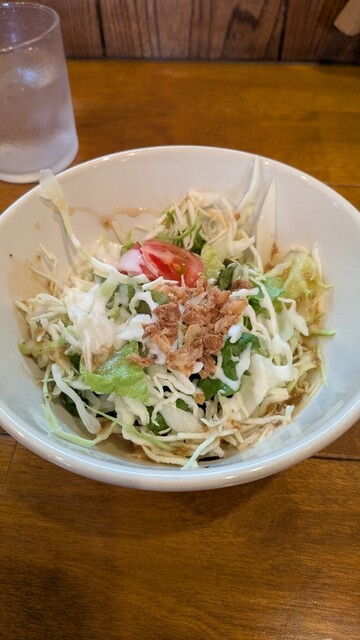
The approach to Kokura’s station-side dining streets is practical, fast-moving, and built around meals between trains, workdays, and local errands. That setting matters for omurice. Yoshoku, Japan’s long-running adaptation of Western dishes, has always lived partly in the ordinary: ketchup rice, demi-glace, cutlets, cream sauces, and eggs handled carefully enough to turn lunch into a small test of technique. Tamago Monogatari Egg Story sits in that grammar, closer to the daily counter than the destination tasting room.
Kitakyushu is often read through ramen, udon, bakeries, and old industrial-port appetite, but yoshoku has its own place in the city’s eating culture. The strongest versions need consistency, heat control, and sourcing that lets the central ingredient carry the plate, not luxury cues. Here the name puts the egg first, which is the correct editorial lens: not novelty or theatre, but how a narrow ingredient focus can sharpen a familiar Japanese-Western form.
Omurice as a test of eggs, rice, and restraint
Omurice looks simple until compared across Japan. In casual shops it can be soft nostalgia; in more technical kitchens it becomes a timing exercise, where the rice cannot be wet, the egg cannot turn rubbery, and the sauce cannot flatten everything beneath it. The category rewards cooks repeating a small set of motions precisely, not kitchens chasing breadth. A specialist omurice address can therefore be more revealing than a long-menu restaurant: the margin for error is narrower than the format suggests.
Tamago Monogatari Egg Story’s public category is omurice, placing it inside the yoshoku lineage rather than the broader washoku frame. Its selection for Tabelog 100 Yoshoku WEST 2025 is the key external signal. The list is not a Michelin-style hierarchy, but it separates notable yoshoku specialists across western Japan from the mass of cafés and casual Western-style rooms serving similar dishes. A Tabelog score of 3.59 adds another data point in a market where scores move conservatively, especially outside the Tokyo-Osaka-Kyoto media corridor.
The ingredient-sourcing angle is not luxury provenance. It is whether the food gives the egg enough responsibility. In omurice, egg quality shows through texture, colour, and how cleanly it binds or covers the rice; the dish has fewer places to hide than a heavy fried plate. A restaurant built around this category wagers that the egg can be centre, not garnish. That puts it in a different conversation from Kitakyushu’s noodle counters and sushi rooms, where broth, fish, or rice vinegar carry authority.
For travellers mapping a broader Kitakyushu food day, the contrast helps. Gyoran Tei Honten points toward the city’s ramen culture, Imanami Udon toward its noodle rhythm, and Inaka An Kokura honten toward another local register of comfort and routine. Omurice occupies the middle ground: Western in ancestry, Japanese in execution, and often judged by diners who have eaten it since childhood.
Kokura's casual dining tier, judged by focus rather than polish
The city’s everyday dining range is broad enough that price alone does not explain ambition. A bakery such as Shiroya Bakery Kokura ten sits in the sub-¥1,000 snack-and-staple lane, while Miyoshino occupies a higher casual bracket around ¥4,000 to ¥4,999. Sushi addresses such as 寿司つばさ and 天寿し 京町店 are a separate decision, shaped by counter culture and fish access. Tamago Monogatari Egg Story operates in the lower everyday meal tier, making the award recognition more interesting: yoshoku credibility is earned without premium-service markers.
That matters for visitors who over-index on grand meals in Japan. Kitakyushu rewards a mixed itinerary. A day might move from station-area yoshoku to sweets at Hyo Kashiya KOMARU, then to local chicken cooking at Hountei. The useful question is not which address is more formal, but which part of the city’s appetite each explains.
Compared with out-of-metro kaiseki such as Sato, omurice has almost no ceremonial buffer. It is judged quickly: rice, egg, sauce, plate temperature, portion, and pacing. That compression is why yoshoku remains durable. It gives the kitchen a small vocabulary and asks for fluency. When a short-format restaurant gets national-platform recognition within a regional yoshoku list, it signals the category is being taken seriously beyond nostalgia.
How it fits into a sharper Kitakyushu itinerary
Use this address as a daytime anchor rather than the formal centre of a trip. The better Kitakyushu dining plan is not one trophy meal but a sequence of local forms. Omurice near Kokura, udon, ramen, sweets, and a more serious evening counter show more of the city than one expensive reservation. For broader planning, the full Kitakyushu restaurants guide is the natural starting point, with parallel context in the Kitakyushu hotels guide, bars guide, wineries guide, and experiences guide.
Japan’s casual-specialist culture also travels well as a comparison point. A focused sukiyaki room such as -Grilled beef Sukiyaki- KAMAKURA TANUKIAN 鎌倉 たぬき庵 in Kamakura, a Tokyo charcoal-and-tuna address like. 鮪と炭火焼き うお炭 秋葉原店 in Tokyo, or a curry specialist such as [Curry Senmon Ten] Maruyama Kyoju. in Sapporo all show the same national habit: a narrow proposition can carry more authority than a sprawling menu. The same pattern appears outside Japan in different forms, from Jōdo Saké Bar in Los Angeles to Onigiri Time in Pasadena, where format discipline gives casual food a clearer identity.
The editorial case for the restaurant is specific. It is not a grand-room recommendation and does not need to be. It belongs to Japanese dining where a humble category receives serious repetition, where ingredient focus is visible through execution rather than luxury language. In Kitakyushu, it corrects itineraries chasing only sushi, ramen, or formal regional cooking. For a wider lens on Japan’s contemporary casual spectrum, compare it with.cafe in Osaka.know in Kumamoto, and (Shoku) Vietnam in Kawasaki: different cuisines, same lesson that the tighter the format, the more clearly the kitchen’s priorities show.
Comparison Snapshot
Comparable venues by cuisine and price in the same metro.
| Venue | Cuisine | Price | Notes |
|---|---|---|---|
| Tamago Monogatari Egg StoryThis venue — the venue you are viewing | Omurice-focused Japanese yoshoku | $ | Not listed |
| Imanami Udon | Japanese Udon Noodles | $ | Kokuraminami-ku |
| Zubora Tei | Traditional Okonomiyaki & Teppan-yaki | $$ | Kokurakita Ward |
| Gyoran Tei Honten | Traditional Kitakyushu Tonkotsu Ramen | $ | Kokurakita Ward |
| teppan sakaba hitojiman | Teppan izakaya with okonomiyaki & monjayaki | $$ | Kokuraminami-ku |
| Miyoshino | Traditional Yakitori & Chicken Dishes | $$ | Kokura Kita Ward |
Recognition history
Dated appearances from independent guides and award organizations, with the underlying list record or original source where available.
Tabelog 100 #26 · No. 26
Tabelog · Tabelog 100 - Yoshoku - WEST - 2025
Continue exploring
More in Kitakyushu
Restaurants in Kitakyushu
Browse all →
Bars in Kitakyushu
Browse all →
At a Glance
- Cozy
- Solo
- Casual Hangout
- After Work
- Standalone
Current opening hours
- Monday
- 11:30 AM–2:30 PM, 6–8:30 PM
- Tuesday
- 11:30 AM–2:30 PM, 6–8:30 PM
- Wednesday
- 11:30 AM–2:30 PM, 6–8:30 PM
- Thursday
- Closed
- Friday
- 11:30 AM–2:30 PM, 6–8:30 PM
- Saturday
- 11:30 AM–2:30 PM, 6–8:30 PM
- Sunday
- Closed
Hours can change for holidays and private events. Last verified .
Simple, non‑smoking, counter‑oriented space with a few small tables, creating a modest and cozy atmosphere typical of a local yoshoku-style spot.