Funky Ramen
Funky Ramen serves Modern Japanese Ramen & Sushi in Düsseldorf, with an open kitchen, a sake program, and signatures including Tantanmen Ramen and Cheese Ramen.
Pearl is the En Primeur Club membership app — saves, bookings, and concierge access live there. Same editors, same standards.
- Address
- Münsterstraße 33, 40477 Düsseldorf, Germany
- Phone
- +4921193074150
- Directions
- Get directions
 Saves & bookings on Pearl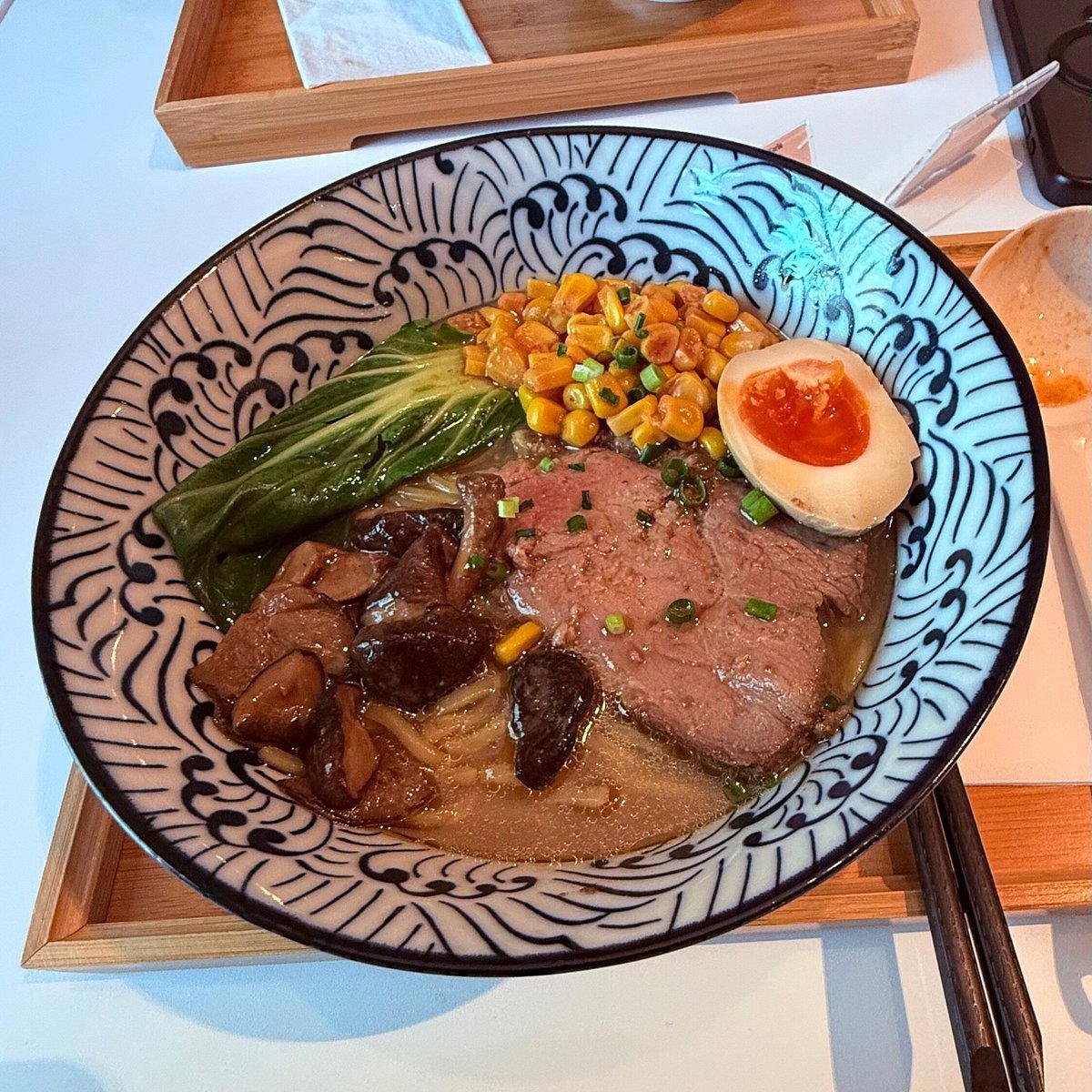
Ramen in the Rhine: What Japanese Noodle Culture Looks Like in Düsseldorf
Münsterstraße cuts through the Pempelfort district with the particular energy of a street that has never quite committed to a single identity: independent retailers, mid-century apartment facades, and a dining scene that skews younger and more internationally curious than the old-town tourist corridor to the south. It is in this context that Funky Ramen occupies its address at number 33, a spot that signals its intentions before you read a single word on the menu. The name alone positions it outside the reverent, austere framing that Japanese noodle houses sometimes adopt in European cities, suggesting instead something more accessible and less ceremonially Japanese.
That positioning matters, because Düsseldorf carries unusual cultural weight when it comes to Japanese food. The city hosts one of the largest Japanese communities in Germany, concentrated around the Immermannstraße corridor, which has sustained authentic Japanese grocery shops, izakayas, and specialist restaurants for decades. Ramen, specifically, has moved from a niche interest among that diaspora community to a city-wide draw, with a generation of younger Düsseldorf diners now approaching Japanese noodle formats with the same fluency they bring to Korean barbecue or Vietnamese pho. Funky Ramen operates in that expanded, post-diaspora moment, when the cuisine no longer needs to justify itself to a general audience.
The Cultural Architecture of a Bowl
To understand what a ramen restaurant in a German city is actually doing, it helps to understand what ramen is doing in Japan. The dish emerged from Chinese wheat-noodle traditions that entered Japan in the late nineteenth and early twentieth centuries, then transformed across regional lines into something distinctly Japanese. Tonkotsu, the pork-bone broth style associated with Fukuoka, became a global shorthand for the entire category, but the actual range is wider: shoyu (soy-seasoned), shio (salt-based), and miso variants each carry regional identities, and the broth is always the argument the cook is making, with noodles, tare, and toppings as supporting evidence.
European ramen houses occupy a spectrum between faithful regional reproduction and liberal interpretation. Düsseldorf’s Japanese-community restaurants have historically leaned toward the former; newer spots across the city have been freer with fusion elements, sometimes importing Korean or Southeast Asian influence into the bowl. Where Funky Ramen falls on that spectrum is part of what makes it worth addressing directly: the name suggests the latter tendency, and the Pempelfort address, away from the Immermannstraße cluster, reinforces that it is speaking to a broader audience rather than to an existing diaspora base.
For readers who know the German ramen scene more broadly, the reference points are instructive. The category does not yet have the Michelin infrastructure that defines fine dining in cities like those anchored by Schwarzwaldstube in Baiersbronn or Aqua in Wolfsburg, or the high-concept dessert framing of CODA Dessert Dining in Berlin. Ramen in Germany operates in a middle register: serious about craft, affordable by design, and reviewed mostly through crowd-sourced channels rather than critical institutional ones. That is not a weakness; it reflects the cultural role of the dish, which in Japan is everyday food made well, not occasion dining made accessible.
Pempelfort as a Dining District
The neighbourhood context matters for planning. Pempelfort sits north of the Altstadt and west of the Japanese quarter, close enough to both to draw foot traffic from each but distinct from both in character. It runs younger and more residential than the tourist-facing old town, which means dinner crowds tend to arrive earlier and the post-work hour is genuinely busy. For visitors staying centrally, Pempelfort is a short tram ride or a manageable walk, and Münsterstraße has enough density of independent food options that an evening there can work as a destination in itself rather than a single-stop trip.
Düsseldorf’s broader dining scene spans the sort of range you would expect from a city of its commercial weight. The Altstadt end covers traditional Rhenish cooking and international fast-casual; the Japanese quarter provides the deepest concentration of Japan-origin cuisine in the city; and districts like Pempelfort fill in the independent middle ground. For a fuller picture of how these areas connect, the full Düsseldorf restaurants guide maps the relevant areas with more granularity. Nearby alternatives that fall into a similar casual-independent register include Alanya Döner, Amuni Wein- und Käsebar, Anfora, Arca Alacati, and 3h’s burger & chicken, each occupying a different corner of the neighbourhood’s casual dining range.
Thinking About the Visit
Ramen is seasonal in a meaningful sense. Tonkotsu and miso-heavy broths carry the autumn and winter months particularly well; lighter shio preparations work better against warmer weather. If you are visiting Düsseldorf between October and March, the calculus for a bowl of ramen is direct: cold air outside, hot broth inside, a format that rewards eating quickly while it is at temperature. Summer visits are still reasonable but may push you toward lighter menu options if they are available.
Because no booking data is confirmed for Funky Ramen, the practical advice defaults to what the format and location suggest: ramen restaurants at this scale and address type in German cities are generally walk-in operations, with peak pressure falling on Friday and Saturday evenings and the 7pm-8pm window midweek. Arriving slightly before or after that window tends to reduce wait times. The address at Münsterstraße 33 is the confirmed location; current hours and any reservation options are leading verified directly before visiting, as these details fall outside the confirmed data available here.
For context on the broader spectrum of dining available across Germany during a longer trip, the list of options is genuinely wide: JAN in Munich, Vendôme in Bergisch Gladbach, Victor’s Fine Dining by Christian Bau in Perl, ES:SENZ in Grassau, Schanz in Piesport, Waldhotel Sonnora in Dreis, and Restaurant Haerlin in Hamburg all represent the Michelin-registered end of the national scene. At the international end, reference points like Le Bernardin in New York City and Lazy Bear in San Francisco illustrate just how wide the spectrum runs between everyday craft and high-occasion dining, a range that makes the ramen category’s position within it all the more legible.
How Funky Ramen Düsseldorf compares with similar nearby venues.
| Venue | Cuisine | Price |
|---|---|---|
| Staudi's | Contemporary | €€€ |
Continue exploring
More in Düsseldorf
Restaurants in Düsseldorf
Browse all →
Bars in Düsseldorf
Browse all →
Hotels in Düsseldorf
Browse all →
Wineries in Düsseldorf
Browse all →
At a Glance
- Trendy
- Lively
- Modern
- Industrial
- Casual Hangout
- Date Night
- Open Kitchen
- Sake Program
Current opening hours
- Monday
- 4–9:30 PM
- Tuesday
- 4–9:30 PM
- Wednesday
- 4–9:30 PM
- Thursday
- 4–9:30 PM
- Friday
- 4–10 PM
- Saturday
- 1–10 PM
- Sunday
- 1–9:30 PM
Hours can change for holidays and private events. Last verified .
Lively zones with exposed brick, wooden tables, raw materials, graffiti elements, hip-hop influences, and dynamic red/blue/neutral areas creating an immersive fusion of tradition and street culture.
Know Before You Go
- Getting there
- Münsterstraße 33, 40477 Düsseldorf, Germany