Taki Asia to go
An Asian takeaway counter on Wiener Neustadt's central Hauptplatz, Taki Asia to go occupies a practical niche in a city where fast-casual Asian food sits well outside the Viennese fine-dining orbit. The format suits the square's foot traffic, making it a workable stop for those moving between the city's other dining options.
Pearl is the En Primeur Club membership app — saves, bookings, and concierge access live there. Same editors, same standards.
- Address
- Hauptpl. 15, 2700 Wiener Neustadt, Austria
- Phone
- +43262234797
- Website
- marienmarkt.at
- Directions
- Get directions
 Saves & bookings on Pearl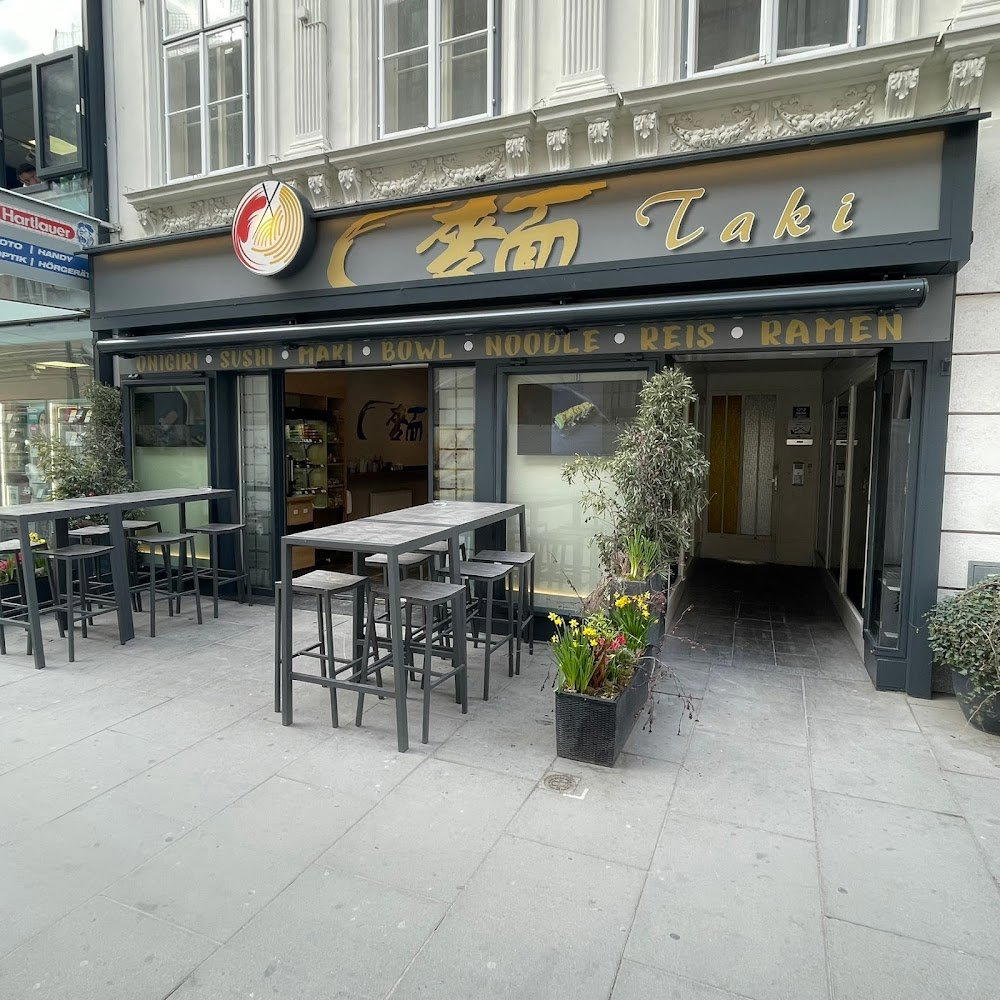
Asian Fast-Casual in Lower Austria's Provincial Capital
Taki Asia to go is an Asian noodle and sushi takeout restaurant at Hauptpl. The city's restaurant offer is shaped by a working population rather than tourism flows, which means format and price accessibility tend to matter more here than prestige. Against that backdrop, Asian fast-casual counters serve a clear function: speed, affordability, and a flavour profile that the surrounding Austrian and Italian options do not replicate. Taki Asia to go, positioned on Hauptplatz 15 at the city's central square, occupies exactly that gap.
The Hauptplatz is Wiener Neustadt's gravitational centre, a broad pedestrian square flanked by civic architecture and a regular flow of foot traffic from the adjacent shopping streets and public transport connections. A takeaway counter here benefits from visibility and passing trade in a way that a side-street location would not. The format, as the name signals directly, is to-go rather than sit-down, which places it in a distinct tier from the table-service restaurants nearby.
Where It Sits in the Local Scene
Wiener Neustadt's restaurant scene is modest by Austrian urban standards, but it covers a reasonable spread of formats. The city has table-service Italian options, burger concepts, and more considered European kitchens. Dejavu and Little Garden represent sit-down alternatives at different price points, while Le Burger anchors the fast-casual end of the Western food offer. Luigi and Mädchen und Wolf extend the range further. Asian takeaway, by contrast, fills a flavour category that none of these cover, which explains why a format like Taki Asia to go finds traction in a city of this size.
The Format and What It Implies
Takeaway-only or primarily to-go Asian formats carry a specific operational logic. The absence of a sit-down component compresses the service model into counter interaction and packaging rather than floor choreography, which means the dynamic between the counter team and the customer becomes the primary touchpoint of the experience. In contexts where the editorial angle of a dining room relies on the interplay between kitchen, floor staff, and sommelier, a to-go counter reframes that entirely: the equivalent exchange happens at the point of handover, in wait time, and in whether the food travels well.
For a format like this, consistency across the counter team matters considerably. A well-run takeaway relies on staff who can answer questions about allergens, handle volume during peak hours, and present the product in a way that holds up after a short journey. These are not incidental details; they are the service architecture of the format.
Austria's Asian Food Spectrum, in Context
At the higher end of Austrian dining, Asian influence tends to appear as technique rather than format. Restaurants like Steirereck im Stadtpark in Vienna and Döllerer in Golling an der Salzach integrate Asian-derived techniques into Austrian produce-led menus, but they operate in an entirely different register. Further afield, the precision kitchens at Ikarus in Salzburg and Griggeler Stuba in Lech similarly show how Asian influence has entered the fine-dining tier. Alpine restaurants such as Gourmetrestaurant Tannenhof in Sankt Anton am Arlberg and Kräuterreich by Vitus Winkler in Sankt Veit im Pongau occupy a produce-focused niche, while Landhaus Bacher in Mautern an der Donau, Obauer in Werfen, Ois in Neufelden, and Restaurant 141 by Joachim Jaud in Mieming each represent the considered regional cooking that defines the upper tier of Austrian restaurant culture. None of this applies to a provincial to-go counter, but the spectrum is worth understanding: the restaurant operates at the accessible, high-frequency end of a country whose restaurant hierarchy extends from fast-casual to multi-starred European kitchens.
Internationally, the gap between a to-go Asian counter and the precision tasting menus at places like Atomix in New York City or the seafood refinement of Le Bernardin in New York City is vast. That comparison is not a criticism of the format; it is a reminder that Asian food in European cities operates across an enormous range, and the to-go counter serves a need that the fine-dining tier never could.
Planning a Visit
The restaurant is located at Hauptplatz 15 in the centre of Wiener Neustadt. As a walk-in-friendly counter, it is set up for collection rather than reservations, and it is open Monday through Saturday from 9 AM to 6:30 PM, with Sunday closed.
Booking and Cost Snapshot
Comparable venues nearby, for context on price, style, and recognition.
| Venue | Cuisine | Price | Notes |
|---|---|---|---|
| Taki Asia to goThis venue — the venue you are viewing | Hauptplatz, Asian Noodle & Sushi Takeout | $ | Not listed |
| ONO Bowl & Tea | Not listed | $$ | Wiener Neustadt, Hawaiian Poke Bowls & Bubble Tea |
| Mädchen und Wolf | Wiener Neustadt, Modern Austrian | $$$ | Not listed |
| Taki Nudeln | Not listed | $ | Marienmarkt, Traditional Asian Noodles and Bowls |
| Papa's Kitchen | Not listed | $ | Marienmarkt, Vegetarian/Vegan Healthy Bistro |
| Little Garden | Not listed | $$ | Wiener Neustadt, French-Asian Fusion Bistro |
Continue exploring
More in Wiener Neustadt
Restaurants in Wiener Neustadt
Browse all →
![[aend] restaurant in Vienna](https://cdn.enprimeurclub.com/storage/v1/object/public/images/locations/recsVyRkMfzCxPmp0/hero2.jpg?width=3840&quality=75)
Bars in Wiener Neustadt
Browse all →

Hotels in Wiener Neustadt
Browse all →
At a Glance
- Casual
- Casual Hangout
- Open Kitchen
Current opening hours
- Monday
- 9 AM–6:30 PM
- Tuesday
- 9 AM–6:30 PM
- Wednesday
- 9 AM–6:30 PM
- Thursday
- 9 AM–6:30 PM
- Friday
- 9 AM–6:30 PM
- Saturday
- 9 AM–6:30 PM
- Sunday
- Closed
Hours can change for holidays and private events. Last verified .
Casual takeout spot with fast-paced preparation visible to customers.