ONO Bowl & Tea
ONO Bowl & Tea serves Hawaiian poke bowls and bubble tea in Wiener Neustadt, with a sake program and quick-bite pacing that fits lunch or dinner plans.
Pearl is the En Primeur Club membership app — saves, bookings, and concierge access live there. Same editors, same standards.
- Address
- Herzog-Leopold-Straße 25, 2700 Wiener Neustadt, Austria
- Phone
- +4368120567799
- Website
- ono-store.at
- Directions
- Get directions
 Saves & bookings on Pearl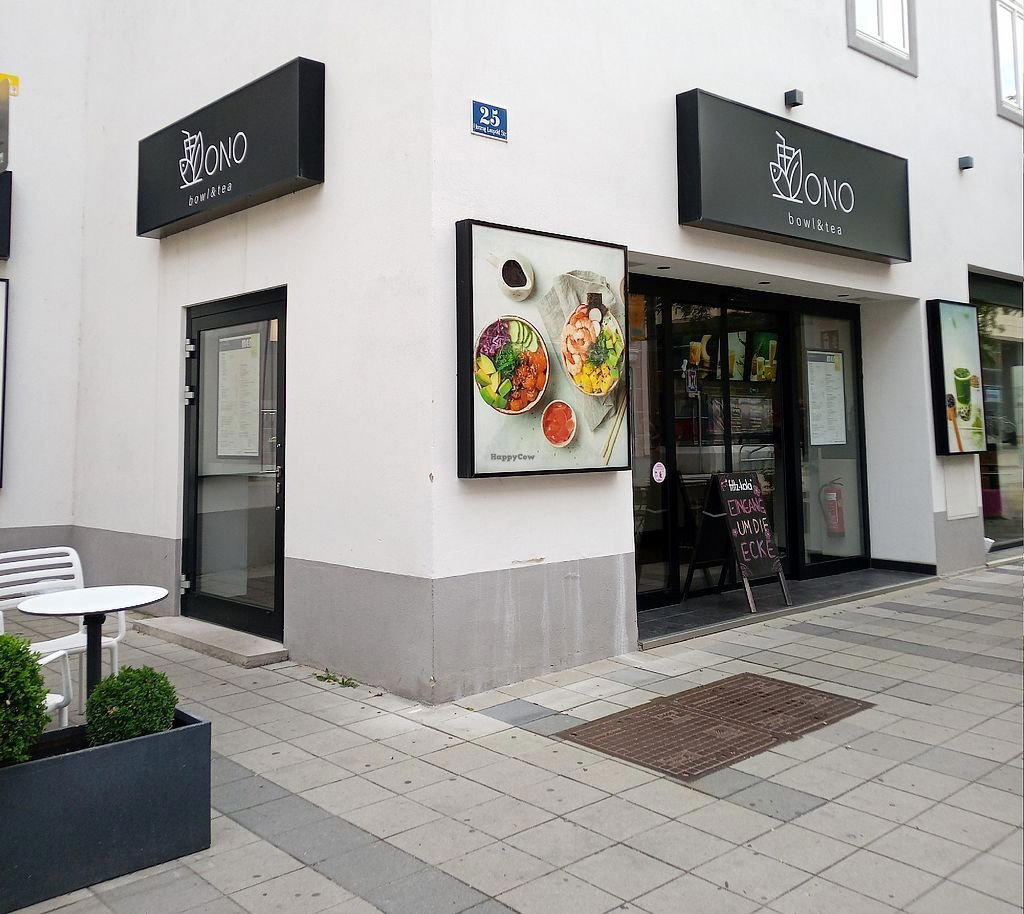
Bowl Culture in a Lower Austrian City Centre
ONO Bowl & Tea is a restaurant in Wiener Neustadt, Austria, serving Hawaiian poke bowls and bubble tea at a casual price point of about $12 per person. Herzog-Leopold-Straße runs through the commercial core of Wiener Neustadt, a city of roughly 45,000 that sits about 50 kilometres south of Vienna and functions less as a tourist destination than as a working regional capital. The dining scene here reflects that character: practical, locally oriented, and only recently beginning to absorb the casual-international formats that swept through Vienna proper in the mid-2010s. ONO Bowl & Tea, at number 25 on that street, belongs to the newer wave, a format built around assembled bowls and tea service rather than the schnitzel-and-roast traditions that still anchor most menus in the surrounding streets.
Bowl restaurants as a category have moved through European cities in a recognisable sequence: first in capital cities with large student and international populations, then outward into secondary cities where the format often arrives already refined and stripped of its more experimental edges. Wiener Neustadt sits at that second stage. The bowl format arriving here in the 2020s is not the chaotic, trend-chasing version of a decade ago but something more settled, grain bases, protein options, sauces and toppings arranged with some structural logic, positioned against fast-casual price points. ONO fits that pattern, operating in a city where Dejavu, Le Burger, and Little Garden represent the range of casual dining the centre currently supports.
What the Format Signals
The pairing of bowls with tea is a deliberate positioning choice that places ONO in a different register from burger counters or pizza spots. Tea-forward venues in Central Europe tend to draw a daytime and early-evening crowd: students, professionals on a lunch break, people looking for something that functions as a meal without the weight of a full sit-down service. That demographic shapes the atmosphere in ways that go beyond menu design. The pace is faster, the acoustics tend toward ambient rather than loud, and the space typically reads as somewhere you can eat alone with a laptop as easily as with a group. In a city centre like Wiener Neustadt, where Luigi and Mädchen und Wolf occupy more conventional sit-down positions, that kind of flexibility has real practical value.
The tea component also functions as a signal about sourcing orientation. Venues that invest in a serious tea list, whether that means Chinese oolongs, Japanese senchas, or South Asian blends, are typically operating with a kitchen that applies similar sourcing attention to its bowl ingredients. That inference is not guaranteed, but it is a pattern worth noting when assessing a format that lives or dies on ingredient quality rather than technical cooking complexity.
Atmosphere and Approach
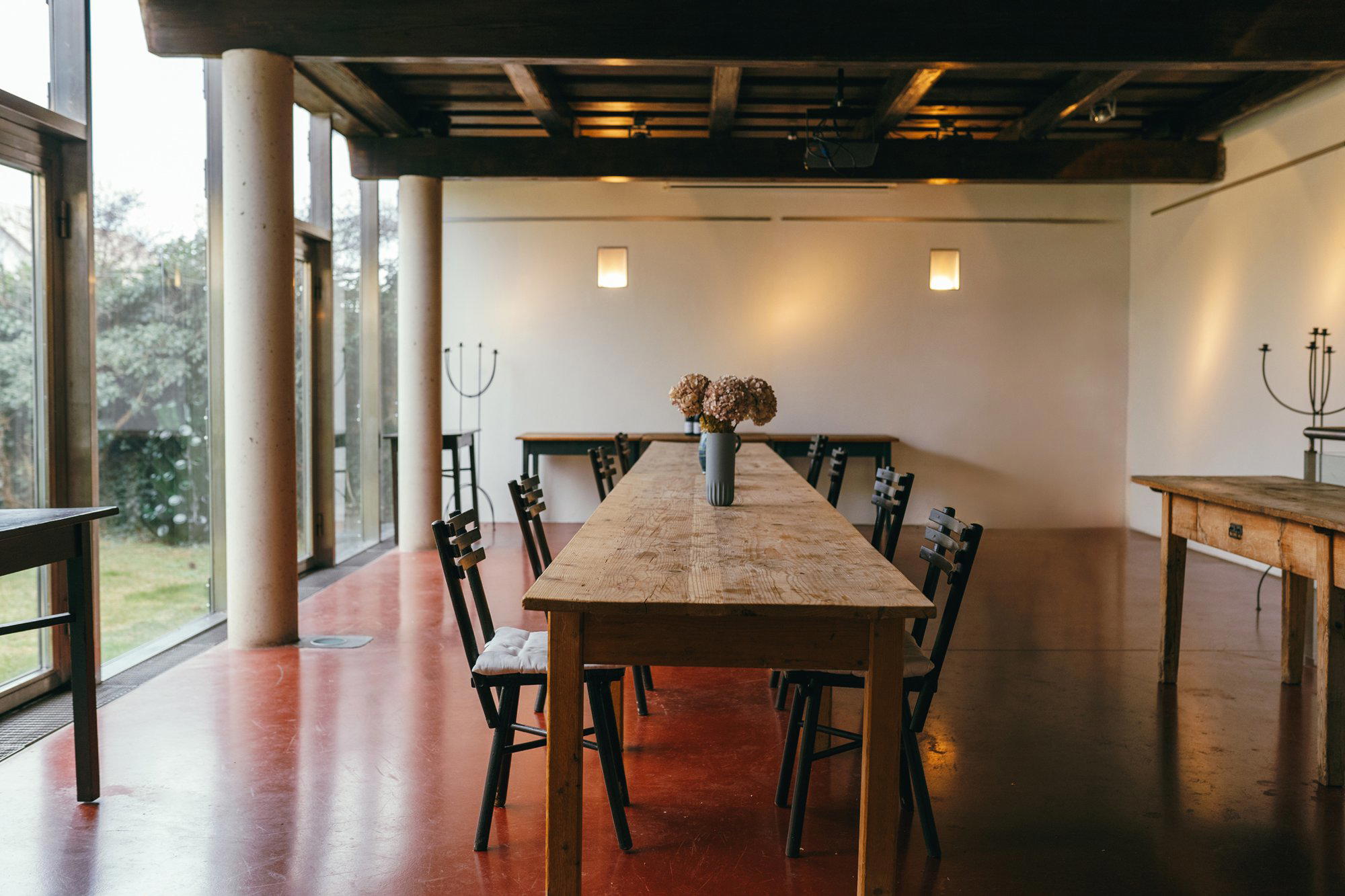
Bowl-and-tea venues internationally have tended toward two visual registers: the minimal Scandinavian-influenced aesthetic of pale wood and white tile, or the warmer, more eclectic approach that draws on pan-Asian visual references. The address on a central pedestrian-adjacent street in a mid-sized Austrian city suggests a compact footprint, the kind of space that works well for a bowl-and-tea counter. That format suits the bowl-and-tea proposition, which does not require the theatre of an open kitchen or the hush of fine dining but does benefit from spaces that feel composed rather than provisional.
The sensory experience at venues in this category is anchored differently than at a tasting-menu restaurant. There is no single dish arriving at a precise temperature on warmed ceramic. Instead, the cumulative effect comes from the layering of textures and temperatures within a single bowl, the contrast between warm grains and cool vegetables, between a sharp dressing and a mild protein, and from the parallel register of a tea served correctly rather than as an afterthought. That combination, when executed with consistency, produces a different kind of satisfaction than a composed fine-dining plate, but not a lesser one.
Wiener Neustadt in Austrian Dining Context
Lower Austria as a region does not occupy the same position in national dining conversation as Vienna, the Wachau wine corridor, or the Salzburg area, where restaurants like Landhaus Bacher in Mautern an der Donau and Obauer in Werfen draw destination visitors. At the fine-dining end, Austria's attention concentrates on Steirereck im Stadtpark in Vienna, Döllerer in Golling an der Salzach, Ikarus in Salzburg, Griggeler Stuba in Lech, Gourmetrestaurant Tannenhof in Sankt Anton am Arlberg, Kräuterreich by Vitus Winkler in Sankt Veit im Pongau, Ois in Neufelden, and Restaurant 141 by Joachim Jaud in Mieming. Wiener Neustadt sits outside that circuit entirely, which means that venues operating there do so without the support of culinary tourism infrastructure. They succeed or do not on the basis of local repeat custom, a harder test in some respects than performing for a transient dining audience.
That context makes the presence of a format like ONO worth reading carefully. Bowl-and-tea concepts require a consistent supply chain and a kitchen team that understands balance and freshness rather than classical technique. Getting that right in a secondary city, without the talent pipeline or wholesale infrastructure of a capital, reflects either genuine operational discipline or strong relationships with suppliers. For the traveller passing through Wiener Neustadt, on the way south from Vienna, or using the city as a base for Lower Austrian day trips, ONO represents the kind of low-friction lunch stop that makes a long travel day easier to manage. For international reference points in assembled-bowl formats done at the highest level, the precision of venues like Atomix in New York City shows what the format can achieve when culinary ambition is dialled up; Le Bernardin in New York City illustrates a parallel principle about ingredient-led simplicity at a different price tier.
Planning a Visit
ONO Bowl & Tea is located at Herzog-Leopold-Straße 25 in central Wiener Neustadt, reachable directly from the main railway station in under ten minutes on foot. Wiener Neustadt Hauptbahnhof has frequent connections to Vienna Meidling and Vienna Hauptbahnhof, making a lunchtime visit viable as part of a day trip from the capital. For the full picture of casual and mid-range eating in the city, our full Wiener Neustadt restaurants guide covers the broader scene across neighbourhoods and formats.
Peers Worth Knowing
Comparable venues nearby, for context on price, style, and recognition.
| Venue | Cuisine | Price | Notes |
|---|---|---|---|
| ONO Bowl & TeaThis venue — the venue you are viewing | Hawaiian Poke Bowls & Bubble Tea | $$ | Not listed |
| Papa's Kitchen | Vegetarian/Vegan Healthy Bistro | $ | Marienmarkt |
| Luigi | Classic Italian with Seafood Focus | $$ | Hauptplatz |
| Le Burger | American Smash Burgers | $$ | near Fischapark |
| Taki Asia to go | Asian Noodle & Sushi Takeout | $ | Hauptplatz |
| Little Garden | French-Asian Fusion Bistro | $$ | Wiener Neustadt |
Continue exploring
More in Wiener Neustadt
Restaurants in Wiener Neustadt
Browse all →
![[aend] restaurant in Vienna](https://cdn.enprimeurclub.com/storage/v1/object/public/images/locations/recsVyRkMfzCxPmp0/hero2.jpg?width=3840&quality=75)
Bars in Wiener Neustadt
Browse all →

Hotels in Wiener Neustadt
Browse all →
At a Glance
- Trendy
- Modern
- Casual Hangout
- Open Kitchen
- Sake Program
Current opening hours
- Monday
- 11 AM–8 PM
- Tuesday
- 11 AM–8 PM
- Wednesday
- 11 AM–8 PM
- Thursday
- 11 AM–8 PM
- Friday
- 11 AM–8 PM
- Saturday
- 11 AM–8 PM
- Sunday
- 11 AM–8 PM
Hours can change for holidays and private events. Last verified .
Lively cafe atmosphere with open preparation of bowls.