
Takada Noageage brings Osaka’s tachinomi culture into a compact Nanbasennichimae room built around standing-bar pace, counter interaction, deep-fried food, shochu, and wine. Its 2025 Tabelog 100 Tachinomi selection gives it a credible marker in a city where casual drinking rooms often compete on energy, speed, and kitchen discipline rather than ceremony.
Pearl is the En Primeur Club membership app — saves, bookings, and concierge access live there. Same editors, same standards.
- Address
- 2-21 Nanbasennichimae, Chuo Ward, Osaka, 542-0075, Japan
- Phone
- +81 6-6630-6717
- Website
- tabelog.com
 Saves & bookings on Pearl
Nanbasennichimae does not ask diners to lower their voices. Around Namba and Nipponbashi, the rhythm is market traffic, late-afternoon drinkers, fast-turning counters, and Osaka’s habit of taking casual food seriously. In that setting, a standing bar must do more than look informal: move drinks, control the fryer, handle solo diners without making them feel parked, and keep the counter neither chaotic nor stiff.
Takada Noageage fits that Osaka grammar. It is a tachinomi, anchored by deep-fried food, with shochu and wine among the drinks. The combination matters. Osaka has long made space for low-formality but not low-skill dining: kushikatsu, okonomiyaki, takoyaki, izakaya counters, and standing bars all depend on rhythm. The appeal is compression, not ceremony: a short order, a drink, limited space, and a kitchen that delivers without turning the meal into a production.
Standing-bar Osaka, judged by rhythm rather than ceremony
Read this room through team coordination. In a counter-led tachinomi, kitchen and floor are less separated than in a seated restaurant. The cook’s timing affects the pour; the pour affects how long a guest lingers; front-of-house rhythm decides whether the room feels generous or merely crowded. The format rewards discipline. A 25-seat standing-bar and counter setup leaves little margin for drift, especially in Nanbasennichimae, where diners can quickly move on if the pace slackens.
Tabelog’s 2025 Tachinomi 100 recognition places Takada Noageage in a narrow, telling category. This is not award language for formal tasting menus or hotel dining rooms; it is a public marker for a style of drinking and eating Japanese cities take seriously on its own terms. A Tabelog score of 3.57 adds a second signal: strong enough to register in a crowded local field, while still in Osaka’s casual price tier rather than a reservation-led luxury tier.
The comparison set explains the positioning. Fukutarou Honten sits in a similar JPY 2,000 to JPY 2,999 band, though its reputation belongs more to Osaka’s konamon tradition. Stand Aida and Ankera So run higher, around JPY 3,000 to JPY 3,999, shifting expectations toward a longer drink-and-snack session. Konamon Dokoro Mitsukuni Ura nanba ten, at JPY 5,000 to JPY 5,999, occupies another spend bracket. Takada Noageage is best read as compact, affordable standing-drink tier, where value is measured by turnover, focus, and how well the first drink meets the first hot plate.
Deep-fried food, shochu, and wine make the format more exacting
Deep-fried food in a tachinomi tests sequencing. The cooking brings heat, oil, and immediacy; the room demands speed and minimal fuss. Add shochu and wine rather than a beer-only model, and service becomes more interesting. The drinks list suggests more than a single round, while the standing format prevents it from becoming leisurely in the Western restaurant sense. This is a concise Osaka drinking meal, not a long-form dinner.
That distinction helps travellers building a Namba evening. Osaka’s stronger casual rooms often work better as part of a route than as a single destination dinner. A standing bar before or after another stop can make more sense than forcing it to carry the night. Readers mapping the city’s range can compare this with broader Osaka listings such as .cafe, 52CHO-ME BAKERY, 551 Horai (551蓬莱), 99 Pizza Napoletana Gourmet, and a canto (Italian). They do not serve the same purpose; Osaka’s dining identity is broad enough to make a standing deep-fry counter part of the core conversation, not a side note.
There is neighbourhood logic here. Nanbasennichimae and the wider Namba orbit reward diners who understand format before arrival. A tachinomi is not for private-room pacing, extended table possession, or a chef-led narrative. The better question is whether the team makes a tight space feel intentional. Counter seating, a standing-bar setup, and solo-dining friendliness indicate a room that accepts single guests and small-group grazing without treating either as second class.
How to place it in an Osaka itinerary
The practical reading is simple: this is a casual, low-spend, no-reservations standing-bar choice with a recognized tachinomi credential. Payment is cash-oriented; credit cards, electronic money, and QR code payments are listed as not accepted, so the friction point is preparation, not dress or formality. The address places it in Chuo Ward’s Nanbasennichimae area, close to Kintetsu Nipponbashi Station, making it more useful for a Namba-focused evening than a cross-city detour.
For visitors, treat the restaurant as a format-specific stop: go for Osaka’s standing-drink culture, the deep-fried-food category, and the compressed pleasure of a counter dependent on timing. Do not judge it against kappo, sushi, or Western fine dining. Judge it against Osaka’s casual drinking rooms, where the difference between ordinary and memorable is usually operational: how kitchen, drinks, and front-of-house cadence hold together under pressure.
Use Our full Osaka restaurants guide for a wider dining map, then place this stop alongside the city’s hotel, bar, winery, and experience planning through Our full Osaka hotels guide, Our full Osaka bars guide, Our full Osaka wineries guide, and Our full Osaka experiences guide. For contrast outside Osaka, EP Club’s Japan and overseas restaurant coverage ranges from -Grilled beef Sukiyaki- KAMAKURA TANUKIAN 鎌倉 たぬき庵 in Kamakura. 鮪と炭火焼き うお炭 秋葉原店 in Tokyo.know in Kumamoto, (Shoku) Vietnam in Kawasaki, [Curry Senmon Ten] Maruyama Kyoju. in Sapporo, and [ki:] in Kyoto to Los Angeles-area Japanese drinking and snack culture at Jōdo Saké Bar in Los Angeles and Onigiri Time in Pasadena.
Recognition Snapshot
Comparable venues by cuisine and price in the same metro.
| Venue | Cuisine | Price | Notes |
|---|---|---|---|
| Takada NoageageThis venue — the venue you are viewing | Osaka stand-up fried foods bar | $$ | Not listed |
| KOBEキッチン MUGUNI | Modern Omurice with Kobe Beef | $$ | Amerikamura |
| Aaaa | Japanese Stand-up Bar | $$ | Chūō |
| Okonomi Tamachan Viva | Okonomiyaki, Teppanyaki & Korean Izakaya | $$ | Nishi |
| Udon Ubara | Japanese Udon | $$ | Tennōji |
| Sora Tsuruhashi souhonten | Traditional Osaka yakiniku & horumon | $$ | Tennōji |
Recognition history
Dated appearances from independent guides and award organizations, with the underlying list record or original source where available.
Tabelog 100 #26 · No. 26
Tabelog · Tabelog 100 - Tachinomi - 2025
Continue exploring
More in Osaka
Restaurants in Osaka
Browse all →




Bars in Osaka
Browse all →
Hotels in Osaka
Browse all →



Wineries in Osaka
Browse all →
At a Glance
- Lively
- Cozy
- Energetic
- Casual Hangout
- After Work
- Group Dining
- Solo
- Late Night
- Standalone
- Beer Program
- Sake Program
Current opening hours
- Monday
- Closed
- Tuesday
- 11:30 AM–2 PM, 5–9 PM
- Wednesday
- 11:30 AM–2 PM, 5–9 PM
- Thursday
- 11:30 AM–2 PM, 5–9 PM
- Friday
- 11:30 AM–2 PM, 5–9 PM
- Saturday
- 11:30 AM–2 PM, 5–9 PM
- Sunday
- 11:30 AM–2 PM, 5–8:30 PM
Hours can change for holidays and private events. Last verified .
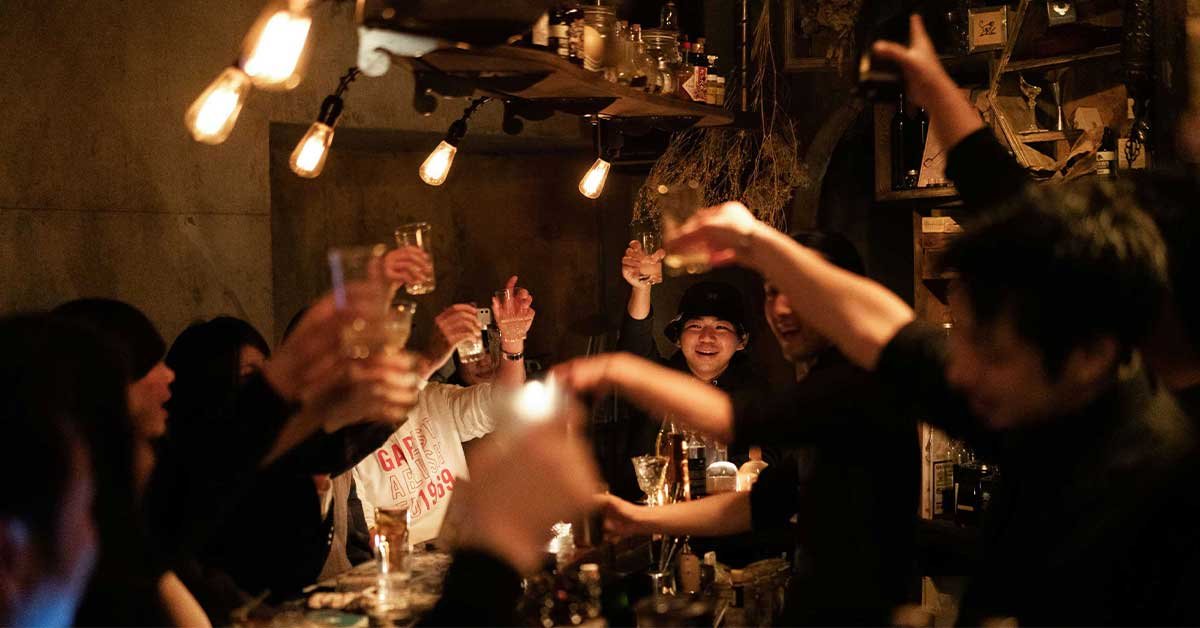
Typical Osaka tachinomi atmosphere: a compact stand-up space with counters, bright and functional lighting, and a bustling, casual feel where guests enjoy quick drinks and freshly fried skewers shoulder to shoulder.