Tía Pol
On a stretch of 10th Avenue that once belonged to the meatpacking trade, Tía Pol has anchored the Chelsea tapas conversation for years, drawing on the Spanish tradition of ingredient-first, technique-second cooking. The format is compact, the menu built around Iberian pantry staples and seasonal sourcing, and the atmosphere closer to a Madrid taberna than a New York dining room. It sits at the accessible end of the city's Spanish table, far from the tasting-menu register of Midtown's $$$$ counters.
Pearl is the En Primeur Club membership app — saves, bookings, and concierge access live there. Same editors, same standards.
- Address
- 205 10th Ave, New York, NY 10011
- Phone
- +12126758805
- Website
- tiapol.com
- Directions
- Get directions
 Saves & bookings on Pearl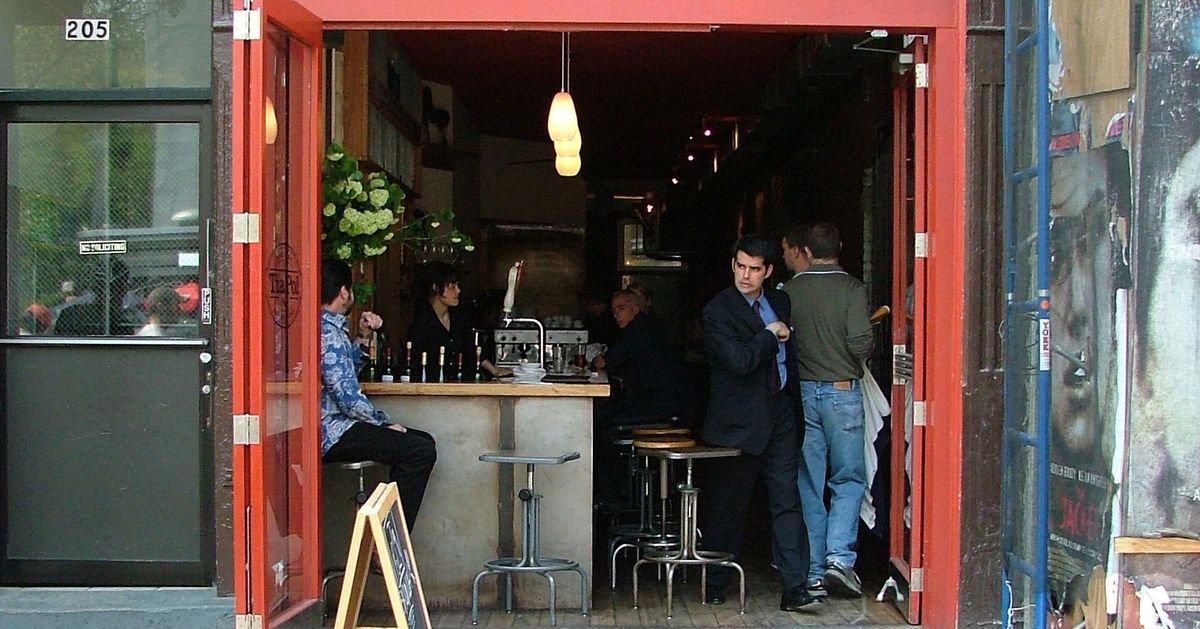
Where Chelsea Meets the Iberian Pantry
Tía Pol is an authentic Spanish tapas restaurant at 205 10th Ave in New York City, with. Tía Pol, at 205 10th Ave, occupies a slice of that corridor with the format that defines the leading Spanish tapas bars: small plates, a short but considered wine list, and a kitchen that treats the Iberian pantry as the whole argument. In a city where Spanish dining can tilt toward the theatrical, large-format paella spectacles, modernist pintxos programs, Tía Pol has held its ground as a place where the sourcing does the talking.
That sourcing-first posture connects directly to why Spain's table translates well in New York. The Iberian larder is built on preserved and cured products that travel: jamón ibérico from acorn-fed pigs, salt cod worked through generations of bacalao recipes, tinned seafood from Galicia and the Cantabrian coast, pimentón from Murcia or La Vera. These are not ingredients that require proximity to Spain to arrive in good condition; they require a kitchen that knows how to use them honestly. At its core, that is what separates a credible tapas operation from a decorative one, not the theatre of the room, but the integrity of what comes out of the tin or off the hook.
The Iberian Pantry in New York Context
New York's Spanish dining tier has always been narrower than its French or Japanese equivalents. The city's highest-recognition tables are weighted toward French technique (see Le Bernardin or Per Se), Japanese precision (Masa), and increasingly, Korean progressives like Atomix and Jungsik New York. Spanish cooking occupies a different register: it tends to reward regularity over occasion dining, and its leading city expressions are neighbourhood-anchored rather than destination-engineered.
That positioning is not a weakness. Across the American dining map, the venues that hold particularly durable local reputations are often those that never aimed for the tasting-menu format in the first place. Bacchanalia in Atlanta and Emeril's in New Orleans both built their standing on consistent, ingredient-driven menus that stayed connected to their respective food cultures rather than chasing international benchmarks. The farm-to-counter logic at Blue Hill at Stone Barns in Tarrytown and Single Thread Farm in Healdsburg operates at a much higher price point, but the underlying argument, that great ingredients need minimal intervention, is the same one a good tapas kitchen makes every evening.
What the Format Demands
The tapas format places unusual pressure on sourcing because there is nowhere to hide. A small plate of jamón or a sliced anchovy fillet is not supplemented by a sauce or a lengthy preparation; the ingredient is the dish. This is the structural logic behind why Galician tinned seafood commands premiums even in export markets: navajas (razor clams), mejillones en escabeche (marinated mussels), and anchovies from the Cantabrian coast are products that take years of fishery management and careful processing to reach the quality level where they can be served with nothing more than good bread and oil.
New York has seen this format done at varying levels of seriousness. At the more elaborate end, chefs trained in San Sebastián or Barcelona bring modernist technique to the pintxo tradition. At the neighbourhood end, the question is whether the pantry is stocked with the real thing or approximations. The distinction matters most in the cured meats and preserved seafood categories, where the gap between commodity product and artisan production is significant in both flavour and price. A kitchen willing to pay for 36-month jamón ibérico de bellota or hand-packed Cantabrian anchovies is making a legible statement about its priorities.
Drinking Spanish in Chelsea
The wine program at a serious tapas bar is inseparable from the food logic. Spain's drinking culture is regional in the same way its food is: Txakoli from the Basque Country, Manzanilla and Fino from Jerez, Godello and Albariño from Galicia, Garnacha from Priorat or Navarra. These are not wines that appear prominently on the lists of New York's formal dining rooms, Per Se and Le Bernardin anchor their cellars in France and Burgundy in particular, which means a committed Spanish wine list at a neighbourhood tapas bar fills a genuine gap in the city's drinking map.
Fino and Manzanilla, in particular, remain underrepresented in New York despite being among the more food-compatible wines in Europe. Their salinity and oxidative character align specifically with cured and tinned seafood, a pairing that is essentially built into the culture of the Spanish coast. Any tapas bar that keeps these by the glass is communicating something meaningful about its understanding of the format.
Sitting Inside the Wider American Dining Conversation
The farm-to-table vocabulary that defines American fine dining at its current apex, articulated at places like The French Laundry in Napa, Providence in Los Angeles, and Addison in San Diego, shares a root premise with the Spanish tapas tradition: the ingredient is the argument. The difference is price tier and elaboration. At the modernist extreme, venues like Alinea in Chicago or Lazy Bear in San Francisco transform ingredients through technique to the point where sourcing becomes context rather than foreground. A tapas kitchen inverts that hierarchy. The tin of Cantabrian anchovies is not a supporting note; it is the point.
Internationally, that same sourcing-as-argument logic underpins the reputation of venues like Alain Ducasse's Louis XV in Monte Carlo and 8½ Otto e Mezzo Bombana in Hong Kong, both of which build menus around specific regional product rather than generic luxury protein. The scale and price point differ, but the principle that the provenance of an ingredient is part of its meaning translates across formats.
For New York diners whose default reference points are the $$$$ counters of Midtown or the full range of the city's restaurant offering, Tía Pol represents a different kind of seriousness, one measured not in tasting courses or starred recognition, but in the quality of what's stocked in the walk-in and on the shelf. For the complete picture of what the city offers across formats and price tiers, the EP Club New York City guide maps the full range.
Planning Your Visit
The restaurant sits at 205 10th Ave in West Chelsea, within walking distance of the High Line's southern end. The neighbourhood is most accessible via the C/E subway lines to 23rd Street. As with most neighbourhood tapas bars operating at this scale, booking ahead is recommended. Arrive with appetite calibrated for sharing: the tapas format rewards ordering across several categories rather than anchoring to a single dish.
Quick reference: 205 10th Ave, New York, NY 10011 | West Chelsea | Spanish tapas format | Walk-in or advance booking recommended for evenings.
A Credentials Check
Comparable venues nearby, for context on price, style, and recognition.
| Venue | Cuisine | Price | Notes |
|---|---|---|---|
| Tía PolThis venue — the venue you are viewing | Authentic Spanish Tapas | $$ | Not listed |
| Sevilla | Authentic Spanish Paella & Tapas | $$ | West Village |
| Tio Pepe | Authentic Spanish & Mexican Tapas | $$ | West Village |
| Despaña | Authentic Spanish Tapas & Fine Foods | $$ | SoHo-Little Italy-Hudson Square |
| La Barra | Spanish Tapas Bar | $$$ | Chelsea-Hudson Yards |
| Leña at Mercado Little Spain | Spanish Wood-Fired Grill | $$$ | Chelsea-Hudson Yards |
Continue exploring
More in New York City
Restaurants in New York City
Browse all →
Bars in New York City
Browse all →


Hotels in New York City
Browse all →









At a Glance
- Cozy
- Intimate
- Rustic
- Date Night
- Casual Hangout
- Group Dining
- Standalone
- Extensive Wine List
Current opening hours
- Monday
- Closed
- Tuesday
- 3–10 PM
- Wednesday
- 3–10 PM
- Thursday
- 3–11 PM
- Friday
- 3–11 PM
- Saturday
- 12–11 PM
- Sunday
- 12–4 PM, 5–9 PM
Hours can change for holidays and private events. Last verified .
Warm, unpretentious hole-in-the-wall with a cozy, neighborhood joint atmosphere.