Tio Pepe
On West 4th Street in Greenwich Village, Tio Pepe occupies the kind of address that New York's neighborhood dining culture was built around, close-quartered, unhurried, and rooted in a block that has absorbed decades of the city's appetite. Compared to the high-ceremony counters of Midtown or the tasting-menu formalism uptown, this is a different register of the city's dining offer entirely.
Pearl is the En Primeur Club membership app — saves, bookings, and concierge access live there. Same editors, same standards.
- Address
- 168 W 4th St, New York, NY 10014
- Phone
- +12122426480
- Website
- tiopepenyc.com
- Directions
- Get directions
 Saves & bookings on Pearl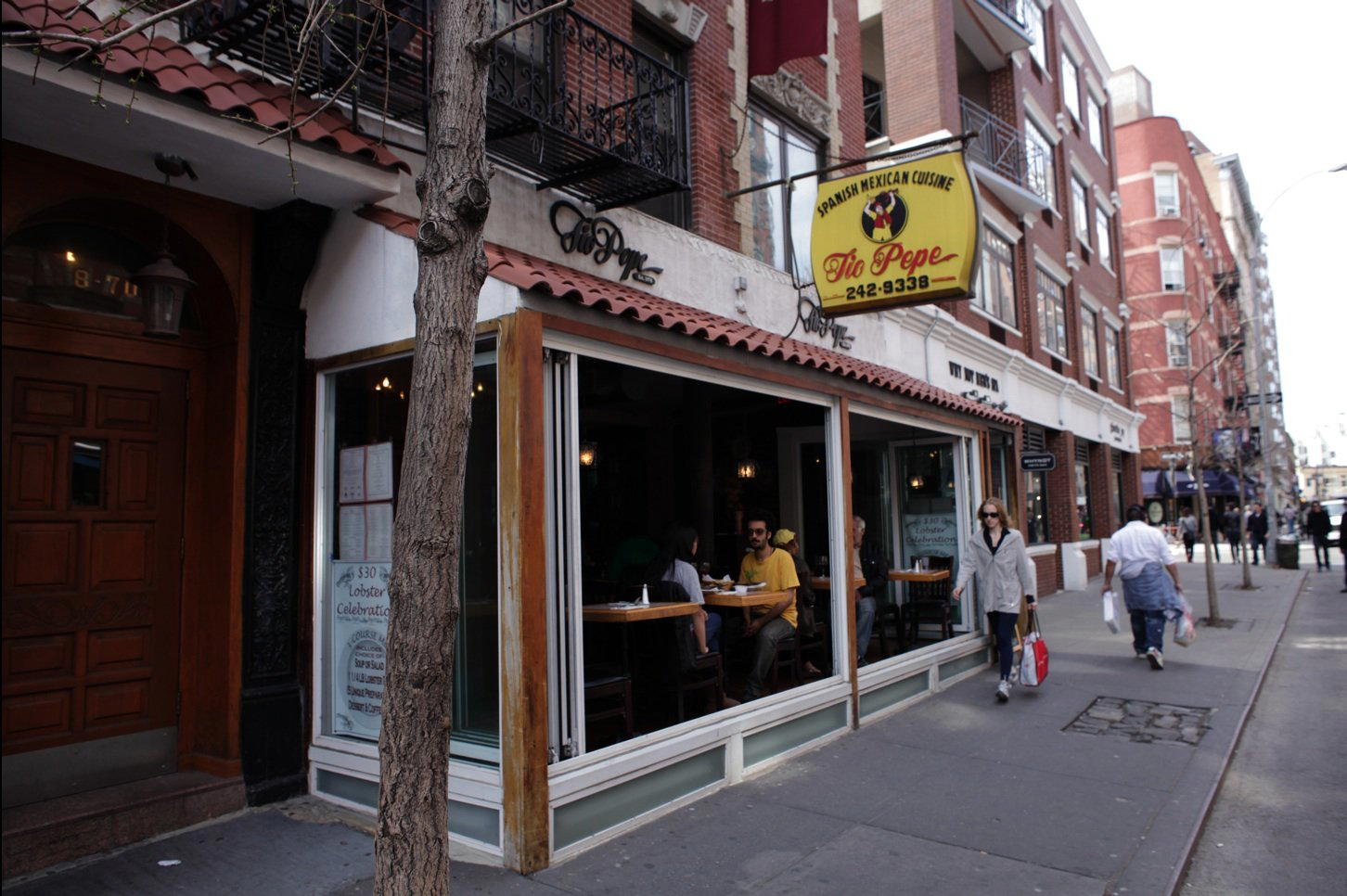
West 4th Street and the Village's Enduring Dining Logic
Greenwich Village has long operated on a different frequency from the rest of New York's restaurant culture. While Midtown produces the high-ceilinged power rooms, the kind of dining that anchors expense accounts and special-occasion calendars at places like Le Bernardin or Per Se, the Village has historically been where the city eats for its own pleasure. The blocks around West 4th Street carry that logic in their architecture: low-rise brownstones, short blocks, the proximity of Washington Square Park, and a foot-traffic rhythm that belongs to residents rather than tourists. Restaurants here tend to read as extensions of the neighborhood rather than destinations parachuted into it.
Tio Pepe sits at 168 West 4th Street, an address that places it squarely inside that tradition. The Village has never been the city's showiest dining corridor, but it has consistently produced the rooms where New Yorkers return most reliably, not for spectacle, but for something that holds up across years of visits.
The Sensory Register of a Village Room
The dining experience that West 4th Street has historically offered is one defined by compression and warmth rather than grandeur. Rooms in this part of the Village tend toward the intimate end of the scale: close seating, low ceilings, the ambient sound of a full room absorbed by plaster walls and heavy wooden furniture rather than bouncing off marble and glass. The effect is a particular kind of noise, not the controlled hush of a tasting-menu room like Atomix or Jungsik, and not the engineered buzz of a high-volume contemporary brasserie, but something closer to the sound of a dining room that has been full for a long time and knows it.
This is the atmospheric register that distinguishes the neighborhood restaurant from both the occasion restaurant and the trend-driven opening. Where Masa organizes every sensory variable around the counter and the chef's sequence, a room like this one organizes itself around the table and the guest's own pace. The distinction matters because it shapes the entire logic of the visit: what you order, how long you stay, and what you remember afterward.
Spanish restaurants in New York occupy a specific position in that broader neighborhood-dining tradition. They tend to run warm in both temperature and service register, with a kitchen vocabulary built around fat, acid, and fire that translates well to the kind of unhurried evening the Village is designed for. The smell of a working Spanish kitchen, garlic meeting olive oil, the particular char of a hot plancha, is one that reads as immediately welcoming in a way that more technically precise cuisines sometimes do not.
Where Tio Pepe Sits in the New York Dining Picture
New York's restaurant culture operates across several distinct tiers, and understanding where a given address fits matters more than it does in most cities. Stronger examples from the market, the Per Se and Le Bernardin tier, operates on a different set of assumptions about price, formality, and advance planning than the neighborhood dining that makes up the majority of the city's actual eating. Between those poles sits a large and varied middle, and within that middle the Village has always produced some of the city's most durable addresses.
Tio Pepe belongs to the neighborhood end of that spectrum: a room where the point is the meal and the company rather than the occasion. That is not a diminishment. In a city where the high-ceremony tier receives the majority of critical attention, and where the broader American fine-dining conversation, from Alinea in Chicago to The French Laundry in Napa to Blue Hill at Stone Barns just north of the city, tends to valorize ambition over frequency, the consistent neighborhood room is actually the harder thing to maintain. Reputation at this level is built on return visits rather than on a single memorable meal.
That dynamic plays out differently in different American cities. Bacchanalia in Atlanta and Emeril's in New Orleans both represent the anchor-institution model in their respective markets, where a single address comes to define a city's sense of its own dining ambition. New York is too large and too competitive for any single room to occupy that position, which means that longevity itself becomes a form of credentialing. An address that survives decades on a block like West 4th Street has earned its standing through repetition, through the accumulation of evenings rather than the performance of any single one.
Planning Your Visit
West 4th Street is accessible from several subway lines serving the West Village and Greenwich Village, making the restaurant direct to reach from most Manhattan neighborhoods.
Those planning a wider itinerary that extends beyond New York might also consider how addresses like Single Thread Farm in Healdsburg, Providence in Los Angeles, Lazy Bear in San Francisco, Addison in San Diego, or The Inn at Little Washington fit into the same spectrum, each represents a different answer to the question of what a restaurant is for, from the multi-course occasion format to the destination hotel dining room. Internationally, 8½ Otto e Mezzo Bombana in Hong Kong and Alain Ducasse at Louis XV in Monte Carlo anchor the highest-formal tier across different markets, providing useful reference points for understanding how the neighborhood-dining model differs from the grand-occasion format at its most developed.
A Minimal comparable set
Comparable venues nearby, for context on price, style, and recognition.
| Venue | Cuisine | Price | Notes |
|---|---|---|---|
| Tio PepeThis venue — the venue you are viewing | Not listed | $$ | Not listed |
| Real Madrid | Not listed | $$ | Mariner's Harbor-Arlington-Graniteville, Authentic Spanish Seafood |
| Alcala | Not listed | $$$ | East Midtown-Turtle Bay, Authentic Basque Spanish Tapas |
| GAUDIr | Not listed | $$ | East Harlem (North), Modern Spanish Tapas |
| Tasca NYC | Not listed | $$$ | Upper West Side (Central), Spanish-Caribbean Fusion |
| Toledo Restaurant | Midtown-Times Square, Classic Spanish | $$$ | Not listed |
Continue exploring
More in New York City
Restaurants in New York City
Browse all →
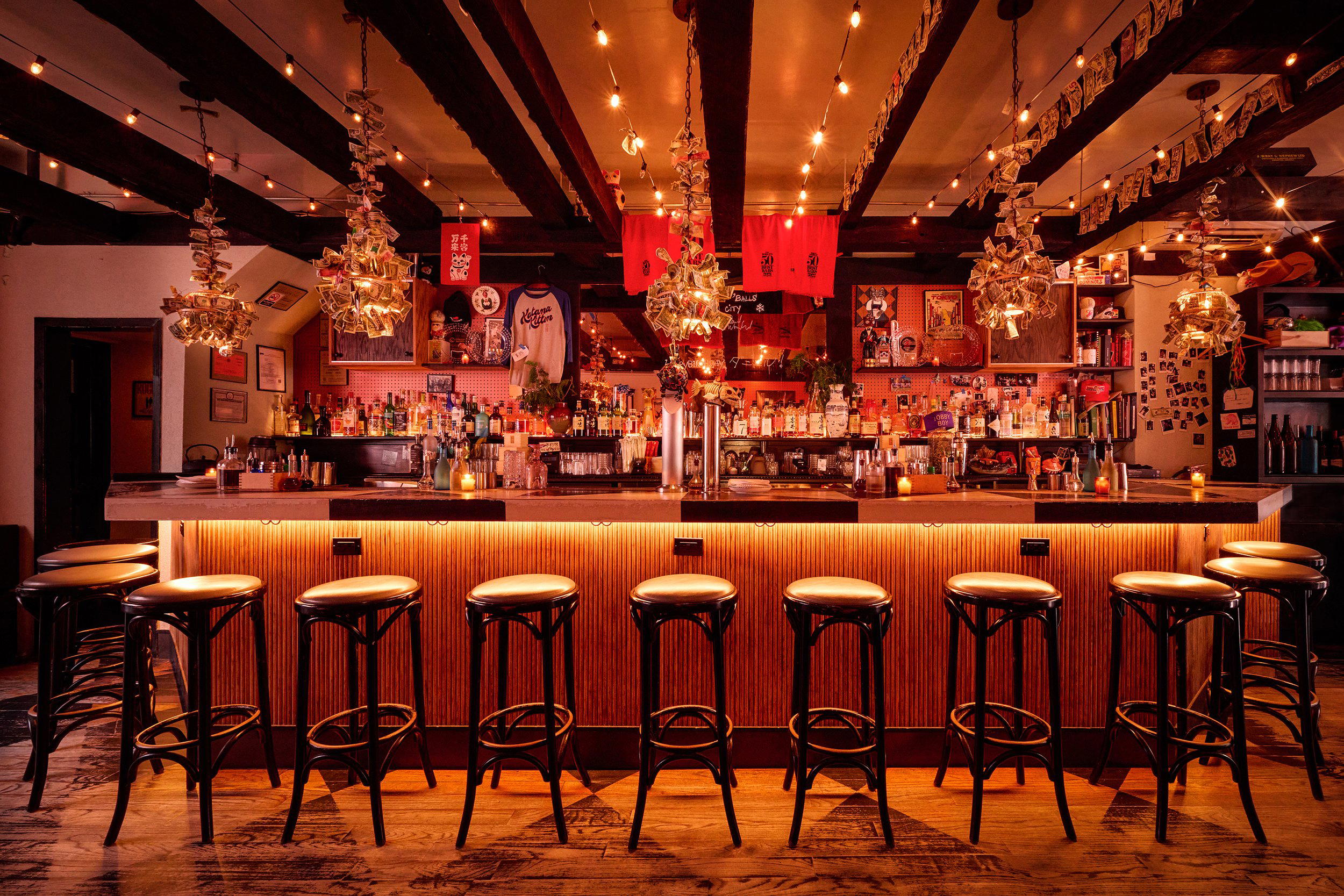
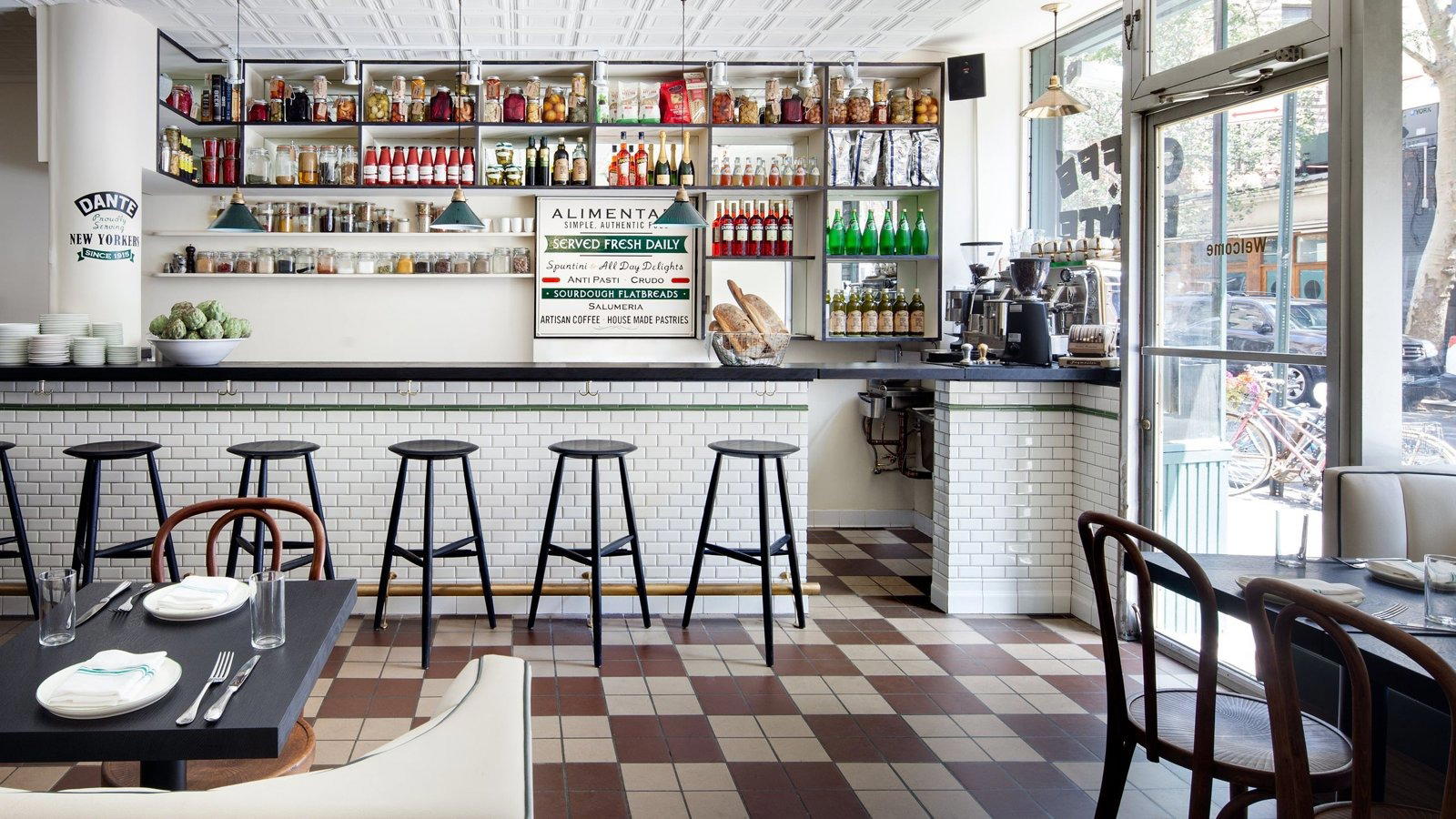
Bars in New York City
Browse all →
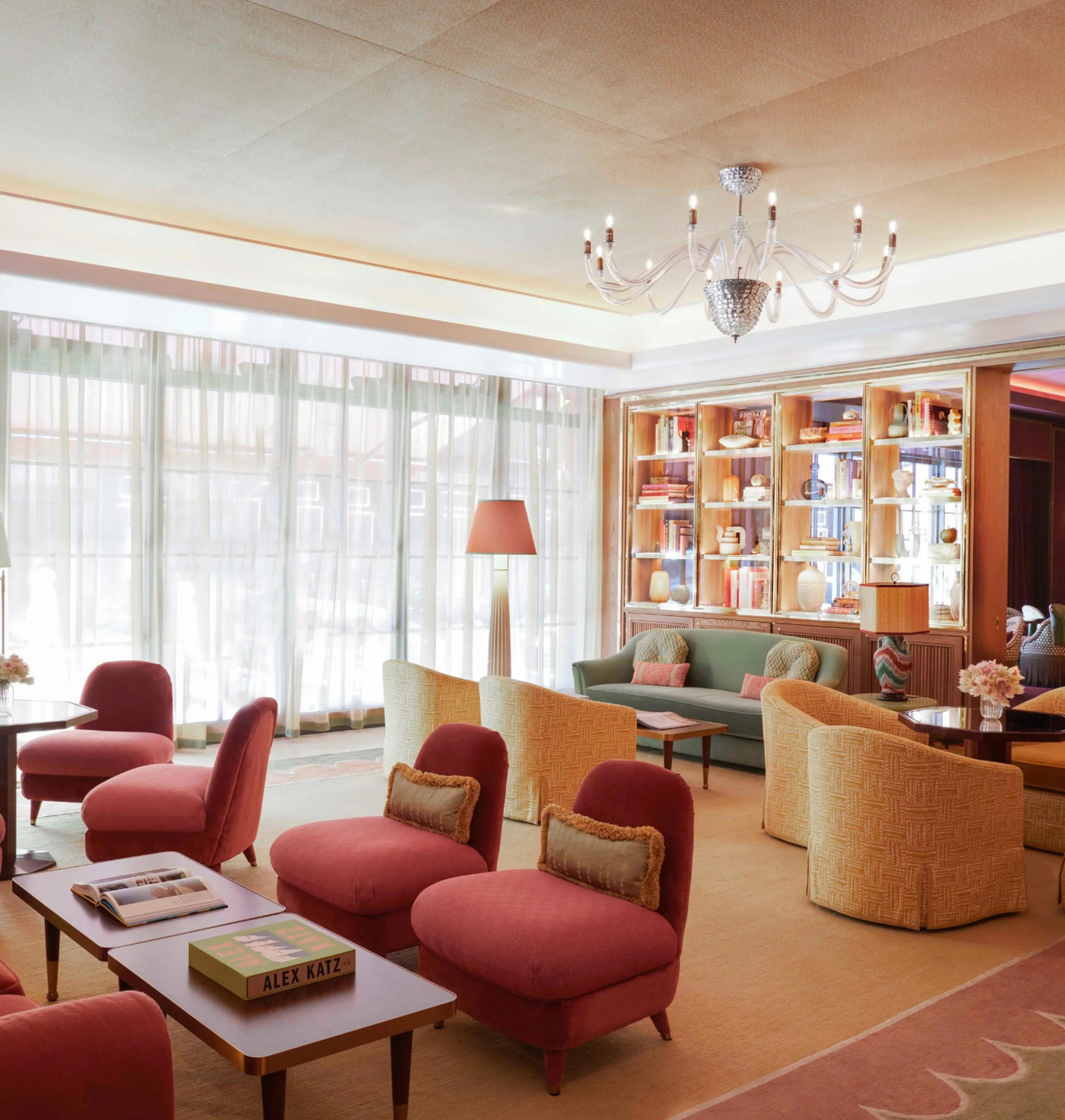
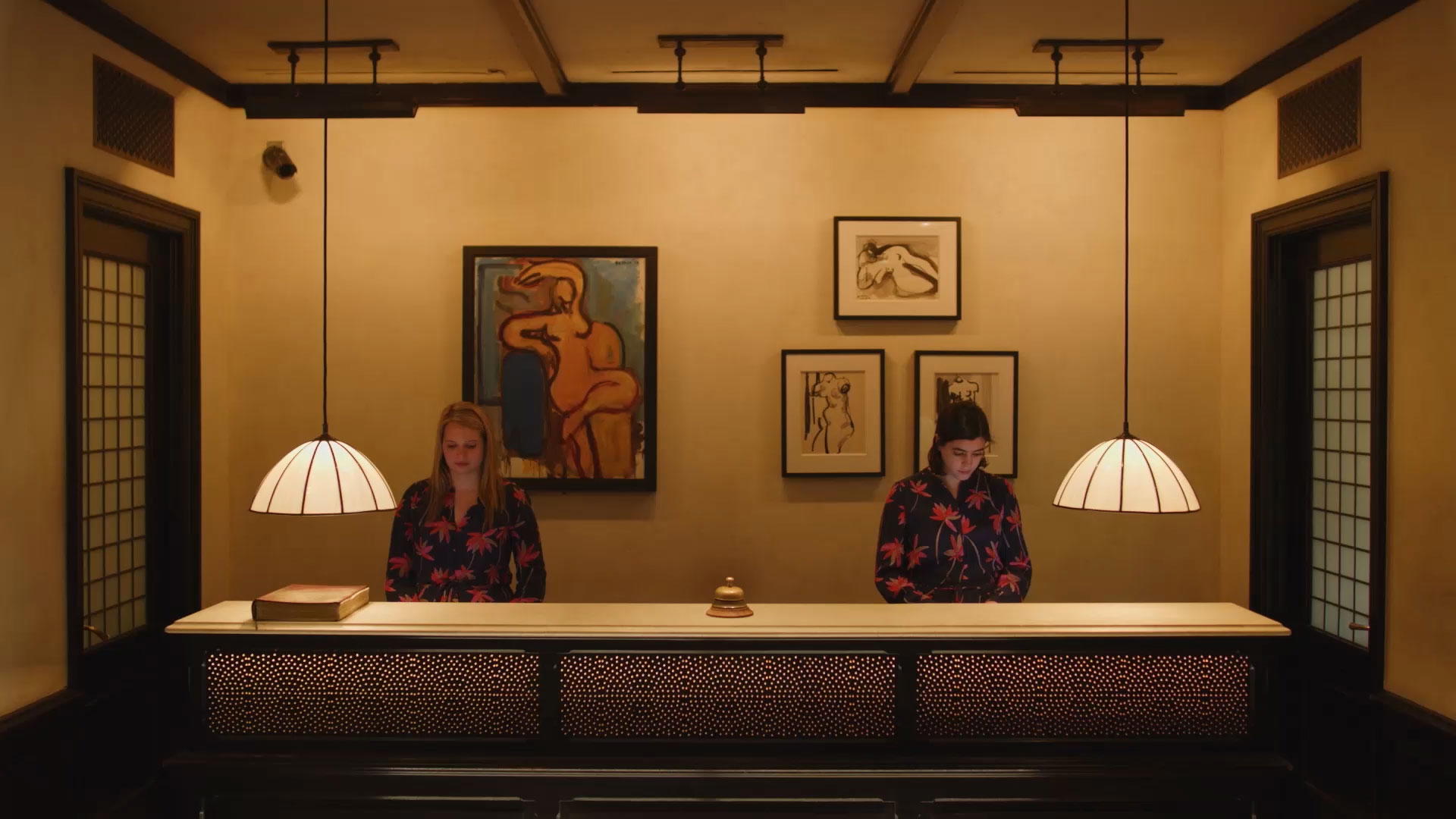
Hotels in New York City
Browse all →






At a Glance
- Classic
- Well Known
- Date Night
- Casual Hangout
- Historic Building
- Craft Cocktails
- Street Scene
Current opening hours
- Monday
- Closed
- Tuesday
- Closed
- Wednesday
- 4–10 PM
- Thursday
- 4–10 PM
- Friday
- 4–11 PM
- Saturday
- 12–11 PM
- Sunday
- 12–10 PM
Hours can change for holidays and private events. Last verified .
Dimly lit with moody atmosphere, floor-length open windows for people-watching, and quiet dining room in the back.