Sevilla
Sevilla on Charles Street has anchored the West Village's Spanish dining tradition for decades, operating in a neighbourhood where old-school reliability carries more weight than trending concepts. The kitchen draws on Iberian sourcing traditions at a price point well below the city's marquee tasting-menu circuit, making it a practical reference point for anyone mapping New York's Spanish options.
Pearl is the En Primeur Club membership app — saves, bookings, and concierge access live there. Same editors, same standards.
- Address
- 62 Charles St, New York, NY 10014
- Phone
- +12129293189
- Website
- sevillarestaurantandbar.com
- Directions
- Get directions
 Saves & bookings on Pearl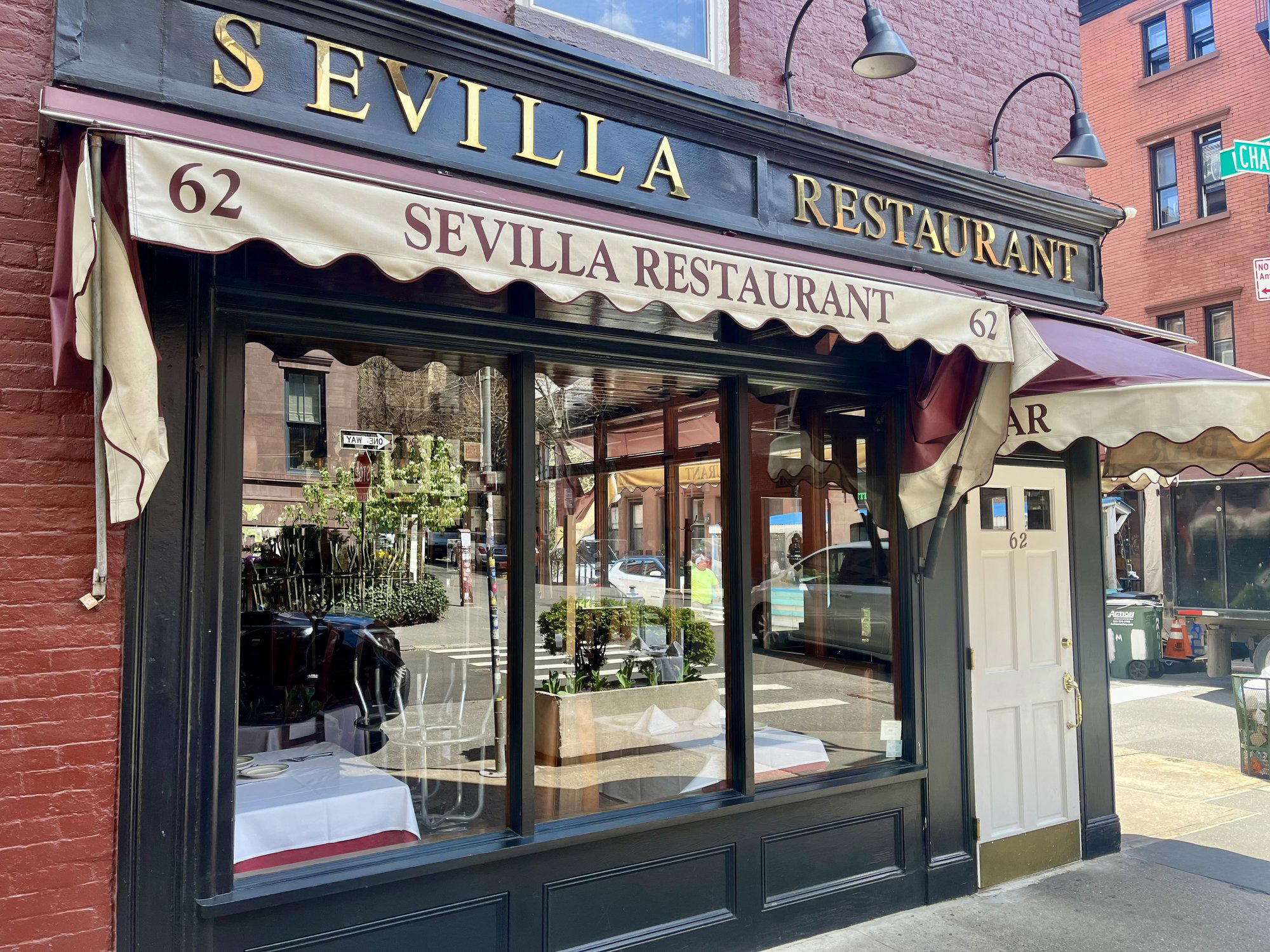
Charles Street and the Long Arc of Spanish Cooking in New York
West Village dining has cycled through enough concepts over the past two decades to make anything with genuine longevity worth examining carefully. Sevilla, at 62 Charles Street, sits in that category: a Spanish restaurant in New York City's West Village that has outlasted trends, neighbourhood demographic shifts, and the particular pressure that comes from operating on one of Manhattan's most scrutinised dining blocks. In a city where the newest opening pulls oxygen from established rooms, persistence at this address is its own credential.
Spanish food in New York has historically occupied a complicated tier. The city has never built the kind of deep Iberian dining infrastructure you find in Miami or certain pockets of Los Angeles, where larger Spanish-speaking communities created sustained demand for regional cooking. In New York, Spanish restaurants have tended to cluster around two poles: tapas bars running accessible small-plate formats, and a handful of longer-standing full-service rooms that predate the small-plates wave entirely. Sevilla belongs to the latter group, which makes its position on Charles Street something worth understanding in context rather than isolation.
Where the Ingredients Come From, and Why That Matters Here
Spanish cuisine is built around a specific geography of ingredients: Ibérico pork from acorn-fed pigs in Extremadura and Andalusia, Padrón peppers from Galicia, saffron from La Mancha, salt cod traditions that stretch across both Spain and Portugal. These are not interchangeable commodities, and the sourcing decisions a kitchen makes tell you more about its seriousness than the menu description ever will.
For a restaurant operating at Sevilla's tenure and price position, the relevant question is how faithfully those sourcing traditions are honoured when the supply chain runs from the Iberian peninsula to a West Village kitchen. The broader trend in New York's Spanish dining has been toward imported Ibérico products becoming genuinely accessible: jamón ibérico de bellota, which was effectively unavailable in the United States before 2007 when import restrictions eased, is now on menus at multiple price points across Manhattan. That shift changed the baseline for what a serious Spanish kitchen is expected to source and serve.
Dishes rooted in Galician seafood traditions, Castilian roast preparations, and Catalan saucing techniques each carry their own sourcing logic. Clams for a preparation in the almejas style want briny Atlantic product; a proper arroz negro depends on fresh cuttlefish ink rather than shelf-stable alternatives; a roast suckling pig in the Segovian tradition requires a specific size and age of animal that most American suppliers do not routinely stock. These are the details that separate a kitchen engaging seriously with the cuisine from one running approximations of it. They are also details the diner cannot assess from the menu alone.
The West Village has enough Spanish-adjacent options, from tapas bars running Basque-style pintxos to wine bars emphasising natural Spanish producers, that Sevilla's kitchen occupies a specific niche rather than a general one. Full-service, traditional-format Spanish dining at a neighbourhood price point is a smaller category in New York than the number of restaurants nominally serving Spanish food might suggest.
Where Sevilla Sits in the West Village Dining Circuit
The West Village dining circuit has split along recognisable lines. At one end, the neighbourhood now hosts restaurants that compete on the same reservation and recognition tier as Le Bernardin, Per Se, and Masa, places where a tasting menu runs several hundred dollars per person and the booking window extends months. At the other end, the neighbourhood sustains neighbourhood regulars: rooms that fill on weeknight habit rather than destination-dining intent. Sevilla operates closer to the second register.
That positioning is not a criticism. Particularly useful restaurants in any city are the ones that hold a consistent standard at a consistent price without requiring the planning overhead of Atomix, Jungsik New York, or comparable tasting-menu commitments. For travellers mapping New York's dining geography, the relevant comparison set for Sevilla is not the city's award-circuit rooms but the layer of mid-format restaurants that give a neighbourhood its daily texture.
Farm-to-table sourcing programs have reshaped how many New York kitchens communicate their ingredient provenance, Blue Hill at Stone Barns in nearby Tarrytown represents the maximalist version of that philosophy, with a working farm supplying the kitchen directly. Spanish cuisine operates on a different sourcing logic: the relevant supply chains are transatlantic rather than regional, and authenticity is measured against Iberian benchmarks rather than Hudson Valley seasons. That distinction matters when assessing what a Spanish kitchen in New York is actually doing well.
The Broader Picture: Spanish Dining Beyond New York
New York's Spanish dining scene exists within a wider American conversation about Iberian food that has expanded considerably since the early 2000s. Destination-driven ingredient sourcing at serious Spanish kitchens now connects to the same networks that supply restaurants like Emeril's in New Orleans or Providence in Los Angeles when those kitchens reach for premium imported product. Internationally, the sourcing discipline expected at rooms like Alain Ducasse: Louis XV in Monte Carlo or 8½ Otto e Mezzo Bombana in Hong Kong sets a standard for what ingredient integrity looks like at the premium tier. A neighbourhood Spanish room in the West Village is playing a different game, but the underlying sourcing questions remain the same at every level.
Readers interested in how farm-integrated sourcing programs work at the highest level of American dining can cross-reference Single Thread Farm in Healdsburg, The French Laundry in Napa, or Alinea in Chicago, each of which has made ingredient sourcing a public part of its identity in ways that clarify what the commitment actually involves.
Planning Your Visit
| Venue | Cuisine | Price Tier | Booking Lead Time | Format |
|---|---|---|---|---|
| Sevilla (62 Charles St) | Spanish | Mid-range | Short / walk-in possible | Full-service, à la carte |
| Le Bernardin | French, Seafood | $$$$ | Several weeks | Tasting / prix fixe |
| Atomix | Modern Korean | $$$$ | Months ahead | Tasting counter |
| Per Se | French, Contemporary | $$$$ | Several weeks | Tasting / prix fixe |
| Jungsik New York | Progressive Korean | $$$$ | 1-2 weeks | Tasting / à la carte hybrid |
Sevilla is at 62 Charles Street in the West Village. The address is walkable from the Christopher Street-Sheridan Square subway station. As a neighbourhood full-service room, same-week reservations are typically feasible, and the walk-in window is more realistic here than at the city's high-demand tasting-menu destinations. Sevilla is open Wednesday and Sunday from 1-9 PM, Thursday through Saturday from 1-10 PM, and is closed Monday and Tuesday. The restaurant is walk-in friendly, with an average price of about $40 per person.
In Context: Similar Options
Comparable venues nearby, for context on price, style, and recognition.
| Venue | Cuisine | Price | Notes |
|---|---|---|---|
| SevillaThis venue — the venue you are viewing | Authentic Spanish Paella & Tapas | $$ | Not listed |
| Tio Pepe | Authentic Spanish & Mexican Tapas | $$ | West Village |
| Alcala | Authentic Basque Spanish Tapas | $$$ | East Midtown-Turtle Bay |
| Solera | Contemporary Spanish Tapas | $$$ | East Midtown-Turtle Bay |
| Aunt Bernies | Spanish Tapas and Wine Bar | $$ | Murray Hill-Kips Bay |
| Dean Fryer | British Seafood Pub | $$ | New York City |
Continue exploring
More in New York City
Restaurants in New York City
Browse all →
Bars in New York City
Browse all →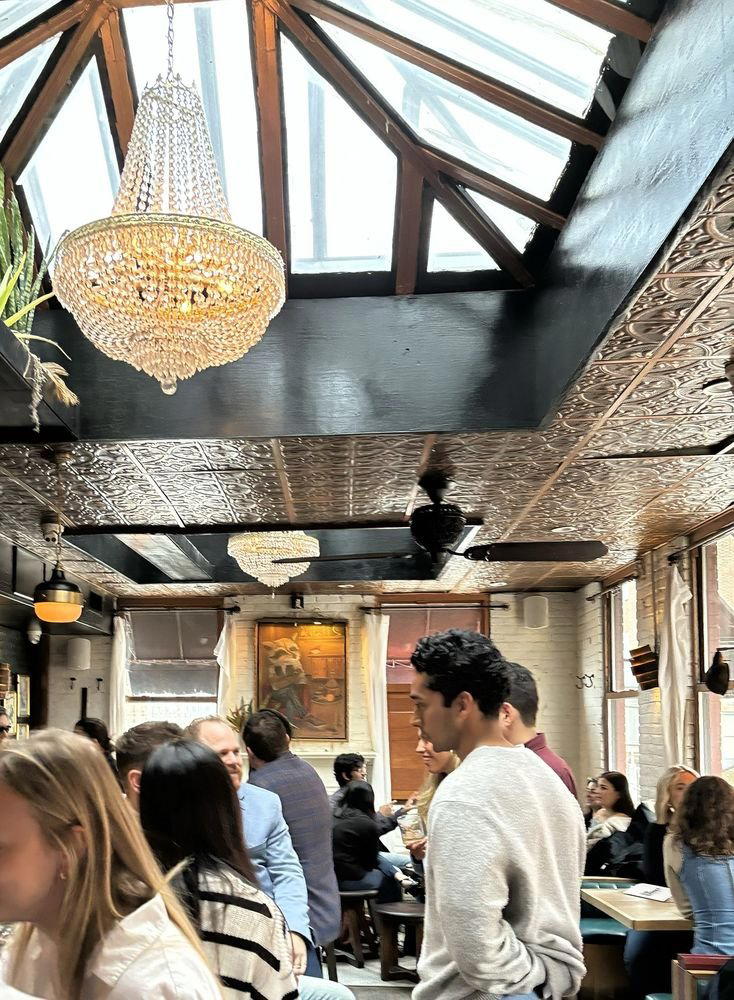
Hotels in New York City
Browse all →








At a Glance
- Classic
- Cozy
- Well Known
- Group Dining
- Casual Hangout
- Historic Building
- Extensive Wine List
Current opening hours
- Monday
- Closed
- Tuesday
- Closed
- Wednesday
- 1–9 PM
- Thursday
- 1–9 PM
- Friday
- 1–10 PM
- Saturday
- 1–10 PM
- Sunday
- 1–9 PM
Hours can change for holidays and private events. Last verified .
Dark, crowded room with garlic aromas, bull heads, oil paintings, and brown leather booths creating a warm, classic Spanish tavern atmosphere.