
Our verdict
Sushiyuu occupies a basement counter in Roppongi's M's Building, where chef Daisuke Shimazaki has built steady critical recognition since appearing on Opinionated About Dining's Japan rankings, moving from Recommended in 2023 to #452 in 2024 and #520 in 2025. Open six evenings a week, it sits in the mid-tier of Tokyo's serious sushi scene: less theatrical than Ginza's trophy counters, more focused than the neighbourhood's casual offer.

Pearl is the En Primeur Club membership app, where members save venues, book tables and use the concierge.
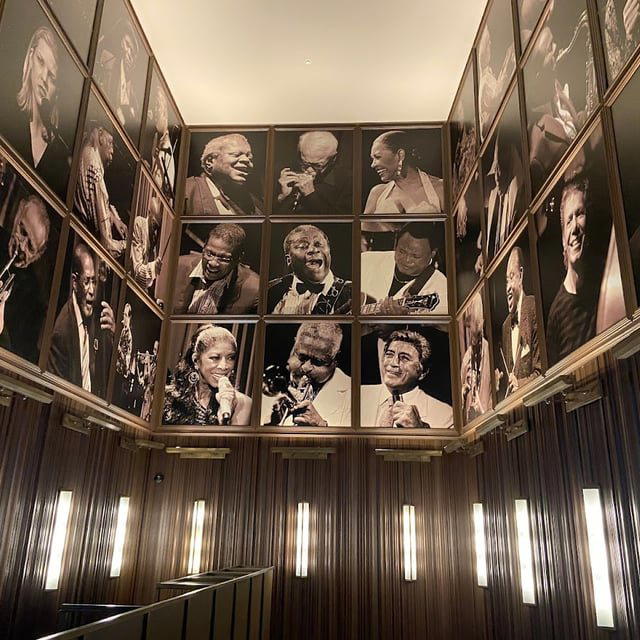
Roppongi's Sushi Counter Against the Grain
Roppongi has a complicated reputation in Tokyo's dining hierarchy. The district is better known for its art institutions, late-night energy, and concentration of international restaurants than for serious sushi. That makes it an unusual address for a counter that has earned consecutive listings on Opinionated About Dining's Japan rankings, a critical index that tracks specialist sushi, ramen, and washoku through the kind of repeat, informed-visitor data that Michelin's inspectors don't always capture.
The neighbourhood context matters. Roppongi's serious dining has historically tilted toward French and kaiseki formats: RyuGin, which operates nearby, built its reputation on Japanese haute cuisine at the highest technical level. The area's sushi offer has been thinner by comparison.
The Roppongi Basement Counter Format
Basement counters in Tokyo are a format with specific implications. They read differently from ground-floor operations: the descent creates a contained environment, acoustically separate from street-level noise, with lighting and temperature that the chef controls completely. In Ginza, this format has become the default for serious omakase, see Sushi Kanesaka or Harutaka, both of which operate in configurations where the physical setting reinforces the idea that you are stepping out of the city's movement and into something more deliberate. Sushiyuu uses the same spatial logic but from a Roppongi address, a neighbourhood where that kind of purposeful separation from the street has less precedent in the sushi category.
The operating hours confirm a dinner-only model: Monday through Saturday, 5:00 pm to 11:30 pm, closed Sunday. That six-evening window is a common configuration for serious Tokyo counters, where the itamae's preparation work, fish selection, rice temperature management, vinegar calibration, occupies the hours before service. The late closing time of 11:30 pm gives the restaurant a longer service window than many comparable counters, which can suggest multiple sittings or a more relaxed pace through the meal.
Reading the OAD Rankings in Context
Opinionated About Dining operates differently from Michelin or the Asia's 50 Best list. Its rankings aggregate scores from a large pool of identified frequent diners, weighted toward people who eat across the relevant category with regularity. For Tokyo sushi specifically, the OAD Japan list functions as a signal of sustained quality in the eyes of the most informed repeat visitors, people who have enough reference points to distinguish a counter that performs consistently from one that had a strong run during inspection season.
The movement in Sushiyuu's position, Recommended in 2023, entering the numbered rankings at #452 in 2024, then #520 in 2025, reads as a counter building its voter base rather than declining in quality. A numbered ranking requires a certain volume of submissions; the 2025 number reflects a wider pool of voters than 2024, which may explain the apparent drop in absolute number even as the counter grows in reach. This is a common pattern in the OAD data for counters that are genuinely gaining visibility.
For comparison within the broader Tokyo sushi tier, Edomae Sushi Hanabusa and Hiroo Ishizaka occupy adjacent critical territory, while Sukiyabashi Jiro Roppongiten, also in Roppongi, operates at the very best of the recognised tier in the same district, providing a point of reference for how seriously the area can be taken when a counter earns its place.
Chef Daisuke Shimazaki and the Counter's Position in the Scene
Tokyo's sushi scene at this level rewards clarity of identity over eclecticism. The counters that build durable critical reputations tend to have a precise point of view on rice temperature, fish sourcing geography, and the ratio of aged to fresh pieces through a service.
What the record does support is the assessment that the counter has been recognised consistently since at least 2023, the earliest year in the available OAD data, and has not been a one-season phenomenon. That kind of sustained presence, particularly from a Roppongi address in a category where Ginza's gravitational pull remains strong, is the kind of detail that matters when assessing where a counter actually sits in the competitive field.
Tokyo's Sushi Scene Beyond Ginza
The distribution of serious sushi across Tokyo's neighbourhoods has shifted over the past decade. Ginza and Shimbashi remain the densest cluster, but counters of genuine critical weight now operate in Minami-Aoyama, Shibuya, Nishi-Azabu, and increasingly, in addresses that earlier guidebooks would have overlooked. Roppongi's entry into this distribution is still partial, Sushiyuu and Sukiyabashi Jiro Roppongiten are outliers rather than part of a cohesive neighbourhood scene, but they indicate that the format can sustain critical quality outside its traditional geography.
That same geographic diversification is visible at the regional level. Serious sushi is no longer a Tokyo-only conversation: Sushi Shikon in Hong Kong and Shoukouwa in Singapore have built credible reputations at the top of their respective markets, operating on edomae principles in cities where the supporting supply chain has become sophisticated enough to allow it. Tokyo remains the reference point, but the radius of serious sushi has expanded.
For visitors building a Japan itinerary around the dining calendar, the broader EP Club network covers HAJIME in Osaka, Gion Sasaki in Kyoto, akordu in Nara, Goh in Fukuoka, 1000 in Yokohama, and 6 in Okinawa. Our full Tokyo restaurants guide maps the city's dining options across cuisine types and price tiers, and our guides to Tokyo hotels, Tokyo bars, Tokyo wineries, and Tokyo experiences cover the full visit.
Planning Your Visit
Sushiyuu operates Monday through Saturday, with evening service from 5:00 pm to 11:30 pm. The address is basement level at M's Building, 7-10-1 Roppongi, Minato City, Tokyo. Sunday is closed.
Quick reference:
Frequently asked questions
What do regulars order at Sushiyuu?
As a dinner-only counter under a single chef, Sushiyuu operates on an omakase format, the sequence is determined by the kitchen, built around the day's fish selection and the chef's reading of what's at its finest. Regulars at counters like this tend to trust the progression rather than direct it; the value of a returning relationship with the itamae is that the pacing and selection adjust over time to the diner's preferences.
What do critics highlight about Sushiyuu?
The critical record for Sushiyuu is grounded in Opinionated About Dining's Japan rankings, which placed the counter at Recommended in 2023, #452 in 2024, and #520 in 2025, a trajectory built on aggregate scores from a specialist voter pool rather than single-inspector visits. Critics and frequent diners working within that system tend to weight consistency of sourcing, rice discipline, and the counter's ability to deliver at the same level across multiple visits. The OAD methodology is particularly sensitive to counters that perform reliably rather than episodically, which makes Sushiyuu's consecutive appearances in the rankings the most substantive critical signal currently on record.
A Tight Comparison
| Venue | Cuisine | Price | Awards | Notes |
|---|---|---|---|---|
| SushiyuuThis venue (the venue you are viewing) | Traditional Edomae Omakase | $150–200 | Not listed | Not listed |
| Harutaka | Edo-Style Omakase Sushi | $200–300 | 3 Michelin Stars · World's 50 Best #76 | Sushi |
| RyuGin | Modern Kaiseki | $500+ | 3 Michelin Stars · World's 50 Best #41 | Kaiseki, Japanese |
| L'Effervescence | Modern French with Japanese Influences | $200–300 | 3 Michelin Stars · World's 50 Best #69 | French |
| HOMMAGE | Modern French with Japanese Influences | $150–200 | 2 Michelin Stars · World's 50 Best #78 | Innovtive French, French |
| MAZ | Innovative Peruvian-Japanese Fusion | $150–200 | 2 Michelin Stars · World's 50 Best #28 | Innovative |
Recognition history
Dated appearances from independent guides and award organizations, with the underlying list record or original source where available.
Opinionated About Dining Top Restaurants in Japan Recommended
Opinionated About Dining
Full recognition history (4 entries)
Opinionated About Dining Top Restaurants in Japan Ranked #520
Opinionated About Dining
Opinionated About Dining Top Restaurants in Japan Ranked #452
Opinionated About Dining
Opinionated About Dining Top Restaurants in Japan Recommended
Opinionated About Dining
Continue exploring
More in Tokyo
Restaurants in Tokyo
All restaurants in Tokyo →


Bars in Tokyo
All bars in Tokyo →






Details
- Intimate
- Cozy
- Elegant
- Date Night
- Special Occasion
- Solo
- Chefs Counter
- Sake Program
- Sustainable Seafood
- Omakase
- Counter Dining
- Sake
- Allergy Accommodating
Current opening hours
- Monday
- 11 AM–3 PM, 4–11 PM
- Tuesday
- 11 AM–3 PM, 4–11 PM
- Wednesday
- 11 AM–3 PM, 4–11 PM
- Thursday
- 11 AM–3 PM, 4–11 PM
- Friday
- 11 AM–3 PM, 4–11 PM
- Saturday
- 11 AM–3 PM, 4–11 PM
- Sunday
- 11 AM–3 PM, 4–11 PM
Hours can change for holidays and private events. Hours as of .
Cozy, traditional Japanese with minimal decor, warm lighting, and a relaxed welcoming atmosphere centered around the small sushi counter.