Michelin Plate
Our verdict
Sushidokoro Yamato occupies a quietly serious position in Tsukiji's post-market dining scene, delivering nigiri-focused omakase with the discipline of a traditional Edomae shop. A Michelin Plate holder in both 2024 and 2025, and ranked 147th among all restaurants in Japan by Opinionated About Dining in 2025, it draws a local-leaning crowd that values craft over ceremony.

Pearl is the En Primeur Club membership app, where members save venues, book tables and use the concierge.
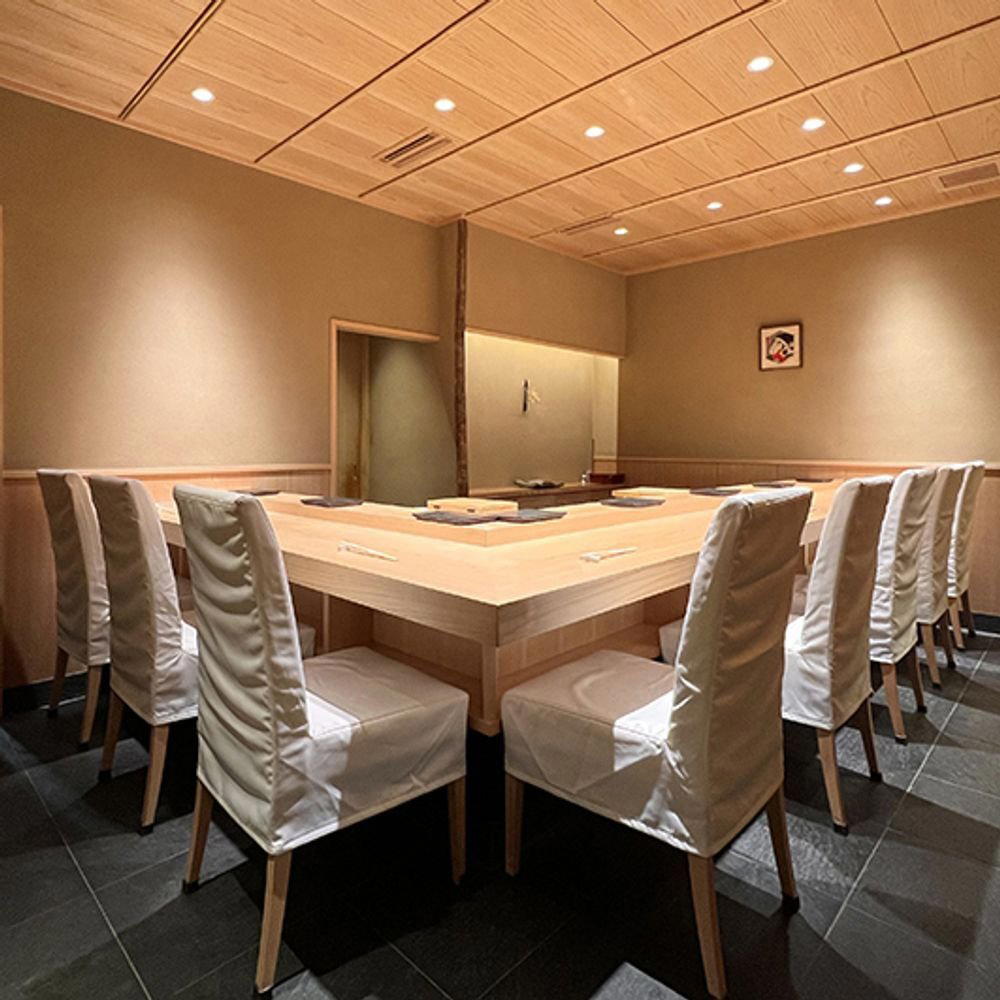
Sushidokoro Yamato, Tokyo
Tsukiji After the Market: A District That Kept Its Standards
Tsukiji's identity has never been straightforwardly gastronomic in the way Ginza is. It built its reputation on proximity to the wholesale fish trade, and the restaurants that thrived here did so by being honest rather than theatrical. When the inner market relocated to Toyosu in 2018, the neighbourhood could have drifted toward tourist convenience. Instead, a core of technically serious sushi and seafood counters held their ground, serving the same carefully sourced fish to a smaller, more deliberate clientele. Sushidokoro Yamato sits within that cohort: a ground-floor counter on Tsukiji's 3-chome, running evening-only hours daily, with a format built entirely around nigiri omakase.
The broader geography matters here. Ginza's premium sushi circuit, which includes counters such as Sushi Kanesaka and Harutaka, prices at the ¥¥¥¥ tier and operates with Michelin star recognition that places those venues in a different competitive bracket. Tsukiji's serious counters, including Yamato, operate at the ¥¥¥ level, which in Tokyo sushi terms still represents a meaningful commitment but opens the format to a wider range of regulars. The trade-off is not quality but spectacle: this is a district that has always preferred substance to presentation theatre.
The Room as a Statement About Craft
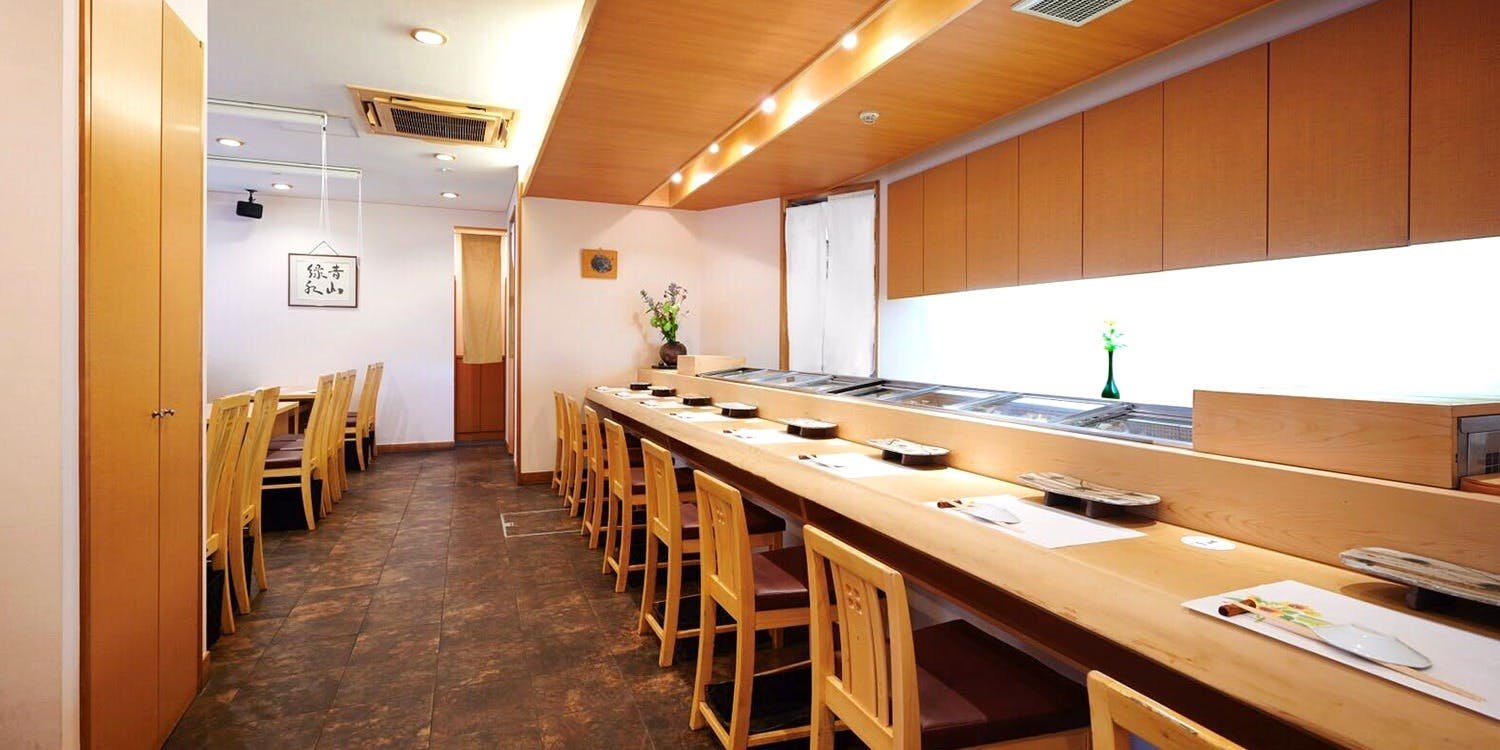
Interior design in high-end Japanese dining often communicates intent before a single piece of fish is sliced. At Sushidokoro Yamato, the aesthetic draws on the vocabulary of the tea ceremony rather than the sleek minimalism of a Ginza counter. The sparse interior recalls a tea hut, shelves stocked with water jugs associated with the tea ceremony. On one earthen wall, an implement traditionally used to pierce rice bags for sampling hangs with the quiet deliberateness of a flower arrangement. None of this is accidental. In Japanese aesthetic tradition, the choice to display functional agricultural objects as near-art signals an orientation toward material honesty, toward the thing itself rather than its packaging.
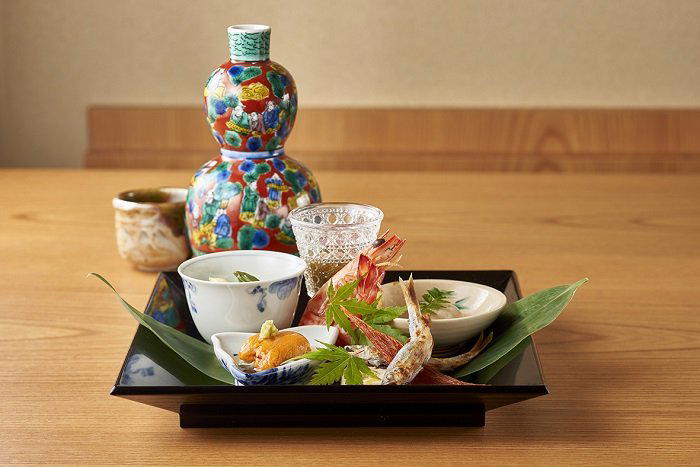
This framing carries directly into the food. Omakase formats vary considerably across Tokyo's sushi spectrum, from multi-course kaiseki-adjacent progressions to lean, nigiri-heavy sequences that say everything through rice temperature, neta conditioning, and the calibration of vinegar to fat. Yamato's set menus place the accent squarely on nigiri, with technique as the primary lens. The progression opens with gizzard shad, kohada, a fish that functions almost as a technical examination in Edomae sushi: the curing process, the balance of salt and vinegar, the timing of preparation all reveal the kitchen's discipline in ways that more forgiving fish do not. Boiled squid, conger eel, and egg follow, each executed in the manner of a proper sushi shop, meaning without distraction or novelty for its own sake.
Recognition and Peer Context
The awards record for Sushidokoro Yamato is instructive in what it says about the venue's positioning. A Michelin Plate in both 2024 and 2025 places the counter within Michelin's acknowledged-but-unstarred tier, the designation used for restaurants that demonstrate consistent quality without yet attracting the full star assessment. In Tokyo, that tier is densely populated and meaningful: the city's guide covers a range so wide that a Plate acknowledgment in a district like Tsukiji carries real weight as a marker of recognised craft.
The Opinionated About Dining ranking provides additional calibration. OAD's methodology aggregates assessments from a defined set of experienced diners rather than anonymous inspectors, which tends to surface restaurants valued by people who eat at high volume and with comparative context. Sushidokoro Yamato ranked 147th among all restaurants in Japan in 2025, up from 214th in 2024. A move of that scale in a single year, across a list that covers kaiseki, ramen, soba, French, and every other format competing for position, suggests a counter gaining traction among informed diners rather than one coasting on existing reputation.
For comparison, counters such as Sukiyabashi Jiro Roppongiten and Edomae Sushi Hanabusa represent different points on Tokyo's sushi spectrum, with varying price tiers, star counts, and formats. Yamato's position, Michelin-acknowledged, OAD-ranked, mid-premium in pricing, and neighbourhood-rooted rather than destination-marketed, places it in a specific and coherent niche: technically serious without the waiting lists and premium pricing that define the Ginza tier.
Edomae Discipline and What It Actually Requires
Edomae sushi, the style developed in Edo-period Tokyo, is grounded in preservation and conditioning techniques that predate refrigeration: salting, vinegaring, simmering, and marinating each fish according to its specific properties. The style demands restraint from the itamae because the work happens during preparation, not at the moment of service. A properly cured kohada has already done its becoming before it reaches the counter. Conger eel, simmered and brushed, requires a cook's understanding of timing and heat. Egg, the tamago, is often used by knowledgeable diners as a barometer for kitchen discipline, given how little it conceals.
What distinguishes counters working seriously within this tradition is the refusal to substitute novelty for mastery. The Tokyo sushi scene has room for both the kaiseki-influenced omakase that introduces seasonal vegetables, specialty broths, and non-traditional fish, and the counter that treats Edomae technique as sufficient and worth doing without augmentation. Yamato, based on its format and recognition, operates clearly in the latter mode.
Planning Your Visit
Sushidokoro Yamato operates evening-only hours, running from 5 pm to 9 pm every day of the week. The address is 3 Chome-7-2, Tsukiji, Chuo City, in the building marked as 第5銀座ウェスト 築地ビル, ground floor. Tsukiji is accessible via the Hibiya subway line at Tsukiji station or the Toei Oedo line at Tsukiji Shijo. Given the limited evening window and the omakase format, reservations are advisable.
The price tier is ¥¥¥, placing it below the full-premium ¥¥¥¥ tier of Ginza's starred counters but firmly within serious dining territory. Appropriate dress is smart-casual; the aesthetic of the room, spare and deliberate, sets that tone without requiring formal attire.
For further reading across Tokyo's dining scene, our full Tokyo restaurants guide covers the city's range by cuisine and district. Those planning broader Japan itineraries may find useful reference in coverage of Gion Sasaki in Kyoto, HAJIME in Osaka, Goh in Fukuoka, akordu in Nara, 1000 in Yokohama, and 6 in Okinawa. For sushi outside Japan, Sushi Shikon in Hong Kong and Shoukouwa in Singapore represent the Edomae tradition transplanted to Southeast Asia. Tokyo hotel, bar, winery, and experience planning is covered in our hotels guide, bars guide, wineries guide, and experiences guide.
For a different approach to Tokyo's sushi scene, Hiroo Ishizaka offers a contrasting neighbourhood perspective in the residential Hiroo district.
Quick reference: Sushidokoro Yamato, 3 Chome-7-2 Tsukiji, Chuo City, Tokyo. Open daily 5–9 pm. Price tier ¥¥¥. Michelin Plate 2024 and 2025. OAD Japan ranked 147 (2025).
Frequently asked questions
What should I expect cuisine-wise at Sushidokoro Yamato?
Which chef is Sushidokoro Yamato associated with?
The chef associated with Sushidokoro Yamato is Yasui Yamato.
What dish is Sushidokoro Yamato famous for?
The omakase at Sushidokoro Yamato leads with gizzard shad (kohada), a piece that Michelin reviewers specifically flag as notoriously difficult to execute correctly. The format is nigiri-led throughout, with conger eel, boiled squid, and egg among the pieces that follow. Kohada is considered a benchmark cut in Edomae tradition: its balance of vinegar cure and fish quality signals a kitchen's technical standing more clearly than premium cuts like tuna.
What does dinner at Sushidokoro Yamato typically cost?
Pricing at Sushidokoro Yamato is listed as ¥¥¥.
Is Sushidokoro Yamato open every day?
Hours at Sushidokoro Yamato: Hours: Monday 5–9 pm Tuesday 5–9 pm Wednesday 5–9 pm Thursday 5–9 pm Friday 5–9 pm Saturday 5–9 pm Sunday 5–9 pm.
How do I find Sushidokoro Yamato?
Sushidokoro Yamato is located at Japan, 〒104-0045 Tokyo, Chuo City, Tsukiji, 3 Chome−7−2 第5銀座ウェスト 築地ビル 1F, Tokyo.
Does Sushidokoro Yamato have a Michelin star or similar recognition?
Sushidokoro Yamato has received recognition including: The spare interior reminds us of a tea hut, its shelves casually stocked with water jugs used in the tea ceremony. On one earthen wall, an implement used to pierce bags of rice to take samples hangs like a flower arrangement. Omakase set me….
Comparison Snapshot
| Venue | Cuisine | Price | Awards | Notes |
|---|---|---|---|---|
| Sushidokoro YamatoThis venue (the venue you are viewing) | Edomae Sushi Omakase | $200–300 | Michelin Plate | Not listed |
| Harutaka | Edo-Style Omakase Sushi | $200–300 | 3 Michelin Stars · World's 50 Best #76 | Sushi |
| RyuGin | Modern Kaiseki | $500+ | 3 Michelin Stars · World's 50 Best #41 | Kaiseki, Japanese |
| L'Effervescence | Modern French with Japanese Influences | $200–300 | 3 Michelin Stars · World's 50 Best #69 | French |
| HOMMAGE | Modern French with Japanese Influences | $150–200 | 2 Michelin Stars · World's 50 Best #78 | Innovtive French, French |
| MAZ | Innovative Peruvian-Japanese Fusion | $150–200 | 2 Michelin Stars · World's 50 Best #28 | Innovative |
Recognition history
Dated appearances from independent guides and award organizations, with the underlying list record or original source where available.
Michelin Plate
Michelin
Opinionated About Dining Top Restaurants in Japan Highly Recommended
Opinionated About Dining
Full recognition history (6 entries)
Michelin Plate
Michelin
Opinionated About Dining Top Restaurants in Japan Ranked #147
Opinionated About Dining
Michelin Plate
Michelin
Opinionated About Dining Top Restaurants in Japan Ranked #214
Opinionated About Dining