Google: 4.7 · 486 reviews


At the rear of a spare, elegant dining room on York Street, Sushi Yūgen's eight-seat chef's counter represents the serious end of Toronto's omakase tier. Chef Kyohei Igarashi blends Michelin-starred sushi training with kaiseki discipline across 20-odd courses served twice nightly, sourcing nearly everything directly from Japan and maintaining one of the city's most carefully curated private-import sake lists.
 Discover on Pearl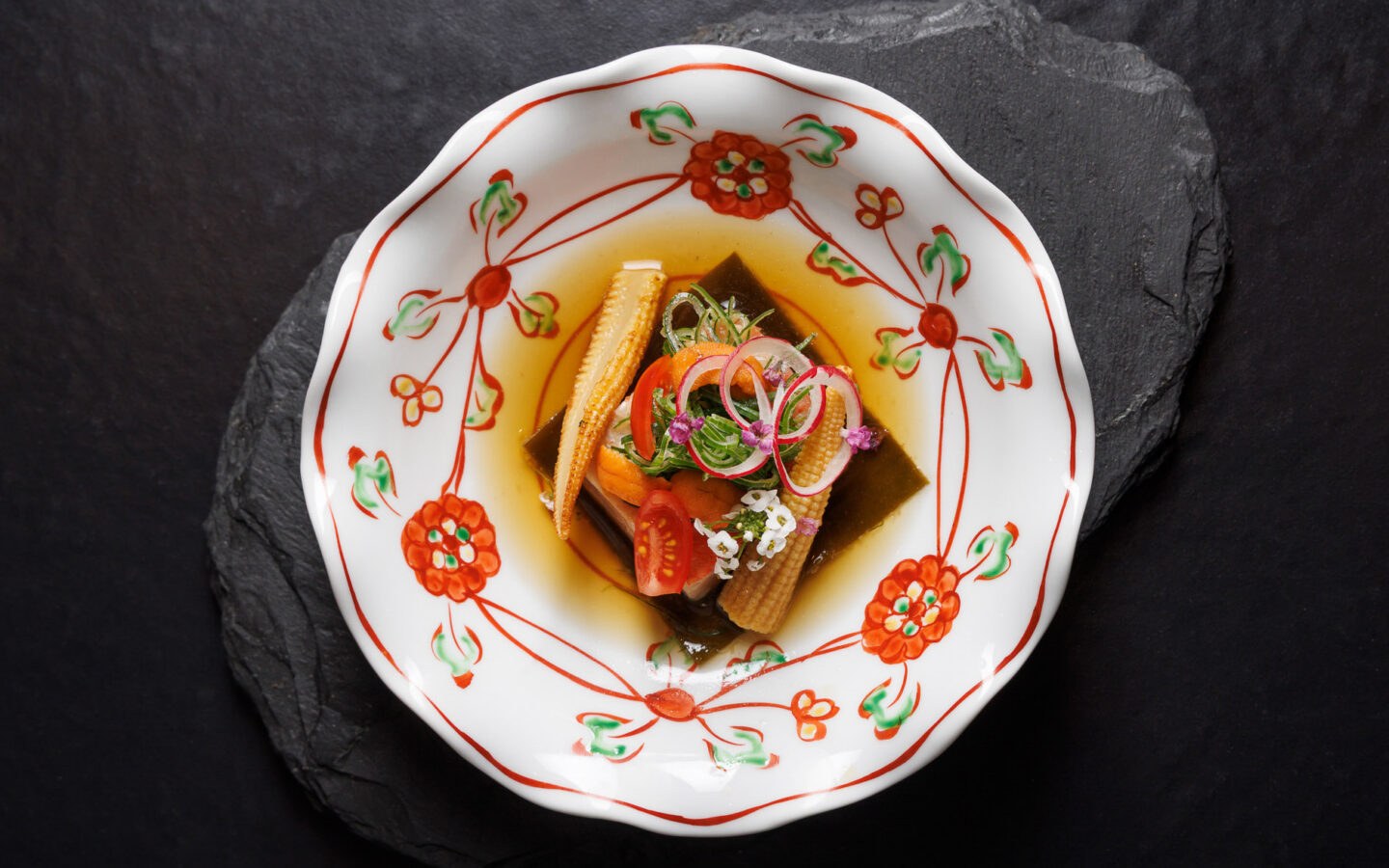
Where Toronto's Omakase Scene Gets Serious
Toronto's high-end Japanese dining has sorted itself into a recognisable hierarchy over the past decade. At the accessible end sit neighbourhood sushi bars and conveyor-belt outposts; in the middle, a growing cohort of a-la-carte Japanese restaurants with imported ingredients and trained chefs. At the leading sits a much smaller, harder-to-book tier of counter omakase, where the meal is the entire point and the experience is measured in hours rather than courses. Sushi Yūgen, at 150 York Street in the Financial District, occupies that upper bracket alongside peers like Sushi Masaki Saito and Aburi Hana, though it sits in a distinct position within that set: less rigidly orthodox than a traditional sushi-ya, more formally structured than an izakaya-inflected tasting counter.
What separates Yūgen from comparable counters in the city is the training lineage behind the menu. Chef Kyohei Igarashi has worked inside both Michelin-starred sushi restaurants and kaiseki kitchens, and the resulting format shows both influences simultaneously — not as a hybrid novelty but as a considered culinary logic. Kaiseki's reverence for seasonal progression and composed presentation sits alongside sushi's precision and sourcing discipline, without either tradition being diluted. For context on how rare that combination is, consider that most omakase counters in North American cities trend one way or the other: either pure Edomae with strict nigiri sequencing, or kaiseki-leaning menus that treat sushi as one section among many. Yūgen holds both at once.
The Counter After Dark: What the Evening Service Delivers
The eight-seat chef's counter at Yūgen runs two seatings per night. Both follow the same 20-odd course format, though the rhythm of the room tends to shift between early and late sittings in ways familiar to anyone who frequents serious tasting counters. Early sittings draw professionals and pre-theatre guests who move efficiently; later sittings tend toward longer lingering, more sake poured, more conversation with the chef. The counter itself is set at the rear of the main restaurant — a deliberate spatial choice that creates the sense of a room within a room, quieter and more focused than the dining room beyond it.
The menu is built around ultra-seasonal Japanese sourcing. With the exception of truffles and caviar, every ingredient comes from Japan directly, a supply chain discipline that places Yūgen among a small number of North American counters , comparable in sourcing philosophy to operations like Atomix in New York City or Le Bernardin's relationship with specific Atlantic suppliers , where provenance is a structural commitment rather than a marketing note.
Truffle season menu offers the clearest illustration of how Yūgen constructs a dish. A domed bowl carved from ice holds three slices of shiromi fanned across a pool of truffle sauce, finished with fresh truffle shavings and gold leaf. The ice vessel is not decorative in the usual sense: it keeps the delicate white fish at a temperature that would be impossible to achieve in ceramic, while the visual presentation extends the seasonal logic of the dish. Elsewhere, steamed Japanese abalone arrives sliced in a sauce built from its own puréed liver , a preparation that closes the sourcing loop and produces an intensity that milder accompaniments simply cannot replicate. Thin sōmen noodles in chilled dashi and madai shabu-shabu appear as further evidence of the kaiseki influence, each course calibrated to its position in the sequence rather than presented for standalone impact.
A Note on the Sake Program
Among Toronto's Japanese dining rooms, sake programs tend to fall into two categories: a curated but relatively standard list drawn from established importers, or a serious private-import program built over time with relationships and allocation access. Yūgen's list belongs to the second category. The program is actively expanding and includes private imports, some unavailable at other Toronto venues. For guests whose knowledge of sake extends beyond the basics, this represents one of the more interesting beverage programs in the city's Japanese tier, comparable in ambition to wine lists at places like Alo or the beverage depth at DaNico. For guests new to sake, the counter setting means staff can guide selections course by course in a way that a larger dining room cannot easily accommodate.
The Financial District Setting
York Street's Financial District address places Yūgen in a neighbourhood defined by weekday business dining and post-market client entertainment rather than the residential density that typically sustains serious tasting-menu restaurants. The district empties considerably after 7pm, which partly explains the counter's booking pressure: Yūgen is drawing from a city-wide destination dining pool rather than a local walk-in base, competing for reservations against the broader Toronto tasting-menu circuit that includes Don Alfonso 1890 and Aburi Hana. This is not a neighbourhood restaurant; it functions as a destination within a competitive premium tier, which means the guest arriving on a Tuesday night has almost certainly planned weeks in advance.
For visitors building a broader Toronto itinerary, EP Club's full Toronto restaurants guide covers the city's dining range in detail, with related resources across hotels, bars, wineries, and experiences. For Canadian fine dining context beyond Toronto, comparable ambition in different registers appears at Tanière³ in Québec City, AnnaLena in Vancouver, Jérôme Ferrer - Europea in Montréal, and regionally at Restaurant Pearl Morissette in Lincoln, The Pine in Creemore, and Narval in Rimouski.
Know Before You Go
Address: 150 York St, Toronto, ON M5H 3S5
Format: Eight-seat chef's counter, omakase only, 20-odd courses, two seatings nightly
Sourcing: Ingredients sourced directly from Japan (truffles and caviar excepted)
Reservations: Counter bookings are limited and in high demand; plan well ahead
Sake: Private-import sake list, seasonally expanding; some labels exclusive to this venue
Setting: Counter positioned at rear of main restaurant; spare, quiet room
Nearby: Financial District, accessible from Union Station
The Minimal Set
A quick context table based on similar venues in our dataset.
| Venue | Notes | Price |
|---|---|---|
| SUSHI YŪGEN | This venue | |
| Alo | Contemporary, $$$$ | $$$$ |
| Sushi Masaki Saito | Sushi, Japanese, $$$$ | $$$$ |
| Aburi Hana | Kaiseki, Japanese, $$$$ | $$$$ |
| Don Alfonso 1890 | Contemporary Italian, Italian, $$$$ | $$$$ |
| Edulis | Canadian, Mediterranean Cuisine, $$$$ | $$$$ |
Continue exploring
More in Toronto
Restaurants in Toronto
Browse all →
Bars in Toronto
Browse all →

Hotels in Toronto
Browse all →
Wineries in Toronto
Browse all →
At a Glance
- Elegant
- Intimate
- Minimalist
- Sophisticated
- Date Night
- Special Occasion
- Business Dinner
- Chefs Counter
- Open Kitchen
- Sake Program
- Sustainable Seafood
Spare, elegant room with minimalist wabi-sabi design, calm and refined Japanese atmosphere conducive to quiet conversation.