Sushi Taro

Washingtonian 100 Very Best Restaurants #24
Our verdict
On 17th Street NW in Dupont Circle, Sushi Taro occupies a specific tier within Washington's serious Japanese dining circuit. The restaurant has held consistent recognition across the city's fine-dining scene and represents one of the few DC addresses where traditional Japanese counter service meets a considered floor team. Advance booking is advisable, particularly for counter seats.

Pearl is the En Primeur Club membership app, where members save venues, book tables and use the concierge.
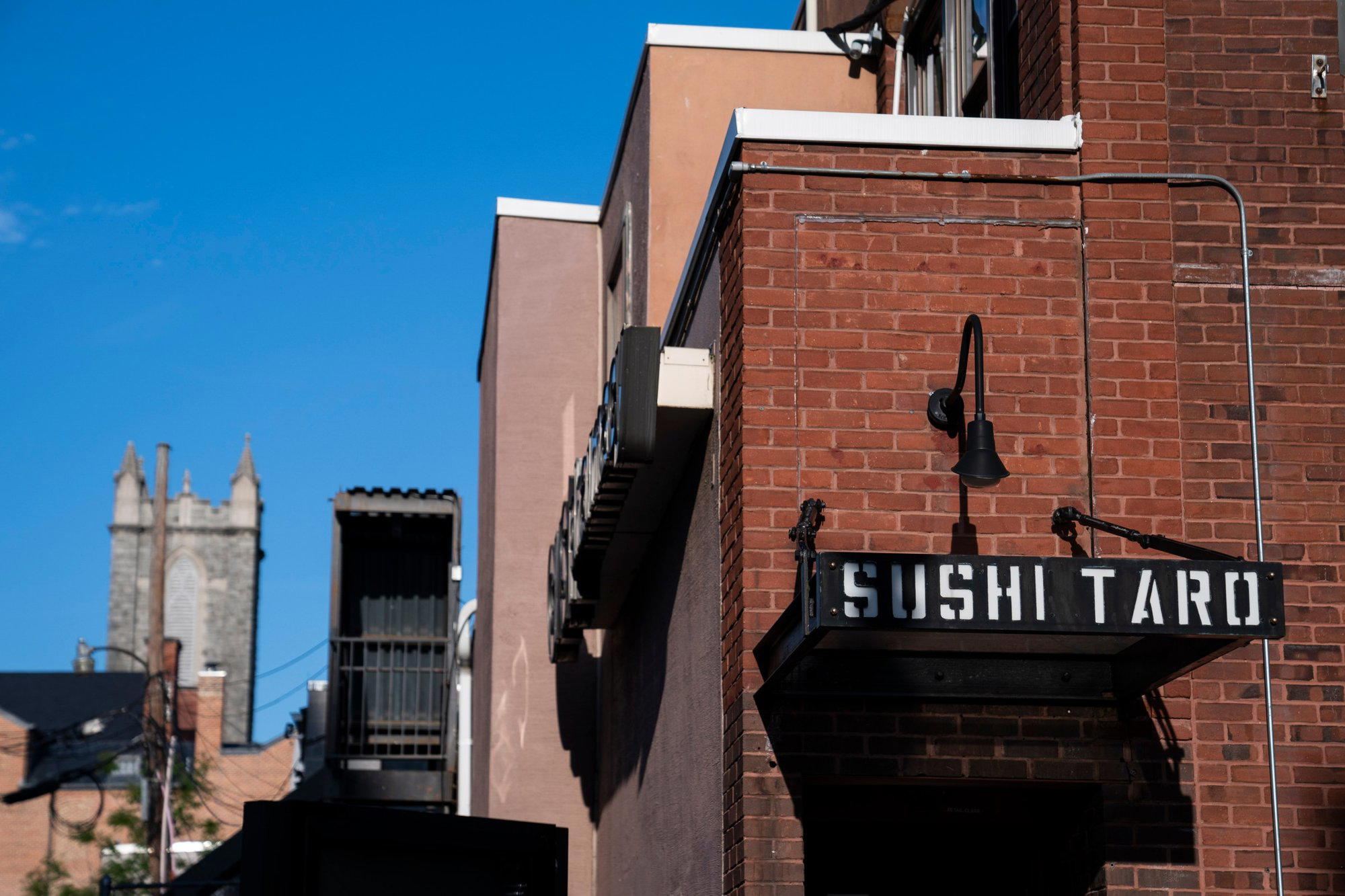
Where Japanese Counter Dining Lands in Washington DC
Dupont Circle's dining strip on 17th Street NW runs from casual neighbourhood staples to rooms with genuine culinary ambition. Sushi Taro, at 1503 17th St NW, sits toward the serious end of that range, a Japanese restaurant that has operated long enough in Washington to function as a reference point for what the city's Japanese dining scene can sustain at its upper tier. In a capital city where the restaurant culture skews toward power-lunch French-American and contemporary New American formats (see The Inn at Little Washington for that tradition taken to its furthest expression), a Japanese counter of this standing occupies a smaller, more defined niche.
The physical experience of arriving here tells you something about its register. The address sits on a walkable stretch of 17th Street, embedded in a neighbourhood that draws a mix of Capitol Hill-adjacent professionals and residents who treat Dupont Circle as a genuine dining quarter rather than a tourist corridor. The room's orientation, counter seating that places guests in proximity to the kitchen's work, belongs to a format where the spatial arrangement is itself a statement about service priorities. This is not incidental; counter-forward Japanese restaurants communicate a different set of values than room-and-table formats, prioritising the direct relationship between preparation and reception over tableside theatrics.
The Service Architecture: Floor, Counter, and the Space Between
Washington's premium dining scene has gradually moved toward a more considered front-of-house model, and Sushi Taro reflects that shift. The editorial angle worth tracking across DC's better restaurants is the relationship between kitchen team and floor team, how much knowledge transfers from the counter to the guest, and whether the sommelier (or sake programme lead, in a Japanese context) operates as a genuine bridge or as a transactional layer.
At restaurants working in the Japanese omakase and kaiseki tradition, the floor dynamic carries particular weight. The pace of service, the sequencing of courses, and the explanatory depth offered at the counter all depend on coordination between the kitchen and front-of-house in ways that a conventional à la carte room does not require. When that coordination works, the guest receives not just food but a coherent progression, a sense that each piece of the meal has been considered in relation to what precedes and follows it. This is the standard against which counter-format Japanese restaurants get measured, in Tokyo and increasingly in the US cities that take the format seriously.
DC sits in an interesting position in this national comparison. The capital has not historically competed with New York's density of serious Japanese counters (compare the booking depth at a venue like Atomix in New York City, where Korean fine dining operates at a comparable level of floor-kitchen integration), but it has a smaller cohort of Japanese restaurants that operate with genuine discipline. Sushi Taro belongs to that cohort, and its longevity on 17th Street is itself a data point about how the local market has supported that level of commitment.
Washington's Fine Dining Context
To place Sushi Taro accurately within DC's restaurant ecology, it helps to map the broader field. Washington's fine-dining circuit spans European-inflected rooms, contemporary American formats, and a handful of restaurants drawing on Asian culinary traditions with the same level of technical seriousness. The city is not short of ambitious cooking: Elmina and Gerards Place represent different corners of the city's serious dining map, while more casual but carefully executed concepts like PhoXotic and Karravaan reflect the growing depth of the city's non-European food culture.
Within that field, a Japanese restaurant operating at counter level represents a particular kind of bet on the Washington audience, a bet that enough guests will seek out precision-focused Japanese dining to sustain a serious programme. That bet has held at Sushi Taro. The comparison set for a venue of this type is not limited to DC: nationally, the restaurants that define what counter Japanese dining looks like at the leading include addresses like Le Bernardin in New York City (which defines a comparable tier of technical discipline in French seafood) and, on the West Coast, The French Laundry in Napa and Single Thread Farm in Healdsburg, both of which represent the American fine-dining tradition at its most considered. Sushi Taro competes in the same category of intentional, high-commitment dining, though within a distinctly Japanese rather than New American framework.
The broader national movement toward collaborative kitchen-floor models, visible at venues like Lazy Bear in San Francisco and Alinea in Chicago, has a parallel in Japanese counter dining, where the chef's direct communication with seated guests is a structural feature rather than an optional enhancement. Sushi Taro participates in that tradition from a DC address, which carries its own significance in a city that has had to build its fine-dining reputation against the assumption that power proximity matters more than culinary depth.
Planning a Visit: Practical Considerations
Sushi Taro is located at 1503 17th St NW, Washington, DC 20036, in the Dupont Circle neighbourhood. The area is well-served by Metro (Dupont Circle station on the Red Line) and is walkable from a number of central DC hotels. For visitors building a broader DC itinerary, the full Washington restaurants guide covers the range of the city's dining at different price points and cuisines, while the Washington hotels guide maps accommodation options by neighbourhood. The Washington bars guide, Washington wineries guide, and Washington experiences guide round out the city's offer for visitors spending more than a single evening.
For counter-format Japanese dining specifically, the general rule across the category applies here: seats at serious counters in American cities tend to fill on short booking windows, with demand concentrated on Thursday through Saturday. Arriving with a reservation is the operative approach; walk-in availability at counter seats in restaurants of this tier is not reliably available, particularly on weekends. Guests with dietary restrictions are advised to communicate those clearly at the time of booking, omakase and tasting-format Japanese restaurants build their sequences in advance, and late-stage modification is harder to accommodate than early notice.
Frequently asked questions
Where do I go for Sushi Taro?
Sushi Taro is located at 1503 17th St NW, Washington, DC 20036, Washington.
How does Sushi Taro compare to other Japanese restaurants in Washington DC?
Washington DC's Japanese dining options span casual izakayas to counter-format rooms built around chef-driven progression menus. Sushi Taro at 1503 17th St NW sits within the latter category, making it one of the few counter-dining destinations in the Dupont Circle area rather than the downtown core where most of the city's fine-dining competition clusters. For diners specifically seeking traditional Japanese counter service in a residential neighbourhood setting, the address is one of the more deliberate choices in the DC dining geography.
What's the signature dish at Sushi Taro?
Sushi Taro's kitchen operates within the Japanese counter-dining tradition, where the progression of nigiri and composed courses functions as the throughline rather than a single standalone dish. Counter seats at venues of this format in DC typically allow the kitchen to guide what arrives based on the day's fish and seasonal availability.
Should I book Sushi Taro in advance?
Yes. Sushi Taro operates at 1503 17th St NW in Dupont Circle, a neighbourhood where demand for serious Japanese dining consistently outpaces the number of counter and dining room seats available on any given night. Reservations through the venue directly are the standard approach. Booking at least two to three weeks ahead is a reasonable baseline for weekend seatings.
What's the standout thing about Sushi Taro?
Within Washington DC's fine-dining circuit, counter-format Japanese restaurants that maintain the discipline of traditional service are a small category. Sushi Taro's position on 17th Street NW places it at the more considered end of Dupont Circle's dining strip, where the service architecture and counter format distinguish it from the neighbourhood's more casual Japanese options.
Do they accommodate allergies at Sushi Taro?
Counter-format Japanese restaurants typically require allergy information at the time of booking rather than on arrival, since courses are prepared sequentially and substitutions affect the full progression. check the venue's official channels at 1503 17th St NW or through their reservation channel before visiting.
Is Sushi Taro good value for money?
Japanese counter dining at this level in Washington DC generally sits in a range comparable to the city's other premium tasting-format restaurants, where the per-person spend reflects both the quality of fish sourcing and the labour-intensive counter service model. Confirming current pricing directly with the venue before booking is advisable.
Budget Reality Check
Comparable venues nearby, for context on price, style, and recognition.
| Venue | Cuisine | Price | Awards | Notes |
|---|---|---|---|---|
| Sushi TaroThis venue (the venue you are viewing) | Traditional Japanese Omakase | $150–200 | Washingtonian 100 Very Best Restaurants #24 | Not listed |
| Uchi | Modern Japanese Omakase | $150–200 | Not listed | Central Business District, Modern Japanese Omakase |
| Omakase @ Barracks Row | Japanese Omakase | $150–200 | 1 Michelin Star · Washingtonian 100 Very Best Restaurants #4 | Barracks Row, Modern Japanese Sushi Omakase |
| Katsumi | Japanese Sushi & Lounge | Not listed | Star Wine List | Logan Circle, Japanese Sushi & Lounge |
| Maru San | Japanese-Peruvian Nikkei Hand Rolls | $30–50 | Star Wine List | Eastern Market, Japanese-Peruvian Nikkei Hand Rolls |
| Omakase Room by Tadayoshi | Japanese Omakase | $200–300 | Not listed | East End, Japanese Omakase |
Recognition history
Dated appearances from independent guides and award organizations, with the underlying list record or original source where available.
Washingtonian 100 Very Best Restaurants #24
Washingtonian
Continue exploring
More in Washington DC
Restaurants in Washington DC
All restaurants in Washington DC →
Bars in Washington DC
All bars in Washington DC →

Details
- Elegant
- Sophisticated
- Intimate
- Special Occasion
- Date Night
- Business Dinner
- Chefs Counter
- Private Dining
- Sake Program
- Sustainable Seafood
- Omakase
- Tasting Menu
- A La Carte
- Sake
- Vegetarian Friendly
Current opening hours
- Monday
- Closed
- Tuesday
- 5–9 PM
- Wednesday
- 5–9 PM
- Thursday
- 5–9 PM
- Friday
- 5–10 PM
- Saturday
- 5–10 PM
- Sunday
- Closed
Hours can change for holidays and private events. Hours as of .
Quiet and elegant with a focus on intimate, authentic Japanese dining experience.