Our verdict
Sushi Master on Strada Brasov brings Japanese fish cookery to Galati, a city whose position on the Danube has long shaped how its residents think about freshwater sourcing and proximity to seafood supply chains. The restaurant sits within a dining scene that is still defining its relationship with Asian cuisine, making it one of the more distinctive addresses in the city's current restaurant mix. See our full Galati restaurants guide for broader context.

Pearl is the En Primeur Club membership app — saves, bookings, and concierge access live there. Same editors, same standards.
- Address
- Strada Brasov 91, Galați 800686, Romania
- Phone
- +40773314013
- Hours
- Daily 10 AM–9:30 PM
- Website
- sushimaster.ro
- Directions
- Get directions
- Booking
- Book on the venue's website
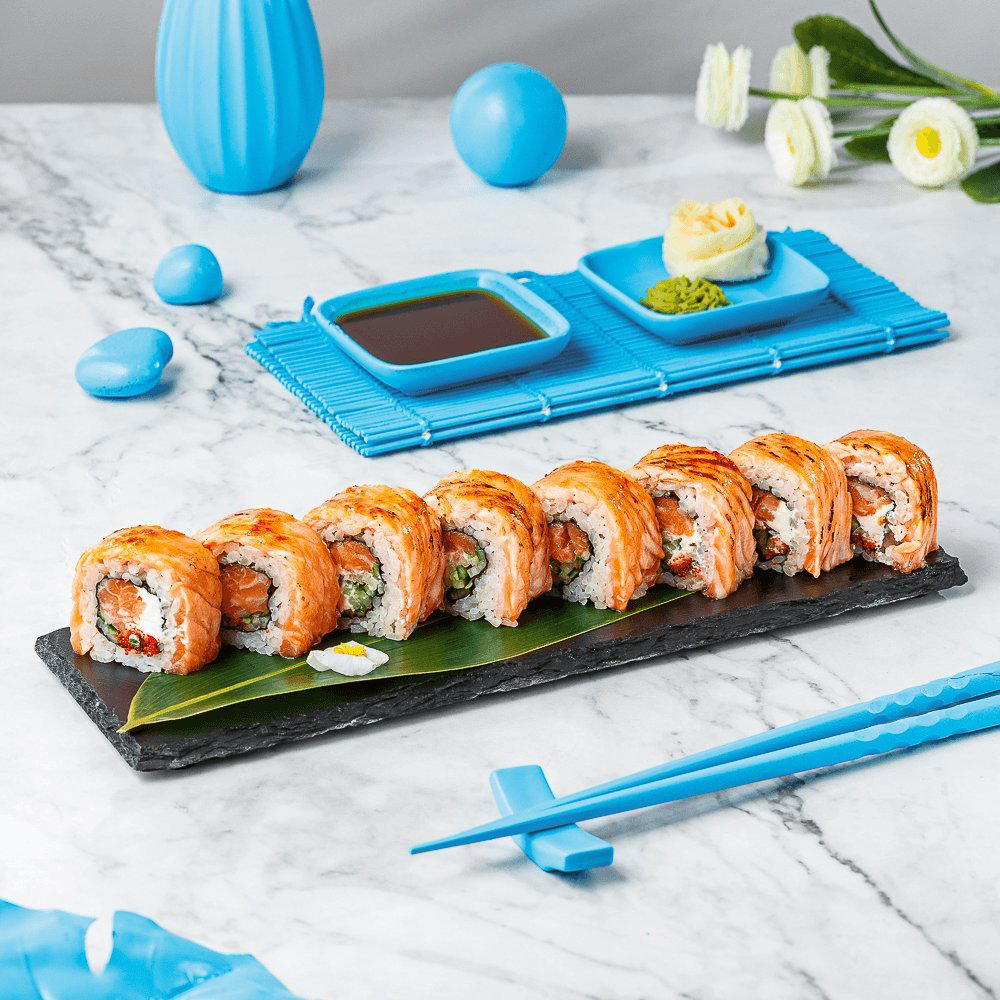
The menu
What to order
- Set By Master
- Lots Of Salmon Set
- SushiMaster 1kg
Japanese Fish Cookery in a Danube Port City
Galati's relationship with fish is older than any restaurant in it. As Romania's primary inland port on the Danube, the city has historically oriented its food culture around freshwater species — carp, pike, catfish — rather than the oceanic varieties that define Japanese sushi traditions. When a city's baseline is river fish prepared in Balkan register, a kitchen asking diners to engage with raw marine protein and Japanese seasoning logic represents a real recalibration of expectation. Sushi Master, at Strada Brasov 91, occupies that position.
The address sits in a residential district of Galati removed from the central waterfront promenades where most of the city's established dining clusters. Approaching the street, the context is domestic and unhurried, apartment blocks, local commerce, the ordinary texture of a working Romanian city rather than a tourist corridor. That setting matters for how to read the place: this is a neighbourhood restaurant serving a local clientele that has chosen Japanese-format dining as part of its regular rotation, not a destination built for visitors passing through.
Sourcing Logic in a Landlocked-Adjacent Market
The ingredient question is the central editorial issue for any sushi operation in Romania. Japan's omakase counters, including those with the Michelin recognition of operations like Atomix in New York, draw their authority in part from supply chains built over decades, direct relationships with fish markets, same-day tsukebi delivery, species selection calibrated to season. Romania has none of that infrastructure in place for marine fish. The nearest significant seafood processing hubs are on the Black Sea coast, accessible via routes through cities like Agigea, where coastal-facing operations such as Vatos Restaurant have more direct access to day-boat catch.
For a sushi restaurant in Galati, supply chain discipline becomes the defining variable. The city is roughly 80 kilometres from the Black Sea as the crow flies, but the logistics of fresh marine fish distribution in Romania still depend largely on Bucharest-routed cold chains, meaning that what arrives in Galati has typically passed through at least one additional handling stage compared to coastal operations. This is not a dealbreaker, plenty of credible sushi operations in European cities without coastlines maintain quality through controlled frozen-at-sea product, which Japanese tuna exporters have refined to a high technical standard, but it means the sourcing story here is more complex than geography alone would suggest. How a kitchen handles that complexity, through product selection, temperature discipline, and menu calibration, is what determines whether the result holds up.
Romania's wider dining scene is working through this sourcing question across multiple formats. Modern Romanian kitchens in Bucharest, such as Bogdania Bistro, have largely resolved it by anchoring their ingredient logic in domestic produce where provenance is verifiable and proximity is genuine. Japanese cuisine in Romanian secondary cities faces the opposite challenge: the cuisine's identity is inseparable from specific marine ingredients, so domestic substitution is not a direct option.
Where Sushi Master Sits in Galati's Current Dining Mix
Galati's restaurant scene is smaller and less diversified than Bucharest's or Cluj-Napoca's. The city's dining options have historically concentrated on traditional Romanian and pan-Balkan formats, with the international segment developing more slowly than in Romania's larger urban centres. Asian cuisine, and Japanese specifically, remains a minority category. Within that minority, sushi-format restaurants occupy a tier that signals a certain level of consumer sophistication and willingness to pay above the local average for a product that requires cold-chain investment.
The comparison venues operating in Galati's orbit include French-leaning operations (Le Bistrot Français), modern Romanian formats (L'Atelier, NOUA), and fusion hybrids (STUP), alongside wine-forward addresses like Kupaj Fine Wines and Gourmet Tapas. None of these operate in the same cuisine category as Sushi Master, which means it competes less on direct comparison and more on the question of where local diners allocate their discretionary spend on non-traditional cuisine. That is a different competitive dynamic than the one operating in cities like Bucharest, where multiple sushi operations compete directly on product quality, price, and chef credentials.
For broader reference on what serious fish-forward dining looks like at the high end, operations like Le Bernardin in New York City set the international standard for marine-ingredient discipline, a useful reference point for understanding what the sourcing and technique bar looks like when a kitchen makes seafood its primary editorial commitment.
Romanian Dining Context Across Cities
Understanding Sushi Master's position requires some sense of how dining culture is developing across Romanian cities at different scales. Larger university cities like Cluj-Napoca, where venues such as Cofeels have built followings around specialty formats, have absorbed international cuisine categories more quickly than port cities like Galati, where the economic and demographic profile has historically supported a more conservative dining culture. Secondary cities such as Timisoara and Sibiu, home to operations like Cartofisserie in Timisoara and Kombinat Gastro-Brewery in Sibiu, have developed their own distinct dining identities, often anchored in either local-ingredient gastronomy or accessible international formats.
Galati is still in an earlier phase of that diversification. That makes a Japanese-format restaurant here less a reflection of a mature market than a signal of one in transition. See our full Galati restaurants guide for the broader picture of where the city's dining scene currently sits and which addresses across categories are worth attention. For context on what's happening in nearby parts of Romania's restaurant circuit, Butterfly Events in Chiscani operates just outside Galati's administrative boundary and represents a different approach to event-format dining in the same regional catchment.
Planning a Visit
Sushi Master's address, Strada Brasov 91, Galați 800686, places it in a residential quarter most easily reached by car or local taxi rather than on foot from the city centre. For those building a broader Galati itinerary, pairing a visit here with other stops in the city's developing dining circuit makes more sense than treating it as a standalone destination. Elsewhere in the country, operations like Lo Sfizio in Targu Mures, Cafeneaua Nației in Ploiesti, and Caru' cu bere in Bucuresti provide useful comparison points for how Romanian cities at different scales have built out their dining identities.
Frequently asked questions
Is Sushi Master child-friendly?
Japanese restaurants in smaller Romanian cities like Galati tend to operate as relatively quiet, counter-style or table-service spaces where well-behaved children are generally accommodated. Contacting the venue directly before visiting with young children is advisable.
What's the overall feel of Sushi Master?
Sushi Master sits on Strada Brasov 91 in a residential quarter of Galati, which shapes its character: this is a neighbourhood restaurant serving Japanese cuisine in a Danube port city with its own deep-rooted fish culture, not a downtown showcase venue. The setting is more low-key than the sushi counters of Bucharest's centre, which suits a city where dining out remains a local rather than tourist-driven activity.
Is Sushi Master the only Japanese restaurant in Galati?
Galati's restaurant scene is smaller and less diversified than Bucharest's or Cluj-Napoca's, and Japanese cuisine remains a limited category in the city. Sushi Master at Strada Brasov 91 represents one of the few venues in Galati specifically oriented around Japanese fish cookery, which positions it differently from the broader Romanian cities where several competing Japanese operations exist.
What do regulars order at Sushi Master?
What can be said is that any sushi operation in Galati faces a particular sourcing context: the city's proximity to the Danube has historically made freshwater fish central to local food culture, and how a restaurant reconciles that with Japanese technique is the practical question worth asking staff directly when you visit.
Quick Comparison
Comparable venues nearby, for context on price, style, and recognition.
| Venue | Cuisine | Price | Notes |
|---|---|---|---|
| Sushi MasterThis venue — the venue you are viewing | Japanese Sushi | $10–20 | Not listed |
| Caru' cu bere | Traditional Romanian | $20–30 | Old Town |
| Sushi Master | Japanese Sushi | Not listed | Electroputere |
| Sushi Master | Japanese Sushi | $10–20 | Peninsula |
| CARTUF | Belgian Fries | $10–20 | Iasi |
| Aubergine | Mediterranean with Israeli and Egyptian influences | Not listed | Old Town |
Sushi Master
Featured Guides
Details
- Casual Hangout
- Group Dining
- Sake Program
- A La Carte
- Vegetarian Friendly
Current opening hours
- Monday
- 10 AM–9:30 PM
- Tuesday
- 10 AM–9:30 PM
- Wednesday
- 10 AM–9:30 PM
- Thursday
- 10 AM–9:30 PM
- Friday
- 10 AM–9:30 PM
- Saturday
- 10 AM–9:30 PM
- Sunday
- 10 AM–9:30 PM
Hours can change for holidays and private events. Last verified .
Casual atmosphere suitable for friends and everyday dining.