Our verdict
Sushi Master on Bulevardul Tomis places Japanese fish-forward dining inside a Romanian Black Sea port city where fresh seafood arrives overland and by sea from multiple directions. The address puts it along Constanța's main commercial artery, making it accessible from the city centre without a detour. For a city whose restaurant scene skews heavily toward grilled fish and Dobrogean lamb, a dedicated sushi counter represents a distinct shift in register.

Pearl is the En Primeur Club membership app — saves, bookings, and concierge access live there. Same editors, same standards.
- Address
- Bulevardul Tomis 56, Constanța 900178, Romania
- Hours
- Daily 10 AM–9:30 PM
- Website
- sushimaster.ro
- Directions
- Get directions
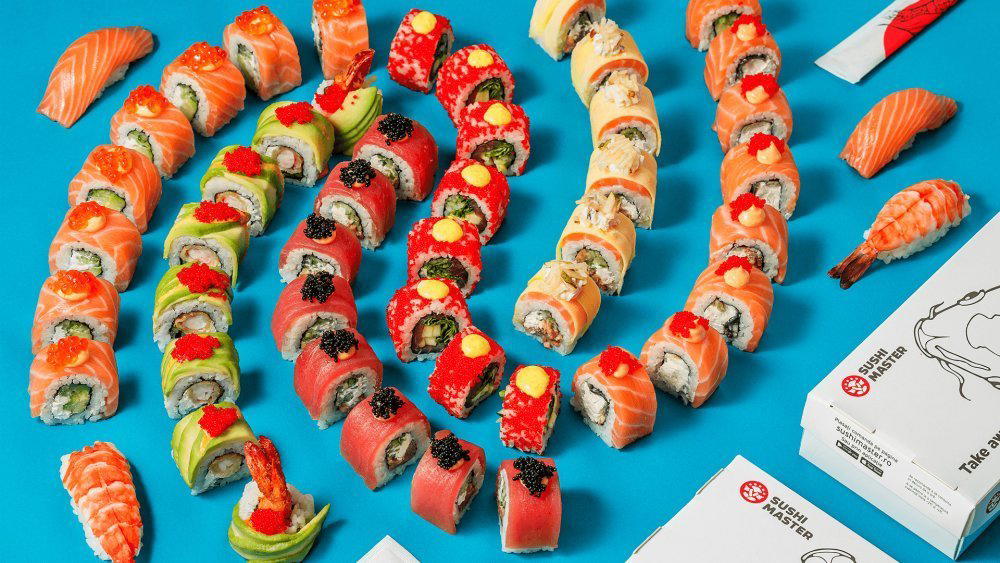
The menu
What to order
- Shanghai
- Avocado Fried Salmon
- SushiMaster Big in Japan
Japanese Precision on the Black Sea Shore
Constanța sits at the edge of the Black Sea, a port city with two thousand years of layered identity — Greek, Roman, Ottoman, and now a functioning Romanian harbour town where fishing boats and container ships share the same coastline. The city's restaurant scene has historically reflected that maritime character: grilled fish, mezze-style spreads, and seasonal Black Sea catches prepared with minimal intervention. Against that backdrop, a dedicated sushi operation on Bulevardul Tomis represents something worth examining. Japanese fish-forward dining, when it arrives in a non-Japanese city, always carries a question about sourcing. The answer to that question tells you nearly everything about whether the kitchen is operating with genuine intent or simply capitalising on the format's global appeal.
In landlocked or semi-coastal European cities, sushi restaurants typically source from one of a small number of wholesale distribution networks that move Atlantic salmon, Norwegian trout, and farmed yellowtail across the continent. Constanța's position changes the calculation somewhat. The Black Sea does produce viable fish for raw preparation — certain flatfish, mullet, and horse mackerel have been used in regional raw-fish traditions for generations, though Romanian sushi kitchens rarely lean into that local specificity. The more interesting question is whether a kitchen on Bulevardul Tomis engages with its geography or imports the same product mix you'd find in Warsaw or Lyon. For readers planning a visit, it is worth asking directly what the kitchen is currently working with, since sourcing decisions in this tier of the market can shift seasonally. You can find Sushi Master at Bulevardul Tomis 56, Constanța 900178.
Where Sushi Fits in Constanța's Dining Structure
Constanța's restaurant offer has widened considerably over the past decade, tracking a pattern visible across Romanian cities: a first wave of international formats (Italian, Chinese, sushi) followed by a more considered local-produce movement. Properties like Vatos Restaurant in nearby Agigea reflect the coastal dining tradition, while the city centre has absorbed more varied formats. Sushi Master occupies a specific niche within that structure: a format that requires cold-chain discipline and ingredient sourcing rigour that most casual dining operators do not attempt.
Across Romania more broadly, the sushi category spans everything from supermarket grab-and-go to dedicated omakase-adjacent counters. The distance between those poles is significant. At the serious end, kitchens are selecting fish on arrival, maintaining strict temperature control from delivery to plate, and sourcing nori, rice vinegar, and wasabi from specialist importers rather than generic catering suppliers. At the casual end, the format is largely decorative, recognisable shapes served at accessible prices with little attention to the sourcing chain. Constanța's market size places it below Bucharest and Cluj-Napoca in terms of the critical mass needed to support high-specification Japanese dining, but that does not preclude a kitchen from operating with discipline at a more accessible price point.
For comparison, Bucharest's Japanese dining tier includes venues that benchmark against central European peers. Bogdania Bistro and Caru' cu Bere illustrate the capital's range across different cuisine registers entirely, but the structural point holds: city size correlates with the depth of specialist dining available. Constanța operates at a different scale, and expectations should be calibrated accordingly. That is not a criticism, it is a framework for reading what a venue like Sushi Master is actually attempting to do within its market.
The Sourcing Question and Why It Matters Here
Ingredient sourcing in sushi is not a peripheral concern, it is the discipline around which the entire format is organised. Rice variety and preparation, fish freshness and handling temperature, the quality of supporting ingredients like tamago or miso: each of these carries weight in determining whether a plate of nigiri functions as food or as an approximation of food. European sushi operations that take sourcing seriously tend to share certain markers: relationships with specific importers, willingness to limit the menu to what is genuinely available that week, and a kitchen that adjusts its offer based on what arrives rather than maintaining a fixed list regardless of product quality.
The Black Sea context adds a layer that is genuinely interesting from a sourcing perspective. Romania's coastline has historically supported a fishing industry, and while the Black Sea's biodiversity is narrower than the Atlantic or Pacific, there are species, particularly among the flatfish and small pelagics, that could theoretically inform a more locally-grounded approach to Japanese-style raw preparation. Whether any Constanța kitchen has pursued that angle in a sustained way remains an open question, but it represents the more compelling editorial possibility in a city of this profile.
For a reference point on what seriously committed Japanese-influenced fish cookery looks like at the highest international tier, Le Bernardin in New York City and Atomix, also in New York, demonstrate how sourcing rigour and cultural specificity interact at a Michelin-starred level. Those references are not a comparison in scale or ambition, but they illustrate the principle that ingredient provenance, handled with intention, produces a categorically different result than generic distribution-chain sourcing. The principle scales down as well as up.
Constanța's Broader Dining Scene
Visitors arriving in Constanța for the first time sometimes treat it primarily as a transit point for the Mamaia resort strip to the north, which means the city centre's own dining offer goes underexplored. Bulevardul Tomis is the city's main commercial artery, running through the core of the modern city and accessible on foot from the train station and the old city peninsula. A restaurant at number 56 is positioned in a part of the city that sees genuine local traffic rather than purely tourist footfall, which tends to produce a more calibrated offer. For a fuller picture of what the city currently supports across different cuisines and price points, our full Constanța restaurants guide maps the options in more detail.
Elsewhere in Romania, the dining conversation has matured significantly. Kombinat Gastro-Brewery in Sibiu, Cofeels in Cluj-Napoca, and Eat IT in Oradea each represent different aspects of a restaurant culture that has moved well beyond the post-communist recovery phase. The same trajectory applies to coastal Romania, where Butterfly Events in Chiscani and Lo Sfizio in Târgu Mureș illustrate how varied the regional offer has become. Against that backdrop, Sushi Master's presence in Constanța reflects a broader pattern: specialist format dining reaching Romanian cities outside the capital with increasing regularity.
Planning Your Visit
Sushi Master is located at Bulevardul Tomis 56, Constanța 900178, on the city's primary commercial boulevard. Bulevardul Tomis is served by Constanța's main public transport lines and is walkable from the central train station, making it direct to reach without private transport.
Frequently asked questions
Is Sushi Master okay with children?
Sushi restaurants in this format generally accommodate families, though the experience is shaped by the menu structure. Calling ahead to Bulevardul Tomis 56 directly will give you the clearest picture of seating arrangements and whether the menu suits younger diners.
What's the overall feel of Sushi Master?
Sushi Master sits on Bulevardul Tomis, Constanța's primary commercial boulevard — a location that places it in the city's everyday dining flow rather than a tucked-away setting. The format is Japanese sushi, which in most configurations means a focused, relatively quiet room oriented around the food.
Is Sushi Master one of the few dedicated Japanese sushi venues in Constanța?
Constanța's restaurant scene has expanded over the past decade, but dedicated Japanese sushi restaurants remain a relatively small part of the city's dining offer compared to Romanian and Mediterranean options. Sushi Master on Bulevardul Tomis 56 occupies that specific niche in a city of roughly 250,000 people with a dining culture still consolidating around international formats. No awards or third-party ratings are currently documented for the venue.
What's the best thing to order at Sushi Master?
At any sushi restaurant operating in a port city like Constanța, the handling of fish — its sourcing and preparation — is the central question worth asking when you arrive. Staff can typically point you toward whatever is moving freshest that day.
How do I find Sushi Master?
Sushi Master is located at Bulevardul Tomis 56, Constanța 900178, Romania, Constanta.
In Context: Similar Options
Comparable venues nearby, for context on price, style, and recognition.
| Venue | Cuisine | Price | Notes |
|---|---|---|---|
| Sushi MasterThis venue — the venue you are viewing | Japanese Sushi | $10–20 | Not listed |
| Caru' cu bere | Traditional Romanian | $20–30 | Old Town |
| Restaurant Seoul | Authentic Korean Barbecue | $20–30 | Sector 1 |
| Pizza Radu | Pizza | $10–20 | Strada Griviței |
| Restaurant Trattoria Garibaldi - CAROL | Authentic Italian Trattoria | $20–30 | Carol |
| Egg & Smash House | American Smash Burgers & Breakfast | $10–20 | Cincsor |
Sushi Master
Featured Guides
Continue exploring
More in Constanta
Restaurants in Constanta
Browse all →
Wineries in Constanta
Browse all →
Details
- Casual Hangout
- Sake Program
- A La Carte
- Vegetarian Friendly
Current opening hours
- Monday
- 10 AM–9:30 PM
- Tuesday
- 10 AM–9:30 PM
- Wednesday
- 10 AM–9:30 PM
- Thursday
- 10 AM–9:30 PM
- Friday
- 10 AM–9:30 PM
- Saturday
- 10 AM–9:30 PM
- Sunday
- 10 AM–9:30 PM
Hours can change for holidays and private events. Last verified .
Cozy atmosphere with friendly staff, ideal for casual dining.