1 Michelin Star · Black Pearl 1 Diamond
Our verdict
Sushi Kinetsu holds a Michelin star (2024) and Black Pearl Diamond recognition (2025), operating from City of Dreams Macau with an omakase format built on fish flown from Japan three times weekly and Yamagata rice cooked in Kagoshima spring water. Evolved from the former Shinji by Kanesaka, the kitchen team remains unchanged. Booking is essential.

Pearl is the En Primeur Club membership app — saves, bookings, and concierge access live there. Same editors, same standards.
- Address
- Macao, 1樓大堂新濠天地頤居
- Phone
- +853 2892 0880
- Hours
- Mon 12–2:30 PM, 6–10:30 PMTue ClosedWed 6–10:30 PMThu–Sun 12–2:30 PM, 6–10:30 PM
- Website
- cityofdreamsmacau.com
- Directions
- Get directions
Continuity in the Counter
Macau's fine-dining circuit has long operated at an unusual intersection: a city where French tasting menus at Robuchon au Dôme share the same integrated resort corridors as omakase counters drawing regulars who might fly in specifically for a single meal. The Japanese counter tradition — tight seating, silent choreography, fish arriving in sequence by temperature and fat content — has found a durable foothold here, partly because Macau's high-spending visitor profile overlaps closely with the clientele that supports the same format in Tokyo's Ginza or Hong Kong's central district. Sushi Kinetsu sits squarely inside that tradition, occupying the lobby level of City of Dreams and carrying both a Michelin star (awarded 2024) and a Black Pearl Diamond (2025), placing it in a tier that competes directly with the handful of serious omakase addresses across Greater China rather than with the city's broader Japanese dining scene.
What the Regulars Already Know
The clearest signal of institutional continuity here is the kitchen team. Sushi Kinetsu emerged from what had been Shinji by Kanesaka, an omakase counter with documented Kanesaka lineage that closed during the disruptions of the COVID-19 period. When the rebranded counter reopened, the kitchen staff carried across unchanged, a fact that matters to the regulars who had built routines around the predecessor and were, in effect, simply resuming them under a new name. This kind of continuity is not common in Macau's resort dining ecosystem, where kitchen turnover tends to follow the logic of large hospitality groups rather than the master-apprentice lineage model that shapes serious Japanese counter culture.
For those clientele, the reassurance goes beyond familiarity. It means the tacit knowledge accumulated over years, which pieces to linger on, which progression in the nigiri sequence signals the kitchen's current focus, how the rice behaves across seasons, transfers intact. Loyal guests at this kind of counter are not merely ordering a meal; they are reading a text they have been studying for some time. That dynamic, more than any single ingredient or award, explains the retention at counters like this one.
For a sense of how that same counter-culture tradition plays out at a different price point and register in Hong Kong, Sushi Shikon provides a useful point of comparison, while Harutaka in Tokyo illustrates the lineage-led omakase model in its home environment.
The Supply Logic Behind the Menu
Two sourcing decisions define the flavor profile here, and both are operationally demanding enough to function as genuine differentiators in a market where Japanese restaurants often compromise on provenance once they move away from Japan's distribution networks. Fish arrives from Japan three times per week, a frequency that, in a city like Macau, requires sustained logistics relationships and meaningful volume to justify. The alternative, for a counter of this type, would be to work with Hong Kong's fish market infrastructure, which is competent but operates on different selection and handling assumptions than the Tokyo-to-counter pipeline the kitchen is working within.
The rice sourcing is equally specific: Yamagata-prefecture rice, cooked in spring water sourced from Kagoshima, seasoned with a light-tasting vinegar. Each of those choices reflects a culinary position. Yamagata rice is associated with a particular firmness and sweetness that behaves differently under vinegar dressing than Niigata varieties, and the spring water decision speaks to the mineral content that affects how the rice cooks and holds temperature at the counter. For regulars, these details are not abstract, they register directly in the texture and warmth of each nigiri piece.
Macau's Omakase Position in a Wider Context
The city's serious Japanese counter scene is smaller than Hong Kong's but occupies a distinct position: the resort-hotel format means venues here operate with a level of physical investment and service infrastructure that standalone counters in other cities rarely match. Sushi Kissho by Miyakawa represents another data point in this tier, and the presence of multiple credentialed omakase addresses within City of Dreams and its peer properties reflects a deliberate segmentation strategy by resort operators who understand that Japanese counter dining commands a high per-seat spend from a visitor profile that is already in the building.
That context matters when positioning Sushi Kinetsu against alternatives. The Michelin star and Black Pearl Diamond do not exist in isolation, they place the counter within a regional award ecosystem that includes the French contemporary addresses at Alain Ducasse at Morpheus and the Cantonese programs at Jade Dragon and Chef Tam's Seasons. Within that peer field, Sushi Kinetsu is the address to choose when the priority is Japanese counter precision over tasting-menu spectacle or classical Cantonese depth. Across mainland China, comparable fine-dining seriousness can be found at Xin Rong Ji in Beijing, 102 House in Shanghai, and Ru Yuan in Hangzhou, while Imperial Treasure in Guangzhou, Xin Rong Ji in Chengdu, and Dai Yuet Heen in Nanjing extend the regional frame further.
Planning the Visit
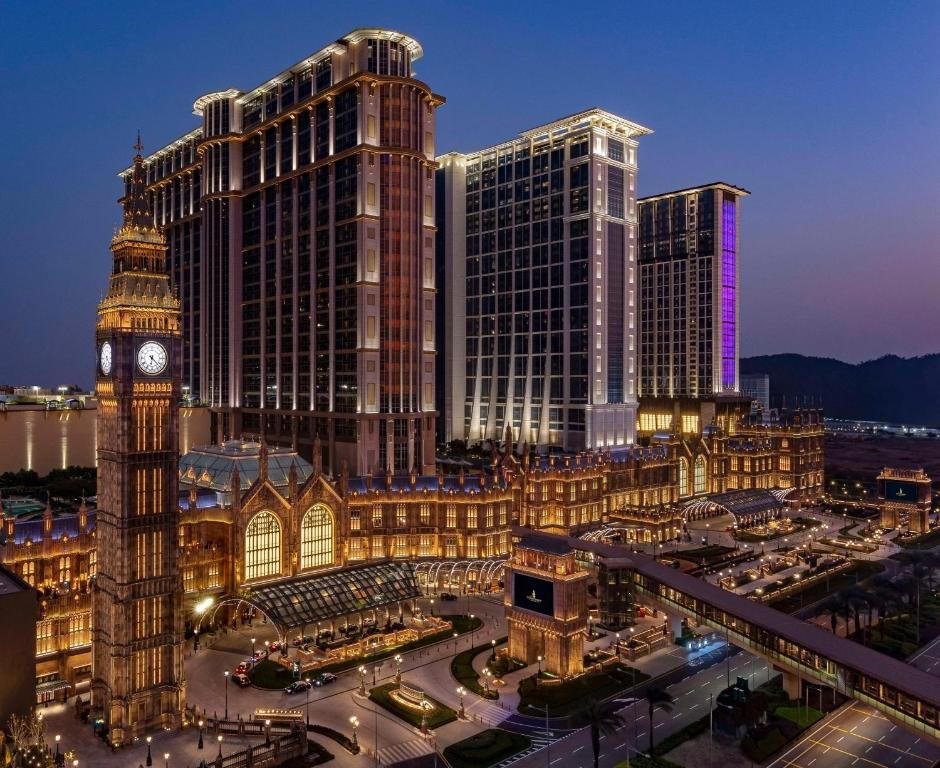
Sushi Kinetsu is located on the ground floor lobby level at City of Dreams in Cotai, within the Nuwa hotel building. The counter operates at the leading price tier ($$$$) and offers two menu formats, the specific compositions and pricing are confirmed at booking. Reservations are essential and should be made well in advance, particularly for weekend evenings when demand from resort guests compounds the counter's natural capacity limits. Given the counter format and the seriousness of the kitchen, arrival on time is functional rather than merely polite: omakase pacing is calibrated to the seated group, and late arrivals compress the experience for everyone at the counter. For broader context on where this counter fits within Macau's dining scene, see our full Macau restaurants guide, alongside our guides to Macau hotels, Macau bars, Macau wineries, and Macau experiences.
Frequently asked questions
Is Sushi Kinetsu more mid-range or high-end?
Pricing at Sushi Kinetsu is listed as $$$$.
Is Sushi Kinetsu Michelin-listed?
Sushi Kinetsu has received recognition including: Black Pearl 1 Diamond (2025); Formerly Shinji by Kanesaka that shut its doors amid COVID-19, the upmarket omakase Japanese restaurant has been reincarnated as Sushi Kinetsu. Regulars can rest easy that their sushi are made the same way as b….
What should I order at Sushi Kinetsu?
Sushi Kinetsu operates an omakase format, so the menu is set by the kitchen rather than selected by the diner. Two menu options are available, differentiated by course count or price tier. The kitchen's sourcing does the deciding: fish arrives from Japan three times a week, and the rice is Yamagata grain cooked in Kagoshima spring water and dressed in a light vinegar — the same approach carried over from the former Shinji by Kanesaka counter.
What cuisine category does Sushi Kinetsu fall under?
Where is Sushi Kinetsu in Macau?
Sushi Kinetsu is located at Macao, 1樓大堂新濠天地頤居, Macau.
What's the best way to book Sushi Kinetsu?
Booking is essential at Sushi Kinetsu, which sits at the top price tier in Macau's Japanese counter scene (rated $$$$ and holding a 2024 Michelin Star alongside a 2025 Black Pearl Diamond). No phone or online booking link is listed in current public records, so the most reliable approach is to contact the Nuwa hotel at City of Dreams directly, as the restaurant operates within that property on the ground floor lobby level in Cotai.
Budget and Context
| Venue | Cuisine | Price | Awards | Notes |
|---|---|---|---|---|
| Sushi KinetsuThis venue — the venue you are viewing | Edomae Omakase Sushi | $200–300 | 1 Michelin Star · Black Pearl 1 Diamond | Not listed |
| Aji | Asian Bistronomy (Nikkei Fusion) | $50–100 | 1 Michelin Star · Wine Spectator Best of Award of Excellence | Nikkei, Innovative |
| Ying | Modern Cantonese Fine Dining | Not listed | 1 Michelin Star · La Liste Top Restaurants | Cantonese |
| Five Foot Road | Modern Sichuan Fine Dining | Not listed | 1 Michelin Star · La Liste Top Restaurants | Sichuan |
| Robuchon au Dôme | Contemporary French Fine Dining | $150–200 | 3 Michelin Stars · La Liste Top Restaurants | French Contemporary |
| Feng Wei Ju | Refined Hunan & Sichuan Chinese | Not listed | 2 Michelin Stars · La Liste Top Restaurants | Hunan-Sichuan, Hunanese |
Recognition history
Dated appearances from independent guides and award organizations, with the underlying list record or original source where available.
Michelin 1 Star
Michelin
Black Pearl 1 Diamond
Black Pearl
Opinionated About Dining Top Restaurants in Asia Recommended
Opinionated About Dining
Full recognition history (6 entries)
Black Pearl 1 Diamond
Black Pearl
Michelin 1 Star
Michelin
Michelin 1 Star
Michelin