







Michelin Plate · La Liste Top Restaurants · Black Pearl 1 Diamond
Our verdict
On the 21st-floor sky bridge of Morpheus hotel, Yí serves a seasonal Chinese tasting menu structured around the 24 solar terms of the Chinese calendar. The 60-seat dining room, designed by Zaha Hadid, frames a contemporary approach to regional Chinese cuisine — drawing from Cantonese, Sichuan, Chaozhou, Hunan, and Shandong traditions — with daily market sourcing and a tea pairing program curated by certified sommeliers.

Pearl is the En Primeur Club membership app — saves, bookings, and concierge access live there. Same editors, same standards.
- Address
- MacaoEstr. do Istmo, MO Yi, Level 21, Morpheus City of Dreams
- Phone
- +85388686688
- Hours
- Daily 6–10:30 PM
- Website
- cityofdreamsmacau.com
- Directions
- Get directions
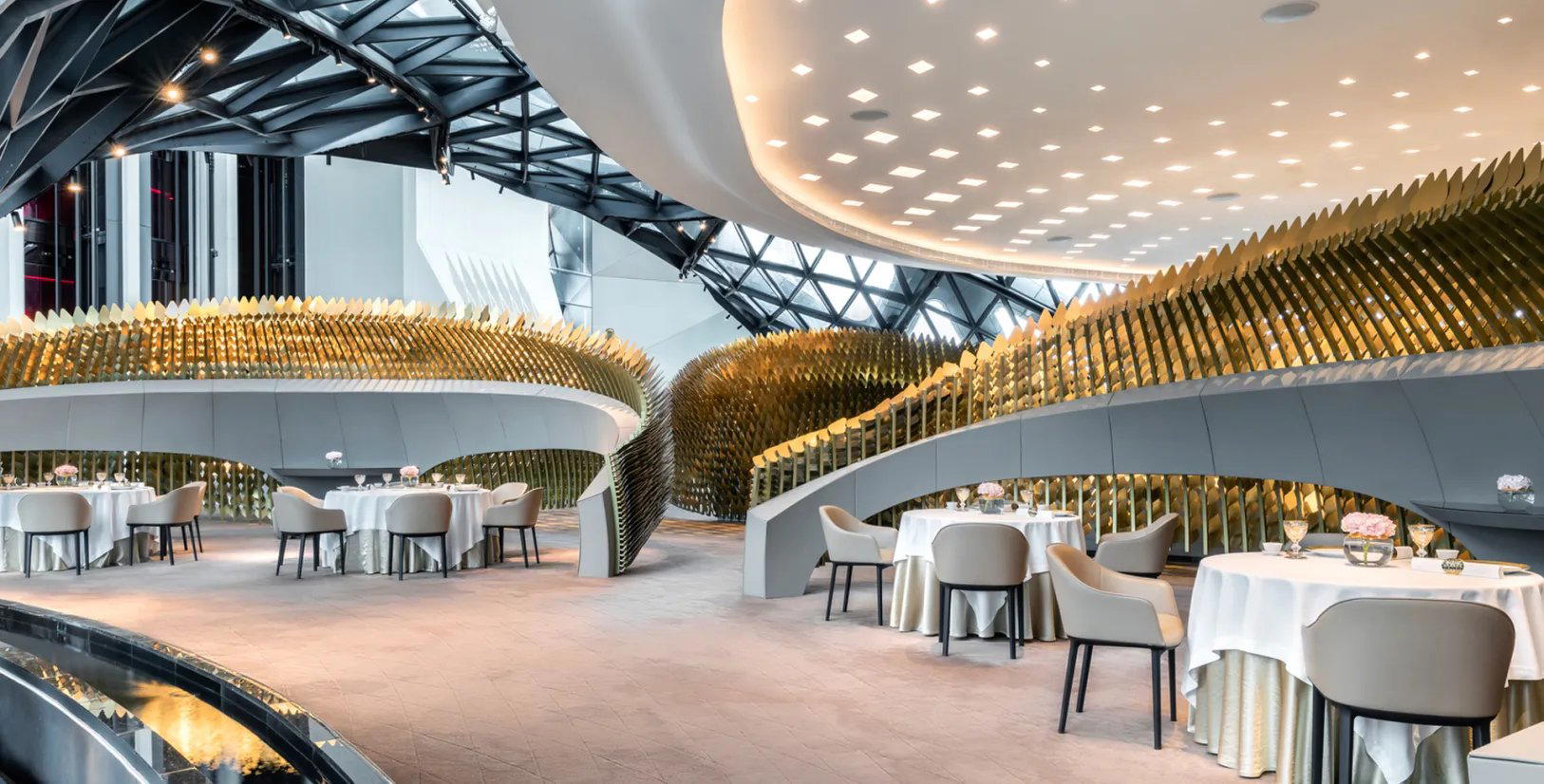
Thirty Floors Up, Where Chinese Fine Dining Takes a Different Shape
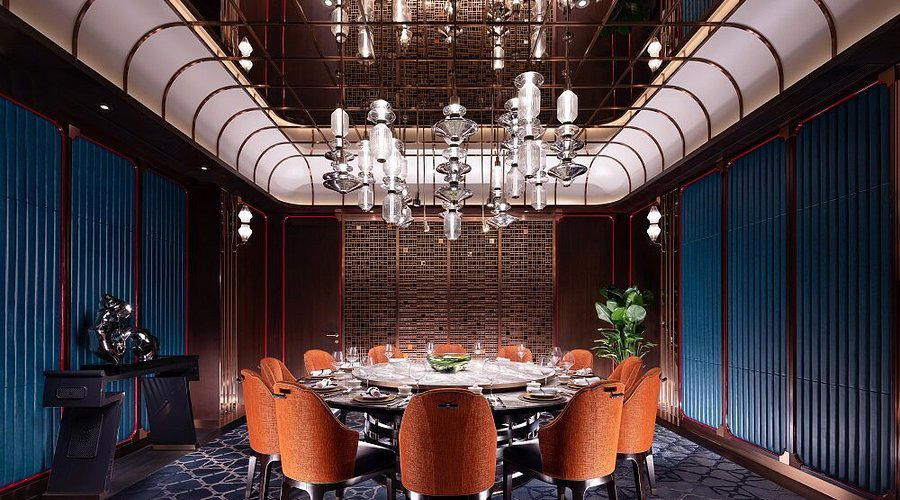
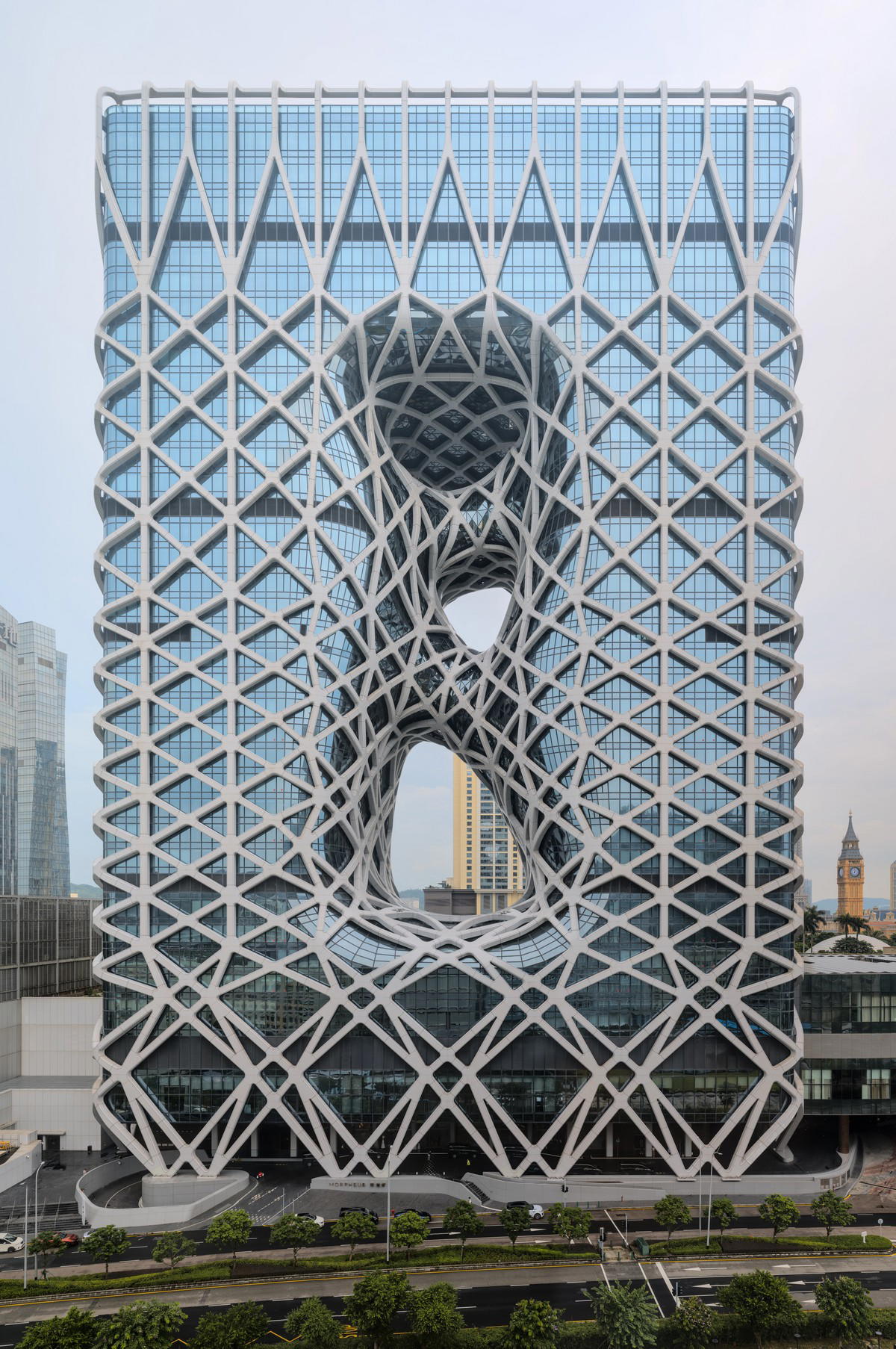
Arriving at Morpheus by night, the building itself announces something out of the ordinary. Zaha Hadid's exoskeletal tower rises above the City of Dreams resort complex with a structural logic that feels more like sculpture than architecture. The 21st floor sky bridge — a corridor suspended between two towers — is where Yí operates, and the approach to the restaurant is as deliberate as anything on the menu. A narrow passageway draws you inward, the city receding below, before the dining room opens into Hadid's signature geometry: sculptural seating forms that suggest a dragon's den, angular accents that catch the light, and a sense that the interior has been considered as carefully as any dish that leaves the kitchen.
That combination of dramatic setting and serious culinary intent places Yí inside a small cohort of Macau restaurants where the room and the food compete as equals. Robuchon au Dôme and Alain Ducasse at Morpheus occupy a similar tier in terms of ambition and price, but their reference points are French. Yí's distinction is that it applies equivalent rigor to a Chinese format, specifically to the multi-course tasting menu as a vehicle for exploring regional diversity across a single meal.
The Architecture of the Menu
Contemporary Chinese fine dining in Asia has gradually moved away from the banquet model, large tables, shared dishes, lazy Susan choreography, toward the tasting counter format borrowed from Japanese and European kitchens. Yí sits in that transition zone. The dining room holds 60 guests across 12 tables, a scale that preserves some of the spaciousness of formal Chinese dining without the noise and density of a banquet hall. The menu format is a tasting sequence: six or eight courses, with the kitchen recommending the eight-course option for the fuller arc.
What the format preserves from the Chinese banquet tradition is the logic of sequencing flavors across regions. Where a traditional Cantonese banquet might move from cold cuts to soup to braised meats to fried rice, Yí draws from a wider map, Cantonese, Sichuan, Chaozhou, Hunan, Shandong, letting the menu function as a survey of technique and regional character rather than a single cuisine's progression. The difference between this and a multi-regional banquet is precision of execution: smaller portions, tighter presentations, and a kitchen that sources daily from local markets and operates without freezers. Every element of the mise en place, including the house chili sauces, is prepared in-house.
The menu is anchored to the 24 solar terms of the Chinese calendar, a traditional system for marking seasonal transitions that predates modern agriculture. In practice this means the menu shifts with the produce calendar rather than on a fixed quarterly basis, with fish and meat courses rotating daily based on what Chef Angelo Wong and his team find at market each morning. Some dishes hold their place across a full season; others appear for days. That structure sits closer to the kaiseki model of seasonal fidelity than to the European tasting menu, which tends toward longer-running set compositions.
Produce, Sourcing, and the Logic of Premium Ingredients
Across Asia's upper tier of contemporary Chinese restaurants, from Xin Rong Ji in Beijing to 102 House in Shanghai to Ru Yuan in Hangzhou, the question of ingredient sourcing has become as defining as technique. Yí's approach combines local market procurement with a selective use of imported premium products. Documented examples include Australian crab meat paired with pomelo, lime, and French caviar, alongside Japanese nodoguro and A4 Wagyu from Miyazaki. The combination is characteristic of a certain strand of contemporary Chinese fine dining, where the kitchen accepts the leading product available globally rather than restricting itself to Chinese-origin ingredients.
The effect in the bowl or on the plate is a menu that feels simultaneously rooted and internationally referenced. Double-boiled melon soup draws on Cantonese medicinal food traditions; the lamb chop with Sichuan numbing sauce references the northwest. Crispy pork skin with black truffle and the welcome tea of chrysanthemum and pear frame the meal at its edges. The internal logic is Chinese, even when the ingredients are not. This places Yí in a different category from more regionally strict kitchens like Feng Wei Ju, which holds to Hunan-Sichuan tradition at a considerably lower price point, or Xin Rong Ji in Chengdu, where the focus remains tightly Zhejiangese.
Where Yí Sits in Macau's Fine Dining Tier
Macau's fine dining scene is unusual among Chinese cities in that its upper bracket includes both legacy European addresses and a growing number of serious Chinese kitchens. Chef Tam's Seasons and Jade Dragon represent the Cantonese anchor of that tier. Yí's multi-regional approach positions it as something distinct: not a Cantonese specialist, but a broader survey of Chinese culinary geography filtered through a contemporary fine dining lens.
The recognition record reflects that positioning. La Liste ranked Yí at 82 points in 2026, up from 77.5 points in 2025. Opinionated About Dining placed the restaurant at #150 in Asia for 2025, having ranked it #137 in 2024 and #99 in 2023. The Black Pearl one-diamond designation in 2025 adds a China-specific benchmark to the international recognition. Taken together, these signals place Yí in the middle-upper tier of Asian Chinese fine dining, comparable in ambition and critical standing to addresses like Imperial Treasure Fine Chinese Cuisine in Guangzhou or Dai Yuet Heen in Nanjing, and below the very top tier occupied by the Michelin-starred Cantonese rooms in Hong Kong and a handful of mainland Chinese addresses. For a useful point of comparison in terms of tasting-menu format discipline, Atomix in New York City or Le Bernardin represent what sustained critical recognition at this level looks like in Western contexts.
Tea Pairing, the Cigar Bar, and the Full Evening
The service design at Yí reflects a particular attentiveness that distinguishes the better hotel fine dining rooms from freestanding restaurants. Staff are reported to offer magazines to solo diners, provide portable chargers on request, and bring ginger tea if they detect any discomfort, responses to unspoken cues rather than scripted hospitality. That level of floor management is harder to sustain in higher-volume or more casual formats, and it is one reason why the 60-seat constraint is a feature rather than a limitation.
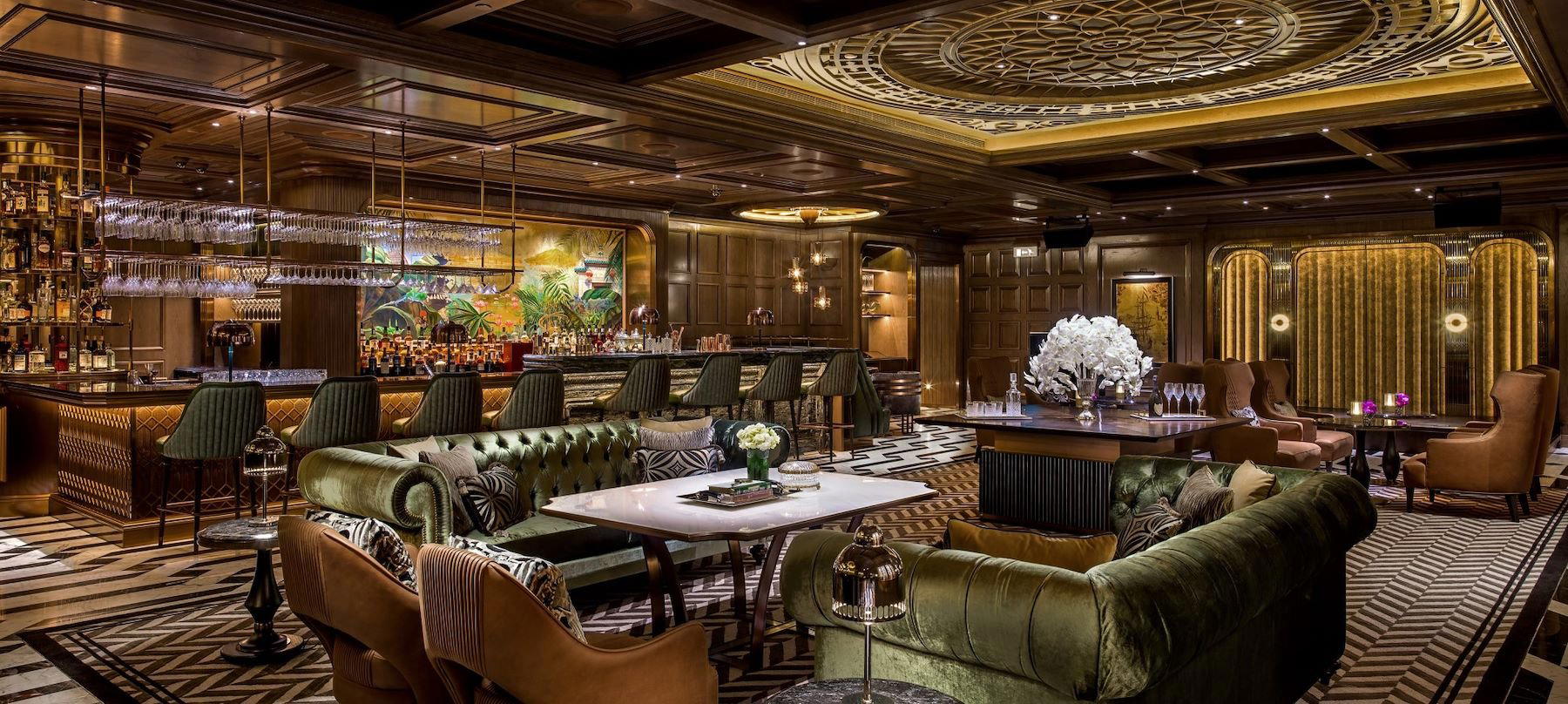
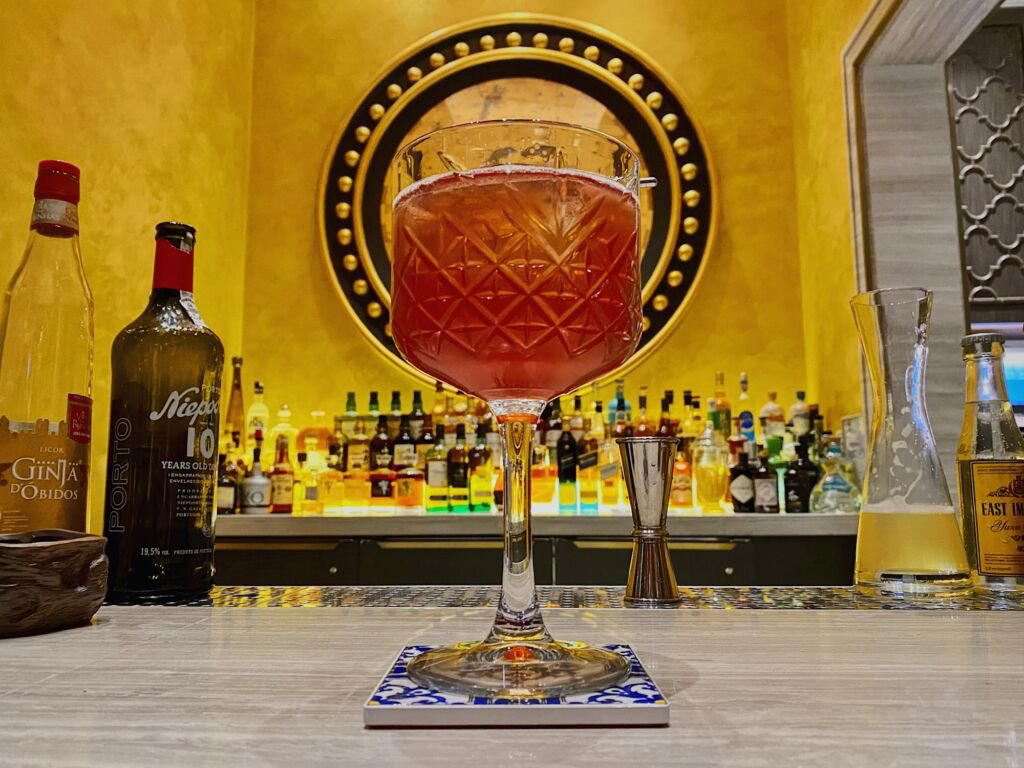
Beverage program is structured around two pairing options: wine and tea. The tea pairing draws from premium Chinese teas selected by certified sommeliers, covering the full spectrum of Chinese tea regions and styles. For a meal as rooted in Chinese food philosophy as this one, the tea pairing is the more coherent choice, though the wine list covers the standard fine dining expectations. After the meal, a cigar bar adjacent to the dining room extends the evening with cocktails, digestifs, and specialty cigars, a format that mirrors the private-club atmosphere of the sky bridge setting.
Planning Your Visit
Yí operates at the City of Dreams resort on the Cotai Strip, on the 21st floor of the Morpheus tower. The restaurant opens for dinner only and seats 60 guests across 12 tables, which means availability at this price point can tighten quickly, particularly on weekends and during major Macau events. Advance booking is advisable, and guests with dietary restrictions should communicate them at the time of reservation rather than on arrival. The kitchen works with a six- or eight-course format; the eight-course menu is the kitchen's recommendation for the complete experience. The $$$$ price positioning places it at the upper end of Macau's Chinese dining tier, broadly in line with the Cantonese fine dining rooms and below the top-end European addresses in the same resort ecosystem. For broader planning across the city, see our full Macau restaurants guide, our full Macau hotels guide, our full Macau bars guide, our full Macau wineries guide, and our full Macau experiences guide.
Frequently asked questions
What should I eat at Yí?
How far ahead should I plan for Yí?
A Tight Comparison
A quick snapshot of similar venues for side-by-side context.
| Venue | Cuisine | Price | Awards | Notes |
|---|---|---|---|---|
| YiThis venue — the venue you are viewing | Contemporary Chinese Fine Dining | $200–300 | Michelin Plate · La Liste Top Restaurants | Not listed |
| Aji | Asian Bistronomy (Nikkei Fusion) | $50–100 | 1 Michelin Star · Wine Spectator Best of Award of Excellence | Nikkei, Innovative |
| Ying | Modern Cantonese Fine Dining | Not listed | 1 Michelin Star · La Liste Top Restaurants | Cantonese |
| Five Foot Road | Modern Sichuan Fine Dining | Not listed | 1 Michelin Star · La Liste Top Restaurants | Sichuan |
| Robuchon au Dôme | Contemporary French Fine Dining | $150–200 | 3 Michelin Stars · La Liste Top Restaurants | French Contemporary |
| Feng Wei Ju | Refined Hunan & Sichuan Chinese | Not listed | 2 Michelin Stars · La Liste Top Restaurants | Hunan-Sichuan, Hunanese |
Recognition history
Dated appearances from independent guides and award organizations, with the underlying list record or original source where available.
Michelin Plate
Michelin
La Liste Top Restaurants
La Liste
Black Pearl 1 Diamond
Black Pearl
Forbes 5-Star
Forbes
Opinionated About Dining Top Restaurants in Asia Recommended
Opinionated About Dining
Full recognition history (16 entries)
SCMP 100 Top Tables Restaurants
SCMP 100 Top Tables
Wine Spectator Best of Award of Excellence
Wine Spectator
Black Pearl 1 Diamond
Black Pearl
Forbes 5-Star
Forbes
La Liste Top Restaurants
La Liste
Michelin Plate
Michelin
Opinionated About Dining Top Restaurants in Asia Ranked #150
Opinionated About Dining
The Best Chef One Knife
The Best Chef
Michelin Plate
Michelin
Opinionated About Dining Top Restaurants in Asia Ranked #137
Opinionated About Dining
Opinionated About Dining Top Restaurants in Asia Ranked #99
Opinionated About Dining
Details
- Elegant
- Sophisticated
- Modern
- Scenic
- Ornate
- Special Occasion
- Date Night
- Business Dinner
- Celebration
- Hotel Restaurant
- Panoramic View
- Design Destination
- Private Dining
- Extensive Wine List
- Skyline
- Tasting Menu
- Omakase
- Set Menu
- Wine
- Spirits
- Tea
Current opening hours
- Monday
- 6–10:30 PM
- Tuesday
- 6–10:30 PM
- Wednesday
- 6–10:30 PM
- Thursday
- 6–10:30 PM
- Friday
- 6–10:30 PM
- Saturday
- 6–10:30 PM
- Sunday
- 6–10:30 PM
Hours can change for holidays and private events. Last verified .
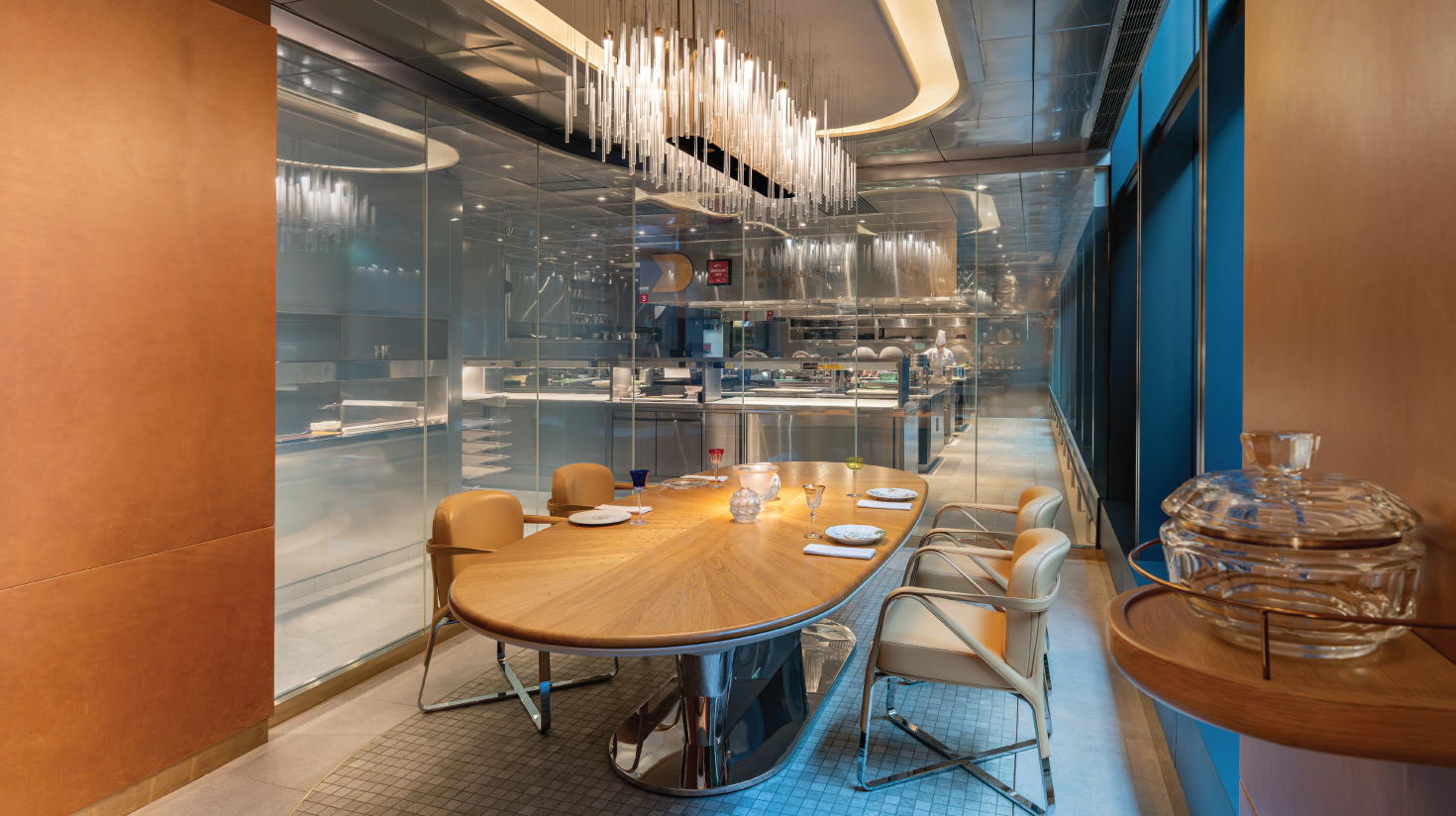
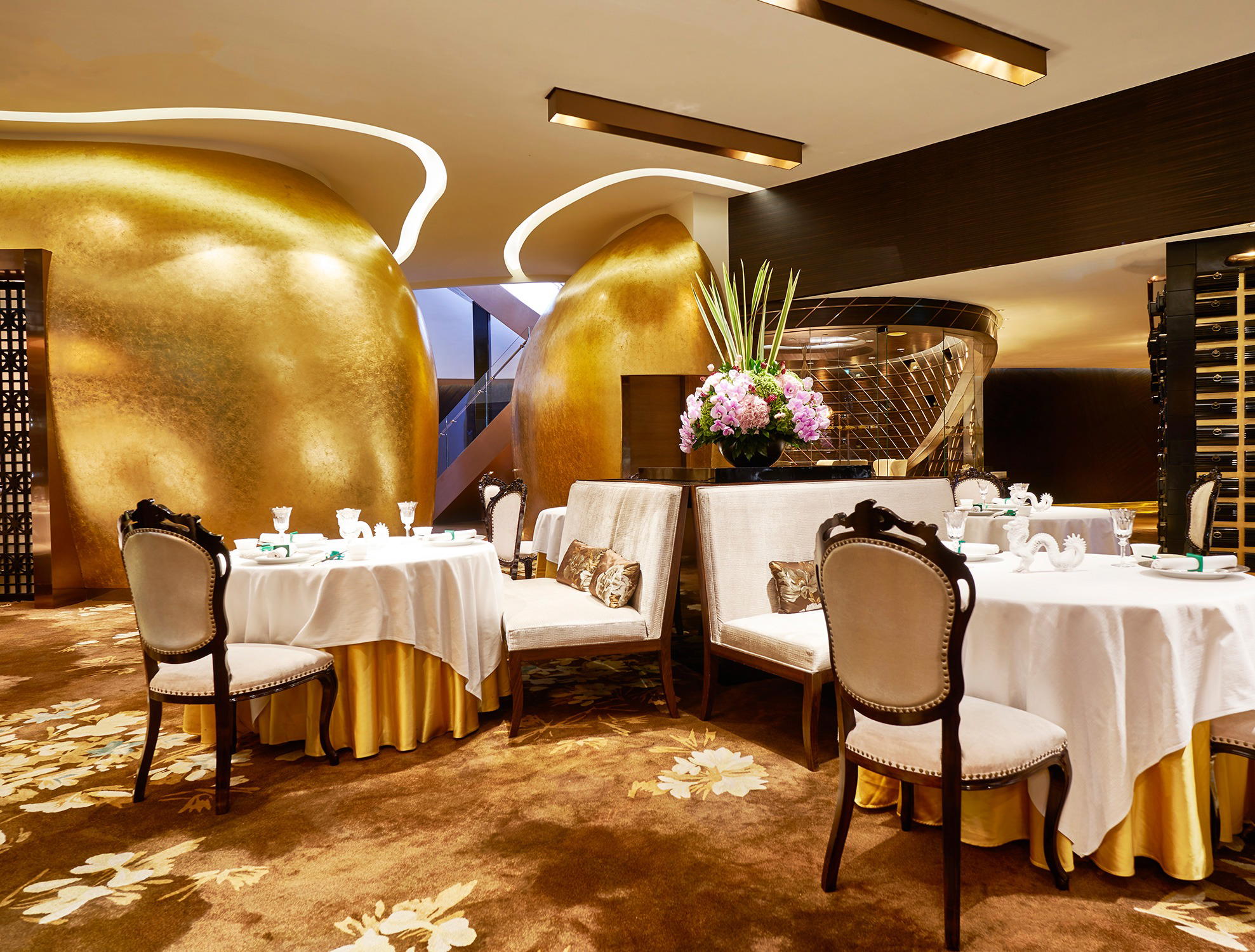
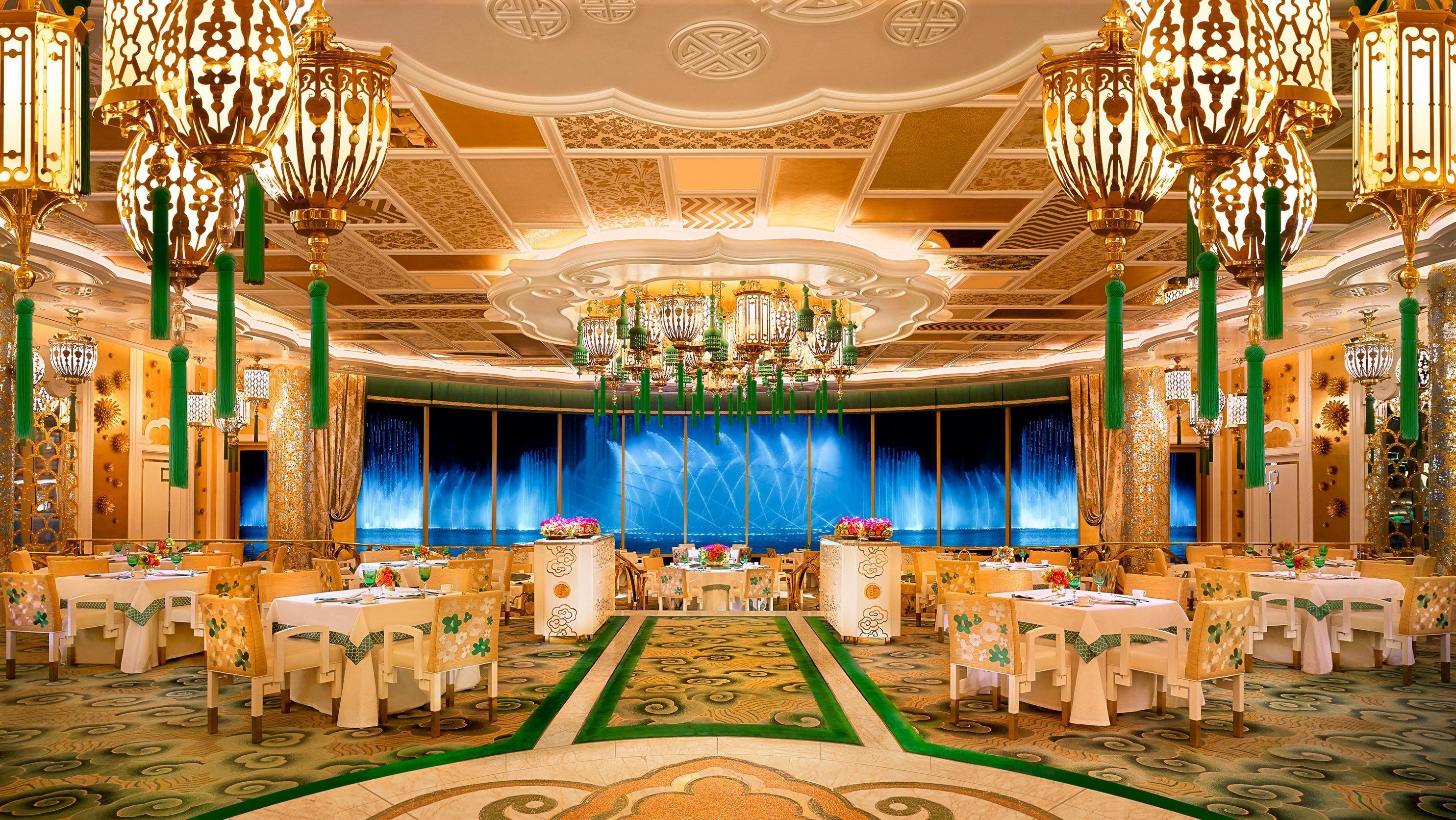
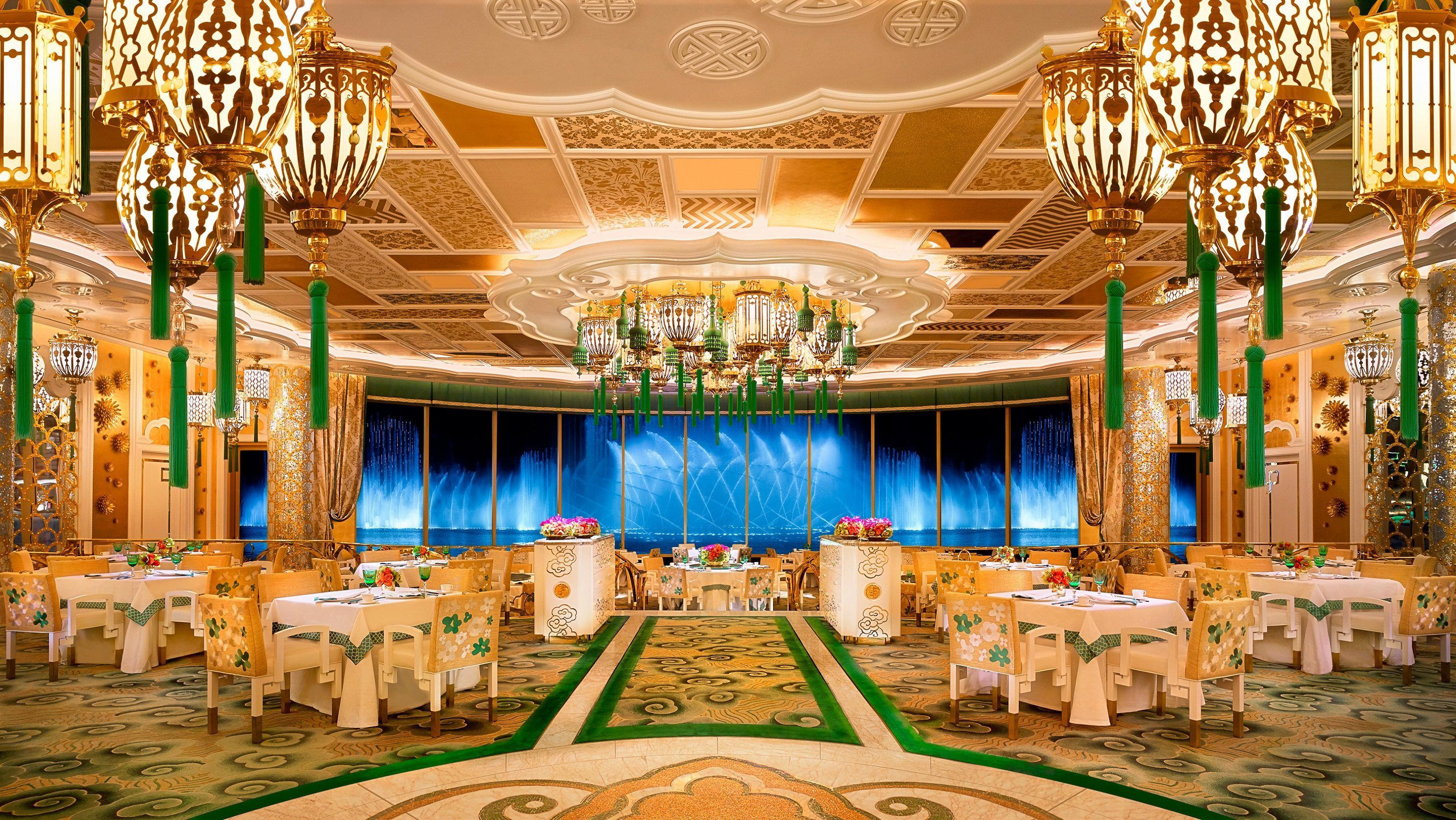
Refined and theatrical, with a golden semi-domed ceiling, shimmering water elements, rich wood and stone textures, and an auspicious 'dragon guarding the feast' design theme.