Tsujita Annex
Tsujita Annex on Sawtelle Boulevard is where the Westside's most committed ramen regulars return week after week for the tsukemen format that put this address on the map. The original Tsujita next door draws the walk-in crowd; the Annex operates at a quieter register, built around the ritual of dipping thick noodles into a concentrated tonkotsu-tare broth that cools slowly on the table.
Pearl is the En Primeur Club membership app — saves, bookings, and concierge access live there. Same editors, same standards.
- Address
- 2050 Sawtelle Blvd, Los Angeles, CA 90025
- Phone
- +14242480226
- Website
- toasttab.com
- Directions
- Get directions
 Saves & bookings on Pearl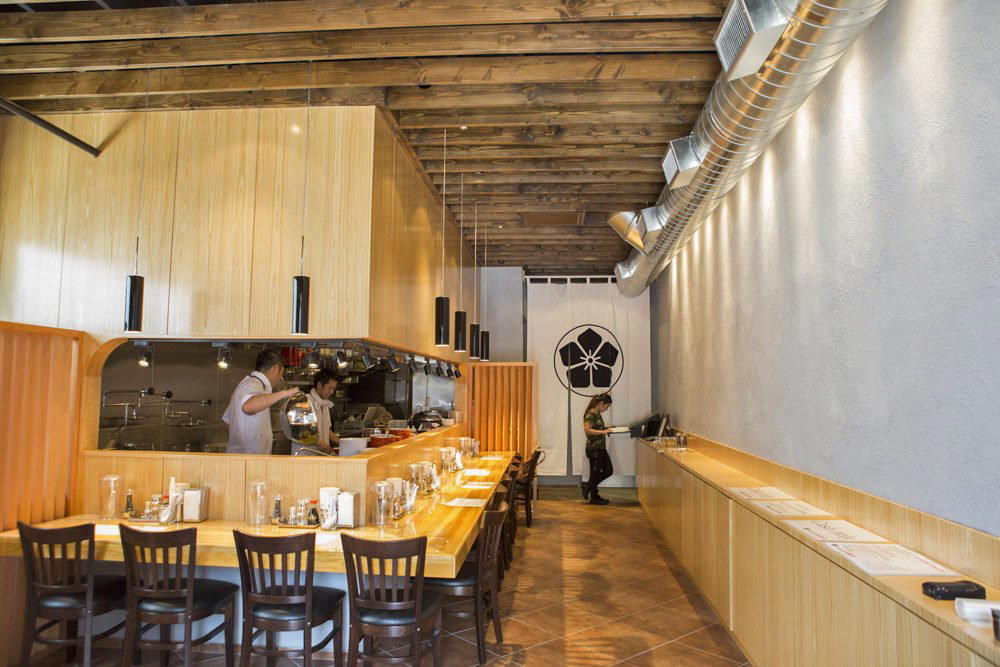
Sawtelle and the Architecture of Repeat Visits
Los Angeles ramen arrived in force during the 2000s and settled into a familiar geography: the stretch of Sawtelle Boulevard in West LA became the primary node, pulling chains and independents alike into a corridor that now reads as the city's most consistent Japanese dining strip. Within that corridor, the Tsujita operation occupies a particular position. The original Tsujita and its annex a few steps away are not competing for the same customer so much as serving two registers of the same loyalty. The Annex, at 2050 Sawtelle Blvd, developed a following built almost entirely on one format: tsukemen, the dipping-noodle style that keeps broth and noodles separate until the eater brings them together.
That structural difference matters more than it might appear. Where a bowl of ramen rewards speed, tsukemen rewards attention. The broth starts at a higher temperature and a more concentrated ratio precisely because it will cool and dilute slightly as the meal progresses. Regulars at the Annex understand this arc; they develop a pace, a preferred noodle-to-broth ratio, a point in the meal where they add the dilution dashi that servers bring to extend the broth toward a finishing soup. That accumulated knowledge is what separates the Annex's repeat clientele from the curious first-timers who more often queue next door.
The Tsukemen Tradition and Where the Annex Sits Within It
Tsukemen as a format traces back to Tokyo in the 1950s, and its modern iteration owes much to the rich, animal-fat-forward broths that became dominant in the 2000s. The version that arrived in Los Angeles through the Tsujita group belongs to the heavier end of that spectrum: the tonkotsu-shoyu base is thick enough to coat noodles visibly, with a depth that functions more like a sauce than a soup in its undiluted state. This places the Annex in a different competitive set from the lighter shio or chicken-broth ramen houses that have multiplied across the city.
In a city where Japanese dining has fragmented dramatically, with kaiseki at Hayato and New Taiwanese precision at Kato occupying the fine-dining end, and the broader American table represented by everything from Providence to Osteria Mozza, the Annex operates in a middle register that is harder to categorize. It is not casual in the way a chain ramen shop is casual. The format demands enough engagement from the diner that the experience has more in common, structurally, with a tasting format than with a fast bowl.
What the Regulars Know
The editorial angle on any address with genuine repeat clientele is not what the menu says but what the regulars do with it. At the Annex, that unwritten knowledge centers on a few consistent patterns. The tsukemen is the anchor, and for most repeat visitors it is also the only order that matters. The broth concentration means that the quality of the noodle itself becomes more perceptible than in a submersed ramen: the thick, straight noodles hold their texture through the meal in a way that rewards slower eating. Regulars also develop a relationship with the dilution step, using the broth extender to shift the flavor register in the final third of the meal rather than leaving it untouched.
The Annex also draws a subset of diners who move between it and the broader Sawtelle dining culture. That regularity is a form of trust signal that no award replicates. While Somni and the city's most formal Japanese counters operate on reservation cycles and allocation systems, the Annex runs on the logic of the neighborhood regular who arrives at a known hour.
Lazy Bear in San Francisco and Alinea in Chicago operate at a different price tier and formality level, but the underlying logic of a clientele that learns the format and returns for it repeatedly is recognizable across these different venues. Closer to home, Addison in San Diego has built its own loyal base through format discipline. The Annex does so at a fraction of the price point.
Sawtelle as a Dining Address
Sawtelle Boulevard's concentration of Japanese restaurants and Japanese-influenced cooking is not accidental. The corridor developed through decades of community settlement and business investment that predates the city's current restaurant culture by several generations. That history gives the strip a density of food knowledge, both among operators and among the neighborhood population, that most restaurant clusters in Los Angeles lack. Walking the stretch between Olympic and Mississippi, you encounter a range of formats and price points that holds up against comparable strips in any American city.
Within the Sawtelle context, the Annex is the address that specialists recommend. Not because it is obscure, but because its format specificity means that knowing what to order and how to pace the meal produces a noticeably different experience from arriving without context. That gap between informed and uninformed visits is wider here than at most comparable price points.
Know Before You Go
- Address: 2050 Sawtelle Blvd, Los Angeles, CA 90025
- Format: Tsukemen (dipping noodles); separate noodle and broth service
- Ordering note: Ask for the dilution dashi when you are in the final third of your broth; it shifts the flavor register rather than simply extending volume
- Context: Operated in conjunction with Tsujita next door; the Annex skews toward the tsukemen format while the main location carries a broader menu
- Timing: Sawtelle corridor queues build on weekend lunches; weekday midday visits tend to move faster
- Getting there: Street parking on Sawtelle and surrounding blocks; the 12 bus serves the corridor from downtown
Cuisine and Recognition
Comparable venues nearby, for context on price, style, and recognition.
| Venue | Cuisine | Price | Notes |
|---|---|---|---|
| Tsujita AnnexThis venue — the venue you are viewing | Tokyo-Style Tonkotsu Shoyu Ramen | $$ | Not listed |
| Skewers by Morimoto | Japanese Yakitori Skewers | $$ | LAX Airport |
| Ten Ramen | Japanese Ramen | $$ | Wilshire Center |
| Roji Sushi | Traditional Japanese Sushi | $$ | Los Feliz |
| Tentenyu | Kyoto-Style Chicken Ramen | $$ | Sawtelle Japantown |
| Soregashi | Authentic Japanese Sushi | $$ | Hollywood |
Continue exploring
More in Los Angeles
Restaurants in Los Angeles
Browse all →
Bars in Los Angeles
Browse all →
Hotels in Los Angeles
Browse all →
Wineries in Los Angeles
Browse all →
At a Glance
- Lively
- Energetic
- Trendy
- Casual Hangout
- Sake Program
Current opening hours
- Monday
- 11 AM–10 PM
- Tuesday
- 11 AM–10 PM
- Wednesday
- 11 AM–10 PM
- Thursday
- 11 AM–10 PM
- Friday
- 11 AM–10 PM
- Saturday
- 11 AM–10 PM
- Sunday
- 11 AM–10 PM
Hours can change for holidays and private events. Last verified .
Focused and energetic atmosphere with diners seated shoulder to shoulder around steaming bowls of ramen.