Kiku Sushi
On North Larchmont Boulevard, Kiku Sushi occupies a quiet stretch of one of Los Angeles's most neighbourhood-scaled dining corridors. The restaurant sits within a broader Japanese dining tier that has grown more competitive and more technically ambitious over the past decade, making Larchmont's calmer register a deliberate counterpoint to the city's higher-profile omakase rooms. For diners tracking the full range of Japanese dining in Los Angeles, it represents a neighbourhood-anchored option worth knowing.
Pearl is the En Primeur Club membership app — saves, bookings, and concierge access live there. Same editors, same standards.
- Address
- 246 N Larchmont Blvd, Los Angeles, CA 90004
- Phone
- +13234641323
- Directions
- Get directions
 Saves & bookings on Pearl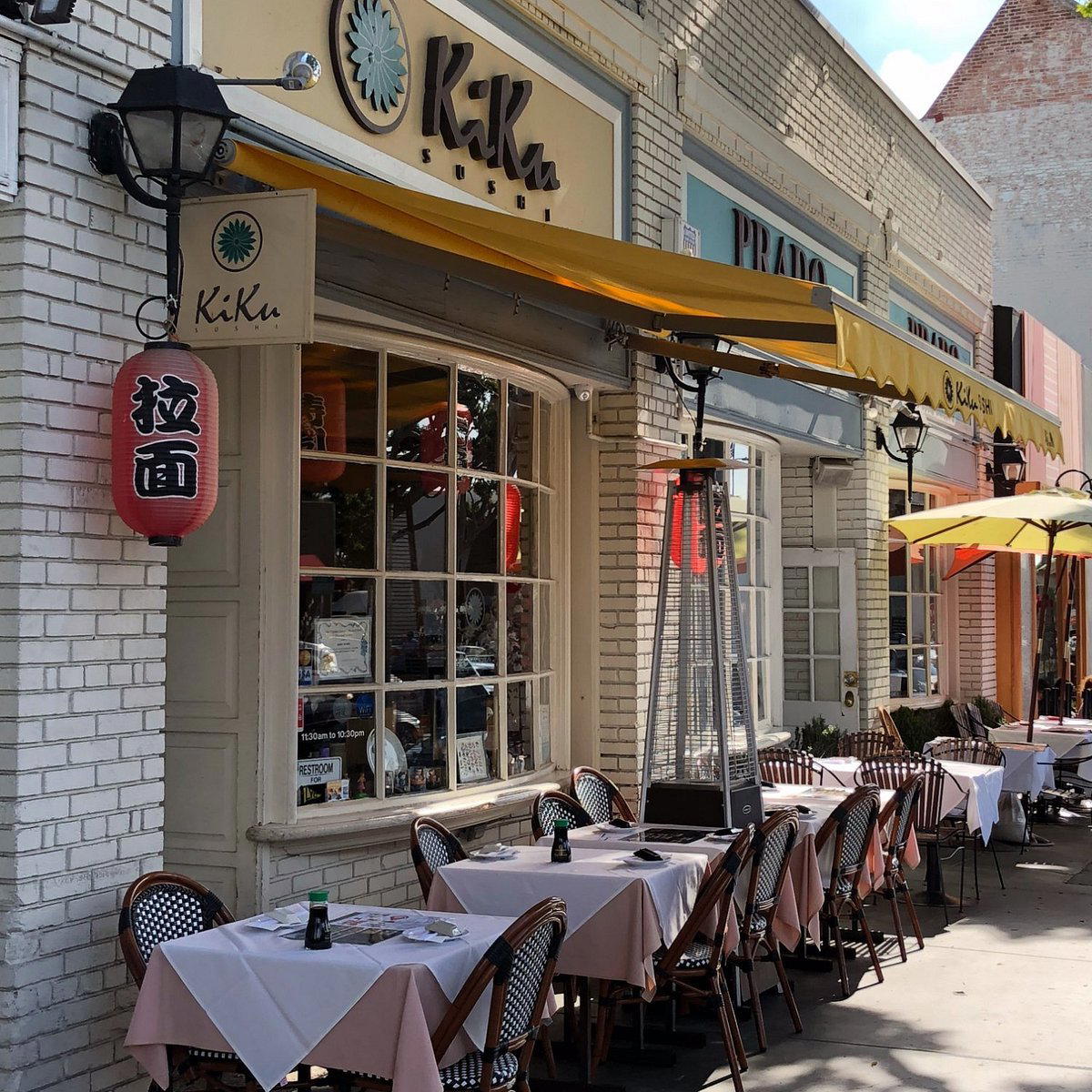
Larchmont Boulevard and the Geography of Everyday Japanese Dining in Los Angeles
North Larchmont Boulevard operates on a different frequency from the restaurant corridors that generate most of Los Angeles's dining press. Where Melrose, Beverly Boulevard, and Downtown's Arts District attract concept-driven openings aimed at national attention, Larchmont has retained a neighbourhood character — independent businesses, walkable scale, a resident clientele that returns on habit rather than hype. It is the kind of street where a Japanese restaurant can build a following through consistency rather than through a single viral dish or a televised competition appearance. Kiku Sushi, at 246 N Larchmont Blvd, occupies exactly that position.
The corridor's dining character is worth understanding before you arrive. Larchmont sits at the western edge of Hancock Park, one of the city's older residential districts, and its restaurant strip reflects that stability. The pace is unhurried. The room temperatures tend to be warmer and more casual than you would find at the city's formal Japanese dining addresses. That context matters because it sets the register for what Kiku Sushi is and, equally, what it is not competing to be.
Where Kiku Sushi Sits in Los Angeles's Japanese Dining Tier
Los Angeles has developed one of the most layered Japanese dining ecosystems outside Japan itself. At the top of the formal tier, a handful of omakase counters have drawn serious international attention: Hayato in the Row DTLA offers a kaiseki-influenced counter experience that has earned sustained critical recognition, while the broader premium Japanese category in the city has expanded to include conceptually ambitious operators working across ramen, izakaya, robatayaki, and sushi formats. That expansion has also sharpened the distinction between destination dining and neighbourhood dining — two categories that coexist without necessarily competing.
Kiku Sushi belongs to the neighbourhood tier. That is not a demotion; it is a specific category with its own logic. The neighbourhood sushi restaurant in Los Angeles functions differently from an omakase counter. The menu tends toward familiarity: nigiri, rolls, sashimi, miso soup. The pacing is set by the diner rather than the kitchen. The relationship between the restaurant and its regular guests carries more weight than critical positioning. In a city where Kato has reshaped what New Taiwanese cooking can mean at the high end, and where Somni operates in the molecular-progressive register, the question for a neighbourhood sushi address is whether it executes its own category with discipline and consistency.
The Sensory Register on Larchmont
Approaching any restaurant on Larchmont, the first thing you notice is the quiet. There are no valet queues, no crowds spilling onto a sidewalk, no line forming before opening. The street runs to ambient neighbourhood noise: the rhythm of a coffee shop, a bookstore, foot traffic moving without urgency. For a dining format that relies on calm as a compositional element, and sushi, even at the casual end, works well when the diner is not rattled, this is a meaningful environmental asset.
Inside a neighbourhood sushi room of this type, the sensory cues that matter most are often the smallest: the temperature of the rice, the precision of the knife work visible across a counter, the smell of clean fish against vinegared grain, the sound of a kitchen working without unnecessary noise. These are not spectacle details; they are calibration signals that tell an experienced diner how seriously the kitchen takes its fundamentals. The absence of theatrics in a neighbourhood sushi room is not a deficit, it is a deliberate mode.
This contrasts instructively with the more dramatically staged Japanese dining experiences available in Los Angeles and nationally. Restaurants like Alinea in Chicago or Somni in Los Angeles are designed around sensory orchestration as a core proposition. At the neighbourhood end of the scale, the proposition is different: the sensory experience is quieter but no less intentional, built around the quality of the ingredient and the skill of the cut rather than the design of the room or the drama of the service sequence.
Japanese Dining Across the American Premium Tier
To understand where neighbourhood Japanese dining in Los Angeles fits within the broader American fine and premium dining picture, it helps to map the full range. At the formal end of the American dining spectrum sit addresses like Le Bernardin in New York City, where a decades-long commitment to seafood technique has produced a specific kind of institutional authority, or The French Laundry in Napa, which operates in a tier defined more by scarcity and ritual than by cuisine category. Further along the range, venues like Blue Hill at Stone Barns in Tarrytown and Single Thread Farm in Healdsburg anchor a farm-driven, ingredient-forward American school that has little in common with traditional Japanese formats.
Within the Japanese category specifically, the American premium tier has bifurcated. One branch runs toward the formalized omakase counter, with fixed menus, set seatings, and price points that put them in direct conversation with tasting-menu French and contemporary American peers. The other branch maintains the neighbourhood model: accessible, recurring, relationship-based. Atomix in New York City is an instructive comparison point, a Korean tasting-menu restaurant that has deliberately positioned itself in the formal tier, earning the recognition that comes with that positioning. The neighbourhood sushi restaurant makes a different calculation: depth of community relationship over breadth of critical attention.
Across the country, premium dining at other addresses, Addison in San Diego, Bacchanalia in Atlanta, The Inn at Little Washington, reflects how formally structured American fine dining has become outside its major coastal centres. The neighbourhood sushi room exists in productive contrast to all of it.
Planning a Visit
Kiku Sushi is located at 246 N Larchmont Blvd, Los Angeles, CA 90004, in the Hancock Park-adjacent stretch of Larchmont Village. Street parking is available along the boulevard, and the location is accessible from the 101 freeway. For diners building a broader Los Angeles itinerary across Japanese and other premium dining categories, Hayato and Osteria Mozza represent different ends of the city's dining register and are worth considering alongside a Larchmont visit. Our full Los Angeles restaurants guide maps the city's dining tiers in more detail. Reservations: Contact the restaurant directly; neighbourhood sushi rooms of this type often accept walk-ins but call-ahead is advisable for larger parties or weekend evenings. Dress: Casual to smart casual, consistent with the Larchmont neighbourhood register.
How Kiku Sushi Los Angeles compares with similar nearby venues.
| Venue | Cuisine | Price |
|---|---|---|
| Larchmont Village Wine | American Wine | Not listed |
| Kali | Californian | $$$$ |
| Mario’s Peruvian & Seafood | Peruvin | Not listed |
Continue exploring
More in Los Angeles
Restaurants in Los Angeles
Browse all →
Bars in Los Angeles
Browse all →
Hotels in Los Angeles
Browse all →
Wineries in Los Angeles
Browse all →
At a Glance
- Cozy
- Intimate
- Casual Hangout
- Open Kitchen
- Street Scene
Current opening hours
- Monday
- 11:30 AM–10 PM
- Tuesday
- 11:30 AM–10 PM
- Wednesday
- 11:30 AM–10 PM
- Thursday
- 11:30 AM–10 PM
- Friday
- 11:30 AM–10 PM
- Saturday
- 11:30 AM–10 PM
- Sunday
- 11:30 AM–10 PM
Hours can change for holidays and private events. Last verified .
Cozy Japanese decor with authentic atmosphere, warm and genuine vibe enhanced by heat lamps on the small outdoor tables for people-watching.
Know Before You Go
- Getting there
- 246 N Larchmont Blvd, Los Angeles, CA 90004