
Sushi Bar Maumi on Robson Street holds consecutive Michelin Plate recognition for 2024 and 2025, placing it among Vancouver's small tier of formally acknowledged Japanese counters.
Pearl is the En Primeur Club membership app — saves, bookings, and concierge access live there. Same editors, same standards.
- Address
- 1668 Robson St, Vancouver, BC V6G 1C7, Canada
- Phone
- +1 604-609-2286
- Website
- sushibarmaumi.ca
- Directions
- Get directions
 Saves & bookings on Pearl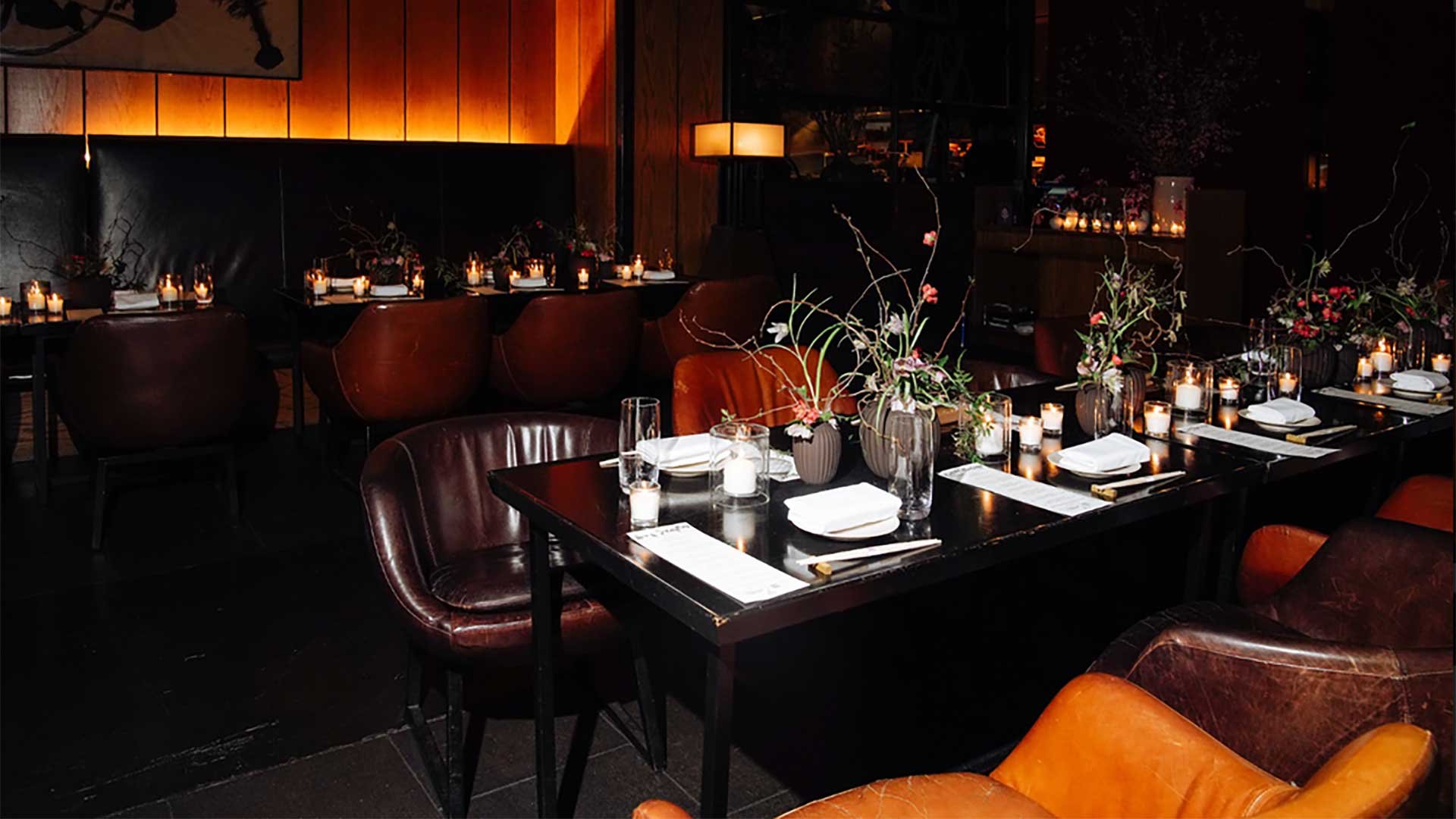
Sushi Bar Maumi Vancouver
Where Robson Street Meets Omakase Discipline
Robson Street is not where most diners go looking for serious Japanese cuisine. The strip between Denman and Burrard runs toward casual ramen, bubble tea, and tourist-facing izakayas, which makes Sushi Bar Maumi's presence at 1668 Robson St notable. The room signals the shift immediately: the scale contracts, the lighting drops, and the counter format places the kitchen in direct view. This is not the accommodating bustle of a neighbourhood Japanese restaurant. The physical arrangement alone communicates that the meal will proceed on its own terms and at its own pace.
The Omakase Tradition in Vancouver's Fine Japanese Tier
Vancouver's premium Japanese dining scene has grown more structured in the past decade. A small cluster of counters now operates at the $$$$ price point with formal omakase or kaiseki frameworks, and a meaningful subset of those carry Michelin recognition following the Guide's 2022 arrival in British Columbia. Sushi Bar Maumi holds Michelin Plates in both 2024 and 2025. Within the local Japanese tier, that positions Maumi alongside venues such as Masayoshi and Okeya Kyujiro, each of which holds its own Michelin standing and operates within a comparable price bracket. Vancouver has a handful of counters at this level, and the distinctions between them matter: format, fish sourcing philosophy, and the degree of ceremony each kitchen applies to the meal's sequencing all differ meaningfully.
For comparative reference across Canada's premium Japanese category, Kaiseki Yu-zen Hashimoto in Toronto represents the kaiseki pole of the same tradition, while Maumi's sushi-forward format connects it to a Pacific Coast lineage that draws on proximity to some of North America's most consistent fish supply chains.
The Dining Ritual: Pacing, Sequence, and Etiquette
Omakase in its traditional form is not a tasting menu in the French sense. The chef controls not just the dish list but the tempo, when each piece arrives, how long the silence between courses runs, and whether explanation accompanies each item or the fish is left to speak without commentary. At counters operating within this discipline, arriving late disrupts more than your own experience; it compresses the kitchen's sequencing for everyone seated. Punctuality at Maumi is not a formality. It is a structural requirement.
The ritual also carries implicit etiquette around how nigiri is eaten. At most counters of this calibre, pieces are designed to be consumed immediately after placement, the rice temperature, the fat distribution in the fish, and the hand-pressed compression are all calibrated for a specific window. Waiting to photograph before eating is a choice, but it is one that costs something in terms of what the chef intended. Asking before shooting is the convention at serious counters, and it is the right one.
Soy sauce application, where it is offered at all, tends to be minimal or pre-applied by the chef at counters with a clear point of view. The absence of a personal soy bottle at your setting is not an oversight, it is a signal about who is seasoning the food.
Reading the 4.4 Rating at Scale
High-end omakase formats systematically attract more polarised feedback than casual restaurants: the price point raises expectations, the format offers less flexibility to adjust for individual preferences mid-meal, and guests unfamiliar with the conventions of counter dining occasionally arrive expecting the responsiveness of à la carte service. That Maumi sustains a 4.4 under those conditions, across a meaningful sample size, points to kitchen execution that reads as consistent and value-coherent to the majority of the dining public, not just to Japanese cuisine specialists.
For context, comparable counters in the Vancouver Japanese tier, including Sushi Masuda, operate under similar rating dynamics. The floor for serious omakase in this city tends to cluster between 4.2 and 4.7, with outliers in both directions often explained by format mismatches rather than kitchen failures.
Summer on Robson: Peak Season Considerations
Search interest for the restaurant peaks in May, June, and August, which aligns with Vancouver's broader summer dining surge. The city draws significant tourist volume during those months, and the West End location on Robson puts Maumi in direct proximity to Stanley Park foot traffic and the summer hotel corridor. The practical consequence: the gap between when you decide to book and when you can actually be seated is wider in summer than at any other point in the year. Planning a June or August visit without a reservation and expecting to walk in is not a strategy that works at this price point and format. Book well ahead, several weeks at minimum during peak months.
The Broader Vancouver Japanese Scene
Maumi sits within a Japanese dining culture in Vancouver that extends well beyond fine dining. The city's Japanese population has shaped a layered restaurant ecology: the sushi bar tradition runs from conveyor-belt neighbourhood spots all the way up to Michelin-level counters, with a substantial middle tier of high-quality but less formal options. Octopus Garden and Sumibiyaki Arashi represent different registers of that broader scene, each with its own format logic. Maumi's position at the formal end of the spectrum means it does not try to serve the whole market, the counter format, price point, and Michelin recognition signal a specific kind of commitment that is appropriate for a specific kind of visit.
Planning Your Visit
The restaurant is located at 1668 Robson St, Vancouver, BC V6G 1C7, in the West End. The address is walkable from the Burrard and Davie Street corridor and sits within a short distance of most West End and downtown hotels. Given the omakase format and the volume of summer visitors in the area, booking in advance is the only practical approach, attempting a walk-in, particularly between May and August, is unlikely to produce a seat at a counter of this category.
Where the Accolades Land
Comparable venues nearby, for context on price, style, and recognition.
| Venue | Cuisine | Price | Awards | Notes |
|---|---|---|---|---|
| Sushi Bar MaumiThis venue — the venue you are viewing | Traditional Edomae-Style Omakase | $$$ | Michelin Plate | Not listed |
| Yuwa | Modern Japanese Kaiseki | $$$ | Michelin Plate | Kitsilano |
| Tetsu Sushi Bar | Edomae Omakase Sushi | $$$$ | Michelin Plate | West End |
| Carlino | Northern Italian with BC influences | $$$ | Michelin Plate | West End |
| COFU Chinatown | Plant-Based Japanese Omakase | $$$ | Not listed | Downtown Eastside |
| Kobe Japanese Steakhouse | Teppanyaki Japanese Steakhouse | $$$ | Not listed | West End |
Recognition history
Dated appearances from independent guides and award organizations, with the underlying list record or original source where available.
Michelin Plate
Michelin
Michelin Plate
Michelin
Continue exploring
More in Vancouver
Restaurants in Vancouver
Browse all →
Bars in Vancouver
Browse all →
At a Glance
- Intimate
- Elegant
- Date Night
- Special Occasion
- Chefs Counter
- Sustainable Seafood
Current opening hours
- Monday
- 7–9:30 PM
- Tuesday
- 7–9:30 PM
- Wednesday
- Closed
- Thursday
- Closed
- Friday
- 7–9:30 PM
- Saturday
- 6–8:30 PM
- Sunday
- 12–2:30 PM, 6–8:30 PM
Hours can change for holidays and private events. Last verified .
Serious and focused atmosphere with all eyes on the chef at the small curved counter; quiet with minimal talking, soft instrumental music, and an intimate, mesmerizing prep experience.