India's wine country found its anchor in Nashik, and Sula Vineyards remains the estate that put the region on the map. Set across rolling basalt hills on the Gangapur-Savargaon Road, it operates as both a working winery and a hospitality destination, drawing visitors who come for the vineyard setting as much as the wine. The estate format places it closer to European agritourism than to a conventional Indian restaurant or bar experience.
Pearl is the En Primeur Club membership app — saves, bookings, and concierge access live there. Same editors, same standards.
- Address
- Gat 36/2, off Gangapur-Savargaon Road, Govardhan, Nashik, Maharashtra 422222, India
- Phone
- +91 99700 90010
- Website
- sulavineyards.com
- Directions
- Get directions
 Saves & bookings on Pearl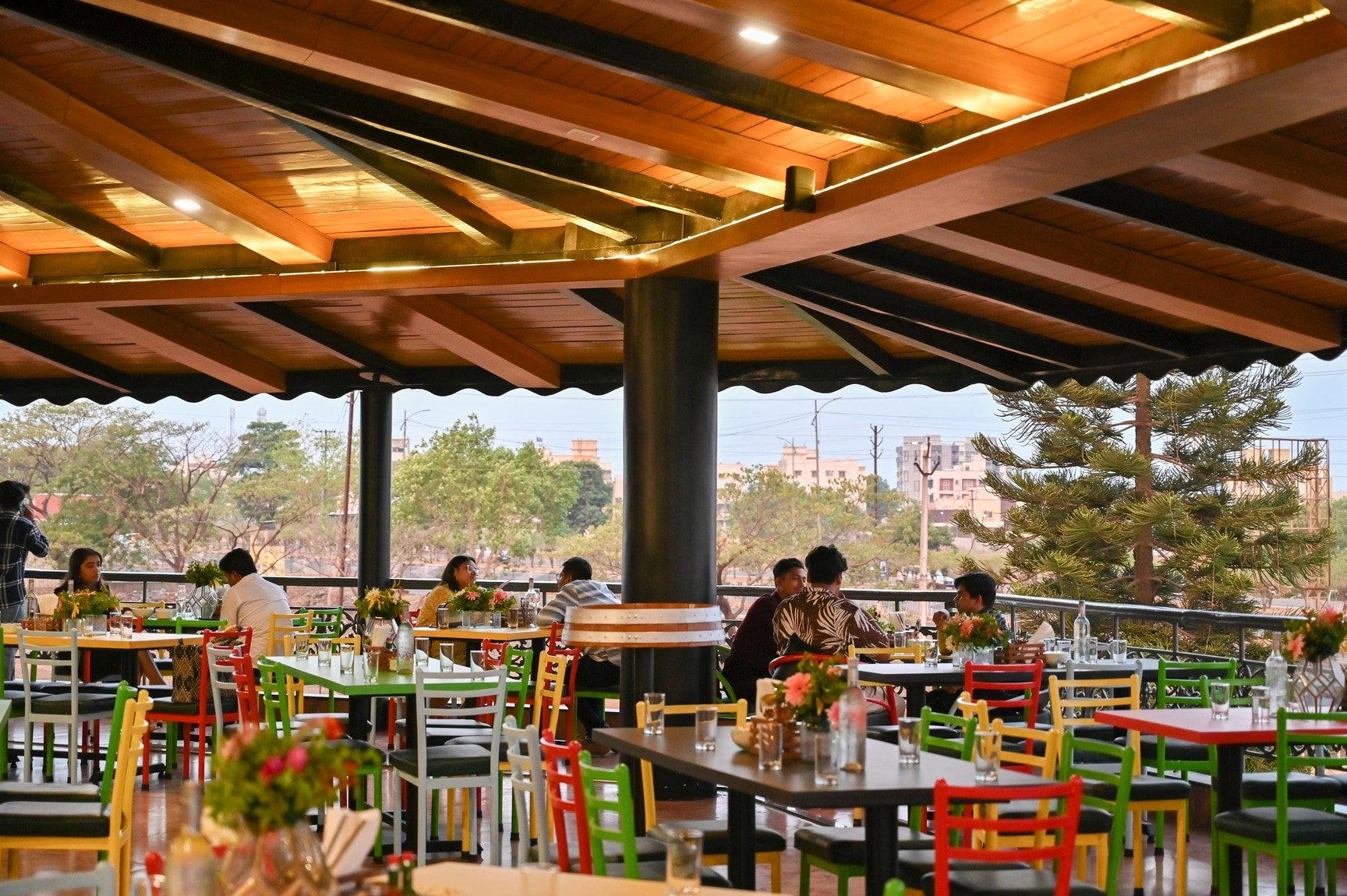
Where Indian Wine Grew Up
The drive out from central Nashik along the Gangapur-Savargaon Road tells you something about how wine culture arrived in Maharashtra. The land flattens, then rises in low ridgelines, and the vine rows start appearing before any signage does. This is the Dindori and Nashik Valley belt, a plateau zone sitting between 500 and 700 metres above sea level, where diurnal temperature swings during the growing season replicate, in partial measure, the conditions that make continental wine regions work. India's commercial wine industry needed exactly this kind of topography to function, and Nashik's basalt soils provided it. For context on how terrain shapes what ends up in the glass, the reasoning here is the same logic that governs regions from the Rhône to the Deccan.
Sula Vineyards, at Gat 36/2 off that same road in Govardhan, Nashik, is a restaurant with. It functions as the visited wine destination in India, drawing a significant share of the roughly 350,000 visitors Nashik's wine corridor attracts annually, and it does so by offering a physical encounter with the production chain that most Indian wine drinkers have never had access to. That matters for understanding what the place actually is: less a restaurant or bar in the conventional sense, more an agricultural estate that has built hospitality infrastructure around the product it grows.
Vineyard as Source Material
The editorial angle on Sula is ultimately about provenance. The estate's food and beverage program sits on land the winery farms, and the surrounding region supplies the raw material for everything that reaches the table or glass. Nashik's position as India's answer to a wine-producing region is not accidental: the plateau climate, the volcanic basalt, and the access to irrigation from the Gangapur Dam reservoir combine to produce growing conditions that allow varieties including Chenin Blanc, Sauvignon Blanc, Shiraz, and Cabernet Sauvignon to ripen with reasonable acidity retention. For those who have followed Farmlore in Bangalore or Naar in Kasauli as examples of Indian dining rooted in where the food actually comes from, Sula represents the wine-country equivalent of that instinct applied at estate scale.
The sourcing principle extends beyond grapes. Maharashtra's agricultural hinterland feeds into Nashik through a dense supply network: the district is among India's largest producers of onion, tomato, and grape for both table and wine use. An estate restaurant operating in this context has ready access to seasonal produce that larger city-based programs in Mumbai or Delhi source with considerably more logistical friction. Americano in Mumbai or Inja in New Delhi work hard to build sourcing stories; here, the supply chain is visible from the dining table.
The Estate Format in Indian Hospitality
India's premium hospitality scene has split, broadly, between urban fine dining anchored to hotel groups and a smaller, slower-growing tier of destination properties where the journey is part of the proposition. Sula belongs to the second category, and that positioning sets expectations clearly. Visitors arrive by road from Nashik city, roughly 15 to 20 minutes from the central railway station. The vineyard setting, the barrel rooms, and the production infrastructure are the context in which the dining and tasting happen.
This format has precedents in Indian destination dining. Adaa at Falaknuma Palace in Hyderabad and Ran Baas The Palace in Qila Mubarak both operate on the principle that the setting does a large share of the work, and that the table is secondary to the environment. Sula's version of this is agricultural rather than palatial: the spectacle is a working winery, not a heritage monument, and the experience is priced and pitched accordingly. For visitors building a broader Maharashtra itinerary, Palaash in Yavatmal offers a parallel case study in destination dining outside the state's major urban centres.
Wine Country in Context: What Nashik Means for Indian Viticulture
Sula's role in establishing Nashik as India's wine region is documented through output rather than awards. The estate's founding in the late 1990s preceded the broader growth of organised wine tourism in the country by nearly a decade, and the SulaFest music and wine festival, now drawing tens of thousands of visitors each February, has become especially prominent annual event in Indian wine culture. That event alone places Nashik on a different tier from the handful of other Indian wine-producing pockets in Karnataka and Himachal Pradesh.
The comparison set for Sula is international wine estate hospitality. India's version is younger, less regulated in its wine tourism infrastructure, and operates at a different price point than those Western counterparts. But the underlying logic is identical: bring the visitor to the source, let the terroir and production process anchor the hospitality, and build the food program around what the land produces. For readers who have followed estate hospitality through properties like Le Bernardin in New York City or Lazy Bear in San Francisco as reference points for what serious food and drink hospitality can look like, Sula represents a different register entirely, operating at a category boundary between agritourism and destination dining rather than within conventional fine dining.
Planning a Visit
Nashik sits approximately 165 kilometres northeast of Mumbai and connects by both rail and road. The Nashik Road railway station receives trains from Mumbai's CST and Dadar termini, with journey times typically in the three-hour range. From the station, the estate is accessible by cab or auto-rickshaw, with the Gangapur-Savargaon Road corridor passing several other smaller wineries en route. The SulaFest window in early February requires advance planning, as accommodation in the Nashik district fills quickly during that period. For those extending the Maharashtra circuit, and The Malabar House in Fort Cochin and Leela Kerala Terrace in Trivandrum represent comparable destination hospitality formats further south for those routing through the Deccan region. Visitors with an interest in regional Indian food traditions beyond Maharashtra might also consider Kappa Chakka Kandhari in Chennai, Royal Vega in Chennai (Madras), or View in Madurai as reference points for what regional anchoring looks like in the south.
In Context: Similar Options
Comparable venues nearby, for context on price, style, and recognition.
| Venue | Cuisine | Price | Notes |
|---|---|---|---|
| Sula VineyardsThis venue — the venue you are viewing | Indian-Italian Fusion with Pan-Asian Influences | $$$ | Not listed |
| Green Park | Indian & International Garden Dining | $$ | Fatehabad Road |
| The Pavillion | Indian, Chinese & Continental | $$ | Rajpur Road |
| Bukhara Restaurant | North West Frontier Indian | $$$ | Diplomatic Enclave |
| Jamavar Mumbai | Authentic Pan-Indian Fine Dining | $$$$ | Marol |
| Peshawari Mumbai | North West Frontier Indian | $$$$ | Sahar |
Continue exploring
More in Nashik
Restaurants in Nashik
Browse all →
Bars in Nashik
Browse all →
Hotels in Nashik
Browse all →
Wineries in Nashik
Browse all →
At a Glance
- Scenic
- Elegant
- Rustic
- Special Occasion
- Celebration
- Date Night
- Wine Cellar
- Terrace
- Extensive Wine List
- Farm To Table
- Local Sourcing
- Vineyard
- Garden
Current opening hours
- Monday
- 10:30 AM–11 PM
- Tuesday
- 10:30 AM–11 PM
- Wednesday
- 10:30 AM–11 PM
- Thursday
- 10:30 AM–11 PM
- Friday
- 10:30 AM–11 PM
- Saturday
- 10 AM–11:30 PM
- Sunday
- 10 AM–11:30 PM
Hours can change for holidays and private events. Last verified .
Scenic vineyard setting with relaxed, elegant atmosphere featuring terrace dining and natural lighting.