
Situated on Rue Gozlin in the 6th arrondissement, Sugaar brings Basque culinary tradition into conversation with Parisian dining culture. The address places it within walking distance of Saint-Germain-des-Prés, one of the city's most contested dining neighbourhoods. Where the kitchen lands on the spectrum between regional authenticity and metropolitan technique is the central question the restaurant poses to its guests.
Pearl is the En Primeur Club membership app — saves, bookings, and concierge access live there. Same editors, same standards.
- Address
- 5 Rue Gozlin, 75006 Paris, France
- Phone
- +33143265186
- Website
- sugaarparis.com
- Directions
- Get directions
 Saves & bookings on Pearl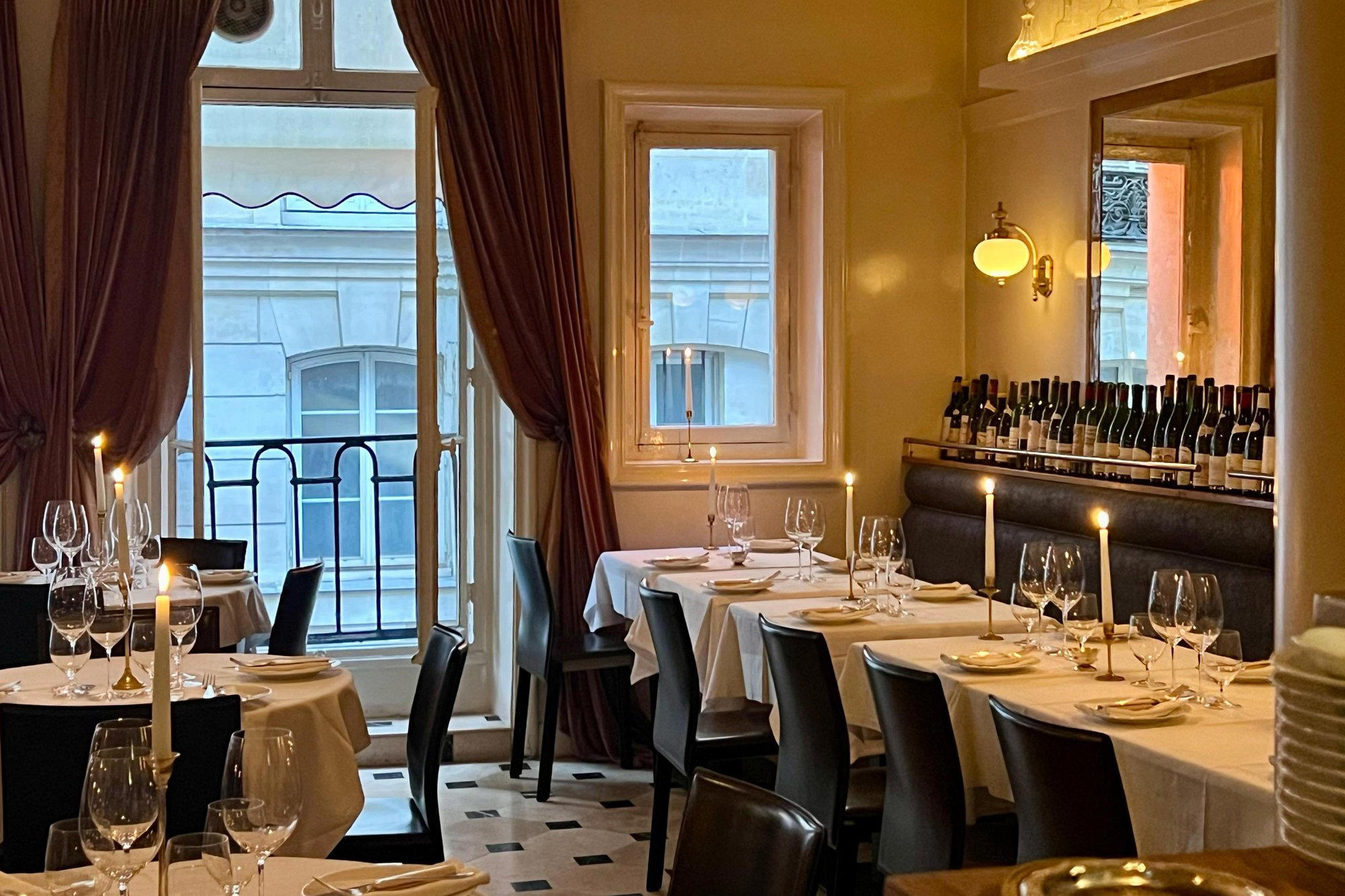
Basque Tradition in a Parisian Arrondissement
The 6th arrondissement has long functioned as a proving ground for restaurants that want proximity to Paris's most educated dining public without the institutional weight of the 1st or 8th. Rue Gozlin sits close to Saint-Germain-des-Prés, a neighbourhood where the competition runs from well-funded brasseries to destination-level addresses like Arpège and, further afield in the higher price tiers, L'Ambroisie. Into this setting, Sugaar introduces a Basque register, a cuisine that carries its own deep codification: salt cod, piperade, txakoli-braised preparations, and the grilling traditions of the Basque coast. The question that any restaurant in this position must answer is whether it treats those traditions as fixed reference points or as raw material for something more hybrid.
Paris has hosted waves of regional French and Iberian cooking that attempted exactly this negotiation. The Basque Country — spanning both French and Spanish sides of the Pyrenees — produces one of Europe's most self-confident food cultures, one with little historical interest in deference to Parisian norms. That confidence is both the asset and the constraint for a restaurant working the tradition in the capital: too literal and it reads as a regional annex, too assimilated and it loses the specificity that justifies the concept. The restaurants that resolve this tension most effectively tend to keep the product logic intact (the sourcing, the seasonality, the core proteins) while applying more cosmopolitan structural thinking to the format and progression of a meal.
Local Ingredients, Global Technique
The editorial argument for Basque cooking in Paris in 2024 rests on a broader pattern visible across European dining. Cities with concentrated fine-dining ecosystems, Paris, Copenhagen, London, have increasingly become hosts to kitchens that import regional ingredient vocabularies from outside their own borders and apply technical frameworks developed in entirely different culinary traditions. Kei does this with Japanese precision applied to French produce. Mirazur in Menton works the border between French and Italian ingredient logic. AM par Alexandre Mazzia in Marseille draws on Congolese sensory memory within a French fine-dining structure. The intersection of imported methods and indigenous products is not a novelty move; it has become the defining creative condition of serious European cooking.
For Sugaar, the Basque product base is the foundation: the Espelette pepper that gives Basque-Navarrais cooking its specific heat register, the anchovy preparations of the Bay of Biscay coast, the sheep's milk cheeses of the interior, and the reef fish that define the coastline's market tables. Restaurants like Alléno Paris au Pavillon Ledoyen and Le Cinq operate at the formal ceiling of this conversation; Sugaar's position is further down the formality register, which gives it room to work with less ceremony and more directness. That directness is itself a Basque characteristic: the pintxo bar culture of San Sebastián, which treats elaborate preparation as something to be consumed standing at a zinc counter, has always carried a democratic refusal of fussiness.
Where Sugaar Sits in the Paris Dining Map
The 6th arrondissement is not the obvious district for a Basque address. The Basque-inflected restaurants that have found footing in Paris historically clustered in the 7th and around the Marché d'Aligre in the 12th, where the city's Basque-origin population has a longer presence. Saint-Germain's dining identity has instead been shaped by French classic cooking and a more recent wave of Japanese-influenced technique, making Sugaar's positioning slightly contrarian by neighbourhood logic. Contrarian positioning in Paris dining is not inherently a problem: some of the city's most durable addresses made their name by operating outside the expected geography. Flocons de Sel in Megève, Bras in Laguiole, and Auberge du Vieux Puits in Fontjoncouse all built reputations by working against the gravitational pull of Paris rather than within it. Sugaar's bet is that the Rue Gozlin address can carry a cuisine that is geographically specific without being geographically dependent.
For the Paris dining public, this is a recognizable proposition. The city has long supported restaurants whose authority derives from a regional or national tradition rather than from the French classical canon. Au Crocodile in Strasbourg and Auberge de l'Ill in Illhaeusern represent the Alsatian tradition working at the highest level within France's regional hierarchy; Basque cooking has historically occupied a different register, one more associated with convivial format than with formal haute cuisine. Whether Sugaar is pitching to the convivial end of that tradition or attempting something more structured is a question the address on Rue Gozlin raises without fully answering from the outside.
The Broader Cross-Border Context
It is worth placing Sugaar in the context of kitchens that have successfully moved regional ingredient logic across long distances. Le Bernardin in New York City transplanted French seafood technique into an American market and sustained it at the highest level for decades. Atomix in New York City applies Korean ingredient and structural thinking within a tasting-menu format calibrated for a global fine-dining audience. Troisgros and Paul Bocuse built identities so strongly rooted in their French regional origins that the specificity became the credential rather than a limitation. Assiette Champenoise in Reims demonstrates how deep regional rootedness can coexist with international-level technical ambition. The pattern holds across these examples: the restaurants that endure are those that treat their regional identity as a precise set of product and flavour commitments, not as a nostalgic frame. For Sugaar, the Basque tradition is rich enough to support that kind of precision if the kitchen chooses to work that way.
Planning Your Visit
Sugaar is at 5 Rue Gozlin, 75006 Paris, close to the Saint-Germain-des-Prés Métro station (line 4). The 6th arrondissement's dining calendar tends to be steadier than tourist-heavy districts, with local clientele maintaining pace outside peak summer weeks, making autumn and early spring the most reliable periods for securing tables without extended forward planning. For a broader orientation to Paris dining across price tiers and neighbourhoods, the EP Club Paris restaurants guide maps the full competitive field. Dress: The 6th arrondissement norm trends smart-casual for dinner at addresses of this type.
How Sugaar Paris compares with similar nearby venues.
| Venue | Cuisine | Price |
|---|---|---|
| Les Deux Magots | Café | Not listed |
| Yen | Soba, Japanese | €€€ |
Recognition history
Dated appearances from independent guides and award organizations, with the underlying list record or original source where available.
World's Best Steaks Europe's 50 Best Steak Restaurants #48 · No. 48
World's Best Steaks · Europe's 50 Best Steak Restaurants 2026
Continue exploring
More in Paris
Restaurants in Paris
Browse all →
Bars in Paris
Browse all →
Hotels in Paris
Browse all →

At a Glance
- Romantic
- Elegant
- Sophisticated
- Intimate
- Date Night
- Special Occasion
- Business Dinner
- Open Kitchen
- Craft Cocktails
Current opening hours
- Monday
- Closed
- Tuesday
- 7 PM–2 AM
- Wednesday
- 7 PM–2 AM
- Thursday
- 7 PM–2 AM
- Friday
- 7 PM–2 AM
- Saturday
- 7 PM–2 AM
- Sunday
- 7 PM–12 AM
Hours can change for holidays and private events. Last verified .
Crisp white tablecloths, flickering candlelight, gleaming silverware, and classy upstairs area creating Parisian elegance with Basque vivacity.
Know Before You Go
- Getting there
- 5 Rue Gozlin, 75006 Paris, France