Our verdict
Bustronome operates from Avenue Kléber in the 16th arrondissement, running a dining-on-board experience aboard a double-decker glass-roofed bus that circuits Paris's principal monuments. The format sits in a small category of experiential dining concepts where the route functions as the setting and the meal unfolds against a moving backdrop of the city. Reservations are advisable, particularly for evening departures.

Pearl is the En Primeur Club membership app, where members save venues, book tables and use the concierge.

The menu
What to order
- Duo of tartare salmon and scallops
- Beef Rossini with Périgueux sauce
A Route Through the City as a Dining Room
Paris has long separated its serious restaurants from its tourist circuits. The city's Michelin-starred tier, from the creative intensity at Alléno Paris au Pavillon Ledoyen to the classical precision at L'Ambroisie, operates from fixed addresses where the room itself is part of the statement. Bustronome works from a different premise entirely: the address changes continuously, and the dining room is a panoramic glass-roofed bus departing from 2 Avenue Kléber, steps from the Arc de Triomphe in the 16th arrondissement. This is a format where the city's monumental spine, Champs-Élysées, Place de la Concorde, the Seine's bridges, the Eiffel Tower, becomes the visual sequence that structures the meal rather than a backdrop seen through a restaurant window.
The concept belongs to a small category of experiential dining that has emerged in European capitals over the past decade, where the experience architecture and the culinary format are designed to reinforce each other. London, Brussels, and Paris have each developed bus or boat dining formats, but the Bustronome version is among the more sustained in positioning itself against genuine culinary expectations rather than simple novelty. Sitting alongside it contextually, though operating in entirely different registers, are formats like Lazy Bear in San Francisco, where the meal is structured as a communal event with a deliberate arc, or Le Bernardin in New York City, where the room's controlled environment amplifies the food. Bustronome inverts that logic: the environment moves, and the cooking must hold its own against constant visual competition.
How the Meal Unfolds Across the Route
Multi-course dining on a moving vehicle involves sequencing that fixed-address restaurants do not have to consider. The route through Paris's central monuments runs approximately ninety minutes for lunch circuits and longer for dinner, and the kitchen, located on the lower deck, must time courses to the motion of the bus, the pace of traffic, and the attentiveness of a guest whose eye is frequently drawn to what passes outside the window. This is a structural constraint that shapes the tasting progression in ways that a conventional kitchen never faces.
The sequencing logic, from what is publicly documented about the Bustronome format, follows a French multi-course structure: amuse-bouche and starter as the bus moves through the Champs-Élysées corridor, main courses timed through the central monuments, and dessert typically arriving as the circuit approaches completion. This pacing means the meal has a geographic narrative as well as a culinary one. The Eiffel Tower, which French restaurants like Le Cinq at the Four Seasons George V can only allude to in their neighbourhood prestige, becomes a literal backdrop to a specific course at Bustronome. The experiential proposition is that you eat through the city rather than arriving in a room and dining within it.
It is closer in spirit, if not in formal ambition, to the proposition at destination restaurants like Mirazur in Menton or Bras in Laguiole, where the landscape visible from the dining room is treated as part of the meal's meaning. The difference is that Bustronome's landscape does not stay still.
What the Format Means for the Cooking
French gastronomy at the level represented by Arpège, Kei, or the regional houses such as Flocons de Sel in Megève and Troisgros in Ouches is built on kitchen infrastructure, stable supply chains, and a controlled environment where temperature, plating time, and service pacing can be managed to precise tolerances. A bus kitchen operates under none of those conditions. Dishes must be designed to survive transit without degrading, plating must work under movement, and service must be rapid enough to pace with the route.
The culinary ambition at Bustronome is therefore bounded by the format, and that is not a criticism so much as a structural observation. The goal is not to replicate what happens at Paul Bocuse's Auberge du Pont de Collonges or the sustained institutional tradition of Auberge de l'Ill in Illhaeusern. The goal is to deliver a coherent French menu that holds together over ninety minutes while the dining room circles past the most photographed city in the world. By that measure, the interest is genuinely in the format rather than in the cooking alone.
For context on where the cooking sits, Bustronome is positioned in the experiential rather than the gastronomic tier of Paris dining. Guests who want the progressive creativity of Les Prés d'Eugénie or the sourcing rigour of Auberge du Vieux Puits will find neither here. What is offered instead is a format where the meal and the city are simultaneous, which is a different kind of value proposition.
Timing and Seasonal Considerations
The Bustronome circuit is most atmospheric in the late spring and summer months, when Paris's long evening light keeps the monuments illuminated without electric enhancement well into dinner service. The summer solstice period, roughly mid-June to mid-July, offers the narrowest gap between natural and artificial light, which means the transition through the route can feel genuinely theatrical without relying entirely on floodlit monuments. Conversely, winter departures that align with the Eiffel Tower's hourly light show offer a different kind of visual punctuation to the meal.
The concept is popular with visitors during the July-August peak, which is also when Paris's fixed-address restaurants experience their highest booking pressure. For the city's wider dining context, the full Paris restaurants guide maps both the gastronomic institutions and the experiential formats across the city's arrondissements. Regional comparisons, from Georges Blanc in Vonnas to
Same-City Peers
Comparable venues nearby, for context on price, style, and recognition.
| Venue | Cuisine | Price | Awards | Notes |
|---|---|---|---|---|
| BustronomeThis venue (the venue you are viewing) | Contemporary French Fine Dining | $50–100 | Not listed | Not listed |
| Les Jardins du Presbourg | Modern French Bistro | Not listed | Not listed | 16e Arr. |
| Restaurant Monsieur Lancaster | Modern French Regional Fine Dining | $150–200 | Not listed | 8th Arr. |
| Le Georges | Modern French Fusion with Rooftop Views | Not listed | Not listed | 4th arrondissement |
| De Vie | Hyper-seasonal French tasting menu with cocktail pairings | $150–200 | World's 50 Best #23 · Conde Nast Hot List Restaurants | Montorgueil |
| Ledoyen | Modern French Fine Dining | $300–500 | Not listed | Champs-Élysées |
Continue exploring
More in Paris
Restaurants in Paris
All restaurants in Paris →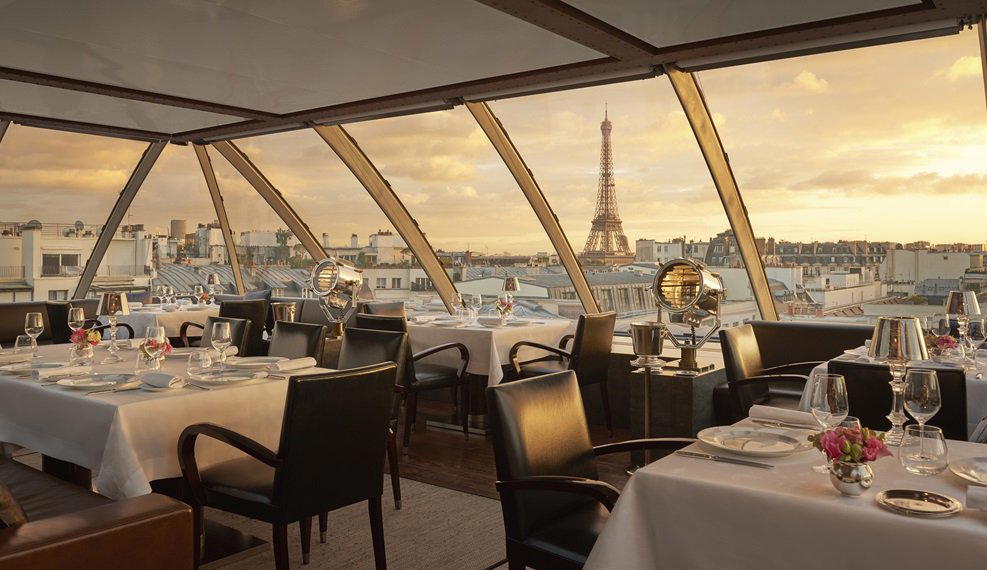
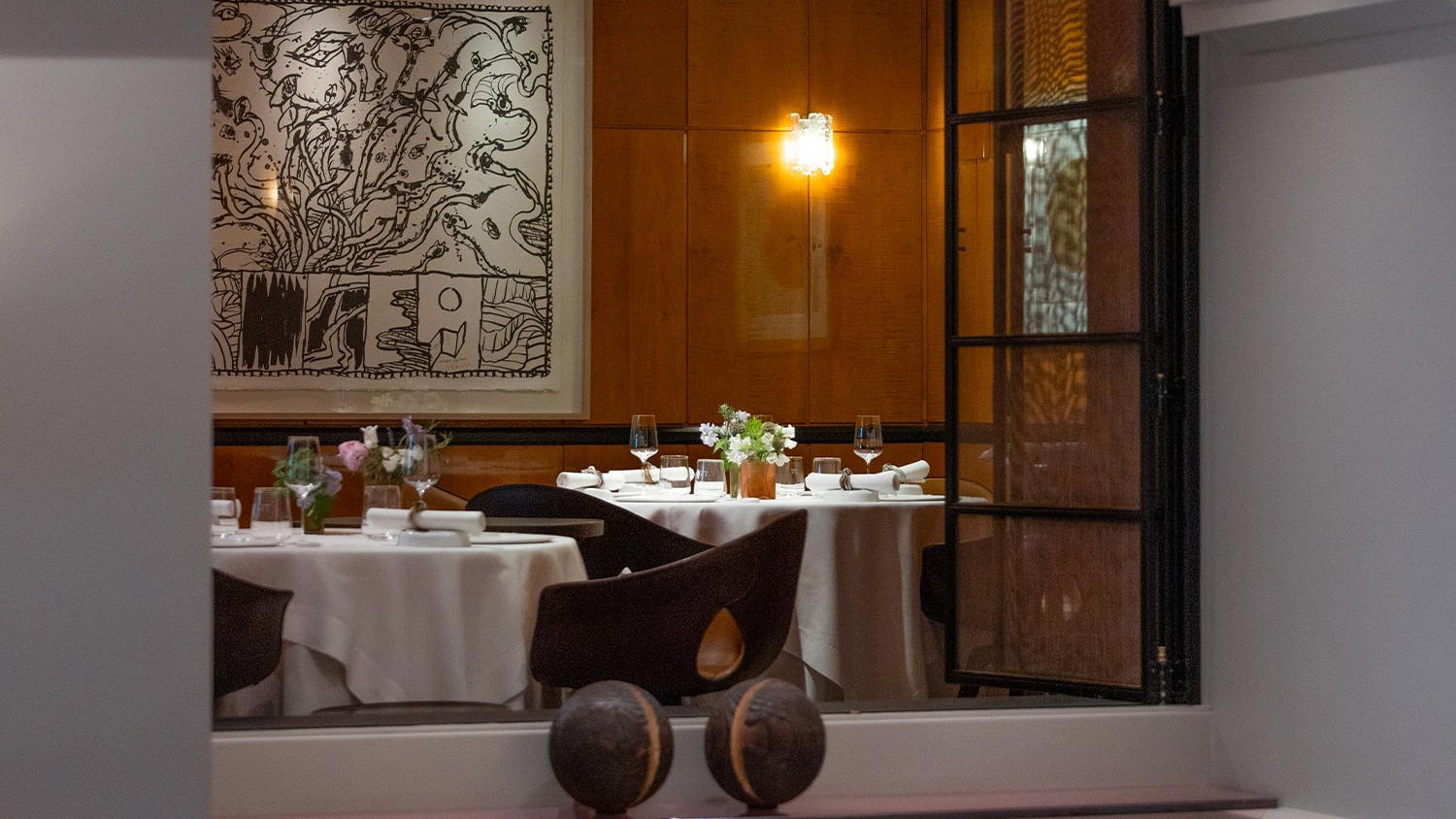

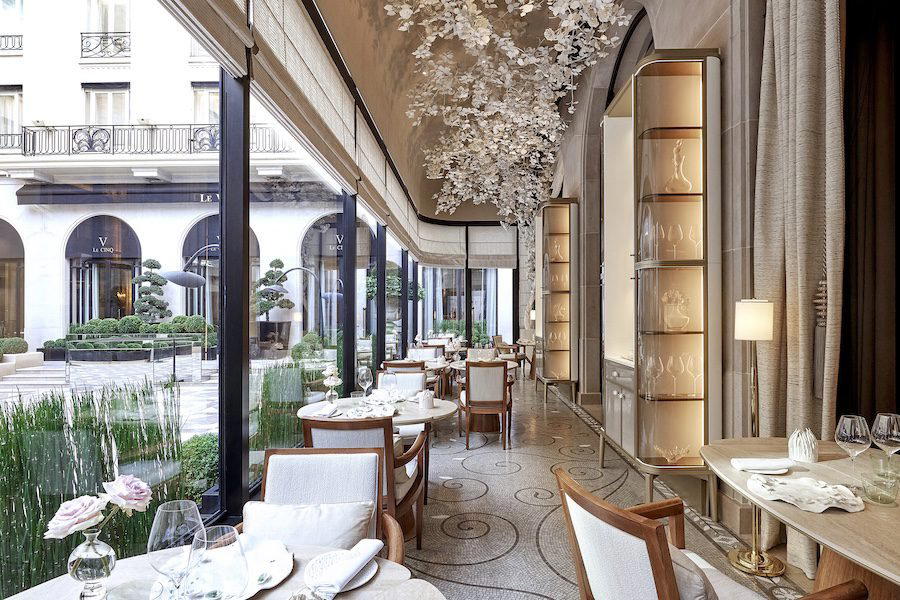
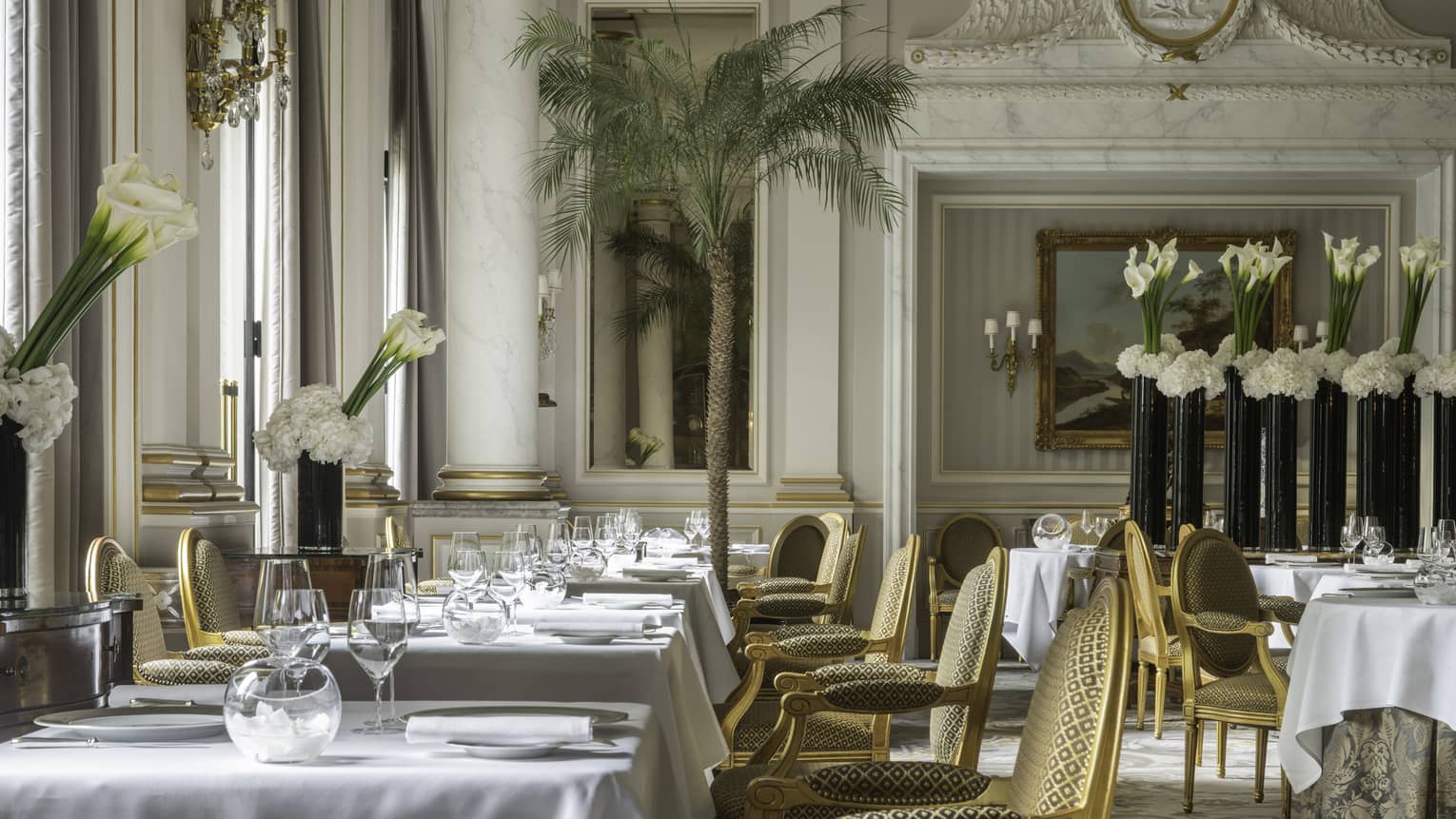
Bars in Paris
All bars in Paris →
Details
- Scenic
- Elegant
- Sophisticated
- Special Occasion
- Date Night
- Celebration
- Panoramic View
- Extensive Wine List
- Skyline
- Street Scene
- Tasting Menu
- Prix Fixe
- Wine Pairing
- Vegetarian Friendly
- Vegan Options
- Gluten Free Options
Current opening hours
- Monday
- 12:15–1:45 PM, 7:45–10:45 PM
- Tuesday
- 12:15–1:45 PM, 7:45–10:45 PM
- Wednesday
- 12:15–1:45 PM, 7:45–10:45 PM
- Thursday
- 12:15–1:45 PM, 7:45–10:45 PM
- Friday
- 12:15–1:45 PM, 7:45–10:45 PM
- Saturday
- 12:15–1:45 PM, 7:45–10:45 PM
- Sunday
- 12:15–1:45 PM, 7:45–10:45 PM
Hours can change for holidays and private events. Hours as of .
Luxurious and comfortable with panoramic views through the fully glazed roof, enhanced by restaurant-style service.