Spicy Fish

Michelin Plate
Our verdict
A Michelin Plate-recognised address on Maria Quitéria in Ipanema, Spicy Fish brings Asian contemporary cooking into one of Rio's most food-literate neighbourhoods at a price point that sits well below the city's fine-dining tier.

Pearl is the En Primeur Club membership app, where members save venues, book tables and use the concierge.
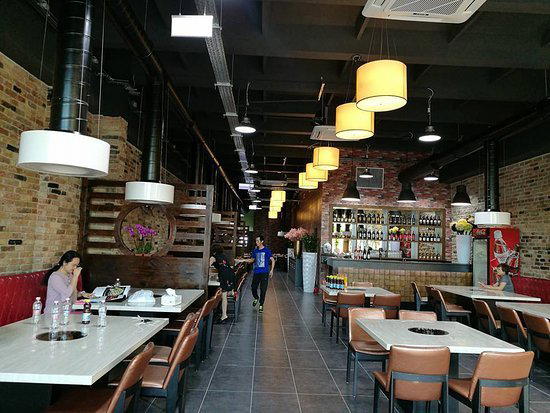
The menu
What to order
- Black cod
- Foie gras gyoza
- Tuna tataki
Asian Contemporary in Ipanema: Reading the Room on Maria Quitéria
Ipanema's restaurant strip along and around Rua Maria Quitéria has long functioned as a calibration point for Rio's middle-to-upper dining market. The street sits close enough to the beach to catch a leisure crowd but carries enough residential density to sustain the kind of neighbourhood regulars that keep kitchens honest across a full week's service. In that context, an Asian contemporary address at a budget-friendly price point is not a novelty act. It is a direct response to what Ipanema's dining public has been asking for: technical cooking in a non-event format, without the commitment of a tasting-menu evening at a place like Lasai or Oteque.
Spicy Fish occupies that gap with some precision. Two consecutive Michelin Plates, awarded in 2024 and again in 2025, place the kitchen inside the guide's recognised tier without ascending to the starred bracket. That distinction matters more than it might first appear. A Michelin Plate signals that inspectors found quality cooking worth flagging to readers, while the single-dollar price indicator tells you this is not a room engineering its way toward a star through elaborate production. The combination is relatively rare in Rio's Michelin landscape, where the recognised names tend to cluster at the top end of the price register Oro, Casa 201, and Cipriani all operate at the upper price tiers. Spicy Fish holds its Michelin recognition at the city's most accessible price point.
What Asian Contemporary Means in a Brazilian Context
The category label Asian contemporary covers a wide range of cooking intentions globally, from the pan-Asian fusion menus that proliferated in European capitals during the 2000s to the more disciplined, single-cuisine-rooted formats that now define the genre in cities with mature Asian dining scenes. In Brazil, the category carries additional cultural weight. São Paulo's Japanese-Brazilian community, one of the largest outside Japan, has shaped a distinct local canon of Japanese-inflected cooking that long predates the global sushi boom. Rio's relationship with that tradition is slightly more arm's-length than São Paulo's, which makes the appearance of a Michelin-recognised Asian contemporary kitchen in Ipanema a meaningful marker of how the city's dining expectations have shifted.
For context, the Asian contemporary format at a comparable level of ambition in other markets tends to involve tight menus built around a single culinary tradition, sourcing strategies that blend local and imported ingredients, and a kitchen philosophy that treats Asian technique as a serious discipline rather than a flavour shortcut. In Singapore, addresses like Willow show how the format operates where Asian cuisine traditions are native; in Istanbul, Banyan demonstrates how Asian contemporary translates into a city with its own strong culinary identity. Spicy Fish in Rio sits within that global conversation, bringing the format into a neighbourhood that approaches it from the outside in rather than from within a longstanding Asian culinary community.
The Price Point and What It Signals
Rio's Michelin-recognised dining scene has historically concentrated its attention at the expensive end of the market. The tasting-menu format, rare ingredients, and extended kitchen teams that drive starred ambitions push price points toward the upper brackets almost by necessity. Spicy Fish's single-dollar pricing, maintained across two consecutive Michelin Plate years, is a signal worth paying attention to. It suggests a kitchen that has identified a format where quality is achievable without the infrastructure costs of a fine-dining operation: a tighter menu, possibly a smaller room, and an approach to ingredients that prioritises flavour-to-cost efficiency over prestige sourcing.
It also places Spicy Fish in a different performance category from the kind of restaurant that earns strong scores through a single impressive opening and then coasts. Nearly seven hundred data points across the life of a budget-tier restaurant in a competitive neighbourhood describe sustained delivery.
For a broader picture of what Rio's dining scene offers across all price registers, our full Rio de Janeiro restaurants guide maps the city's options from neighbourhood casual to tasting-menu formats. Those planning a wider trip can also reference our Rio de Janeiro hotels guide, bars guide, wineries guide, and experiences guide.
Placing Spicy Fish in Brazil's Broader Asian-Influenced Scene
Brazil's restaurant culture outside São Paulo and Rio has developed in unexpected directions over the past decade, with Michelin-recognised kitchens appearing in Gramado, Salvador, and Campos do Jordão. The range of that recognition, from Manga in Salvador to Primrose in Gramado to Mina in Campos do Jordão, reflects a national dining scene that has moved well beyond its major urban centres. Within that map, Asian contemporary in Rio occupies a specific cultural position: it is neither the Japanese-Brazilian hybrid cooking of São Paulo, where Evvai operates with explicit European-Japanese fusion intent, nor the locally-rooted regional cooking that defines the Bahian scene around places like Orixás in Itacaré. It is an imported format that has taken root in a neighbourhood with the demographic appetite to sustain it.
The address on Rua Maria Quitéria, 99, puts the restaurant squarely in Ipanema's commercial core, accessible on foot from the beach and well within the catchment of the neighbourhood's hotel and residential population. There is no phone number or website listed in public directories for direct booking guidance, which suggests walk-in traffic or informal reservation arrangements are part of the operational model, a pattern more common in budget-tier Rio than in its higher-tariff counterparts. Diners planning a visit would be better served arriving with some flexibility in timing rather than expecting a structured online reservation process.
The Case for Attention
Two years of consecutive Michelin recognition at a single-dollar price point in a neighbourhood that sits between Rio's leisure economy and its residential dining base is a combination that warrants the attention Spicy Fish has quietly accumulated. It does not compete in the same register as the city's starred tables or its grand-hotel dining rooms. It competes, instead, for a type of evening that Rio's dining culture has not always prioritised: technically serious cooking in an accessible format, delivered without ceremony and priced to allow return visits. For a city that excels at spectacle, carnival, beach, the panoramic dining rooms that face Guanabara Bay, a kitchen making that argument in a ground-floor Ipanema address is its own kind of counterpoint. Those exploring comparable Michelin-recognised experiences elsewhere in southern Brazil should also consider Castelo Saint Andrews in Gramado for a very different register of the same guide's attention.
FAQ: What Dish is Spicy Fish Famous For?
Spicy Fish's Michelin Plate recognition (2024 and 2025) confirms the kitchen's quality within the Asian contemporary category, but the guide does not specify a signature dish by name. The cuisine type and the venue's name both suggest fish preparations with heat-forward seasoning play a central role in the menu's identity. What is documentable is the consistency of the Michelin assessment across two consecutive years, which points to a kitchen with a stable and repeatable approach to its core offering.
The Quick Read
A quick peer list to put this venue’s basics in context.
| Venue | Cuisine | Price | Awards | Notes |
|---|---|---|---|---|
| Spicy FishThis venue (the venue you are viewing) | Japanese-Korean Fusion Sushi | $30–50 | Michelin Plate | Not listed |
| Lasai | Modern Brazilian Fine Dining | Not listed | 2 Michelin Stars · World's 50 Best #28 | Regional Brazilian, Modern Cuisine |
| Oteque | Modern Seafood Fine Dining | $100–150 | 1 Michelin Star · World's 50 Best #38 | Modern Brazilian, Modern Cuisine |
| Oro | Brazilian Vanguard Fine Dining | Not listed | 2 Michelin Stars · La Liste Top Restaurants | Contemporary Italian, Brazilian, Modern Italian |
| Lilia | Modern Brazilian Creative | $20–30 | Michelin Plate | Italian, Brazilian |
| Casa 201 | Modern French with Brazilian Ingredients | $150–200 | 1 Michelin Star | French |
Recognition history
Dated appearances from independent guides and award organizations, with the underlying list record or original source where available.
Michelin Plate
Michelin
Full recognition history (3 entries)
Michelin Plate
Michelin
Michelin Plate
Michelin
Continue exploring
More in Rio de Janeiro
Restaurants in Rio de Janeiro
All restaurants in Rio de Janeiro →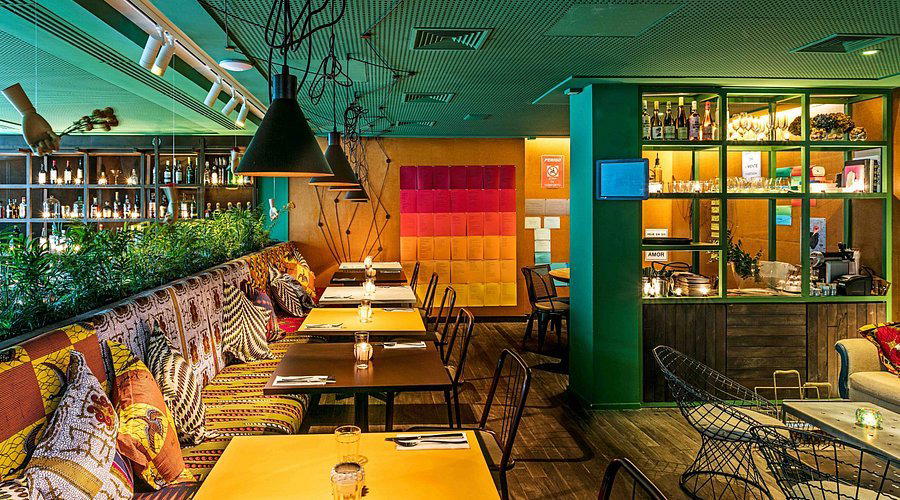
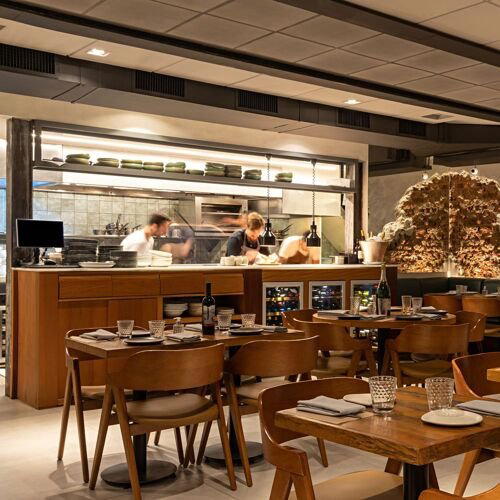
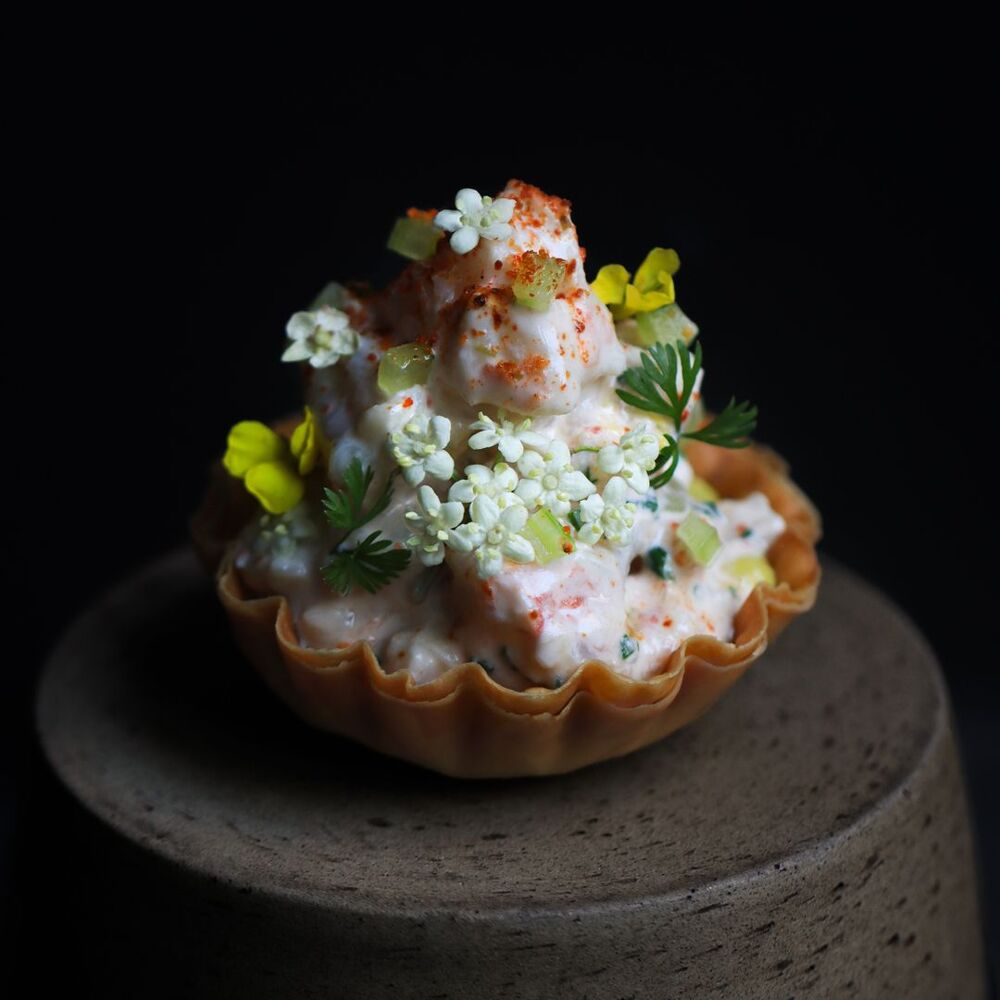
Bars in Rio de Janeiro
All bars in Rio de Janeiro →



Details
- Modern
- Trendy
- Cozy
- Elegant
- Date Night
- Casual Hangout
- Open Kitchen
- Craft Cocktails
- Sake Program
- A La Carte
- Small Plates
- Sake
- Cocktails
Current opening hours
- Monday
- 12 PM–12 AM
- Tuesday
- 12 PM–12 AM
- Wednesday
- 12 PM–12 AM
- Thursday
- 12 PM–12 AM
- Friday
- 12 PM–1 AM
- Saturday
- 12 PM–1 AM
- Sunday
- 12–11 PM
Hours can change for holidays and private events. Hours as of .
Neutral tones, soft lighting, wooden furniture, stone walls, green plants creating a relaxed zen-like atmosphere.