Sonnet

Michelin Plate
Our verdict
On the third floor of a Gangnam side street, Sonnet takes casual French dining seriously, small plates built on sophisticated technique, from cocoa rolls with chicken liver mousse and truffle to buckwheat pasta with clams and caviar. It sits in a mid-tier niche between Seoul's grand tasting-menu houses and neighbourhood bistros, offering French-inflected cooking with enough precision to hold its own in a competitive city.

Pearl is the En Primeur Club membership app, where members save venues, book tables and use the concierge.
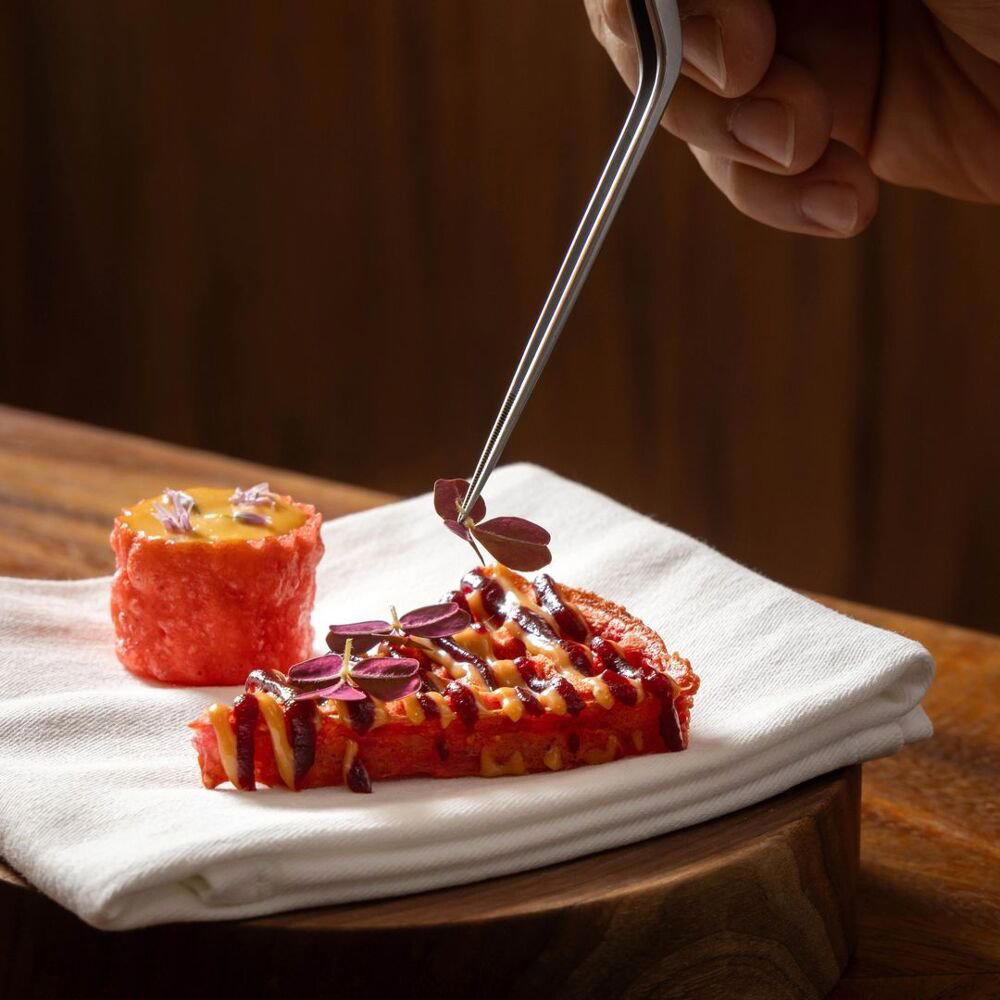
The menu
What to order
- Cocoa rolls with chicken liver mousse
- Buckwheat pasta with clams and caviar
Where Gangnam Goes for French Without the Ceremony
Seoul's French dining scene has long split along predictable lines: white-tablecloth tasting menus in Cheongdam and Apgujeong at one end, casual wine bars in Itaewon at the other. The middle ground, technically serious cooking served without rigid formality, has historically been harder to find in Gangnam. Sonnet occupies that middle tier on the third floor of a low-key building off Seolleung-ro, in a part of the district that feels closer to a working neighbourhood than a dining destination. The approach to the restaurant through an unremarkable stairwell sets expectations accurately. What you find at the top of the stairs is a room where the cooking does the talking.
The name translates from French as 'a short song', a frame for a menu built around small plates rather than extended tasting sequences. In the broader context of Seoul's French restaurants, that positioning is meaningful. Where venues like Jungsik (Contemporary) have made their names on full-evening commitments and multi-course progression, Sonnet proposes something more modular: dishes that can be combined loosely or eaten in sequence, each self-contained, each technically accomplished.
Technique at the Small-Plate Scale
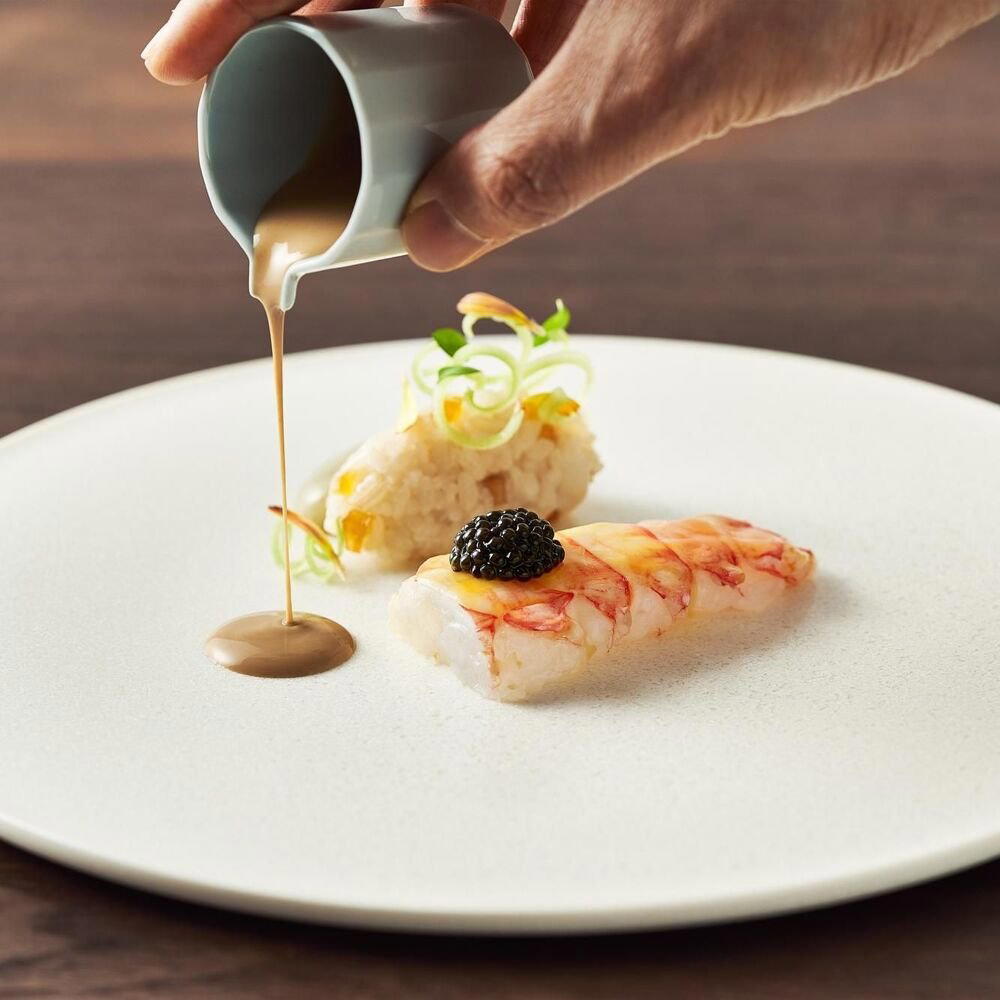
The French small-plate format has become a testing ground in Seoul. Among innovative restaurants, Soigné (Innovative) and alla prima (Innovative) have both shown that abbreviated formats can carry serious culinary weight. Sonnet's contribution to that conversation sits in the specifically French register. Cocoa rolls filled with chicken liver mousse, finished with truffle and raspberry jam, compress a classical terrine tradition into bite-sized form while adding a fruit acidity that cuts the richness of the liver. The pairing is not accidental: this is the kind of balance that takes deliberate calibration, not improvisation.
Buckwheat pasta with fresh clams and caviar represents the other direction on the menu, a dish where the aromatic restraint is the point. The earthiness of buckwheat against the brine of clams and the saline lift of caviar is a studied combination, one that references French coastal cooking while keeping its proportions disciplined. Desserts show precise temperature work, textural contrast, and disciplined sweetness rather than spectacle.
The range from morsels to desserts within a single small-plate format means the menu asks something from the diner: you make choices rather than follow a fixed progression. That dynamic suits a certain kind of eating, one more common at lunch than at dinner, and more comfortable for guests who already have a working knowledge of French culinary vocabulary.
The Lunch–Dinner Dynamic in a Room Like This
Seoul's Gangnam district has developed a pronounced divide between its daytime and evening dining cultures. At lunch, the neighbourhood draws professionals from the surrounding office blocks, people eating on a defined schedule, often ordering fewer courses, less likely to pair extensively with wine. At dinner, the pace slows and the room tends to shift toward couples, small groups, and guests who are building an evening rather than fitting in a meal. For a restaurant like Sonnet, that divide has real consequences.
The small-plate format adapts to both occasions more fluidly than a fixed tasting menu would. A two- or three-plate lunch around the buckwheat pasta and one of the smaller morsels is a complete midday meal. The same room at dinner becomes a different proposition: more plates, more consideration of the sequence, the dessert section more likely to be used. The format's flexibility is a competitive advantage in a neighbourhood where many French options demand the same commitment regardless of the hour.
Comparison venues in Seoul's French mid-tier, L'Amitié sits at a similar ₩₩₩ price register, tend to follow more conventional bistro formats. Sonnet's small-plate approach gives it a different rhythm, one closer to the way contemporary Korean dining has long operated and one that may be part of why French cuisine in this format has found traction in Seoul specifically.
Sonnet in the Seoul French Context
Seoul's relationship with French cuisine has evolved considerably. Zero Complex, operating in the Korean-French innovative tier at ₩₩₩₩, has pushed that fusion direction harder and at higher price points. Sonnet appears to sit apart from both camps: it is not fusing Korean and French traditions, nor is it asking for full tasting-menu investment. It is offering French cooking, taken seriously, in a format that does not require a two-hour evening commitment.
That positioning has parallels in other cities. In New York, the tradition of serious but accessible French cooking, the register that Le Bernardin in New York City occupies at its formal extreme, has a less formal counterpart in the neighbourhood bistro tier. In New Orleans, French influence runs through the dining culture at multiple price levels, from the elaborate formality of Emeril's in New Orleans to the casual end. Seoul's equivalent of that accessible-but-technical French tier is still developing, and Sonnet occupies a legitimate position within it.
For anyone building a broader picture of Seoul's dining scene, the city rewards attention beyond its showpiece tasting-menu restaurants. Our full Seoul restaurants guide covers the range from Korean temple cooking, including Baegyangsa Temple in Jangseong-gun, to regional Korean dining at venues like 권숙수 - Kwon Sook Soo in Gangnam-gu. Beyond Seoul, Mori in Busan and Double T Dining in Gangneung illustrate how seriously the rest of South Korea is developing its own fine-dining identity. Pool House in Incheon and 더 플라잉 호그 - The Flying Hog in Seogwipo extend the picture further. Seoul's hotel and bar scenes, covered in our full Seoul hotels guide and our full Seoul bars guide, provide context for how the city structures a full visit. Those planning around wine or experiences can start with our full Seoul wineries guide and our full Seoul experiences guide.
Planning Your Visit
Sonnet is on the third floor at 3F, Seolleung-ro 157-gil, Gangnam-gu. The address places it within walking distance of Seolleung station on Line 2, in a part of Gangnam that sits between the main retail corridor and the quieter residential blocks to the south. The restaurant is on the third floor at 3F, Seolleung-ro 157-gil, Gangnam-gu. Hours are Mon: Closed; Tue: Closed; Wed to Fri: 5:30-10 PM; Sat and Sun: 5-10 PM, and reservations are essential.
What Regulars Ask About Sonnet
- What do regulars order at Sonnet?
- The cocoa rolls with chicken liver mousse, truffle, and raspberry jam are the most discussed item in the venue's own description, a bite-sized piece that condenses classical French technique into a single mouthful. The buckwheat pasta with clams and caviar represents the more restrained, aromatic side of the menu. Both dishes appear on the small-plate format that defines the restaurant's approach to French cuisine in Seoul.
- Is Sonnet reservation-only?
- Reservations are essential. Given the venue's position in Gangnam's competitive French dining tier and the attention its small-plate format has attracted, advance contact before visiting is sensible. Seoul's French restaurant segment, including higher-investment venues like Jungsik (Contemporary), generally expects reservations, and mid-tier options are increasingly moving in the same direction.
- What has Sonnet built its reputation on?
- The restaurant's identity rests on the application of sophisticated culinary technique to a casual, small-plate French format, a combination that positions it distinctly within Seoul's French dining scene. The name itself signals the philosophy: a short song, not an opera. Dishes like the cocoa roll and the buckwheat pasta demonstrate that the kitchen's technical range is not decorative but functional, used to calibrate flavour balance rather than to impress on sight alone.
Frequently asked questions
Is Sonnet award-winning?
Sonnet has received recognition including: Sonnet translates as 'a short song' in French, an apt name for a restaurant devoted to small plates. It offers a casual take on French cuisine, with a menu ranging from bite-sized morsels to desserts crafted using sophisticated culinary tec….
What's Sonnet's location?
Sonnet is located at 3F, Seolleung-ro 157-gil, Gangnam-gu, Seoul.
What do regulars order at Sonnet?
Two dishes define the menu's range: cocoa rolls filled with chicken liver mousse, finished with truffle and raspberry jam, and buckwheat pasta with fresh clams and caviar. Both demonstrate the kitchen's approach of applying classical French technique to bite-sized formats without the formality of a tasting menu.
What has Sonnet built its reputation on?
Sonnet's positioning is deliberate: French technique applied at the small-plate scale, without the ceremony of Cheongdam's white-tablecloth tasting menus. The name itself, French for 'a short song', signals the kitchen's philosophy: focused, compact, and considered rather than expansive. The cocoa roll and buckwheat pasta dishes illustrate how the menu balances contrasting flavour profiles through precise construction.
Compact Comparison
Comparable venues nearby, for context on price, style, and recognition.
| Venue | Cuisine | Price | Awards | Notes |
|---|---|---|---|---|
| SonnetThis venue (the venue you are viewing) | French Contemporary | Not listed | Michelin Plate | Not listed |
| L'OIGNON | French Pescatarian | $50–100 | Michelin Plate | 압구정동, French Pescatarian |
| Chez Nous Private Kitchen | French Cuisine with Korean Elements | $50–100 | Michelin Plate | 이태원동, French Cuisine with Korean Elements |
| Comme Moa | Classic French Bistro | Not listed | Michelin Plate | 필동, Classic French Bistro |
| July | Modern French with Korean Influences | $50–100 | Michelin Plate | 반포본동, Modern French with Korean Influences |
| Fuje | Contemporary French | Not listed | Michelin Plate | Dogok-dong, Contemporary French |
Recognition history
Dated appearances from independent guides and award organizations, with the underlying list record or original source where available.
Michelin Plate
Michelin
Continue exploring
More in Seoul
Restaurants in Seoul
All restaurants in Seoul →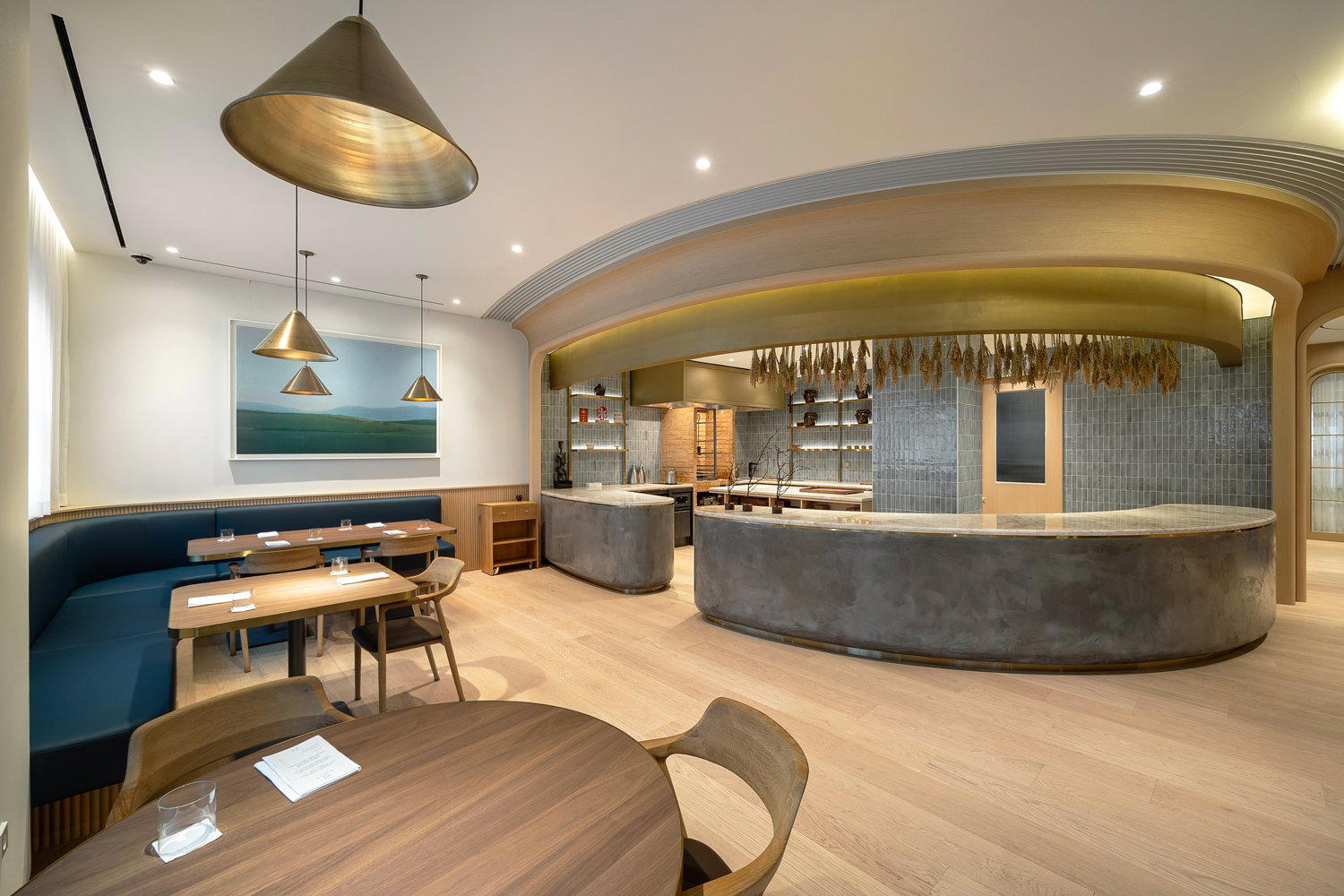
Bars in Seoul
All bars in Seoul →


Details
- Modern
- Elegant
- Intimate
- Date Night
- Solo
- Open Kitchen
- Chefs Counter
- Tasting Menu
- Counter Dining
Current opening hours
- Monday
- Closed
- Tuesday
- Closed
- Wednesday
- 5:30–10 PM
- Thursday
- 5:30–10 PM
- Friday
- 5:30–10 PM
- Saturday
- 5–10 PM
- Sunday
- 5–10 PM
Hours can change for holidays and private events. Hours as of .
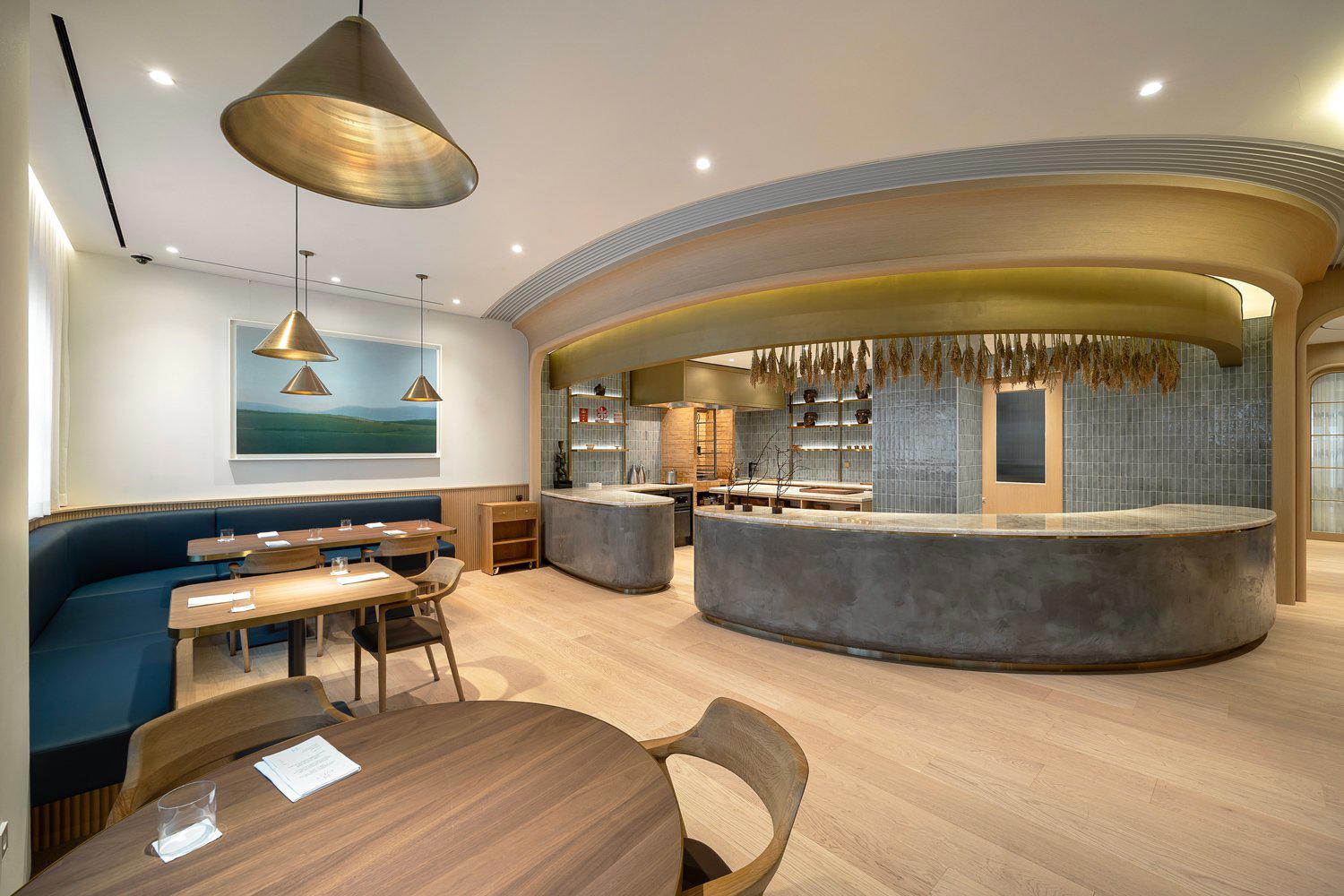
Open kitchen surrounded by a large counter offering an intimate view of chefs at work in a modern, sophisticated setting.