Som Tam Jay So sits on Phiphat 2 in Bang Rak, a short walk from the Silom commercial corridor, and draws a crowd that knows exactly what it wants: the punishing, aromatic heat of Isan-style som tam executed without compromise. The kitchen represents the northeastern Thai tradition in a city that often softens regional dishes for a broader palate. Arrive early, order confidently, and expect to share a table.
 Discover on Pearl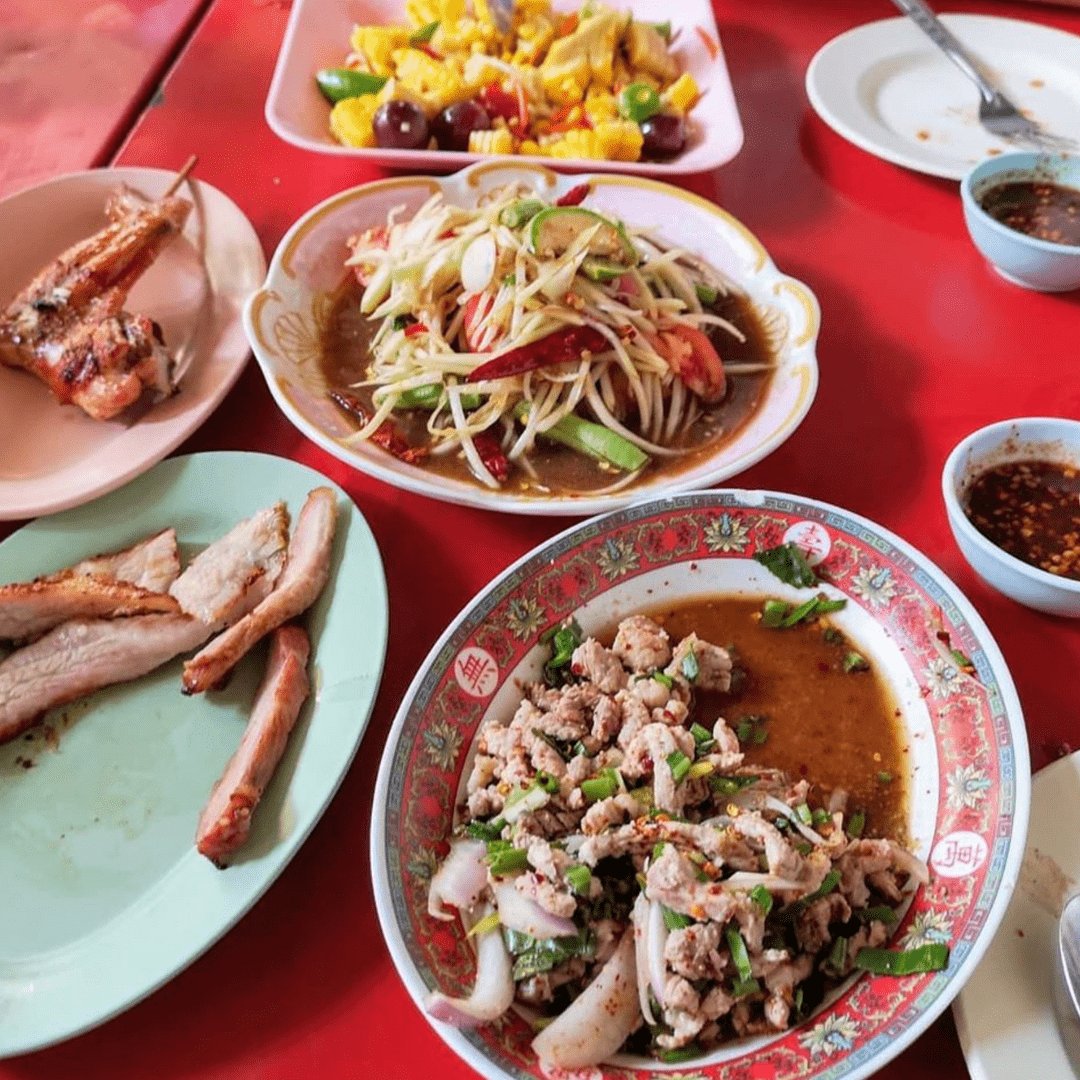
Where Northeastern Thailand Lands in the Middle of Bangkok
Bangkok's relationship with Isan food is long and complicated. The northeast — a plateau stretching toward the Mekong — has exported its workforce, its music, and its kitchen to the capital for decades, and som tam stalls have followed. But what arrives in most Bangkok shopfronts is a negotiated version: the lime dialed back, the dried shrimp gentled, the fermented crab omitted to avoid complaints. Som Tam Jay So, on Phiphat 2 in the Bang Rak district, operates closer to the source. The cooking here reflects the Isan tradition as it exists in Khon Kaen or Udon Thani, not as it has been adjusted for Sukhumvit appetites. For a fuller picture of what the district offers across price points and cooking styles, the full Bang Rak restaurants guide maps the neighbourhood's range in detail.
The Physical Reality of Phiphat 2
Approaching from Silom Road, Phiphat 2 narrows quickly. The street runs through a pocket of Bang Rak that sits between the finance district's glass towers and the older, lower shophouse fabric of the neighbourhood. Som Tam Jay So occupies that shophouse register: an open-fronted space where the mortar and pestle work is audible from outside, where plastic stools meet formica, and where the ventilation plan is essentially the open door. The ambient noise is a mix of street traffic, the rhythmic thudding of papaya being bruised into submission, and the clatter of plates moving fast. This is not a setting designed to slow you down. It is designed to feed you well and turn the table.
The shortlist, unlocked.
Hard-to-book tables, cellar releases, and concierge-planned trips.
Get Exclusive Access →Bangkok has no shortage of rooms where you pay significantly more for considerably less sensory honesty. At the other end of the spectrum, venues like Park Society in the same district occupy a formal dining register that serves a different purpose entirely. Som Tam Jay So is not competing in that space, nor should it be. Its authority comes from repetition, consistency, and an absence of ambiguity about what it is doing.
Som Tam as Cultural Document
Som tam , green papaya salad , is one of the most misunderstood dishes in the Thai canon, largely because its simplicity is deceptive. The ingredients are few: shredded unripe papaya, tomato, long beans, dried shrimp or fermented crab, palm sugar, fish sauce, lime, garlic, and chilies. The technique is the point. The mortar does not merely mix; it bruises and releases, building layers of heat and acid and funk in a sequence that requires judgment at each stage. A som tam made too early or too late in the pounding cycle is a different dish. The version served in Isan households and roadside spots across the northeast tends to run harder on the fermented crab and the chilies than what most Bangkok restaurants serve. The Jay So kitchen operates in that harder register.
This places it in a specific cultural position. Isan food in Bangkok has historically been food for migrant workers and their families, served cheaply and eaten quickly. Over the past decade, that framing has shifted. Serious southern Thai cooking has found a fine-dining audience , Sorn in Bangkok being the clearest example, with two Michelin stars and a ฿฿฿฿ price point built around the coastal south's ingredient tradition. Isan cooking has not followed the same trajectory into the top tier, but it has gained critical respect. The Baan Heng in Khon Kaen and spots like Baan Chik Pork Noodles in Udon Thani represent how the tradition holds in its home region. Som Tam Jay So represents it in the capital.
The Cooking Tradition Behind the Menu
A som tam-centred menu typically extends into the broader Isan repertoire: laab (minced meat salad dressed with toasted rice powder and lime), grilled meats, sticky rice served in woven baskets, and soups built on clear or slightly fermented broths. The sticky rice question matters here. In Isan, rice is eaten with the hands, pinched into small balls and used to scoop. The carbohydrate is not background; it is structural. A meal built around som tam without proper sticky rice is a meal with a missing element, and the kitchens that understand this serve the rice hot, fresh, and in sufficient quantity.
Thai regional cooking at this level of specificity requires sourcing discipline. The unripe papaya needs to be shredded to the right width , too thin and it becomes waterlogged under the dressing, too thick and it resists. The fermented crab (pu pla ra) is the ingredient that most divides opinion; its presence or absence is essentially a declaration of intent. Elsewhere in Thailand's regional food scene, the same commitment to specificity shows up in different contexts: AKKEE in Pak Kret and Ayutthayarom in Phra Nakhon Si Ayutthaya each anchor a regional tradition without softening it for export. The logic is the same across different cuisines and geographies: the closer a kitchen stays to its source, the more it has to say.
Bangkok's Regional Food Hierarchy
The formal dining tier in Bangkok has consolidated around a recognisable set: modern Thai, Southern Thai at fine-dining scale, and international formats from European kitchens. Venues like PRU in Phuket operate in the farm-to-table contemporary register. The Michelin Guide's Thailand coverage has, over successive editions, recognised Isan cooking primarily at the Bib Gourmand level, which reflects both the price point and the format. That recognition matters because it confirms what regular Bangkok eaters already knew: the value density in this category is high and the cooking can be technically demanding in ways that formal-dining metrics tend to underweight.
For context on how Thailand's regional food traditions hold up across the country, it is worth reading across: Banrimbung in Nakhon Pathom, Chomjan in Ubon Ratchathani, and Baan Suan Lung Khai in Ko Samui each demonstrate how regional specificity functions as quality signal rather than limitation.
Planning Your Visit
Som Tam Jay So is on Phiphat 2, off the Silom corridor in Bang Rak, accessible from Sala Daeng BTS station in under ten minutes on foot. The format is casual, the pace is fast, and the crowd at peak hours , midday and early evening , reflects the neighbourhood's mix of office workers, local families, and visitors who have done their research. No booking infrastructure is listed in the public record, which suggests a walk-in format; arriving before the lunch rush or at the edges of dinner service is the sensible approach. The address is 146 Phiphat 2, Si Lom, Bang Rak, Bangkok 10500. For wider reference on what else the district holds, see the Bang Rak guide. Visitors with interests in how Thailand's food culture translates to resort settings can cross-reference The Spa in Lamai Beach or Anuwat in Phang Nga. For comparison with how regional specificity operates in other high-seriousness informal formats internationally, Lazy Bear in San Francisco and Le Bernardin in New York City offer useful reference points at the formal end of the commitment-to-craft spectrum , the contrast itself is instructive.
Frequently Asked Questions
- What do people recommend at Som Tam Jay So?
- The kitchen's reputation is built on its Isan-style som tam, which stays close to the northeastern Thai tradition: fermented crab, high heat, and a dressing that does not compromise on acid or funk. Alongside the som tam, the broader Isan repertoire , laab, grilled meats, and sticky rice , forms the natural order of a full meal. These are the dishes that anchor the venue's standing in the Bang Rak dining scene.
- How hard is it to get a table at Som Tam Jay So?
- No formal booking system is recorded in the public venue data, which points to a walk-in format. In a busy area like Silom in Bang Rak, midday and early evening are the highest-demand windows. Arriving slightly before or after those peaks is the practical approach. Unlike the city's formal-dining tier , where venues comparable to Sorn in Bangkok require advance reservation , casual Isan kitchens of this type typically absorb demand through table turnover.
- What is Som Tam Jay So known for?
- Som Tam Jay So is known for serving Isan-style som tam that holds to the northeastern Thai tradition rather than adjusting for a Bangkok mainstream palate. Its location on Phiphat 2 in Bang Rak places it close to the Silom business district, giving it a mixed crowd of regulars. The Bang Rak area contains a wide range of formats, but kitchens operating at this level of regional specificity are relatively uncommon in the district.
- What if I have allergies at Som Tam Jay So?
- No website or phone number is recorded in the venue's public data, which limits pre-visit communication options. Fermented crab and dried shrimp are standard components of Isan som tam and represent the most significant allergy considerations in this cooking tradition. Fish sauce appears across most dishes. In Bangkok broadly, communicating dietary requirements in Thai tends to produce more precise results than doing so in English. Arriving with written notes specifying the allergy in Thai is the most reliable approach at any informal kitchen in the city.
- Is Som Tam Jay So a good option for visitors who are new to Isan food?
- It depends on tolerance for fermented and high-heat profiles. Isan cooking, as it is prepared here rather than in softened Bangkok versions, relies on fermented crab, fish sauce, and multiple chilies as structural elements rather than optional additions. Visitors unfamiliar with the tradition who want a gentler introduction might encounter the kitchen's output as more challenging than expected. Those who come having eaten their way through northeastern Thai cooking elsewhere , or who actively want to understand the regional form , will find the Bang Rak location a practical entry point into an Isan kitchen operating without significant adjustment for outside tastes.
A Pricing-First Comparison
A fast peer set for context, pulled from similar venues in our database.
| Venue | Price | Awards | Notes |
|---|---|---|---|
| Som Tam Jay So | This venue | ||
| Sorn | ฿฿฿฿ | Michelin 3 Star | Southern Thai, ฿฿฿฿ |
| Baan Tepa | ฿฿฿฿ | Michelin 2 Star | Thai contemporary, ฿฿฿฿ |
| Côte by Mauro Colagreco | ฿฿฿฿ | Michelin 2 Star | Mediterranean, Modern Cuisine, ฿฿฿฿ |
| Gaa | ฿฿฿฿ | Michelin 2 Star | Modern Indian, Indian, ฿฿฿฿ |
| Sühring | ฿฿฿฿ | Michelin 2 Star | German, ฿฿฿฿ |
Need a table?
Our members enjoy priority alerts and concierge-led booking support for the world's most difficult tables.
Get Exclusive AccessThe shortlist, unlocked.
Hard-to-book tables, cellar releases, and concierge-planned trips.
Get Exclusive Access →