Sol Cacao
Sol Cacao is a New York City chocolate maker and café operating at the intersection of craft production and direct-trade sourcing. The operation focuses on bean-to-bar technique with cacao origins that shift by season and harvest. For those tracing where American craft chocolate has arrived in the 2020s, Sol Cacao is a useful reference point in the Bronx-rooted segment of that movement.
Pearl is the En Primeur Club membership app — saves, bookings, and concierge access live there. Same editors, same standards.
- Address
- New York City, United States
- Website
- solcacao.com
- Directions
- Get directions
 Saves & bookings on Pearl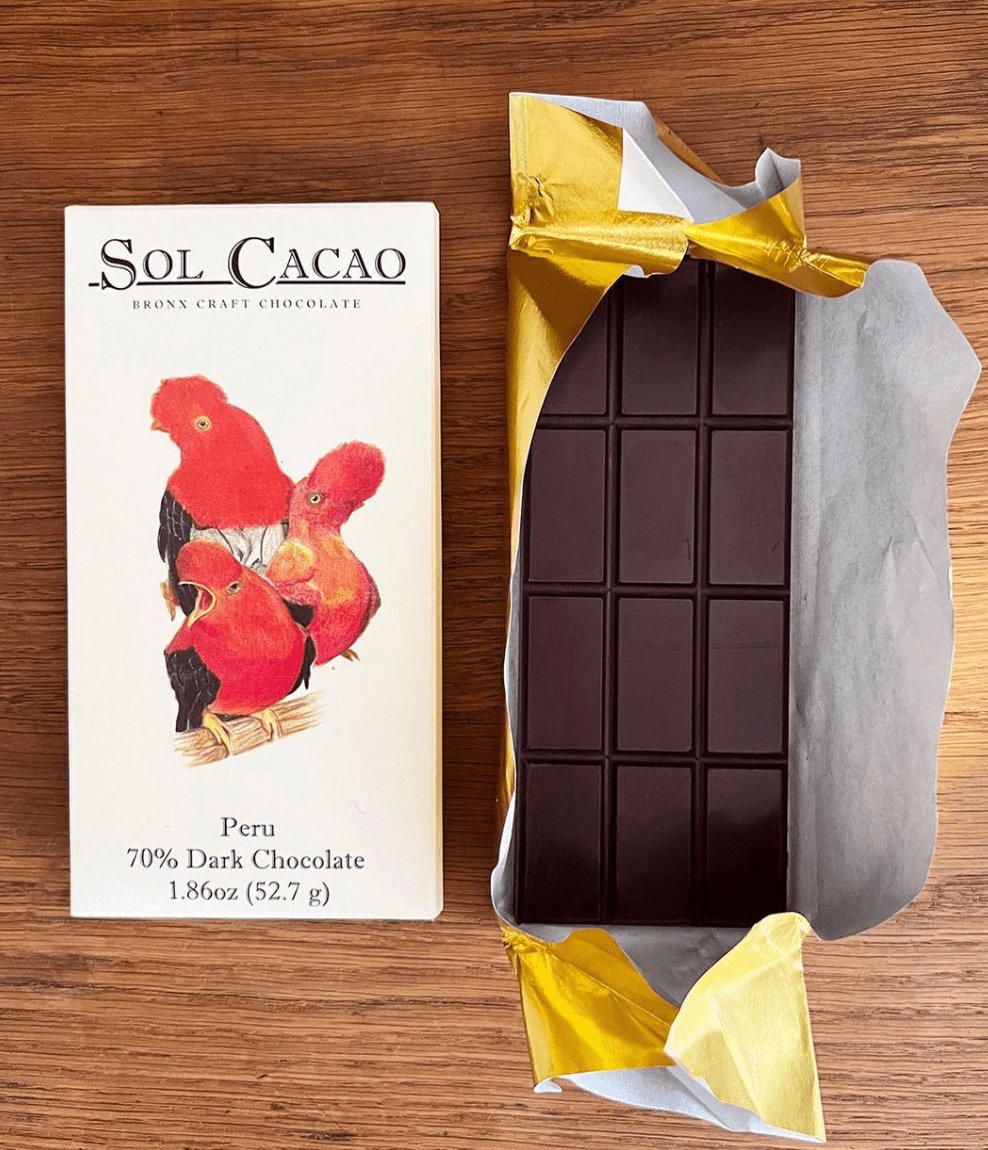
Bean-to-Bar in New York: Where Sol Cacao Sits in the City's Craft Chocolate Arc
American craft chocolate came of age during a specific decade. Between roughly 2010 and 2020, a generation of makers moved away from commodity sourcing toward direct relationships with cacao farmers, single-origin bars, and small-batch production runs that prized traceability over volume. Sol Cacao emerged from that movement with Bronx roots, positioning itself as one of the few New York operations to combine cacao sourcing with on-site production and retail in a borough that rarely figures in the city's premium food conversation. That geographic choice is itself an editorial statement about where craft food can locate.
The broader context matters: New York's fine-dining tier, occupied by operations like Le Bernardin, Eleven Madison Park, and Per Se, runs on imported European technique applied to American and global ingredients. Craft chocolate makers like Sol Cacao operate in a different register: they are closer to the raw material, more concerned with provenance than plating, and their product tells a story that begins at origin rather than in the kitchen. That distinction shapes everything about how Sol Cacao's offering should be read.
Menu Architecture: How the Product Range Signals Intent
In craft chocolate, the menu is the sourcing map. What a maker chooses to produce, and how they organize that production, communicates their priorities more directly than any written mission statement. Operations that offer a single origin per bar format are making an argument about terroir: that cacao from Trinidad tastes different from cacao from Ecuador, and that the maker's job is to clarify rather than obscure that difference. Operations that blend origins are making a different argument, prioritizing balance and consistency over geographic specificity.
The restaurant has worked within the single-origin and direct-trade framework that defines the serious end of American craft chocolate. This places it in a competitive set that looks less like the restaurant world and more like the specialty coffee tier: operations judged on sourcing relationships, roast decisions, and the degree to which processing choices amplify or flatten origin character. The parallel to specialty coffee is instructive. Just as the third-wave coffee movement created a new vocabulary around origin, varietal, and process, the craft chocolate movement has developed its own set of reference points. The restaurant's approach engages with that vocabulary.
For readers familiar with how Atomix structures its tasting progression around a single guiding theme, or how Masa reduces a menu to the absolute minimum required to express its central argument, the restaurant's product architecture follows a similar logic applied to a different category. The restraint is the editorial position.
The Bronx as Context, Not Backdrop
Locating a craft food operation in the Bronx is a decision that carries weight in New York's food geography. The borough has historically been underserved by the kind of premium independent producers that populate Brooklyn and lower Manhattan. That has been shifting, with a cluster of makers, brewers, and food entrepreneurs choosing the Bronx precisely because real estate pressure is lower and community relationships are closer. The restaurant belongs to that wave.
This positioning separates the restaurant from the downtown Manhattan trajectory of New York's premium food scene. The comparison set for the Bronx craft food movement looks less like Eleven Madison Park and more like operations in other American cities that have made similar geographic bets: Lazy Bear in San Francisco, which built its identity partly on neighborhood embeddedness, or Smyth in Chicago, which operates at a remove from the city's most trafficked dining corridors. The geographic choice, in each case, shapes the operation's character.
Direct Trade as Structural Commitment
The direct-trade model that restaurant operates within is not a marketing frame. It is a supply chain decision with real consequences for what ends up in the product. When a maker sources directly from a farming cooperative or single estate, they gain access to information about fermentation time, drying conditions, and harvest year that commodity buyers never see. That information, properly used, allows for production decisions that would be impossible with anonymized bulk cacao.
This is the craft chocolate equivalent of what Single Thread Farm in Healdsburg does with its farm-to-table integration, or what Blue Hill at Stone Barns in Tarrytown has built around direct agricultural relationships. The principle is the same: proximity to origin creates options that distance forecloses. The expression differs by category, but the structural logic holds.
Operations elsewhere in the American fine-food tier have made similar commitments. The French Laundry in Napa, Providence in Los Angeles, and Addison in San Diego each maintain sourcing relationships that define their menus. In craft chocolate, that relationship extends all the way to the cacao pod.
Where Sol Cacao Fits the New York Premium Food Map
New York's premium food conversation tends to organize around Michelin stars, tasting menus, and the kind of formal dining that Per Se and Le Bernardin represent. The restaurant operates outside that taxonomy. It is not chasing starred recognition; it is operating in a category where credibility is established through sourcing transparency, production visibility, and community anchoring. That is a different kind of prestige, and one that a growing segment of the New York food public understands and values.
Readers interested in comparable craft-forward operations in other American cities might also consider Frasca Food & Wine in Boulder, Emeril's in New Orleans, or The Inn at Little Washington for operations that have built strong local identities outside the dominant metropolitan dining axis. European parallels exist too: Atelier Moessmer Norbert Niederkofler in Brunico and Dal Pescatore in Runate both demonstrate how strong sourcing identity and geographic remove from major centers can reinforce rather than limit a food operation's reputation.
Planning Your Visit
| Venue | Category | Price Tier | Booking | Location |
|---|---|---|---|---|
| The restaurant | Craft Chocolate / Café | Accessible | Walk-in / retail | The Bronx, NYC |
| Le Bernardin | French Seafood | $$$$ | Advance booking required | Midtown Manhattan |
| Eleven Madison Park | French / Vegan Tasting | $$$$ | Advance booking required | Flatiron, Manhattan |
| Masa | Sushi / Japanese | $$$$ | Weeks to months ahead | Columbus Circle, Manhattan |
| Atomix | Modern Korean | $$$$ | Advance booking required | NoMad, Manhattan |
The restaurant operates by appointment only. Confirm current visiting details directly before going.
Price and Recognition
Comparable venues nearby, for context on price, style, and recognition.
| Venue | Cuisine | Price | Notes |
|---|---|---|---|
| Sol CacaoThis venue — the venue you are viewing | Not listed | $$ | Not listed |
| Buenos Aires | Not listed | $$ | East Village, Authentic Argentine Steakhouse |
| Industria Argentina | Not listed | $$ | Tribeca-Civic Center, Authentic Argentine Steakhouse |
| JOE & THE JUICE | Not listed | $$ | Midtown-Times Square, Healthy Juice Bar & Café |
| schmuck. | Not listed | $$ | East Village, Creative Cocktail Bar with Small Plates |
| Lhasa Fast Food | Jackson Heights, Tibetan Momos | $ | Not listed |
Continue exploring
More in New York City
Restaurants in New York City
Browse all →
Bars in New York City
Browse all →
Hotels in New York City
Browse all →







At a Glance
- Cozy
- Modern
- Casual Hangout
- Open Kitchen
- Organic
- Local Sourcing
Industrial factory setting in historic Port Morris district with a focus on craft chocolate production.