Sofreh




Michelin Plate · James Beard Award Semi Finalist · The Best Chef One Knife
Our verdict
Sofreh brings Persian home cooking into sharp editorial focus at its Park Slope address, where saffron-stained tahdig, pomegranate-marinated kebabs, and herb-heavy stews fill a spare, marble-and-dark-wood dining room. Chef Nasim Alikhani holds a two-star New York Times recognition. The restaurant fills a documented gap in New York's Iranian food scene at the $$$ price point.

Pearl is the En Primeur Club membership app — saves, bookings, and concierge access live there. Same editors, same standards.
- Address
- 75 St Marks Ave, Brooklyn, NY 11217
- Phone
- (646) 798-1690
- Hours
- Mon ClosedTue–Sun 5:30–9:30 PM
- Website
- sofrehnyc.com
- Directions
- Get directions
- Booking
- Book on the venue's website
The menu
What to order
- Lamb shank
- Kashk bademjan
- Ghormeh sabzi
- Fesenjan
Persian Grilling in New York: Where Sofreh Fits
New York's Iranian restaurant scene has long been thinner than the city's appetite for it. Uptown, Persepolis has held the Upper East Side's Persian post for years, while Eyval represents a newer, more produce-forward interpretation downtown. At the $$$ price point, it sits well below the city's leading tasting-menu tier, where Atomix, Le Bernardin, and Eleven Madison Park operate at $$$$, but it draws comparable critical attention for a cuisine that rarely receives it.
The broader context matters here. Persian cuisine is built around the interplay of sourness and sweetness, the patience of low-and-slow braises, and the ceremony of the rice pot. Kebab is central to that tradition, but it is not the blunt, fast-food register it occupies in many Western cities. In Iran, the kebab is a craft: the marinade, the cut, the skewer gauge, and the heat source each carry meaning.
The Kebab Tradition at the Center of the Menu
Skewered meat in Persian cooking divides broadly into koobideh, where ground lamb or beef is seasoned and pressed onto flat skewers, and barg, where cuts of meat are thinly sliced, marinated, and grilled over high heat. Sofreh's pomegranate molasses-marinated ribeye steak kebab sits in the barg tradition, where the marinade does significant work before the grill ever gets involved. Pomegranate molasses is one of Iranian cooking's great acidic agents: it tenderizes, adds a fruit-forward tartness, and caramelizes under direct heat in a way that pure acid marinades do not. The ribeye cut here is a deliberate choice, providing enough intramuscular fat to survive the charring that proper kebab grilling requires.
That char matters. Persian kebab technique demands high, direct heat and relatively short contact time, producing edges that are smoky and slightly blackened while the interior remains yielding. The same logic applies to the restaurant's chicken preparations, where the bird is flattened to equalize cooking time and served with a sweet-tart barberry and apricot sauce. Barberries, small and intensely sour, are one of Persian cuisine's signature flavor notes, and their combination with apricot creates the kind of sweet-acid tension that defines the tradition. Across the country, comparable technique-forward approaches to regional grilling appear at places like Lazy Bear in San Francisco or Alinea in Chicago, but the reference points for Sofreh's kitchen are older and more specific: the family table, the charcoal mangal, and the long Iranian tradition of treating fire as a finishing instrument rather than a primary one.
Beyond the Skewer: Stews, Rice, and the Tahdig Question
But the editorial case for the restaurant rests as much on what surrounds the centerpiece proteins as on the proteins themselves. The tamarind-soured fish preparation, simmered with enough fresh herbs to register almost as a vegetable dish, reflects the northern Iranian tradition of khoresh, slow-cooked stews where the sauce is as important as the protein. Herb ratios in Persian cooking are not garnish-level; they are structural, contributing bitterness, fragrance, and color in volumes that would surprise a kitchen trained in French or Italian proportion.
Then there is the tahdig. The saffron-stained crust that forms at the bottom of a properly made Iranian rice pot is, by any honest measure, the technical centerpiece of Persian home cooking. Getting it right requires calibrated heat, the right fat, and patience: too much heat and the crust burns; too little and it never forms. Sofreh's version has been described in press coverage as precisely executed, with the golden-crisp layer arriving intact rather than scraped. In a restaurant context, where the rice pot is one of the hardest dishes to standardize across a service, that consistency is the more meaningful claim.
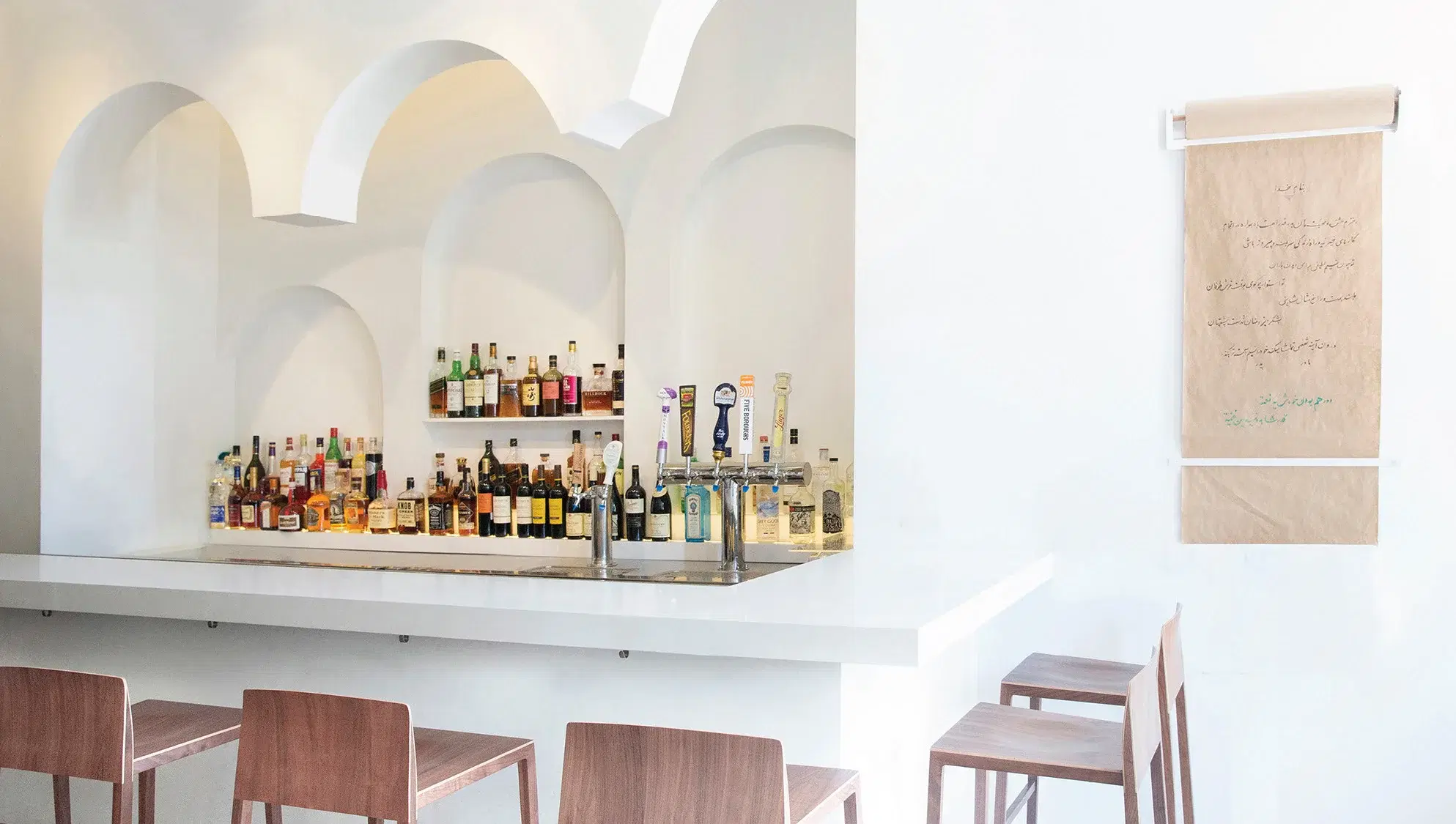
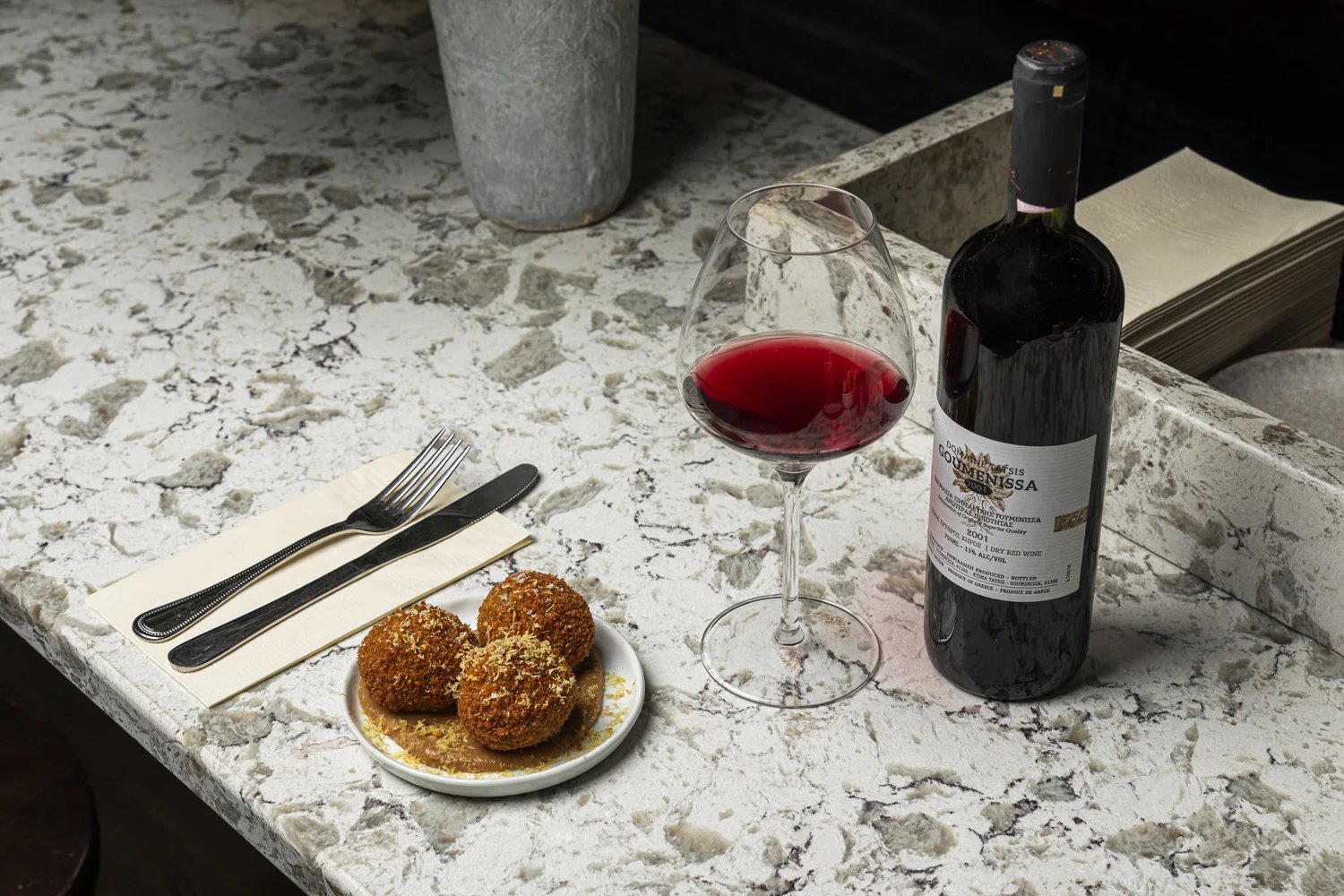
The dips and flatbreads that open the meal deserve equal attention. Roasted eggplant with kashk, the fermented whey common in Iranian cooking, and crispy onions, served with sesame-seeded flatbread, is the kind of dish that rewards unhurried eating. Kashk has a sharpness and funk that separates it from the blander dairy used in similar preparations elsewhere, and it anchors the eggplant's smokiness rather than muting it. High ceilings, black wood beams, and a marble bar create a setting where the food reads against a neutral backdrop rather than competing with decorative noise. That restraint is not incidental: it is the same logic that drives the minimalist interiors at a certain tier of serious New York restaurants, where the investment is clearly in the kitchen rather than the set-dressing. The approach places Sofreh in a different visual register from the ornate Persian restaurants common in diaspora communities, and signals an intention to be assessed on culinary terms rather than cultural nostalgia.
For comparison, the Persian dining scene in Los Angeles, which has a larger Iranian-American population, offers points of reference at either end of the spectrum: Attari Sandwich Shop represents the casual, community-facing end, while Azizam stakes out a more contemporary position. Sofreh sits closest to that contemporary tier, but with a more deliberate rootedness in the source cuisine. Across the broader US restaurant scene, the willingness to treat regional non-European cuisines with the same technical seriousness that defines places like The French Laundry in Napa, Single Thread Farm in Healdsburg, or Providence in Los Angeles remains uneven. Sofreh is one of the clearer examples of it working.
Chef Nasim Alikhani came to restaurant ownership through catering, which is a relevant credential: catering at scale trains for the kind of volume cooking that braises and rice pots require, and it builds an instinct for feeding rather than performing. That background surfaces in a menu that reads as generous rather than architectural, even as the kitchen's execution is precise enough to earn two-star recognition. What to order: The lamb shank and pomegranate ribeye kebab are the most documented dishes; the tahdig is the technical marker worth ordering to assess the kitchen. The eggplant dip with kashk works as an opening while the mains are prepared. Getting there: Prospect Heights is accessible from Manhattan via the 2, 3, B, and Q subway lines. For hotels, bars, and other dining, see our full New York City restaurants guide, our full New York City hotels guide, our full New York City bars guide, our full New York City wineries guide, and our full New York City experiences guide. For context on the wider New York dining scene, Emeril's in New Orleans offers a useful counterpoint on how regional American cuisines gain national standing.
Price and Positioning
| Venue | Cuisine | Price | Awards | Notes |
|---|---|---|---|---|
| SofrehThis venue — the venue you are viewing | Modern Persian | $50–100 | Michelin Plate · James Beard Award Semi Finalist | Not listed |
| Le Bernardin | French Seafood Fine Dining | $300–500 | 3 Michelin Stars · World's 50 Best #13 | French, Seafood |
| Atomix | Modern Korean Tasting Menu | $300–500 | 2 Michelin Stars · World's 50 Best #7 | Modern Korean, Korean |
| Masa | Seasonal Hokkaido Tempura Omakase | $150–200 | Tabelog 100 #34 | Sushi, Japanese |
| Per Se | French Fine Dining Tasting Menu | $300–500 | 3 Michelin Stars · World's 50 Best #40 | French, Contemporary |
| Eleven Madison Park | Contemporary Plant-Based Fine Dining | $300–500 | 3 Michelin Stars · World's 50 Best #4 | French, Vegan |
Recognition history
Dated appearances from independent guides and award organizations, with the underlying list record or original source where available.
Michelin Plate
Michelin
James Beard Award Semi Finalist
James Beard Award
New York Times Best Restaurants in New York City #27
New York Times
The Best Chef One Knife
The Best Chef
Full recognition history (6 entries)
James Beard Award Semi Finalist
James Beard Award
New York Times Best Restaurants in New York City
New York Times
Continue exploring
More in New York City
Restaurants in New York City
Browse all →
Bars in New York City
Browse all →
Hotels in New York City
Browse all →






Details
- Elegant
- Minimalist
- Intimate
- Sophisticated
- Date Night
- Special Occasion
- Open Kitchen
- Craft Cocktails
- A La Carte
- Small Plates
- Vegetarian Friendly
Current opening hours
- Monday
- Closed
- Tuesday
- 5:30–9:30 PM
- Wednesday
- 5:30–9:30 PM
- Thursday
- 5:30–9:30 PM
- Friday
- 5:30–9:30 PM
- Saturday
- 5:30–9:30 PM
- Sunday
- 5:30–9:30 PM
Hours can change for holidays and private events. Last verified .
Pure, calm inspiration with minimalist decor, bright marble bar, high ceilings, and black wood beams allowing colorful food to stand out; tables close together with average privacy.