Soba Ulala
New York's soba tradition runs deeper than most diners expect, and Soba Ulala sits squarely within that specialist current. A Japanese noodle house in a city more associated with omakase counters and tasting menus, it occupies the quieter, more disciplined end of the Japanese dining spectrum, where craft is measured in technique and restraint rather than ceremony and price.
 Discover on Pearl
Pearl is the En Primeur Club membership app — saves, bookings, and concierge access live there. Same editors, same standards.
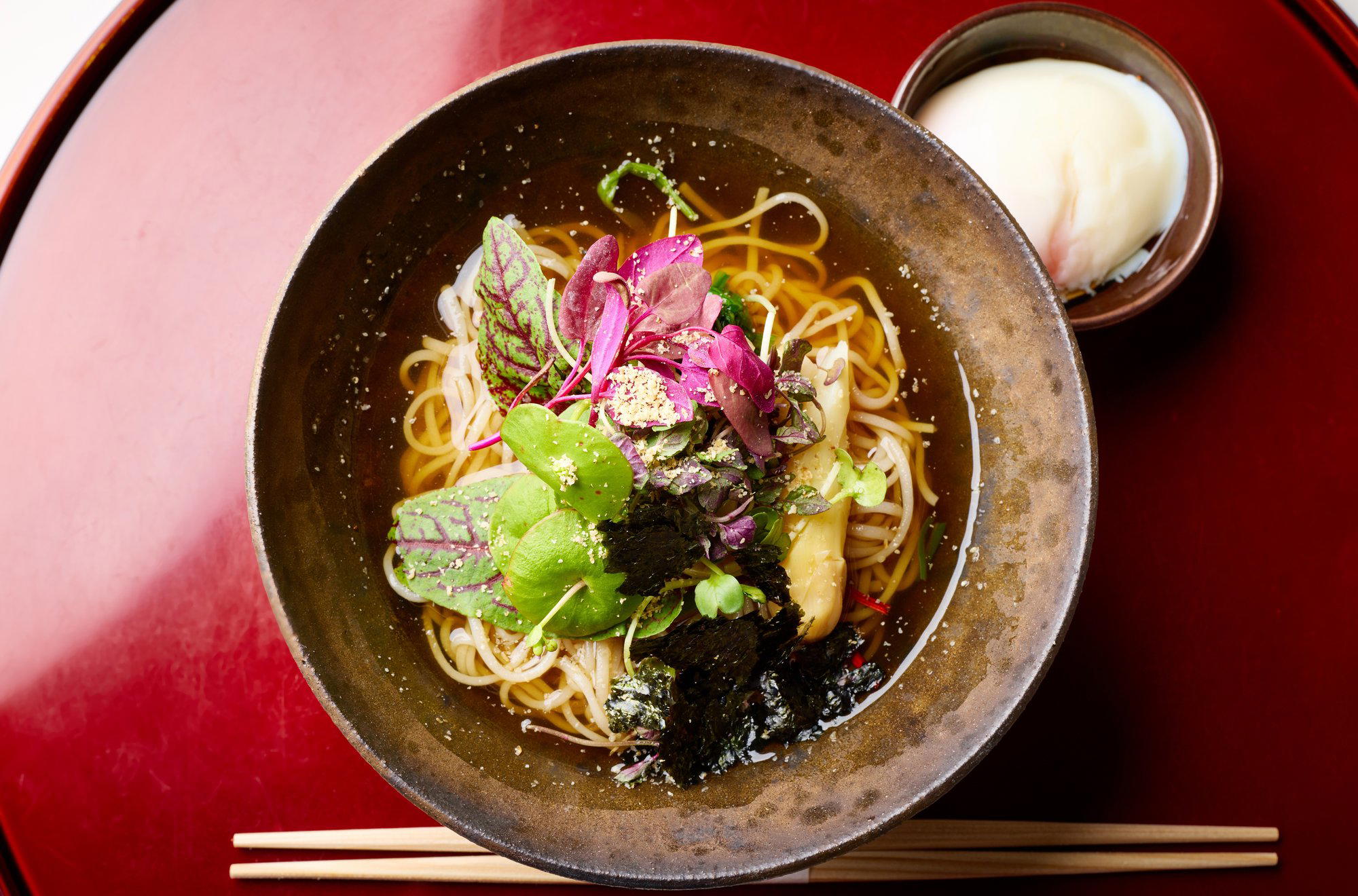
A Street That Slows Down for Noodles
New York's Japanese dining conversation tends to anchor itself at the leading end: the omakase counter, the kaiseki progression, the kind of meal that costs as much as a transatlantic flight. Venues like Masa and Atomix operate in that register, where ceremony and price are inseparable from the experience. But the city also sustains a quieter tradition: the specialist noodle house, where the craft is narrower and, arguably, more demanding. Soba Ulala belongs to that second current. It is a New York City restaurant serving House-Made Soba Noodles at a price tier of 3.
Soba as a discipline is easy to underestimate from the outside. In Japan, the distinction between machine-cut and hand-cut noodles, between buckwheat ratios, between cold and hot preparations, carries the weight that wine region and vintage carry for a sommelier. The leading soba establishments in Tokyo draw as much serious attention as any kaiseki counter, and the gap in New York between the city's most ambitious Japanese cuisine and its leading soba has been closing steadily over the past decade. Soba Ulala is part of that closing.
The Neighbourhood as Context
The editorial angle most useful for understanding Soba Ulala is not the menu or the lineage but the street-level reality it occupies. New York's Japanese food scene has always been geographically specific: midtown holds the high-investment omakase operations, the East Village and Lower East Side carry the izakaya tradition, and pockets of other neighbourhoods sustain the kind of quiet specialist that locals return to without announcement. A soba house operates leading in exactly that last category. It does not need theatre. It needs regulars who understand what they are ordering and why the texture of a freshly milled noodle served cold with a restrained dipping broth is worth the trip on its own terms.
That hyper-local dynamic matters because soba is one of the few Japanese formats where the room itself should recede. The noodle is the event. The context Soba Ulala occupies in New York is one where the competition is not Le Bernardin or Eleven Madison Park but the handful of other serious soba houses that have established footholds in the city, each working within a format that rewards repetition and attention rather than novelty.
What the Format Demands
Soba houses, even at their most accomplished, operate in a price tier well below the city's marquee Japanese dining. That is a function of the format rather than ambition. A tasting menu at Per Se or a full omakase progression prices against a different set of inputs: years of training compressed into a single sitting, premium protein sourced globally, a front-of-house operation scaled to match. Soba's value proposition runs differently. The craft is in the milling and the cutting and the timing, and the pleasure is in simplicity done with precision. A bowl of zaru soba, cold noodles served with a dipping broth, scallion, and wasabi, is complete when it is made correctly. Nothing more is needed.
This means Soba Ulala positions itself in New York's mid-tier Japanese dining, where the expectation is focused technique rather than comprehensive experience. That tier has grown more competitive as the city's Japanese food culture has matured. Visitors who arrive having eaten soba in Tokyo will bring calibrated expectations; the comparison is real and useful. New York's leading soba houses have earned that comparison, and Soba Ulala participates in the same serious conversation.
Soba in the Wider New York Japanese Spectrum
Understanding where Soba Ulala sits requires mapping the wider Japanese dining field in New York. The city supports a full range: from the hyper-premium counter at the leading, through mid-range izakayas and ramen specialists, to the kind of specialist noodle house that soba represents. The format that soba occupies is closer in spirit to a craft ramen house than to an omakase counter, but the technique is more fragile. Ramen broth is built over hours and can be held; soba noodles must be served immediately after cooking or the texture shifts. That time pressure is part of what a serious soba house manages.
New York's appetite for this kind of precision dining has deepened alongside its broader Japanese food literacy. The same diner who seeks out a reservation at Masa for a special occasion may well seek out a soba house for a Tuesday lunch precisely because the register is different. Soba Ulala occupies that functional role in the city's dining week: a place where the quality is serious without the occasion needing to match.
For readers interested in how this kind of focused craft dining compares across American cities, our coverage of Smyth in Chicago and Lazy Bear in San Francisco illustrates how different cities build their fine-dining ecosystems around specialist premises. The Single Thread Farm in Healdsburg and Blue Hill at Stone Barns in Tarrytown represent a different axis entirely, where the sourcing narrative is the organising principle. Soba houses work from none of those frameworks. The discipline is the noodle, and the discipline is enough.
Internationally, the same specificity of focus appears in European contexts. Atelier Moessmer Norbert Niederkofler in Brunico and Dal Pescatore in Runate demonstrate how regional specificity can sustain serious restaurants over decades. Soba Ulala draws from a related logic: the argument that a single format, executed with full commitment, is sufficient reason for a restaurant to exist.
Our full New York City restaurants guide maps the broader dining field if you are building a multi-night itinerary around the city. For comparison with other destination-calibre American dining, see our coverage of The French Laundry in Napa, Providence in Los Angeles, Addison in San Diego, Emeril's in New Orleans, The Inn at Little Washington, and Frasca Food & Wine in Boulder.
Planning Your Visit
Side-by-Side Snapshot
Comparable venues nearby, for context on price, style, and recognition.
| Venue | Cuisine | Price | Awards | Notes |
|---|---|---|---|---|
| Soba UlalaThis venue — the venue you are viewing | House-Made Soba Noodles | $$$ | , | |
| Kizuna | Japanese Omakase | $$$ | , | Upper East Side-Lenox Hill-Roosevelt Island |
| Fushimi Bay Ridge | Japanese-French Fusion | $$$ | , | Bay Ridge |
| KEI | Modern Japanese Izakaya & Ramen | $$$ | , | Chelsea-Hudson Yards |
| Katana Kitten | Japanese-American Izakaya Cocktails | $$$ | 1 recognition | West Village |
| Suzume | Japanese Fusion Izakaya | $$ | , | Williamsburg |
Continue exploring
More in New York City
Restaurants in New York City
Browse all →
Bars in New York City
Browse all →
Hotels in New York City
Browse all →

Wineries in New York City
Browse all →
At a Glance
- Modern
- Cozy
- Intimate
- Trendy
- Date Night
- Solo
- Casual Hangout
- Open Kitchen
- Sake Program
- Corkage Allowed
Relaxed and familiar atmosphere carrying forward Hirohisa's flavors in a more casual setting.