Our verdict
Skanörs Gästgifvaregård sits at the southern tip of the Falsterbo Peninsula, where the Öresund meets the Baltic and the surrounding farmland and coastline have fed local tables for centuries. The inn format places it inside a Swedish hospitality tradition built on seasonal produce and regional provenance, rather than the tasting-menu ambition of the country's urban fine-dining circuit. For travellers making their way through Skåne, it represents a grounded alternative to the region's more celebrated restaurant addresses.

Pearl is the En Primeur Club membership app — saves, bookings, and concierge access live there. Same editors, same standards.
- Address
- Mellangatan 13, 239 30 Skanör, Sweden
- Phone
- +4640475690
- Website
- skanorsgastis.com
- Directions
- Get directions
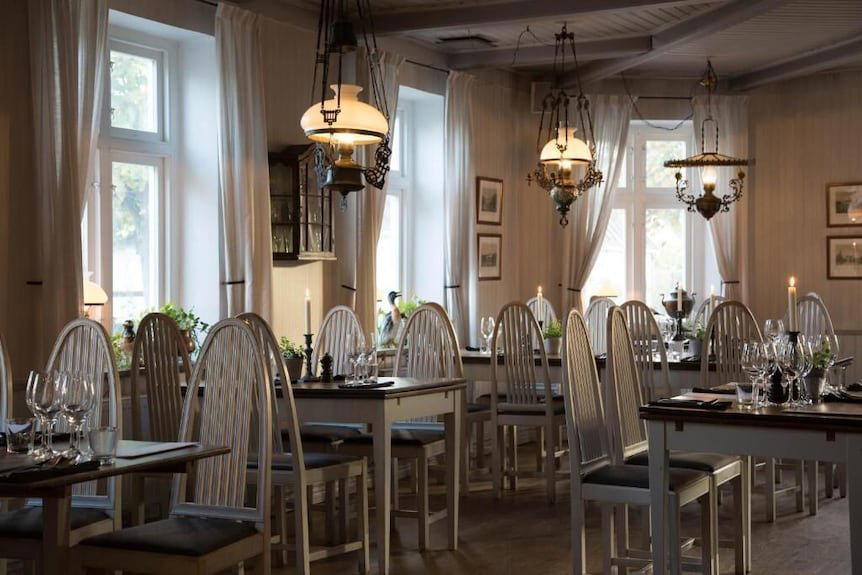
Where the Falsterbo Peninsula Meets the Table
The southwestern tip of Skåne occupies a particular position in Swedish food culture. The Falsterbo Peninsula, a narrow finger of land where the Öresund and the Baltic converge, sits within one of the most agriculturally productive counties in the country. Skåne accounts for a disproportionate share of Sweden's grain, root vegetable, and livestock output, and the proximity of its coastline adds flatfish, shellfish, and herring to a larder that has been feeding this corner of Scandinavia for a very long time. Any kitchen serious about provenance on this peninsula is working with unusually short supply chains.
Skanörs Gästgifvaregård, on Mellangatan in the old market town of Skanör, occupies a building and a format that reflect this geography directly. The Swedish gästgivaregård tradition, a form of licensed inn with roots in the postal relay system of the seventeenth century, was always rooted in local provision: you ate what the surrounding land and water offered, prepared without the intervention of distant import chains. That model has seen a quiet revival across rural Sweden as the sourcing-led approach that once defined high-end Nordic restaurants has filtered into regional inn kitchens. Skanör sits inside that broader shift.
The Inn Tradition and What It Demands
The gästgivaregård format is worth understanding as a category, because it sets expectations differently from a contemporary restaurant. These are properties built around the idea of hospitality as shelter and sustenance rather than as performance. The dining room tends toward the unpretentious end of formal, the wine list toward Swedish and northern European producers, and the menu toward dishes that can be sourced within a manageable radius. This is not the tasting-menu discipline of Vollmers in Malmö or the creative-Nordic ambition of VYN in Simrishamn. It is a different register entirely, and one that rewards visitors who arrive with the right frame of reference.
Across Skåne and the wider Swedish south, the most convincing versions of this format treat sourcing as discipline rather than marketing. The peninsula's fishing boats, the farms immediately north toward Vellinge and Trelleborg, and the game that moves through the coastal wetlands in autumn all feed into a seasonal rhythm that a kitchen in Skanör can follow more literally than any urban address. When that rhythm is respected, the result is food that tastes of a specific place at a specific time of year, which is exactly what the tradition promises.
Skåne's Broader Dining Context
Understanding where Skanörs Gästgifvaregård sits within Swedish dining requires a brief look at how the country's restaurant geography has developed. The highest concentration of awarded kitchens remains in Stockholm, where Frantzén in Stockholm operates at the country's most ambitious price point, and in the larger southern cities. Malmö, forty minutes north of Skanör by car, has Vollmers anchoring its fine-dining offer. Further afield, properties like ÄNG in Tvååker and Knystaforsen in Rydöbruk have shown that destination-level dining can exist well outside city limits when a kitchen commits seriously to its regional context.
Skanör does not compete in that destination tier in the way those properties do, but it occupies a complementary position: a town-scale inn in a historically significant coastal settlement, offering a more accessible and less choreographed version of Skåne's produce-led hospitality. For visitors covering the peninsula, it fits naturally into an itinerary alongside the nature reserve at Falsterbo, the medieval church and market square of the town itself, and the beaches that define this stretch of coast in summer. Elsewhere in Sweden's regional dining circuit, comparable in spirit if not in geography, addresses like PM & Vänner in Växjö and Adrian Restaurang in Borås represent how regional Sweden has built credible dining outside its major cities.
Approaching Skanör and the Inn
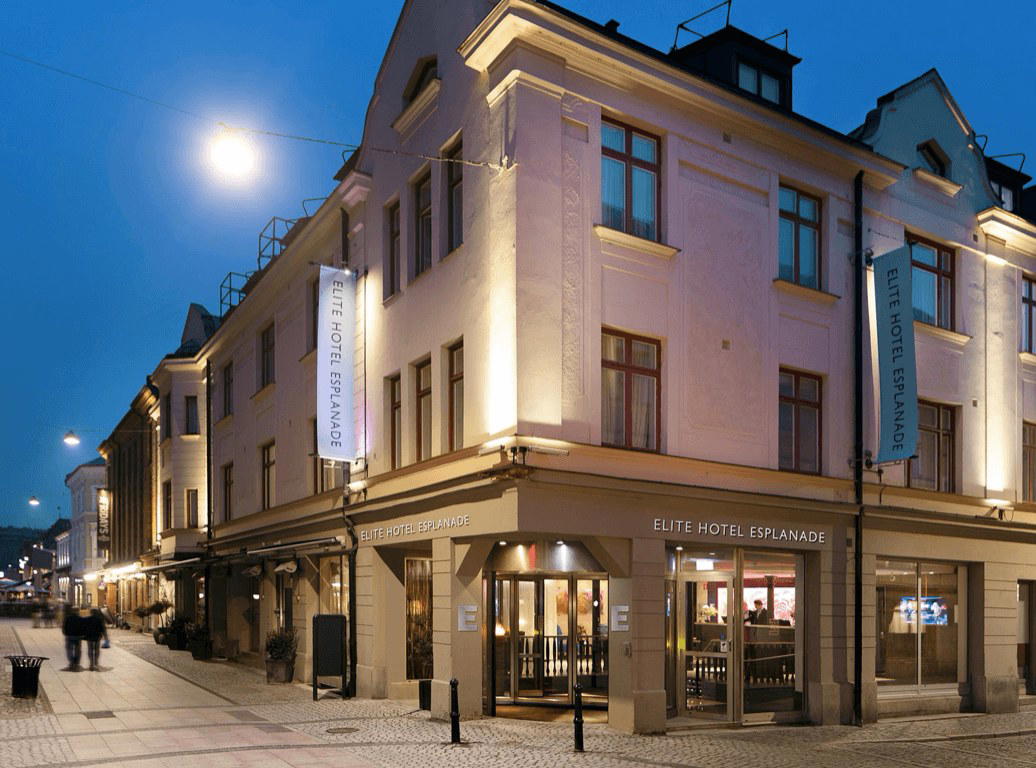
Skanör is a small town, one of two that share the peninsula with its neighbour Falsterbo, and its scale is immediately apparent on arrival. The street grid is tight and largely unchanged from its medieval layout, with low buildings, a central square, and the kind of pedestrian quiet that distinguishes a settlement that tourism has not overwhelmed. Mellangatan runs through the older residential core, and the gästgivaregård building sits within that fabric rather than announcing itself aggressively. The approach is understated in the way that characterises the better regional inn properties across Scandinavia: the architecture signals age and continuity rather than renovation for its own sake.
For practical planning, Skanör is accessible by road from Malmö in under forty minutes and sits at the end of the local rail and bus network that serves the peninsula. The town is small enough that accommodation at the inn itself, if available, removes any transport consideration for the evening. Visitors arriving from further afield, or combining the peninsula with Lilla Bjers in Visby or other Swedish island and coastal addresses, should treat Skanör as a half-day or full-day stop rather than a passing detour. Our full Skanör restaurants guide maps the town's options across formats and price points for those planning a longer visit.
The Seasonal Sourcing Logic
What the peninsula's geography makes possible for a kitchen here is a sourcing calendar that shifts substantially across the year. Spring brings the first coastal vegetables and the end of the winter fish season; summer delivers the produce abundance that Skåne's farming calendar centres on, along with the tourist traffic that raises occupancy across the whole peninsula; autumn introduces game and the root-heavy pantry that defines Scandinavian winter cooking. A kitchen following this calendar closely will present a materially different menu in October than in June, which is the argument for returning across seasons rather than treating a single visit as definitive. This is a pattern visible at the better sourcing-led addresses across the Swedish south, from Signum in Mölnlycke to Enoteket in Norrköping, and it applies with particular logic to a coastal inn that sits inside a working agricultural and fishing region.
The comparison with high-ambition international kitchens is instructive but should not be pressed too far. Le Bernardin in New York City or Atomix in New York City represent a mode of dining built on precise technical execution and a controlled, repeatable experience. The gästgivaregård tradition operates from a different premise: that the season and the available supply should shape the kitchen rather than the reverse. Neither is superior as a category; they answer different questions. Skanörs Gästgifvaregård answers the question of what this particular peninsula tastes like at this particular moment in the year, which is a question worth asking.
Planning Your Visit
Given the town's scale and the inn format, advance contact is sensible for anyone travelling specifically to dine or stay. Skanör does not have the restaurant density of Malmö or Gothenburg, where 28+ in Gothenburg and Brasserie Park in Jönköping sit within cities that offer backup options across formats. On the peninsula, the choice of venues is narrower, which makes confirming availability before arrival more important than it would be in an urban context. Summer weekends in particular draw visitors to the Falsterbo coast, and capacity at a small inn fills accordingly. Direct contact via the address at Mellangatan 13 is the appropriate booking route, and arriving with flexibility on timing within a visit will generally serve better than a rigid single-option plan.
Frequently asked questions
Can I bring kids to Skanörs Gästgifvaregård?
The gästgivaregård format, historically a coaching inn serving travellers of all kinds, has always accommodated families as part of its remit. Skanör itself is a small, low-key town on the Falsterbo Peninsula, and the pace there suits families who are already exploring the area. Contact the inn directly at Mellangatan 13 to confirm current dining and room arrangements before travelling with children.
What's the overall feel of Skanörs Gästgifvaregård?
The gästgivaregård category sits apart from contemporary restaurant formats: these are established inns with roots in providing lodging and food to travellers, which gives them a more grounded, unhurried register than a destination dining room. Skanör is a compact town at the tip of the Falsterbo Peninsula, and that setting reinforces the sense of remove from city dining scenes. Expect a place shaped by function and local tradition rather than by trend.
Is Skanörs Gästgifvaregård a good base for exploring the Falsterbo Peninsula?
Positioned at Mellangatan 13 in Skanör, the inn sits in one of two small towns that share the peninsula with neighbouring Falsterbo, placing guests within easy reach of the area's coastline, bird reserve, and nature paths. The gästgivaregård format was designed precisely for this kind of use: overnight accommodation paired with food and drink for travellers moving through a region. For anyone planning to cover the southwestern tip of Skåne, the address is as central to the peninsula as the geography allows.
What's the best thing to order at Skanörs Gästgifvaregård?
What the peninsula's geography does suggest is that kitchens in this part of Skåne have access to a sourcing calendar that shifts meaningfully across the year, from spring seafood to autumn game, so asking what is in season when you visit is always the right question.
What's Skanörs Gästgifvaregård's location?
Skanörs Gästgifvaregård is located at Mellangatan 13, 239 30 Skanör, Sweden, Skanör.
What makes Skanörs Gästgifvaregård worth seeking out?
The combination of location and format is the argument: the Falsterbo Peninsula is one of Sweden's more geographically distinct corners, a narrow strip of land between the Øresund and Öresund straits, and the gästgivaregård at Mellangatan 13 is embedded in Skanör's town fabric rather than positioned as a destination import. For visitors already exploring Skåne's southwestern edge, it represents the kind of grounded, place-specific hospitality that the inn tradition in Sweden was built around.
Comparable Spots, Quickly
Comparable venues nearby, for context on price, style, and recognition.
| Venue | Cuisine | Price | Awards | Notes |
|---|---|---|---|---|
| Skanörs GästgifvaregårdThis venue — the venue you are viewing | Traditional Swedish Inn | $20–30 | Not listed | Not listed |
| Shotluckan | Shots & Cocktails Bar | $10–20 | Not listed | Gamla Staden (Old Town) |
| Gastro Gaspari | Nordic Gastro | Not listed | White Guide Sweden Restaurants - Fine Level | Flyingeby |
| Fäviken Magasinet | Hyper-local Swedish Avant-Garde | Not listed | Not listed | Järpen |
| Manto | Vegan Afghan-Asian Fusion | $20–30 | Not listed | Södervärn |
Continue exploring
More in Skanör
Restaurants in Skanör
Browse all →
Bars in Skanör
Browse all →
Hotels in Skanör
Browse all →

Details
- Cozy
- Rustic
- Classic
- Family
- Special Occasion
- Historic Building
- Local Sourcing
- A La Carte
Cozy and vintage atmosphere with a calm, beautiful location beside the sea.