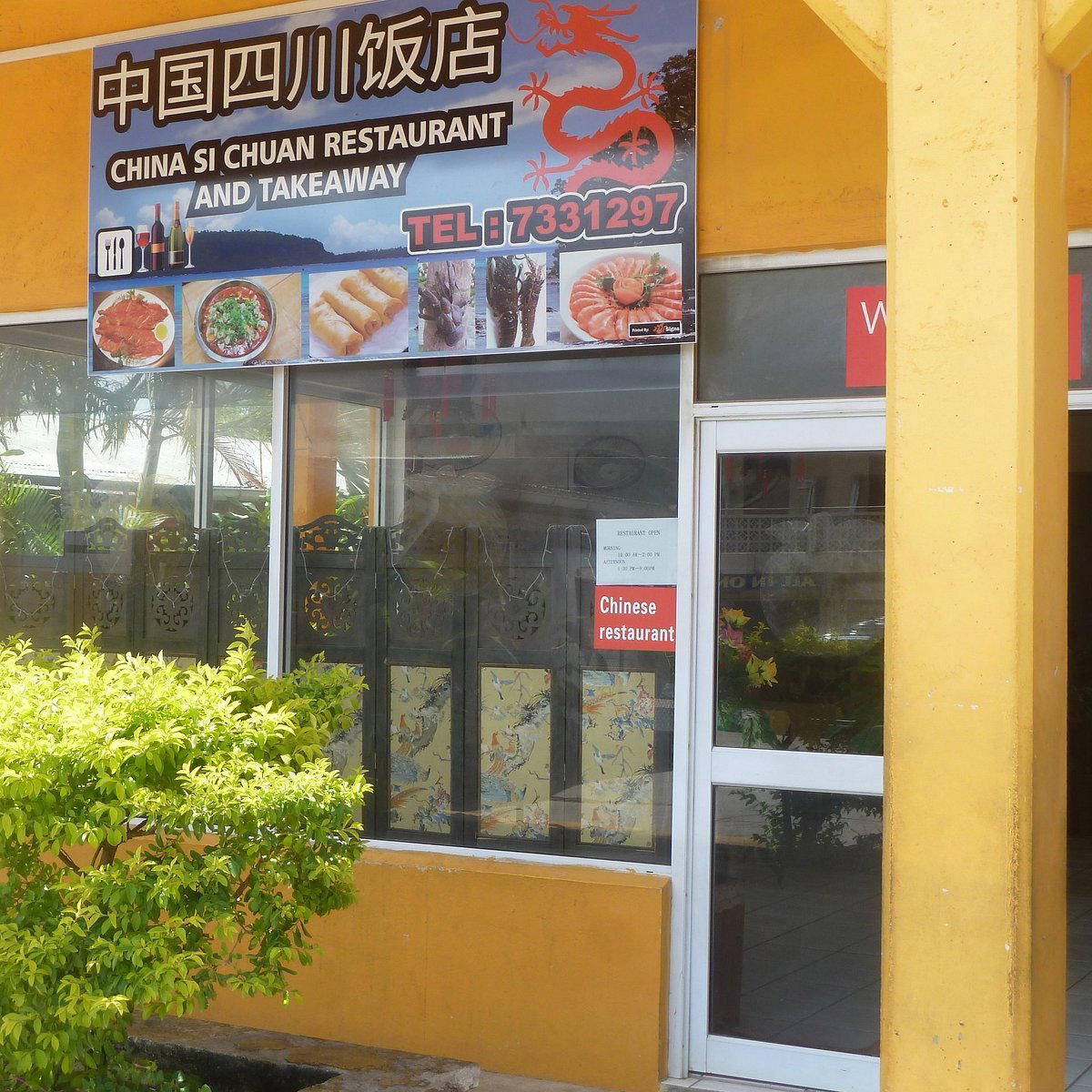
Si Chuan Restaurant
Our verdict
Luganville's restaurant scene is thin on options representing the Chinese interior provinces, which makes Si Chuan Restaurant a point of reference for anyone curious about Sichuan cooking in Vanuatu. The restaurant operates in a town better known for dive sites than dining rooms, placing it at an unusual intersection of Pacific geography and one of China's most technique-driven regional cuisines.

Pearl is the En Primeur Club membership app, where members save venues, book tables and use the concierge.
The menu
What to order
- Salt Spiced Prawns
- Satay Chicken
- Satay Beef
- Ginger Prawns
Sichuan Cooking at the Edge of the Pacific
Luganville sits on the southern shore of Espiritu Santo, Vanuatu's largest island, and its restaurant scene reflects the town's character: small, practical, and shaped more by proximity to the reef than by any particular culinary ambition. Against that backdrop, a restaurant operating under the Sichuan banner occupies an unlikely position. Sichuan cuisine is among China's most regionally specific traditions, built around a set of ingredients, preservation techniques, and flavour principles that are difficult to replicate anywhere far from the province's supply chains. The fact that Si Chuan Restaurant exists here at all is the first thing worth understanding about it.
The broader context for Chinese restaurants in the Pacific islands is worth framing before zooming in on Luganville specifically. Chinese emigrant communities have maintained cooking traditions across Melanesia, Polynesia, and Micronesia for well over a century, adapting sourcing and technique to what local markets could support. The restaurants that survive in smaller Pacific towns tend to operate as hybrid operations: menus that nod toward regional Chinese identity while working with whatever proteins, vegetables, and pantry staples are available locally. That negotiation between origin and place is the defining tension of Chinese cooking in the outer Pacific, and it shapes how any such restaurant should be read.
Ingredient Sourcing in a Remote Port Town
The sourcing challenge at any Sichuan-oriented restaurant in Vanuatu is worth taking seriously, because Sichuan cooking depends on a specific set of raw materials that do not travel easily or cheaply to a town of Luganville's scale. The defining aromatics of the cuisine, particularly Sichuan peppercorns, dried chilies, and fermented black bean pastes, are shelf-stable and can be imported, which means the foundational flavour architecture of dishes like mapo preparations or dry-fried proteins remains technically achievable. What is harder to maintain consistently is the protein and vegetable side of the equation.
Espiritu Santo does produce some of Vanuatu's better agricultural output: the island has a longer growing season than many neighbours and supports local market gardens. Beef is raised on the island, and the waters around Luganville yield fish and shellfish. A Chinese restaurant working those local supply lines intelligently would have access to fresh, if limited, raw material. Whether the kitchen chooses to source locally or rely heavily on imports is a question that separates more considered operations from those running on frozen product, and it is the kind of distinction that becomes apparent in texture and flavour even when the spicing is correct.
For visitors arriving in Luganville from Port Vila, where the dining scene includes options like Akiriki Restaurant in Port Vila, the adjustment in kitchen ambition will be noticeable. Luganville is not a dining destination, and approaching it as one sets the wrong expectation. What a restaurant like Si Chuan can offer in this context is a specific kind of value: familiar flavour logic in an unfamiliar setting, made possible by the portability of Chinese pantry staples across long supply distances. Our full Luganville restaurants guide covers the wider picture for travellers trying to plan meals around the town's other draws.
The Setting and Who It Serves
Luganville is a working port town, not a resort enclave. Its dining rooms tend to be functional rather than designed, and they serve a mix of locals, expat workers, and travellers passing through on their way to dive sites like the SS President Coolidge wreck or the blue holes inland. A Chinese restaurant in this environment typically occupies a direct commercial space, prioritising capacity and turnover over atmosphere. That is the honest framing for what to expect walking in.
The comparison point is not venues like 8 1/2 Otto e Mezzo Bombana in Hong Kong or Amber in Hong Kong, which operate at a different tier of investment and intention entirely. It is not even the considered mid-range of a city like Sydney or Auckland.
For families travelling through Luganville, the practical considerations matter more than they would in a larger city. Chinese restaurants in small Pacific towns typically run accessible price points by regional standards, broad menus that include less challenging options alongside any spiced preparations, and service styles built around groups. If the menu does carry authentic Sichuan spicing on some dishes, parents travelling with children who are unfamiliar with mala heat should ask about spice levels before ordering. The if-then here is simple: if your party is comfortable with spiced food, Sichuan preparations can be the more interesting part of the menu; if not, most such restaurants carry steamed and mild options alongside.
Where It Sits in the Luganville Dining Picture
Luganville's restaurant options are limited enough that categorisation is less about tiers and more about what's available on a given evening. The town has a small spread of Asian restaurants alongside the handful of hotel dining rooms. Chinese restaurants in this context often function as the default option for travellers who want a substantial, familiar meal after a day on the water. That is not a criticism; it reflects the economics of feeding a small, transient population in a remote port.
The contrast with what destination dining looks like elsewhere along the Pacific rim is sharp. Restaurants like Lazy Bear in San Francisco or Atomix in New York City represent the endpoint of what happens when a sophisticated urban market, deep sourcing networks, and high reservation demand converge. Le Bernardin in New York City, Alinea in Chicago, Atelier Crenn in San Francisco, and Arpège in Paris all operate under conditions of resource abundance, established supply relationships, and critical attention that simply do not apply in Luganville. Neither do the expectations that accompany those environments. A restaurant in a small Melanesian port is doing something different and should be assessed accordingly.
For the purposes of comparison, Alain Ducasse at Louis XV in Monte Carlo, Arzak in San Sebastián, Alléno Paris au Pavillon Ledoyen, Aponiente in El Puerto de Santa María, Aqua in Wolfsburg, Atelier Moessmer Norbert Niederkofler in Brunico, Azurmendi in Larrabetzu, and Emeril's in New Orleans all illustrate what the upper end of the global restaurant spectrum looks like when sourcing, technique, and critical infrastructure align. They provide a useful frame for understanding how much of what defines serious restaurant cooking depends on conditions that remote Pacific dining simply cannot replicate, and why that makes the existence of a Sichuan restaurant in Luganville an interesting cultural footnote rather than a culinary statement.
Planning a Visit
Given the town's size, walk-in dining is typical for most restaurants in the area. Luganville's restaurant options are concentrated near the main commercial strip, making it practical to assess options in person before committing to a table.
Frequently asked questions
Is Si Chuan Restaurant good for families?
Luganville's dining scene is largely functional and unpretentious, and Si Chuan Restaurant fits that character. Sichuan cuisine typically spans a range of heat levels, so families with children can often find dishes that suit different palates.
What kind of setting is Si Chuan Restaurant?
Luganville is a working port town on Espiritu Santo, Vanuatu's largest island, and its restaurants tend toward practical over polished. Si Chuan Restaurant operates within that context: expect a dining room built around function rather than atmosphere, serving a cross-section of locals, expats, and travellers passing through the island's main commercial centre. It is not a resort-adjacent venue.
Is Si Chuan Restaurant the only Chinese restaurant in Luganville, Vanuatu?
Luganville's dining options are limited enough that a Sichuan-oriented restaurant occupies a distinct position in the town's food picture. Whether it operates as the sole Chinese venue at any given time is difficult to confirm, as small-town restaurant openings and closures in Vanuatu shift frequently. Travellers researching options on Espiritu Santo should cross-reference current local sources, as EP Club's verified data does not confirm competitor listings for Luganville.
What do people recommend at Si Chuan Restaurant?
Sichuan cooking is built around bold spicing, fermented bean pastes, and the distinctive numbing heat of Sichuan peppercorn, so those flavour profiles are likely present in some form. Travellers sourcing current menu intelligence are best served by asking locally in Luganville before their visit.
In Context: Similar Options
| Venue | Cuisine | Price |
|---|---|---|
| Si Chuan RestaurantThis venue (the venue you are viewing) | Authentic Si Chuan Chinese | $10–20 |
| Akiriki Restaurant | Pacific Smoke & Grill Steakhouse | $20–30 |
| Van Japanese Restaurant | Authentic Japanese Sushi & Ramen | $20–30 |
| Yumi Restaurant | Authentic Korean BBQ | $20–30 |
Details
- Casual Hangout
- Group Dining
- Local Sourcing
- A La Carte
- Vegetarian Friendly
Casual and welcoming atmosphere focused on hearty, flavorful meals with fast service.