
Black Pearl 1 Diamond
Our verdict
ShunDe DongHai Restaurant holds a Black Pearl 1 Diamond for 2025, placing it among the recognised addresses in Shunde's serious dining tier. The restaurant sits within Shunde District, Foshan, the heartland of Cantonese cuisine, where ingredient provenance and classical technique define what separates a credible table from a casual one. For travellers willing to look beyond Guangzhou, it represents a direct line to the culinary tradition that shaped the region.

Pearl is the En Primeur Club membership app, where members save venues, book tables and use the concierge.
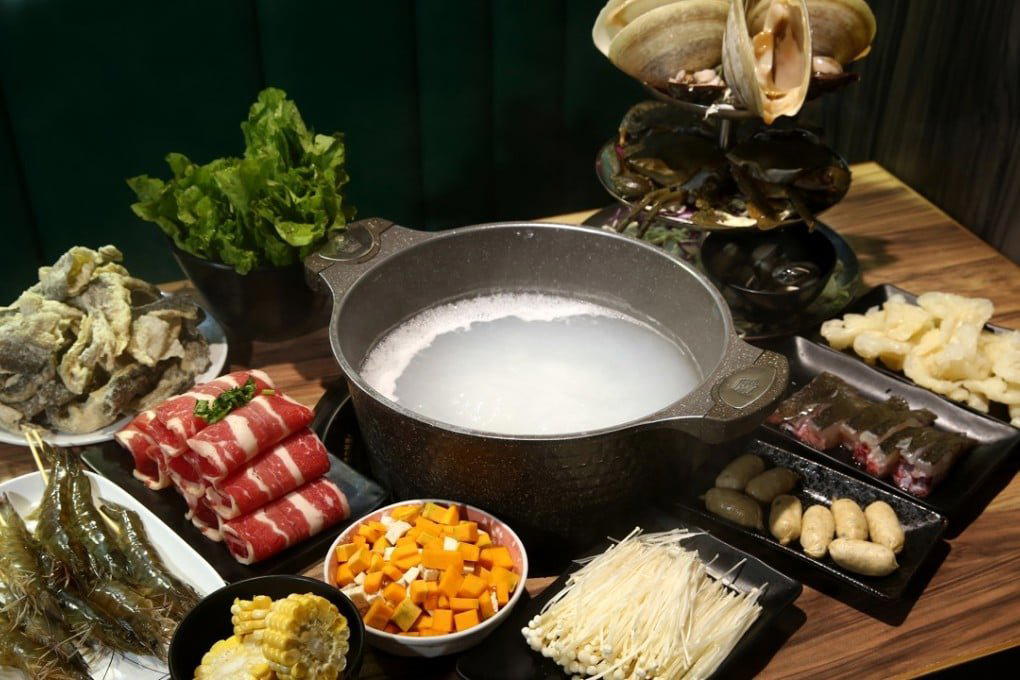
The menu
What to order
- Sliced-skin roast goose
- Crab-clawed bird's nest
- Abalone chicken
Where Shunde's Ingredient Culture Meets the Table
Approach Shunde from Guangzhou and the shift is immediate. The Pearl River Delta's western bank carries a different rhythm from the provincial capital: smaller markets, older fishing practices, and a civic pride in food that predates the restaurant industry itself. Shunde District, administratively part of Foshan, is the place that many food scholars identify as the root of Cantonese cuisine rather than one of its branches. It is the source of dishes and techniques that travelled outward to Guangzhou, Hong Kong, and eventually to Cantonese kitchens worldwide. Eating seriously in Shunde means engaging with that lineage directly, not through a filtered metropolitan version of it.
ShunDe DongHai Restaurant operates inside this context. The address, on the second floor of a building in Shunde District, positions it away from the kind of destination dining corridors that attract casual foot traffic. Arriving here requires intention, which is frequently the condition that separates the most considered kitchens from the most convenient ones. The room's orientation toward the DongHai name, referencing the eastern sea, signals the sourcing logic that informs what reaches the kitchen: a Cantonese table at this level is built, first and foremost, around what the water provides.
The Sourcing Logic Behind Cantonese Excellence
No cuisine in China places greater pressure on raw material quality than Cantonese cooking. The technique is purposely restrained: steaming, gentle poaching, brief stir-frying over high heat. When the kitchen intervenes as little as possible, the ingredient carries the full weight of what appears on the plate. A fish that travelled too far or rested too long cannot be rescued by a sauce. This is why Shunde kitchens have historically maintained direct relationships with suppliers, wet markets, and local fishers in ways that larger urban restaurants find logistically difficult to replicate.
The Pearl River Delta's network of rivers, canals, and estuaries historically supported one of the most productive freshwater and brackish fishing systems in southern China. Freshwater species, including grass carp, snakehead, and various eel varieties, appear in Shunde preparations with a specificity that reflects local sourcing. Meanwhile, proximity to the South China Sea means marine species arrive with a speed and traceability that restaurants in inland cities simply cannot access. For a kitchen that names itself after the sea, that geography is a credential, not just a motif.
Across the wider Cantonese dining tier, the Black Pearl Guide has become the most consequential domestic benchmark for this style of sourcing rigour. Restaurants like Imperial Treasure Fine Chinese Cuisine in Guangzhou and Chef Tam's Seasons in Macau operate within this same recognition framework, where ingredient integrity and classical Cantonese execution are the primary evaluative criteria. ShunDe DongHai's 2025 Black Pearl 1 Diamond places it within that acknowledged tier.
Shunde in the Hierarchy of Chinese Fine Dining
China's premium restaurant circuit has developed considerable geographic range over the past decade. Yet Cantonese cuisine, and Shunde specifically, occupies a particular position in that hierarchy: it is the tradition that other Chinese regional kitchens frequently cite as the reference point for technical precision and ingredient respect.
Within Shunde itself, YU SHAN FANG represents another address in the district's serious dining conversation. The presence of multiple recognised restaurants in a mid-sized Guangdong city reflects how deeply the local food culture sustains genuine kitchen ambition, rather than depending on tourist volume or corporate dining spend to support a high-end tier.
The comparison extends further across the Pearl River Delta and beyond. Xin Rong Ji (Xinyuan South Road) in Beijing and Xin Rong Ji in Chengdu demonstrate how Taizhou cuisine has built its own sourcing-centred premium identity in cities far from its origin point. Jiangnan Wok·Rong in Fuzhou and Fleurs Et Festin in Xiamen show southeastern China's broader regional ambition. Even internationally, the sourcing-first philosophy that defines Shunde's serious tables has parallels: Le Bernardin in New York City built its reputation on precisely the same premise, that a kitchen's restraint is only credible when the raw material justifies it. Closer in spirit to the innovation end of that spectrum, Atomix in New York City shows how sourcing rigour can support an entirely different cultural register.
Planning Your Visit
Shunde is accessible from Guangzhou in under an hour by high-speed rail or road, making it a viable day trip from the provincial capital, though the district rewards a longer stay given the concentration of serious food addresses. The restaurant is located in Shunde District at A-2 level, postal code 528399; plan your visit in advance. Given that the 2025 Black Pearl 1 Diamond recognition will have sharpened local demand, confirming availability well ahead, particularly for weekend evenings, is the sensible position. (our full Shunde experiences guide).
For travellers who arrive with the right context, Shunde is not a detour from serious Chinese dining: it is one of the places where that seriousness was formed.
Frequently asked questions
What's the address for ShunDe DongHai Restaurant?
ShunDe DongHai Restaurant is located at China, CN 广东省 佛山市 顺德区 A-2楼 邮政编码: 528399, Shunde.
Has ShunDe DongHai Restaurant won any awards?
ShunDe DongHai Restaurant has received recognition including: Black Pearl 1 Diamond (2025).
What makes ShunDe DongHai Restaurant worth seeking out?
Shunde is the origin district for much of what defines Cantonese cooking globally, and a Black Pearl 1 Diamond awarded in 2025 signals that ShunDe DongHai is operating at a recognised level within that tradition. The combination of source-region geography and current award standing is what separates it from Cantonese restaurants elsewhere in Guangdong.
How ShunDe DongHai Restaurant compares with similar nearby venues.
| Venue | Cuisine | Price | Awards |
|---|---|---|---|
| ShunDe DongHai RestaurantThis venue (the venue you are viewing) | Shunde Cantonese Seafood | $50–100 | Black Pearl 1 Diamond |
| YU SHAN FANG | Cantonese Sashimi & Seafood | Not listed | Black Pearl 1 Diamond |
| Hongtu Hall | Dim Sum | Not listed | Not listed |
| Lingnan House | Cantonese | Not listed | Not listed |
Recognition history
Dated appearances from independent guides and award organizations, with the underlying list record or original source where available.
Black Pearl 1 Diamond
Black Pearl
Full recognition history (2 entries)
Black Pearl 1 Diamond
Black Pearl
Continue exploring
More in Shunde
Restaurants in Shunde
All restaurants in Shunde →
Bars in Shunde
Browse all →
Details
- Classic
- Special Occasion
- Group Dining
- Celebration
- Local Sourcing
- A La Carte