Viunj Restaurant operates in Isfahan, one of Iran's most historically layered dining cities, where the expectations for traditional Persian cooking run deep. The restaurant draws from the ingredient traditions that have defined central Iranian cuisine for generations, placing it within a competitive local scene that includes long-established names in Persian hospitality.
 Discover on Pearl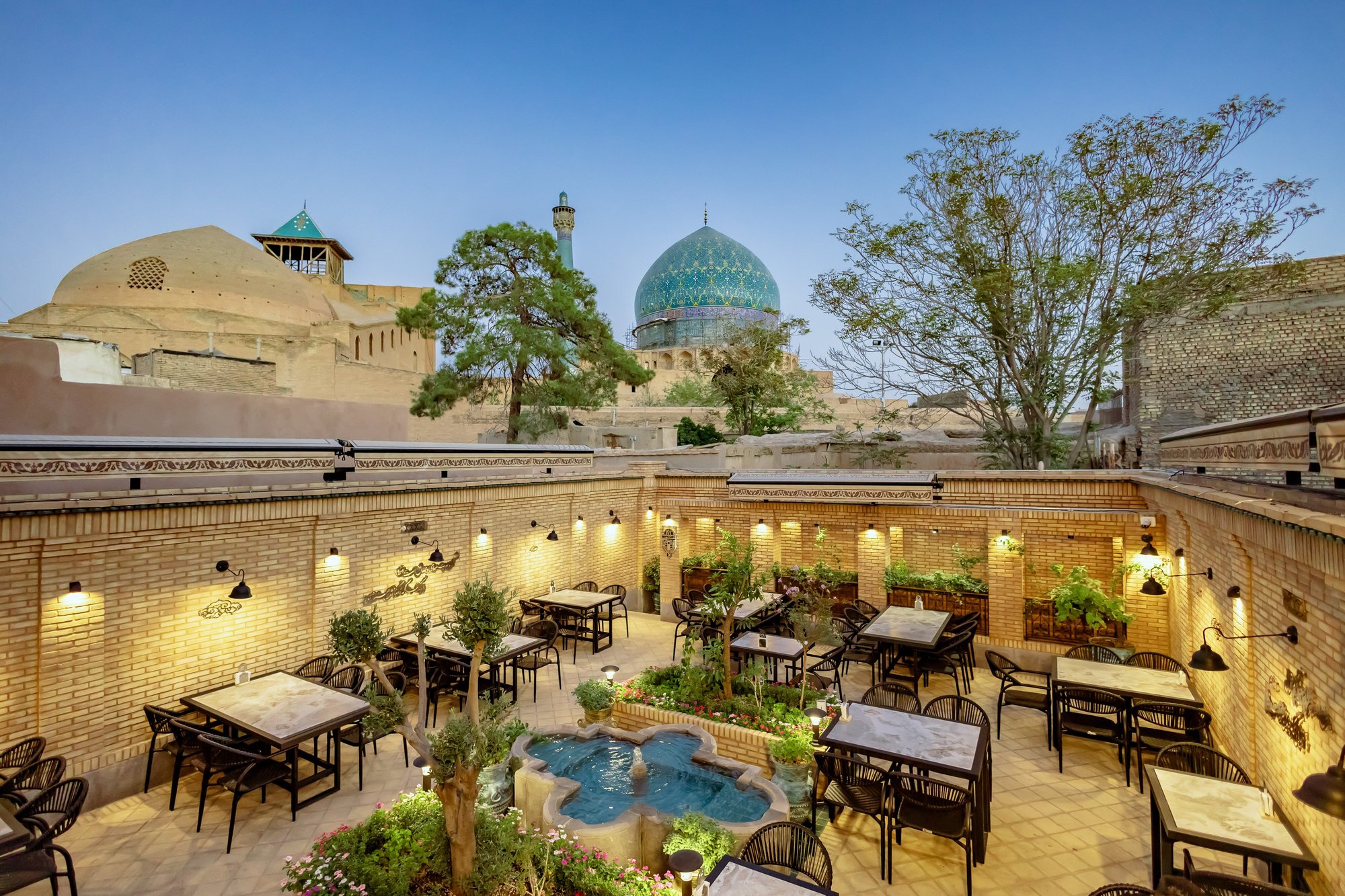
Isfahan's Dining Scene and Where Viunj Fits
Isfahan has always demanded more of its restaurants than most Iranian cities. As a former imperial capital whose bazaars once connected the Silk Road's central arteries, the city carries a culinary inheritance that diners here take seriously. The expectation is not novelty but fidelity: to saffron sourced from Khorasan rather than a generic spice rack, to lamb raised in the high-altitude pastures of central Iran, to pomegranate molasses reduced slowly rather than approximated from concentrate. Restaurants that endure in Isfahan tend to do so because they maintain a supply chain that tourists don't see and locals notice immediately.
Viunj Restaurant operates inside that context. Isfahan's dining options have diversified considerably over the past decade, with new openings ranging from fast-casual kebab formats to traditional teahouse conversions with vaulted brick ceilings and live music. The mid-tier of this market, where sit-down Persian cooking meets a recognizable room and reliable service, has become increasingly competitive. Baastan Restaurant (رستوران سنتی باستان), one of Isfahan's more established traditional names, and Shahrzad Restaurant (رستوران شهرزاد), which has long anchored the city's heritage dining circuit, both represent the tier Viunj competes within: restaurants where the room and the recipe are expected to carry equal weight.
The shortlist, unlocked.
Hard-to-book tables, cellar releases, and concierge-planned trips.
Get Exclusive Access →The Ingredient Logic Behind Central Iranian Cooking
To understand what a restaurant like Viunj is working with, it helps to understand what Isfahan's culinary geography actually provides. Central Iran sits at an altitude that moderates the extremes of a predominantly arid climate, producing lamb with a particular fat distribution, walnuts with a density of flavor that changes slowly cooked dishes, and rose water from Kashan, less than 100 kilometers north, that carries a floral intensity commercial extracts cannot replicate. These are not marketing claims. They are measurable differences that show up in dishes like fesenjan, the slow-braised walnut and pomegranate stew that functions as a regional benchmark dish, or in the quality of the saffron-steeped rice crust, tahdig, that separates competent Persian cooking from the kind that locals return for.
Isfahan's position on Iran's domestic tourism circuit also means its restaurants are judged by two audiences simultaneously: regional visitors who cross-reference dishes against home cooking, and international travelers for whom Persian cuisine may still be relatively unfamiliar. Restaurants that calibrate only for one group tend to drift. Simon Pavilion (عمارت سیمون) has navigated that calibration in a traditional setting, and Anar Caravanserai (کاروانسرای انار) takes a heritage-format approach in a caravanserai conversion further along the region. Each reflects a different answer to the same question: what does authenticity actually require of a kitchen?
What Draws Attention in Isfahan's Current Restaurant Market
The most discussed restaurants in Isfahan right now are not necessarily the most decorated. Iran's dining scene operates largely outside international award frameworks, which means peer reputation, word-of-mouth networks, and Iranian food media carry the signal that Michelin guides carry elsewhere. A restaurant discussed favorably in Tehran's food circles, or recommended consistently across Persian travel platforms, often outperforms venues with more visible international profiles. Koohpayeh Restaurant (رستوران کوهپایه) in Tehran illustrates how a regionally specific menu can generate genuine cross-city interest when the sourcing story is legible to diners.
For comparison further afield, the seafood-focused restaurants of Iran's southern coast, including Khorsand Seafood in Bandar Abbas and Mr Fish (آقای ماهی) in Bandar Abbas, demonstrate how different Iran's regional ingredient maps are from city to city. Isfahan sits firmly in the landlocked, lamb-and-herb interior tradition. Its cooking does not try to compete with the Gulf coast's fish culture; it occupies a different register entirely, one built on slow cooking, dried fruits, and the layered spice logic of Persian classical cuisine.
Planning a Visit to Viunj
Isfahan is most comfortably visited in spring, between late March and early May, or in autumn, when temperatures stay manageable and the city's major attractions, the Imam Square complex, the Friday Mosque, the Armenian quarter of Jolfa, draw substantial visitor numbers without the punishing summer heat. Restaurants in the city generally fill on weekend evenings, particularly during the Nowruz holiday period in late March, when domestic tourism peaks sharply across Iran. Anyone planning to visit Viunj during high season should confirm availability well in advance through local channels, as the formal booking infrastructure familiar to international travelers is not uniformly present across Isfahan's dining scene.
The restaurant's address is listed in Isfahan, though specific district details and contact information are not available in our current records. For current operating hours, table availability, and any menu specifics, direct inquiry through local accommodation concierge services or Persian travel platforms remains the most reliable approach. Visitors already exploring Isfahan's dining options may also want to cross-reference our full Isfahan restaurants guide, which covers the city's broader dining options across formats and price points.
Isfahan in the Wider Iranian Dining Picture
Iran's restaurant culture, for those approaching it from outside, benefits from some geographic orientation. The country's dining scene is not centralized in the way that France's is in Paris or Japan's in Tokyo. Yazd has its own distinct cooking character, with a pastry and confection tradition that stands apart from the savory-dominant register of Isfahan. Caesar Italian Restaurant (رستوران ایتالیایی سزار) in Yazd represents the international-format incursion into traditionally Persian cities, a trend visible across the country. Qeshm Island, where Jijian Classic Kabab and Croll (سی رول) operate, reflects the Gulf-inflected food culture of Iran's south. Qom, where Bozorgi Restaurant has built a local following, sits closer to the central Iranian cooking tradition that Isfahan represents.
For travelers who use international fine dining as a reference point, it is worth noting that the operational logic of a restaurant like Viunj differs structurally from the tasting-menu-format venues that dominate global rankings. Where Le Bernardin in New York or Atomix in New York build identity through sequenced, course-by-course narratives, Iranian restaurants in the traditional format typically present the meal as a simultaneous spread: multiple dishes arriving together, the diner constructing their own progression. The skill of the kitchen shows in the coherence of that spread rather than in any single showpiece dish. It is a different hospitality logic, and Isfahan's leading traditional restaurants have refined it over generations.
For those building an itinerary across Iran's central cities, Laneh Tavoos Restaurant (رستوران لانه طاووس) in Marvdasht, near Persepolis, and Pasargad Restaurant (رستوران پاسارگاد) in Marvdasht sit along a logical route south from Isfahan toward Shiraz, offering further reference points in the same central Persian cooking tradition. Eghbali Restaurant (رستوران اقبالی) in Qazvin and Good Fish Restaurant in Tabriz extend the map northward, into the Azerbaijani-influenced culinary zones of northwestern Iran, where the ingredient logic shifts again toward different grains, dairy preparations, and herb combinations. Isfahan, and Viunj within it, represent a specific node in that larger geography, one that rewards visitors who approach it as part of a broader reading of Iranian food culture rather than an isolated dining stop.
Frequently Asked Questions
- What dish is Viunj Restaurant famous for?
- Our records do not include a verified signature dish for Viunj Restaurant. What can be said is that Isfahan's traditional restaurants are typically anchored by the city's classical Persian repertoire: slow-braised stews like fesenjan and ghormeh sabzi, saffron rice preparations, and lamb-based mains that reflect central Iran's livestock traditions. Visitors should check directly with the restaurant or consult local Isfahan food platforms for current menu specifics. For comparable traditional cooking in the city, Baastan Restaurant (رستوران سنتی باستان) and Shahrzad Restaurant (رستوران شهرزاد) both maintain documented menus in the same tradition.
- How hard is it to get a table at Viunj Restaurant?
- Booking difficulty in Isfahan's mid-tier traditional restaurants tracks closely with the city's tourism calendar. During Nowruz (late March to early April) and the spring travel window, demand across Isfahan's dining circuit rises sharply, and popular rooms fill quickly. Isfahan does not operate a centralized reservation platform comparable to those used in major international cities, so confirming availability directly or through a local contact is advisable during peak periods. For broader context on the Isfahan dining scene, our full Isfahan restaurants guide covers the city's options across formats.
- What makes Viunj Restaurant worth visiting for travelers already familiar with Persian cuisine?
- Isfahan represents one of the few Iranian cities where the classical Persian cooking tradition, built on locally sourced saffron, mountain lamb, and Kashan rose water, has remained relatively intact across its restaurant sector. For travelers who have encountered Persian food primarily outside Iran, the ingredient provenance in Isfahan's better traditional restaurants reflects a different quality baseline than diaspora or export-market versions. Viunj operates within that local sourcing tradition, and for diners seeking a direct reference point in central Iranian cuisine, Isfahan's traditional restaurant circuit provides context that is difficult to replicate elsewhere.
Fast Comparison
A fast peer set for context, pulled from similar venues in our database.
Need a table?
Our members enjoy priority alerts and concierge-led booking support for the world's most difficult tables.
Get Exclusive AccessThe shortlist, unlocked.
Hard-to-book tables, cellar releases, and concierge-planned trips.
Get Exclusive Access →