Sen Sakana
Sen Sakana occupies a precise position in Midtown Manhattan's upscale dining scene, where Japanese technique and Latin American ingredients converge into a format that sits outside the standard omakase or Pan-Asian categories. Located at 28 West 44th Street, the restaurant draws a professional crowd from the surrounding Midtown offices and hotels, positioning itself as a destination for diners who want a structured, high-engagement meal without the full ceremony of New York's most formal tasting-room counters.
Pearl is the En Primeur Club membership app — saves, bookings, and concierge access live there. Same editors, same standards.
- Address
- 28 W 44th St, New York, NY 10036
- Phone
- +12122219560
- Website
- sensakana.com
- Directions
- Get directions
 Saves & bookings on Pearl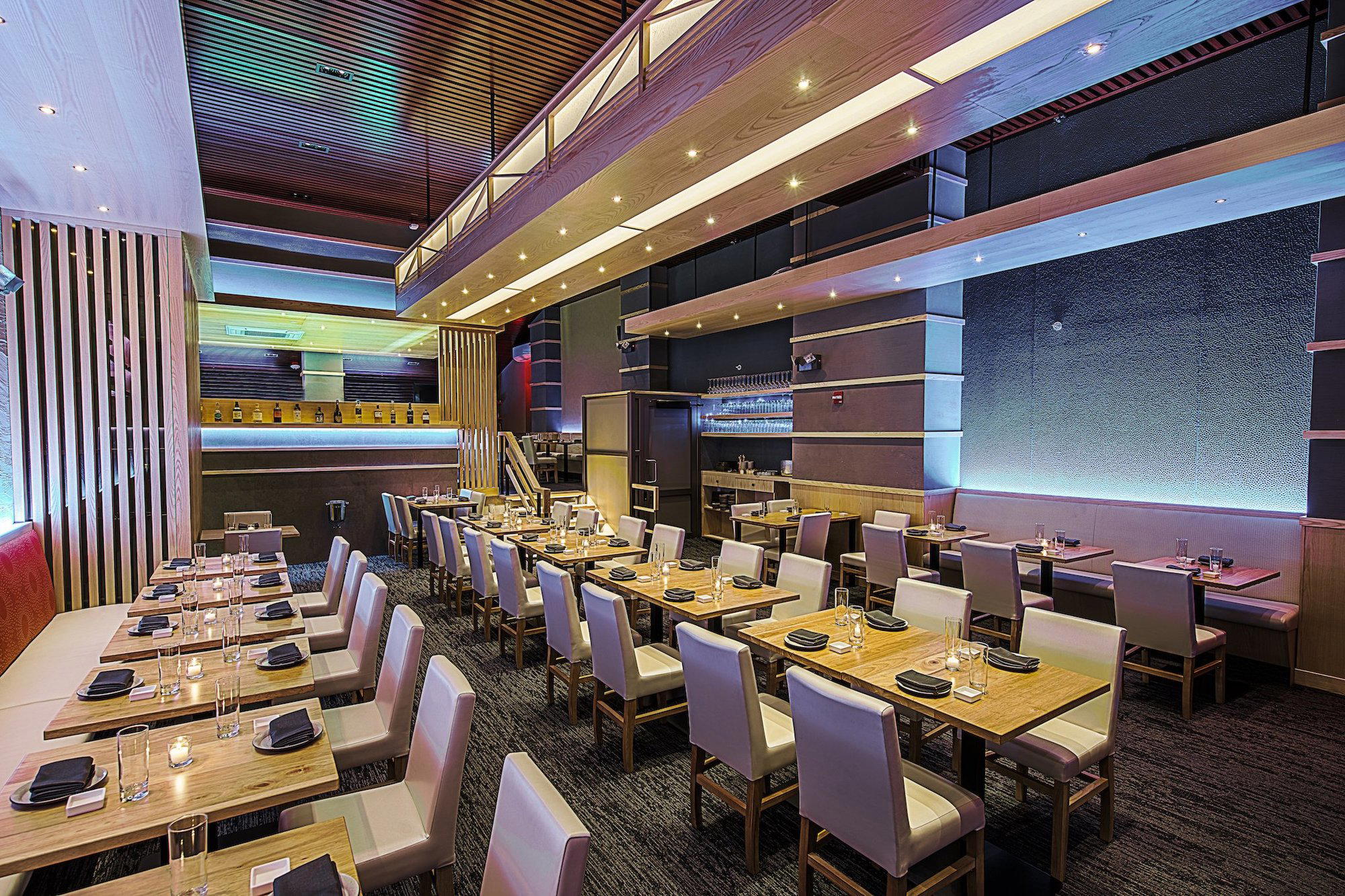
Where Two Culinary Traditions Meet in Midtown
New York has spent the last decade producing restaurants that genuinely refuse to fit a single culinary category. The sharpest examples are not fusion in the old, compromised sense of the word, but rather places where two distinct traditions arrive with equal authority and negotiate on the plate. The intersection of Japanese precision and Latin American produce is one of the more compelling of these encounters, a pairing that has found serious footing in cities from Lima to São Paulo and has recently begun to register in Manhattan's upper dining tier. Sen Sakana, a Kosher Nikkei restaurant in Midtown Manhattan at 28 West 44th Street, operates at a price point of about $150 per person. It is not a novelty concept dressed up in culinary crossover language, it is a restaurant that takes both traditions seriously enough to let them complicate each other.
The broader context matters here. New York's high-end seafood table has long been anchored by institutions like Le Bernardin, where French technique and polished sourcing define the register. The Japanese counter, represented at its most demanding by Masa, operates on an entirely different grammar: restraint, temperature, timing, and the quiet authority of a chef's hand. Sen Sakana does not compete directly with either of those formats. Its peers are restaurants that bring rigorous culinary training to a bicultural menu, where the logic of ceviche and the logic of crudo coexist without one overwhelming the other.
The Atmosphere at 44th Street
Midtown's dining character is shaped by its office geography. The blocks around West 44th Street run between Bryant Park and Grand Central, a corridor of law firms, publishing houses, and financial services companies that generate a reliable lunch and dinner trade from professionals who expect a certain level of polish and don't want to travel far for it. Restaurants in this zone tend toward the well-appointed and the legible, rooms that signal quality without requiring a deep knowledge of the culinary scene to read them correctly.
Sen Sakana fits that pattern in its address but breaks it in its ambition. The sensory experience here is built around the kind of controlled atmosphere that Japanese-influenced dining rooms in New York have refined over the past fifteen years: lower ambient noise than the city's louder fine-dining rooms, a focus on the visual presentation of plates, and a pace that allows the food to function as the primary event rather than background to a business conversation. The contrast with the Midtown street noise outside is immediate and deliberate. Coming in from 44th Street, the drop in volume registers as a shift in register, the way stepping into a serious sake bar in the East Village does, the room tells you something is being taken seriously before the first dish arrives.
This puts Sen Sakana in the company of New York's more considered high-engagement rooms, a category that includes Atomix in Koreatown, where the tasting menu format is treated as a total experience, and Jungsik New York, where Korean ingredients move through a fine-dining structure that rewards attention. Across the broader American fine-dining scene, the same seriousness of purpose appears at restaurants like Alinea in Chicago, Lazy Bear in San Francisco, and Single Thread Farm in Healdsburg, places where the room's sensory design is as deliberate as the menu's.
Japanese-Latin Cooking as a Formal Category
The Nikkei tradition, the Japanese-Peruvian cuisine that grew out of Japanese immigration to Peru beginning in the late nineteenth century, is among the more coherent examples of genuine culinary synthesis anywhere in the world. It is a multigenerational cooking culture with its own techniques, sourcing logic, and canon of dishes. Tiradito, for instance, is a Peruvian preparation that reads like ceviche but cuts like sashimi, sliced rather than diced, without the onion that defines traditional ceviche, finished with leche de tigre. It is one of the cleaner examples of how two traditions can produce something that belongs fully to neither parent.
The restaurant works within and around this tradition, extending the Japanese-Latin conversation beyond the strictly Peruvian frame to take in broader Latin American ingredients and cooking approaches. This is a less settled culinary territory than straight Nikkei, and it requires the kitchen to do more original problem-solving. The results, when this kind of cooking works, are dishes that carry an argument for this acid, this fish, and this temperature rather than simply applying a formula.
For context on how serious American fine dining handles culinary cross-pollination, it is worth looking at what Blue Hill at Stone Barns does with American agricultural ingredients and fine-dining structure, or what Providence in Los Angeles does with California seafood and French-Japanese technique. Internationally, the discipline of bringing two culinary grammars into serious contact appears at 8½ Otto e Mezzo Bombana in Hong Kong and Alain Ducasse at Louis XV in Monte Carlo, both of which demonstrate how much can be accomplished when the kitchen has genuine command of more than one tradition.
How Sen Sakana Sits in New York's Upper Tier
New York's highest-priced dining rooms set a specific floor for what the market expects at the summit of the range. Per Se on Columbus Circle, with its French Laundry lineage and long-standing Michelin recognition, represents one anchor of that tier. The Napa original, The French Laundry, provides the reference point for what that lineage means in practice. Addison in San Diego, The Inn at Little Washington, and Bacchanalia in Atlanta occupy similar positions in their respective cities. The restaurant operates in a Midtown market where the competition for serious diners is intense and the margin for a kitchen that isn't fully committed is narrow.
The restaurant's West 44th Street address places it close to the full range of what New York City's dining scene offers in the vicinity of Bryant Park, including several institutions that have held their positions for decades. To earn repeat business in that environment, the cooking has to deliver on that concept every service.
For a comparison point in another American city's fine-dining ecosystem, Emeril's in New Orleans offers a useful model: a restaurant that built its reputation on cooking that was genuinely regional and genuinely ambitious at the same time, rather than choosing between those qualities.
Know Before You Go
Address: 28 West 44th Street, New York, NY 10036
Neighbourhood: Midtown Manhattan, between Bryant Park and Grand Central Terminal
Comparable Spots, Quickly
Comparable venues nearby, for context on price, style, and recognition.
| Venue | Cuisine | Price | Notes |
|---|---|---|---|
| Sen SakanaThis venue — the venue you are viewing | Kosher Nikkei (Japanese-Peruvian Fusion) | $$$$ | Not listed |
| Hasung Lee | Seasonal Fine Dining Tasting Menu | $$$$ | Manhattan |
| SEA | Modern Southeast Asian Fusion | $$$$ | Midtown South-Flatiron-Union Square |
| Bird Dog | Modern Japanese-California Fusion | $$$$ | Palo Alto |
| Penthouse808 | Pacific Rim Asian Fusion | $$$ | Queensbridge-Ravenswood-Dutch Kills |
| The Newsroom | Caribbean-Latin-Asian Fusion | $$$ | Long Island City-Hunters Point |
Continue exploring
More in New York City
Restaurants in New York City
Browse all →
Bars in New York City
Browse all →
Hotels in New York City
Browse all →





At a Glance
- Elegant
- Sophisticated
- Modern
- Date Night
- Special Occasion
- Business Dinner
- Chefs Counter
- Private Dining
- Open Kitchen
- Sake Program
Current opening hours
- Monday
- 11:30 AM–10 PM
- Tuesday
- 11:30 AM–10 PM
- Wednesday
- 11:30 AM–10 PM
- Thursday
- 11:30 AM–10 PM
- Friday
- Closed
- Saturday
- 8–11:30 PM
- Sunday
- 5–10 PM
Hours can change for holidays and private events. Last verified .
Swanky and expansive Midtown space with pampering service and cheerful greeting.