Saucy Oakland
On 8th Street in Old Oakland, Saucy Oakland operates in a neighbourhood where independent kitchens define the block rather than chain concepts. The restaurant's name signals a particular orientation toward bold, sauce-driven cooking, placing it within a local tradition of direct, unfussy flavour. For visitors working through Oakland's food scene, it represents the kind of neighbourhood anchor worth knowing.
Pearl is the En Primeur Club membership app — saves, bookings, and concierge access live there. Same editors, same standards.
- Address
- 468 8th St, Oakland, CA 94607
- Phone
- +15107643939
- Website
- saucyoakland.com
- Directions
- Get directions
 Saves & bookings on Pearl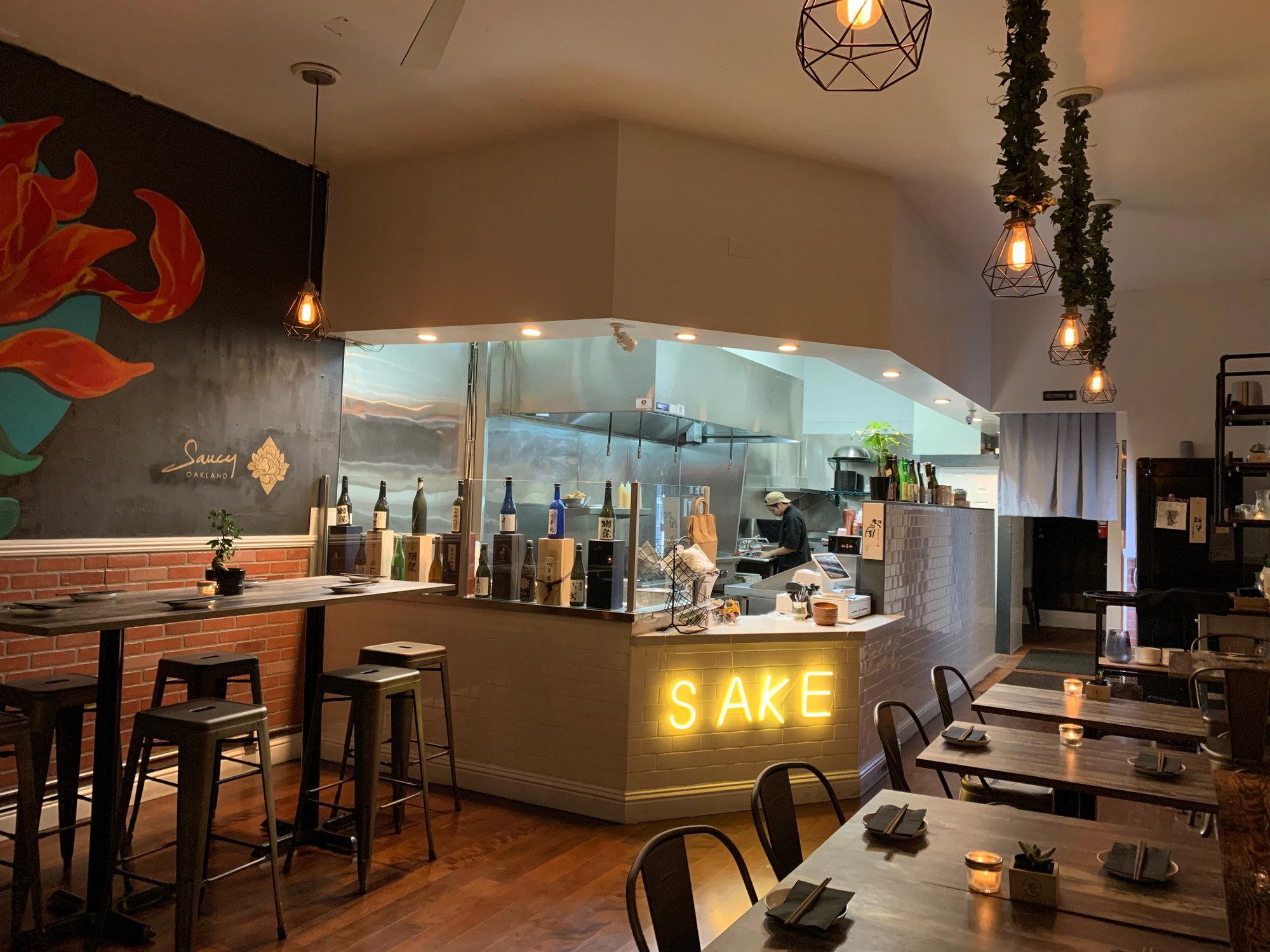
Old Oakland's 8th Street and the Logic of Sauce-Driven Cooking
Walk along 8th Street through Old Oakland and the pattern becomes clear quickly: this corridor runs on independent operators, many of them rooted in a single culinary tradition executed with focus rather than range. Saucy Oakland is a casual Pan-Asian Fusion restaurant at 468 8th St, Oakland. The buildings are low, the foot traffic is purposeful, and the restaurants here tend to work with a specific point of view rather than hedging across categories. 8th St Cafe 文記茶餐廳 holds one end of that spectrum with its Hong Kong tea-house format; Saucy Oakland at 468 8th St occupies its own position with a name that signals, with reasonable economy, exactly what you are arriving for.
Sauce-driven cooking as a culinary frame is worth taking seriously. In American restaurant culture, a dish's sauce is almost always the element that reveals technical ambition most directly: it requires understanding reduction, emulsification, fat balance, and timing in ways that a well-sourced protein alone does not. Restaurants that organise their identity around this element are making a legibility choice, they are telling you what they value before you sit down.
The Neighbourhood Context: Oakland's Independent Kitchen Scene
Oakland has spent the better part of the last fifteen years developing a dining identity that is genuinely distinct from San Francisco's. Where the city across the bay has moved progressively toward high-concept tasting formats, represented regionally by places like Lazy Bear in San Francisco, Oakland's most characterful restaurants have tended to resist that drift. The emphasis here is on specific cultural traditions rendered with care, on cooking that does not require advance study to enjoy, and on price points that make regularity possible.
That dynamic shows up on 8th Street in particular. 3 Bottled Fish represents one version of this commitment; alaMar Dominican Kitchen represents another, grounding Caribbean tradition in a city that has always been receptive to diaspora cooking. Agave Uptown and the home-style Mexican kitchen Cenaduria Elvira, known for tacos dorados and tostada raspada, extend that pattern further. What these restaurants share is an orientation toward cooking that is rooted in somewhere, not calibrated to appeal to everyone.
Saucy Oakland fits inside that tradition. The name alone positions it as a kitchen with a defined focal point, not a generalist address.
Sustainability as a Working Principle in Oakland's Independent Restaurants
One of the more consequential shifts in independent restaurant culture over the last decade has been the movement from sustainability as a marketing claim toward sustainability as an operational constraint. The difference is meaningful. A restaurant that describes itself as sustainable because it compost-bins its waste is doing something different from one that has restructured its sourcing, portion logic, and waste output around genuinely reduced environmental cost.
Oakland's independent kitchen scene has been relatively early in adopting the latter approach, partly because of proximity to Northern California's agricultural network and partly because the city's restaurant culture tends to be run by operators who are embedded in specific communities rather than managing across multiple locations. Restaurants built around a single cuisine tradition, or, in the restaurant's case, a single technique orientation, are structurally better positioned to apply sustainable sourcing principles: you know your ingredients well, your suppliers are fewer, and your waste streams are more predictable.
The broader California restaurant ecosystem provides relevant context here. Properties like Single Thread Farm in Healdsburg and Blue Hill at Stone Barns in Tarrytown have formalised the farm-to-table ethics with documented sourcing frameworks and significant investment in agricultural partnerships. Those models are not directly transferable to a neighbourhood restaurant on 8th Street, but the underlying principle, that knowing your supply chain reduces both environmental cost and quality variance, scales down effectively. Smaller kitchens with specific menus tend to have less waste and more consistent sourcing relationships than high-volume generalists.
In that context, a restaurant defined by its sauces has an inherent efficiency advantage: sauces use secondary cuts, vegetable trim, bones, and cooking liquids that would otherwise be discarded. The culinary traditions most associated with complex sauce work, French, Mexican, West African, Korean, are also traditions with long histories of using whole animals and full vegetables, leaving little behind. The structural logic of sauce-forward cooking aligns with low-waste kitchen practice by default.
Oakland Against the National High-End Field
For readers calibrating Oakland against the broader American fine-dining spectrum, the city occupies a different register from most high-profile restaurant destinations. Venues like The French Laundry in Napa, Alinea in Chicago, Le Bernardin in New York City, Atomix in New York City, and Providence in Los Angeles represent one pole of American restaurant ambition: tasting menus, award hierarchies, and dining as event. Addison in San Diego, Emeril's in New Orleans, and The Inn at Little Washington extend that category further. Even internationally, venues like 8 1/2 Otto e Mezzo Bombana in Hong Kong define what formal ambition looks like at scale.
Oakland does not compete in that tier, and its most distinctive restaurants are not trying to. The city's independent kitchens, the ones worth travelling for, make a different argument: that cooking grounded in a specific tradition, executed with care and served without ceremony, is its own kind of achievement. Alem's Coffee makes that case through Ethiopian coffee culture; the restaurants along 8th Street make it through food. The restaurant, positioned by name and address within this cluster, makes it through the specific logic of sauce-forward cooking.
Know Before You Go
Address: 468 8th St, Oakland, CA 94607
Neighbourhood: Old Oakland / Downtown Oakland
Phone: not listed
Website: not listed
Hours: Mon: Closed; Tue: 11:30 AM-2 PM, 5-8 PM; Wed: 11:30 AM-2 PM, 5:30-9 PM; Thu: 11:30 AM-2 PM, 5:30-9 PM; Fri: 5:30-10 PM; Sat: 5:30-10 PM; Sun: Closed
Reservations: Recommended
Price range: $$
Nearby: 8th St Cafe, 3 Bottled Fish, alaMar Dominican Kitchen, Agave Uptown
How It Stacks Up
Comparable venues nearby, for context on price, style, and recognition.
| Venue | Cuisine | Price | Notes |
|---|---|---|---|
| Saucy OaklandThis venue — the venue you are viewing | Pan-Asian Fusion | $$ | Not listed |
| Señor Sisig | Filipino-Mexican Fusion Street Food | $ | Downtown |
| Casserole House | Korean Jeongol Hot Pots | $$ | Temescal |
| Lounge Chinatown | Chinese and Taiwanese Street Food | $$ | Chinatown |
| Desco | Regional Northern Italian | $$ | Old Oakland |
| The Cook and Her Farmer | Coastal American Seafood with Southern Influence | $$ | Old Oakland |
Continue exploring
More in Oakland
Restaurants in Oakland
Browse all →
Bars in Oakland
Browse all →
Hotels in Oakland
Browse all →

At a Glance
- Trendy
- Lively
- Casual Hangout
- Group Dining
- Open Kitchen
- Sake Program
Current opening hours
- Monday
- Closed
- Tuesday
- 11:30 AM–2 PM, 5–8 PM
- Wednesday
- 11:30 AM–2 PM, 5:30–9 PM
- Thursday
- 11:30 AM–2 PM, 5:30–9 PM
- Friday
- 5:30–10 PM
- Saturday
- 5:30–10 PM
- Sunday
- Closed
Hours can change for holidays and private events. Last verified .
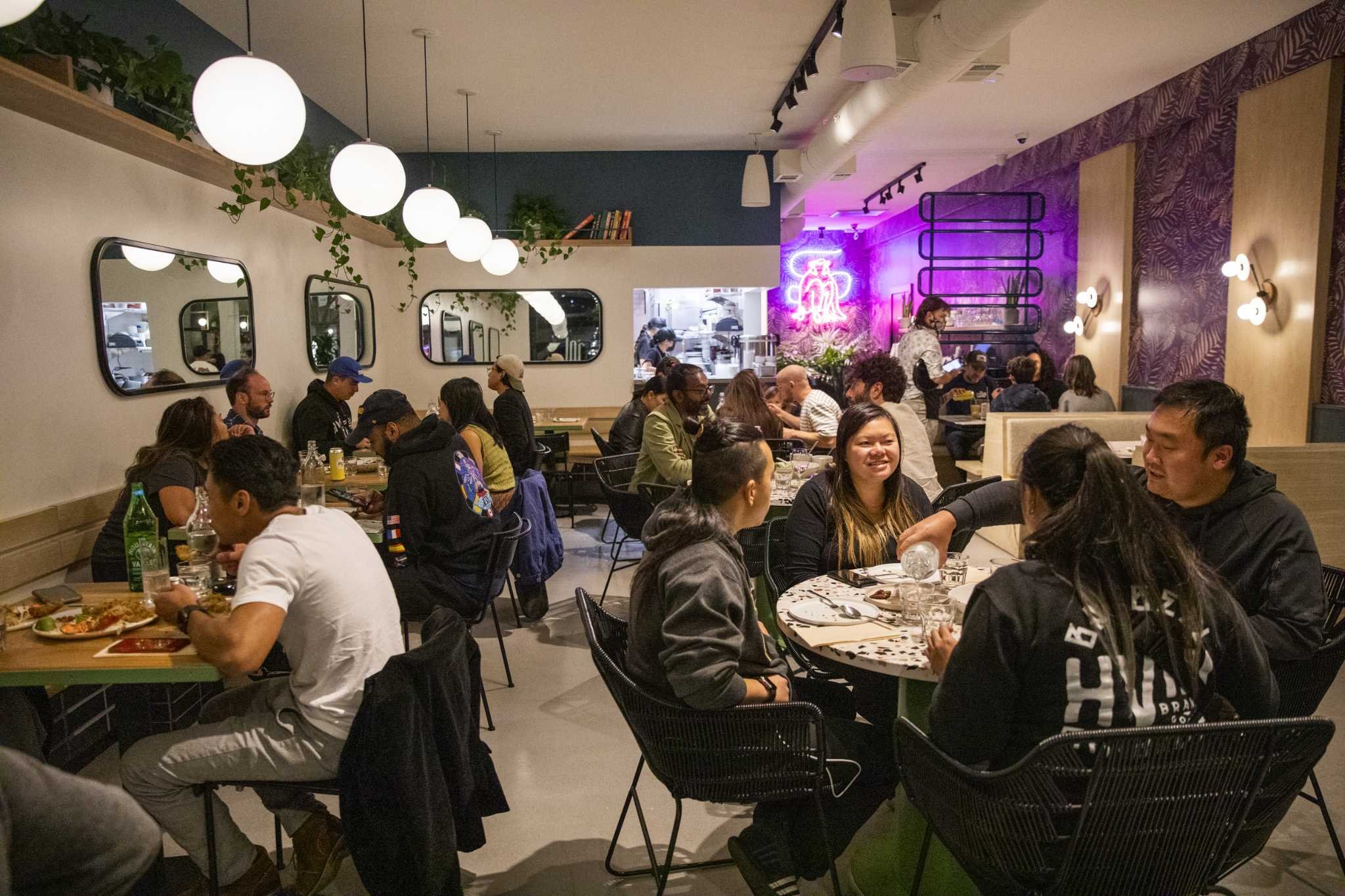
Fun and creative atmosphere focused on friends mingling over lively food.