3 Bottled Fish

<h2>Where Fruitvale's Street Food Culture Gets a Permanent Address</h2><p>Fruitvale, Oakland's densely layered East Bay neighborhood, has long operated as one of the Bay Area's most productive corridors for immigrant-driven food. The sidewalk vendors, taquerias, and family-run spots along International Boulevard represent one of the more credible concentrations of working-class culinary craft in Northern California, a place where sourcing is dictated by community markets and generational knowledge rather than farm-to-table marketing. Into this context, 3 Bottled Fish fits with unusual coherence. The Vietnamese café run by Paulette Tran occupies a modest room at 1924 35th Avenue, seating roughly a dozen patrons at a time, its interior assembled with plants, bookshelves, and a television cycling through footage of Vietnamese hawker stalls. The effect is less designed atmosphere and more honest self-portrait: this is what the food draws from, and the room says so clearly.</p><h2>The Sourcing Logic Behind Vietnamese Café Cooking</h2><p>Vietnamese café cooking at its most considered is an exercise in disciplined sourcing. The canon of dishes that defines the tradition, from phở to bún bò Huế to bánh mì, depends on specific aromatics, fermented pastes, and fresh herbs that do not translate when substituted or approximated. Fish sauce, shrimp paste, fresh lemongrass, Vietnamese coriander, and the particular cuts of pork or beef used in slow-cooked broths are not interchangeable with generic supermarket equivalents. The name 3 Bottled Fish is itself a direct nod to that ingredient philosophy: nước mắm, fish sauce, is the foundational condiment of Vietnamese cooking, and its quality gradient is significant. A sauce from Phú Quốc or Phan Thiết, made from fermented black anchovies with high protein content, differs materially from industrially produced alternatives. Cafés that treat that distinction seriously produce food that lands differently, with a depth of savory, salt, and sweetness that cannot be replicated with shortcuts.</p><p>Fruitvale's access to Vietnamese and pan-Asian grocers along the East Bay corridor makes it a practical choice for a café operating at this level of ingredient fidelity. The neighborhood's own food infrastructure, built over decades of Southeast Asian, Mexican, and Central American settlement, supports the kind of sourcing that a comparable café in a less diverse zip code would struggle to maintain. That geography is not incidental to 3 Bottled Fish's identity; it is structural to it.</p><h2>Twelve Seats, Hawker Logic</h2><p>The scale matters here. Roughly a dozen seats defines not just capacity but method. Hawker-stall cooking, the tradition the in-house television pays visible homage to, is fundamentally small-batch and high-turnover. Broths are made in quantities that can be refreshed with attention, aromatics are used close to their point of peak volatility, and the cook-to-order rhythm of a small room prevents the degradation that plagues higher-volume operations. Compare this to the format of destination tasting-menu restaurants like <a href="https://www.enprimeurclub.com/restaurants/single-thread">Single Thread Farm in Healdsburg</a> or <a href="https://www.enprimeurclub.com/restaurants/the-french-laundry">The French Laundry in Napa</a>, where small seat counts serve a different purpose entirely. At those addresses, limited capacity is a luxury signal. At 3 Bottled Fish, it is a functional decision rooted in the same hawker logic that governs the leading Vietnamese street operations in Hanoi or Ho Chi Minh City: small is not quaint, small is correct for this food.</p><p>The SF Chronicle has identified 3 Bottled Fish as a contributor to Fruitvale's reputation as a place of serious eating, a neighborhood that compounds rather than dilutes Oakland's broader food culture. That recognition matters not because a broadsheet endorsement confers quality, but because it places the café in a documented conversation about what Fruitvale represents in the East Bay food picture. For comparison, the Chronicle's coverage of the neighborhood has situated it alongside Oakland's other credible dining corridors as a zone where street food logic and ingredient integrity coexist without the gentrification premium that often accompanies editorial attention.</p><h2>Oakland's Café Tier: Where 3 Bottled Fish Sits</h2><p>Oakland's café and casual dining tier has fractured in interesting ways. On one side, coffee-forward spaces with minimal food programs have colonized certain neighborhoods. On the other, a smaller cohort of owner-operated cafés with serious culinary commitments operates outside the fine-dining framework entirely. 3 Bottled Fish belongs to the latter group, alongside spots like <a href="https://www.enprimeurclub.com/restaurants/alems-coffee-oakland-restaurant">Alem's Coffee</a>, which represents East African café culture with comparable specificity, and <a href="https://www.enprimeurclub.com/restaurants/cafe-colucci-oakland-restaurant">Cafe Colucci</a>, which has anchored Ethiopian dining in Oakland for years with a similar commitment to origin-specific ingredients. What these cafés share is a refusal to generalize: the food is specific to a tradition, sourced to sustain that specificity, and served in rooms that reflect rather than market that identity.</p><p>Fruitvale's food character also benefits from the density of adjacent operators. <a href="https://www.enprimeurclub.com/restaurants/peas-bakery-oakland-restaurant">Peña's Bakery</a> and the street food culture documented across International Boulevard represent the kind of culinary infrastructure that supports a café like 3 Bottled Fish by maintaining supplier relationships and community demand for ingredients that less diverse neighborhoods cannot sustain. Across Oakland's dining scene, venues like <a href="https://www.enprimeurclub.com/restaurants/daytrip-counter-oakland-restaurant">Daytrip Counter</a> and <a href="https://www.enprimeurclub.com/restaurants/junes-pizza-oakland-restaurant">JUNE'S PIZZA</a> occupy different tiers and formats but share the city's general preference for owner-operated specificity over chain-scaled homogeneity.</p><p>For readers who approach Oakland as a destination, the <a href="https://www.enprimeurclub.com/restaurants/oakland">full Oakland restaurants guide</a> maps the city's dining tiers in more detail. Companion guides cover <a href="https://www.enprimeurclub.com/hotels/oakland">Oakland hotels</a>, <a href="https://www.enprimeurclub.com/bars/oakland">bars</a>, <a href="https://www.enprimeurclub.com/wineries/oakland">wineries</a>, and <a href="https://www.enprimeurclub.com/experiences/oakland">experiences</a>. For those calibrating 3 Bottled Fish against the broader Bay Area and national dining picture, the contrast with formal tasting-room experiences like <a href="https://www.enprimeurclub.com/restaurants/lazy-bear">Lazy Bear in San Francisco</a> is instructive. The ambition is different, the format is different, but the underlying commitment to sourcing integrity is a thread that connects serious operations across price tiers. Internationally, that principle runs from <a href="https://www.enprimeurclub.com/restaurants/le-bernardin">Le Bernardin in New York City</a> through <a href="https://www.enprimeurclub.com/restaurants/alain-ducasse-louis-xv-monte-carlo-restaurant">Alain Ducasse at Louis XV in Monte Carlo</a> and is equally present in a twelve-seat Vietnamese café in Fruitvale when the operator is doing the work correctly.</p><h2>Planning a Visit</h2><p>3 Bottled Fish is located at 1924 35th Avenue in Fruitvale, Oakland. The café seats approximately twelve, which means arrivals during peak hours carry real risk of a wait or a full house. Given the format and the SF Chronicle coverage the café has received, visiting outside standard lunch and early afternoon windows is advisable for those without a confirmed spot. Contact and booking information were not publicly confirmed at time of writing; checking directly with the café before visiting is the practical approach for anyone planning around a specific time. Fruitvale is accessible via the BART Fruitvale station, which places the café within the neighborhood's walkable food corridor.</p><h2>Frequently Asked Questions</h2><dl><dt><strong>What should I eat at 3 Bottled Fish?</strong></dt><dd>The café's Vietnamese identity and the emphasis embedded in its name point toward dishes built around fermented and sauce-forward flavor profiles. Vietnamese hawker-style cooking typically centers rice or noodle dishes, aromatic broths, and herb-heavy accompaniments. Given the café's documented commitment to Vietnamese café tradition and the sourcing context of Fruitvale's East Bay ingredient access, ordering into the broth-based or café-standard Vietnamese formats is the direction the food program is built for. Specific current menu items should be confirmed directly with the café, as dishes can rotate.</dd><dt><strong>Do I need a reservation for 3 Bottled Fish?</strong></dt><dd>At roughly twelve seats, the café has no buffer for walk-in overflow during busy periods. Following SF Chronicle editorial attention, demand has risen for a space that was already capacity-constrained. Whether reservations are accepted or walk-in only is not confirmed in public records at time of writing; contacting the café directly before visiting is the sensible step for anyone with a fixed schedule, particularly on weekends or around midday in Oakland.</dd><dt><strong>What makes 3 Bottled Fish worth seeking out?</strong></dt><dd>The case rests on two things: the specificity of the Vietnamese café format in a neighborhood with genuine ingredient infrastructure, and the scale discipline that keeps the food close to its hawker-stall source. SF Chronicle recognition of both the café and Fruitvale's street food culture as a serious East Bay dining destination provides external validation. For those who approach Oakland's food scene through the lens of ingredient-honest, owner-operated cafés rather than tasting menus or trend-driven concepts, 3 Bottled Fish sits at a credible point on that map. Similar owner-specific commitment defines acclaimed operations at very different price points, from <a href="https://www.enprimeurclub.com/restaurants/atomix">Atomix in New York City</a> to <a href="https://www.enprimeurclub.com/restaurants/emerils-new-orleans-restaurant">Emeril's in New Orleans</a>, though the format and price tier here are entirely distinct.</dd><dt><strong>Can 3 Bottled Fish accommodate dietary restrictions?</strong></dt><dd>Vietnamese café cooking uses fish sauce, shrimp paste, and pork or beef as foundational ingredients in many preparations, which presents real constraints for vegetarian, vegan, or shellfish-restricted diners. Given the small kitchen and format, the ability to modify dishes significantly is not something that can be assumed. Guests with specific dietary requirements should contact the café directly before visiting, as public information on menu flexibility is not confirmed. Oakland broadly offers strong alternatives across cuisines for restricted diets; the <a href="https://www.enprimeurclub.com/restaurants/oakland">Oakland restaurants guide</a> maps those options in more detail.</dd><dt><strong>How does 3 Bottled Fish reflect Fruitvale's Vietnamese food community?</strong></dt><dd>Fruitvale's Vietnamese presence is part of the larger Southeast Asian settlement that shaped Oakland's East Bay food corridor over several decades. 3 Bottled Fish, as documented by the SF Chronicle, is positioned as a café that deepens rather than merely represents that community: the homey interior with Vietnamese hawker stall footage playing on a television and the name's direct reference to fish sauce signal a café built from within the tradition rather than translating it for an outside audience. That distinction is legible in the sourcing decisions and the format, and it places 3 Bottled Fish in a different register from Vietnamese-adjacent concepts aimed primarily at non-Vietnamese diners. Paulette Tran's café is, in that sense, a neighborhood document as much as a restaurant.</dd></dl>

Where Fruitvale's Street Food Culture Gets a Permanent Address
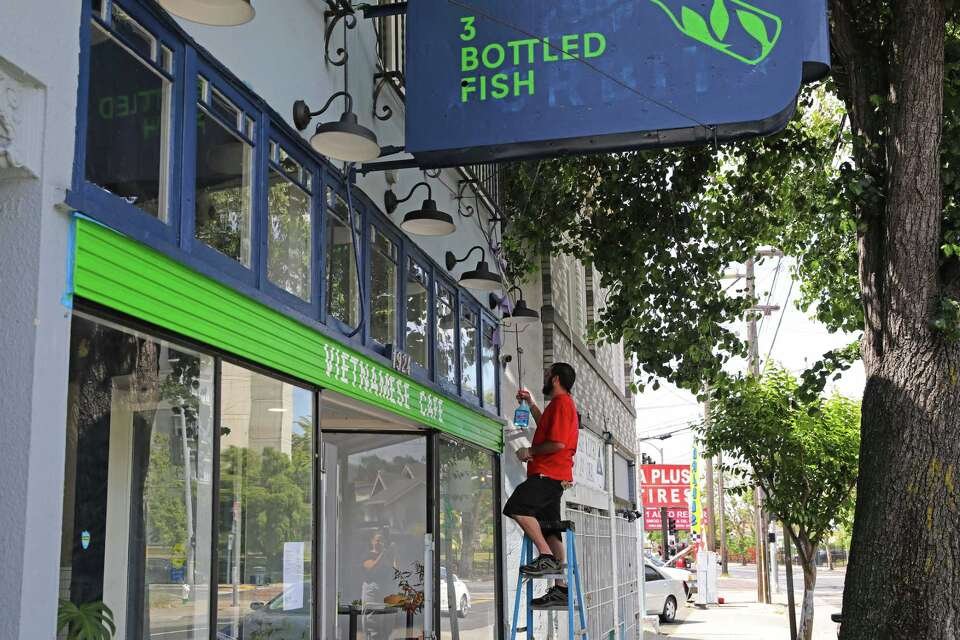
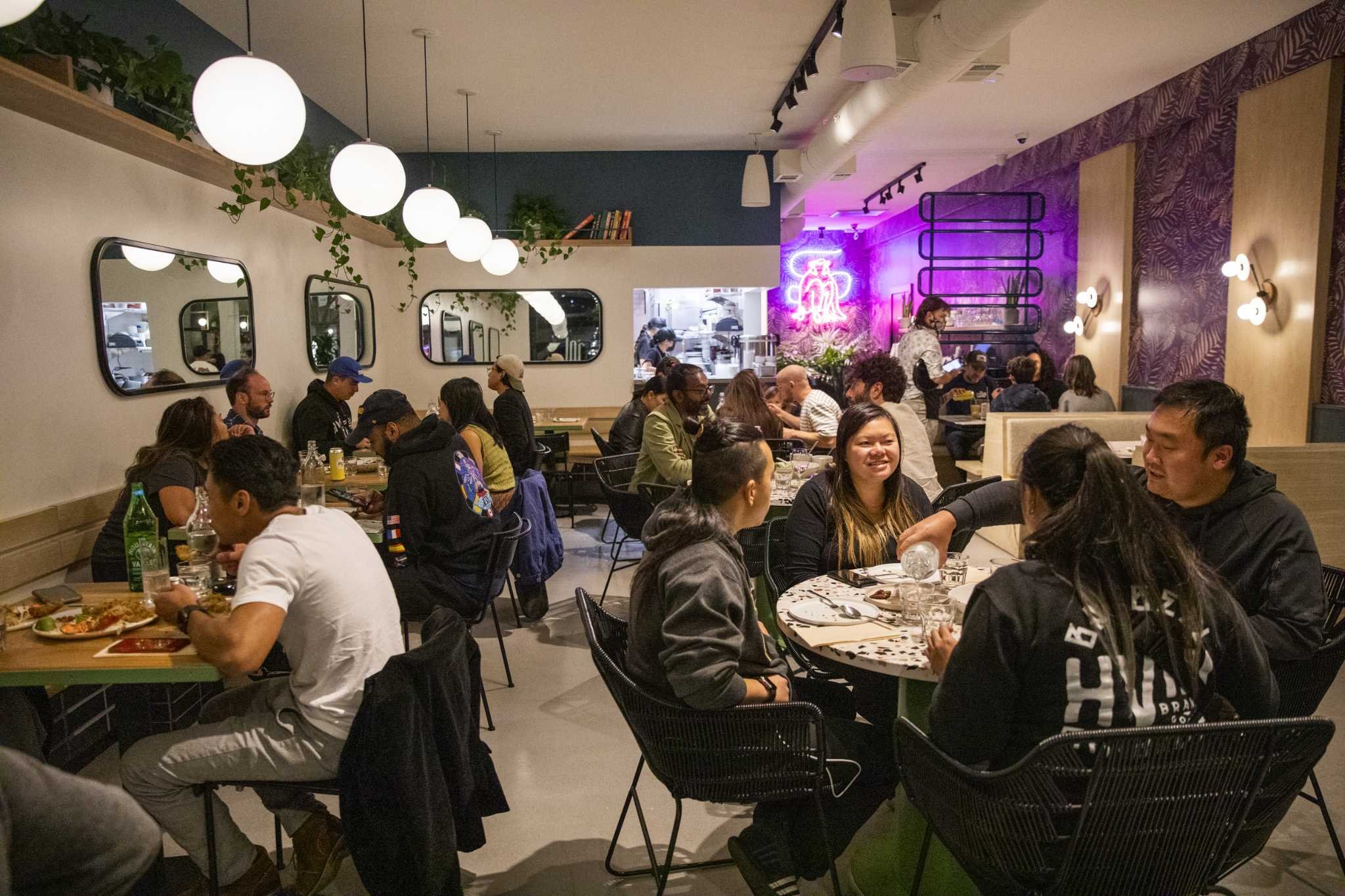
Fruitvale, Oakland's densely layered East Bay neighborhood, has long operated as one of the Bay Area's most productive corridors for immigrant-driven food. The sidewalk vendors, taquerias, and family-run spots along International Boulevard represent one of the more credible concentrations of working-class culinary craft in Northern California, a place where sourcing is dictated by community markets and generational knowledge rather than farm-to-table marketing. Into this context, 3 Bottled Fish fits with unusual coherence. The Vietnamese café run by Paulette Tran occupies a modest room at 1924 35th Avenue, seating roughly a dozen patrons at a time, its interior assembled with plants, bookshelves, and a television cycling through footage of Vietnamese hawker stalls. The effect is less designed atmosphere and more honest self-portrait: this is what the food draws from, and the room says so clearly.
The Sourcing Logic Behind Vietnamese Café Cooking
Vietnamese café cooking at its most considered is an exercise in disciplined sourcing. The canon of dishes that defines the tradition, from phở to bún bò Huế to bánh mì, depends on specific aromatics, fermented pastes, and fresh herbs that do not translate when substituted or approximated. Fish sauce, shrimp paste, fresh lemongrass, Vietnamese coriander, and the particular cuts of pork or beef used in slow-cooked broths are not interchangeable with generic supermarket equivalents. The name 3 Bottled Fish is itself a direct nod to that ingredient philosophy: nước mắm, fish sauce, is the foundational condiment of Vietnamese cooking, and its quality gradient is significant. A sauce from Phú Quốc or Phan Thiết, made from fermented black anchovies with high protein content, differs materially from industrially produced alternatives. Cafés that treat that distinction seriously produce food that lands differently, with a depth of savory, salt, and sweetness that cannot be replicated with shortcuts.
Fruitvale's access to Vietnamese and pan-Asian grocers along the East Bay corridor makes it a practical choice for a café operating at this level of ingredient fidelity. The neighborhood's own food infrastructure, built over decades of Southeast Asian, Mexican, and Central American settlement, supports the kind of sourcing that a comparable café in a less diverse zip code would struggle to maintain. That geography is not incidental to 3 Bottled Fish's identity; it is structural to it.
Twelve Seats, Hawker Logic
The scale matters here. Roughly a dozen seats defines not just capacity but method. Hawker-stall cooking, the tradition the in-house television pays visible homage to, is fundamentally small-batch and high-turnover. Broths are made in quantities that can be refreshed with attention, aromatics are used close to their point of peak volatility, and the cook-to-order rhythm of a small room prevents the degradation that plagues higher-volume operations. Compare this to the format of destination tasting-menu restaurants like Single Thread Farm in Healdsburg or The French Laundry in Napa, where small seat counts serve a different purpose entirely. At those addresses, limited capacity is a luxury signal. At 3 Bottled Fish, it is a functional decision rooted in the same hawker logic that governs the leading Vietnamese street operations in Hanoi or Ho Chi Minh City: small is not quaint, small is correct for this food.
The SF Chronicle has identified 3 Bottled Fish as a contributor to Fruitvale's reputation as a place of serious eating, a neighborhood that compounds rather than dilutes Oakland's broader food culture. That recognition matters not because a broadsheet endorsement confers quality, but because it places the café in a documented conversation about what Fruitvale represents in the East Bay food picture. For comparison, the Chronicle's coverage of the neighborhood has situated it alongside Oakland's other credible dining corridors as a zone where street food logic and ingredient integrity coexist without the gentrification premium that often accompanies editorial attention.
Oakland's Café Tier: Where 3 Bottled Fish Sits
Oakland's café and casual dining tier has fractured in interesting ways. On one side, coffee-forward spaces with minimal food programs have colonized certain neighborhoods. On the other, a smaller cohort of owner-operated cafés with serious culinary commitments operates outside the fine-dining framework entirely. 3 Bottled Fish belongs to the latter group, alongside spots like Alem's Coffee, which represents East African café culture with comparable specificity, and Cafe Colucci, which has anchored Ethiopian dining in Oakland for years with a similar commitment to origin-specific ingredients. What these cafés share is a refusal to generalize: the food is specific to a tradition, sourced to sustain that specificity, and served in rooms that reflect rather than market that identity.
Fruitvale's food character also benefits from the density of adjacent operators. Peña's Bakery and the street food culture documented across International Boulevard represent the kind of culinary infrastructure that supports a café like 3 Bottled Fish by maintaining supplier relationships and community demand for ingredients that less diverse neighborhoods cannot sustain. Across Oakland's dining scene, venues like Daytrip Counter and JUNE'S PIZZA occupy different tiers and formats but share the city's general preference for owner-operated specificity over chain-scaled homogeneity.
For readers who approach Oakland as a destination, the full Oakland restaurants guide maps the city's dining tiers in more detail. Companion guides cover Oakland hotels, bars, wineries, and experiences. For those calibrating 3 Bottled Fish against the broader Bay Area and national dining picture, the contrast with formal tasting-room experiences like Lazy Bear in San Francisco is instructive. The ambition is different, the format is different, but the underlying commitment to sourcing integrity is a thread that connects serious operations across price tiers. Internationally, that principle runs from Le Bernardin in New York City through Alain Ducasse at Louis XV in Monte Carlo and is equally present in a twelve-seat Vietnamese café in Fruitvale when the operator is doing the work correctly.
Planning a Visit
3 Bottled Fish is located at 1924 35th Avenue in Fruitvale, Oakland. The café seats approximately twelve, which means arrivals during peak hours carry real risk of a wait or a full house. Given the format and the SF Chronicle coverage the café has received, visiting outside standard lunch and early afternoon windows is advisable for those without a confirmed spot. Contact and booking information were not publicly confirmed at time of writing; checking directly with the café before visiting is the practical approach for anyone planning around a specific time. Fruitvale is accessible via the BART Fruitvale station, which places the café within the neighborhood's walkable food corridor.
Frequently Asked Questions
- What should I eat at 3 Bottled Fish?
- The café's Vietnamese identity and the emphasis embedded in its name point toward dishes built around fermented and sauce-forward flavor profiles. Vietnamese hawker-style cooking typically centers rice or noodle dishes, aromatic broths, and herb-heavy accompaniments. Given the café's documented commitment to Vietnamese café tradition and the sourcing context of Fruitvale's East Bay ingredient access, ordering into the broth-based or café-standard Vietnamese formats is the direction the food program is built for. Specific current menu items should be confirmed directly with the café, as dishes can rotate.
- Do I need a reservation for 3 Bottled Fish?
- At roughly twelve seats, the café has no buffer for walk-in overflow during busy periods. Following SF Chronicle editorial attention, demand has risen for a space that was already capacity-constrained. Whether reservations are accepted or walk-in only is not confirmed in public records at time of writing; contacting the café directly before visiting is the sensible step for anyone with a fixed schedule, particularly on weekends or around midday in Oakland.
- What makes 3 Bottled Fish worth seeking out?
- The case rests on two things: the specificity of the Vietnamese café format in a neighborhood with genuine ingredient infrastructure, and the scale discipline that keeps the food close to its hawker-stall source. SF Chronicle recognition of both the café and Fruitvale's street food culture as a serious East Bay dining destination provides external validation. For those who approach Oakland's food scene through the lens of ingredient-honest, owner-operated cafés rather than tasting menus or trend-driven concepts, 3 Bottled Fish sits at a credible point on that map. Similar owner-specific commitment defines acclaimed operations at very different price points, from Atomix in New York City to Emeril's in New Orleans, though the format and price tier here are entirely distinct.
- Can 3 Bottled Fish accommodate dietary restrictions?
- Vietnamese café cooking uses fish sauce, shrimp paste, and pork or beef as foundational ingredients in many preparations, which presents real constraints for vegetarian, vegan, or shellfish-restricted diners. Given the small kitchen and format, the ability to modify dishes significantly is not something that can be assumed. Guests with specific dietary requirements should contact the café directly before visiting, as public information on menu flexibility is not confirmed. Oakland broadly offers strong alternatives across cuisines for restricted diets; the Oakland restaurants guide maps those options in more detail.
- How does 3 Bottled Fish reflect Fruitvale's Vietnamese food community?
- Fruitvale's Vietnamese presence is part of the larger Southeast Asian settlement that shaped Oakland's East Bay food corridor over several decades. 3 Bottled Fish, as documented by the SF Chronicle, is positioned as a café that deepens rather than merely represents that community: the homey interior with Vietnamese hawker stall footage playing on a television and the name's direct reference to fish sauce signal a café built from within the tradition rather than translating it for an outside audience. That distinction is legible in the sourcing decisions and the format, and it places 3 Bottled Fish in a different register from Vietnamese-adjacent concepts aimed primarily at non-Vietnamese diners. Paulette Tran's café is, in that sense, a neighborhood document as much as a restaurant.
Side-by-Side Snapshot
A quick look at comparable venues, using the data we have on file.
| Venue | Cuisine | Price | Awards | Notes |
|---|---|---|---|---|
| 3 Bottled Fish | Oakland’s [Fruitvale neighborhood, which has a formidable street food culture]()… | This venue | ||
| JUNE'S PIZZA | ||||
| Popoca | ||||
| À Côté | ||||
| Daytrip Counter | ||||
| Puerto Rican Street Cuisine |
Need a table?
Our members enjoy priority alerts and concierge-led booking support for the world's most difficult tables.
Get Exclusive Access