Casserole House
Casserole House occupies a well-traveled stretch of Telegraph Avenue in Oakland's Temescal corridor, a neighborhood that has become one of the Bay Area's more closely watched dining districts over the past decade. The address at 4301 places it within a cluster of independent operators that collectively define the area's mid-market, community-anchored restaurant character.
Pearl is the En Primeur Club membership app — saves, bookings, and concierge access live there. Same editors, same standards.
- Address
- 4301 Telegraph Ave, Oakland, CA 94609
- Directions
- Get directions
 Saves & bookings on Pearl
Telegraph Avenue and the Temescal Dining Corridor
Oakland's Temescal neighborhood has undergone a recognizable shift over the past fifteen years. What was once a stretch of auto shops and long-standing immigrant-owned businesses gradually absorbed a wave of chef-driven independents, specialty coffee operations, and casual dining concepts that now sit side by side with those older anchors. The 4300 block of Telegraph Avenue, where Casserole House operates, sits at the center of that layered character. This is not a dining district built on a single culinary identity, it pulls from Ethiopian traditions further north, East Asian staples a few blocks in either direction, and the kind of American comfort-food revisionism that took hold across Oakland's independent scene in the 2010s. For a sense of how that full spectrum reads today, the Oakland dining guide maps the broader picture.
The Casserole Format in Context
The casserole as a restaurant concept occupies an interesting position in American dining history. It belongs to an era of communal cooking, church potlucks, family Sunday dinners, the kind of food that traveled in a covered dish and was meant to feed a table rather than impress one. When restaurants built around that format began appearing in urban markets, they were making a deliberate counter-statement to the tasting-menu dominance that characterized the prestige dining of the 2000s. Venues like Le Bernardin in New York City, The French Laundry in Napa, or Lazy Bear in San Francisco represent the high-formality end of American dining, meticulous, course-driven, technically oriented. The casserole tradition sits at the opposite pole: forgiving temperatures, layered flavors that develop over time in the oven, portions designed for sharing rather than precision plating.
That is the culinary lineage Casserole House situates itself within, and it is a format that has aged in interesting ways. Where the dish once carried connotations of economy and convenience, it has since been revisited as a vehicle for technique, slow braises, gratins with serious structural complexity, layered proteins that reward patience. Across American cities, a small group of operators has found a market for that reframing, positioning the casserole not as nostalgia but as a legitimate cooking discipline.
Temescal Neighbors and Competitive Context
The immediate area around 4301 Telegraph gives Casserole House a useful local context. Oakland's Temescal corridor has developed a particular density of independent operators working in complementary registers. 3 Bottled Fish represents the neighborhood's appetite for ingredient-led cooking with a more focused format. Agave Uptown anchors the Mexican-influenced end of the corridor, while alaMar Dominican Kitchen demonstrates that Oakland's dining public has sustained appetite for Caribbean and Latin traditions executed with care. Coffee culture holds its own weight here, with Alem's Coffee as a marker of the neighborhood's Ethiopian commercial roots. 8th St Cafe rounds out the local picture with its Hong Kong tea house format.
This is a neighborhood where a comfort-food concept has to compete on specificity. Broad appeals to nostalgia are insufficient when neighboring operators are working with distinct culinary traditions and clear technical identities. The casserole format, in this context, depends on execution depth, the quality of a long braise, the seasoning logic of a layered gratin, the temperature discipline required to serve something that was built in a dish rather than assembled to order.
Evolution of the Comfort-Food Restaurant in Oakland
Oakland's independent restaurant scene has moved through several identifiable phases. The early 2000s saw a rush of farm-to-table positioning that spread across the Bay Area, with operators emphasizing sourcing credentials as the primary differentiator. By the mid-2010s, the market had absorbed that signal to the point where local sourcing was a floor condition rather than a headline. What emerged in its place was a stronger interest in culinary specificity, not just where ingredients came from, but what tradition they belonged to and how that tradition was being interpreted.
The comfort-food wave, which produced concepts built around fried chicken, pot pies, and baked pasta formats, followed as a partial response to the relentless upward pressure on dining formality. At the national level, operations like Blue Hill at Stone Barns in Tarrytown, Smyth in Chicago, and Single Thread Farm in Healdsburg were pushing the premium end of ingredient-driven dining to its logical extreme. The comfort-food movement occupied the space that created: food that demanded skill but communicated approachability. In Oakland, that tension has always been more visible than in San Francisco, partly because Oakland's dining culture has historically centered community access over prestige signaling.
The restaurant's position on Telegraph Avenue, at the address where it operates, reflects that local priority. The Temescal corridor rewards operators who are readable, who give a neighborhood diner a clear reason to walk in without requiring a prior understanding of the concept's culinary lineage. A casserole restaurant achieves that readability almost by definition, while leaving room for the kitchen to push into more complex territory once a guest is seated.
Planning a Visit
The restaurant sits at 4301 Telegraph Ave in Oakland's Temescal neighborhood, accessible by BART via the Rockridge station roughly six blocks east, or by AC Transit lines running the length of Telegraph. The surrounding block has street parking with standard Oakland residential permit rules applying in the evenings. For venues in the comfort-food and casual-dining tier across the Bay Area, walk-in availability tends to vary significantly by day of the week, with Thursday through Saturday evenings carrying the highest demand. The restaurant is walk-in friendly and follows a casual dress code, so advance planning is usually unnecessary. For broader orientation across the Oakland dining scene, from the Temescal corridor to the Fruitvale and Uptown districts, the EP Club Oakland guide provides the fuller context.
What It’s Closest To
Comparable venues nearby, for context on price, style, and recognition.
| Venue | Cuisine | Price | Notes |
|---|---|---|---|
| Casserole HouseThis venue — the venue you are viewing | Korean Jeongol Hot Pots | $$ | Not listed |
| FuseBOX | Korean-Japanese Fusion Izakaya | $$ | West Oakland |
| Moo Bong Ri | Korean Soondae Specialist | $$ | Temescal |
| Sura Korean Cuisine | Korean Cuisine | $$ | Temescal |
| Mugunghwa | Authentic Korean | $$ | Temescal |
| Don Blanc | Korean BBQ | $$$ | Temescal |
Continue exploring
More in Oakland
Restaurants in Oakland
Browse all →
Bars in Oakland
Browse all →
Hotels in Oakland
Browse all →

At a Glance
- Casual
- Group Dining
- Casual Hangout
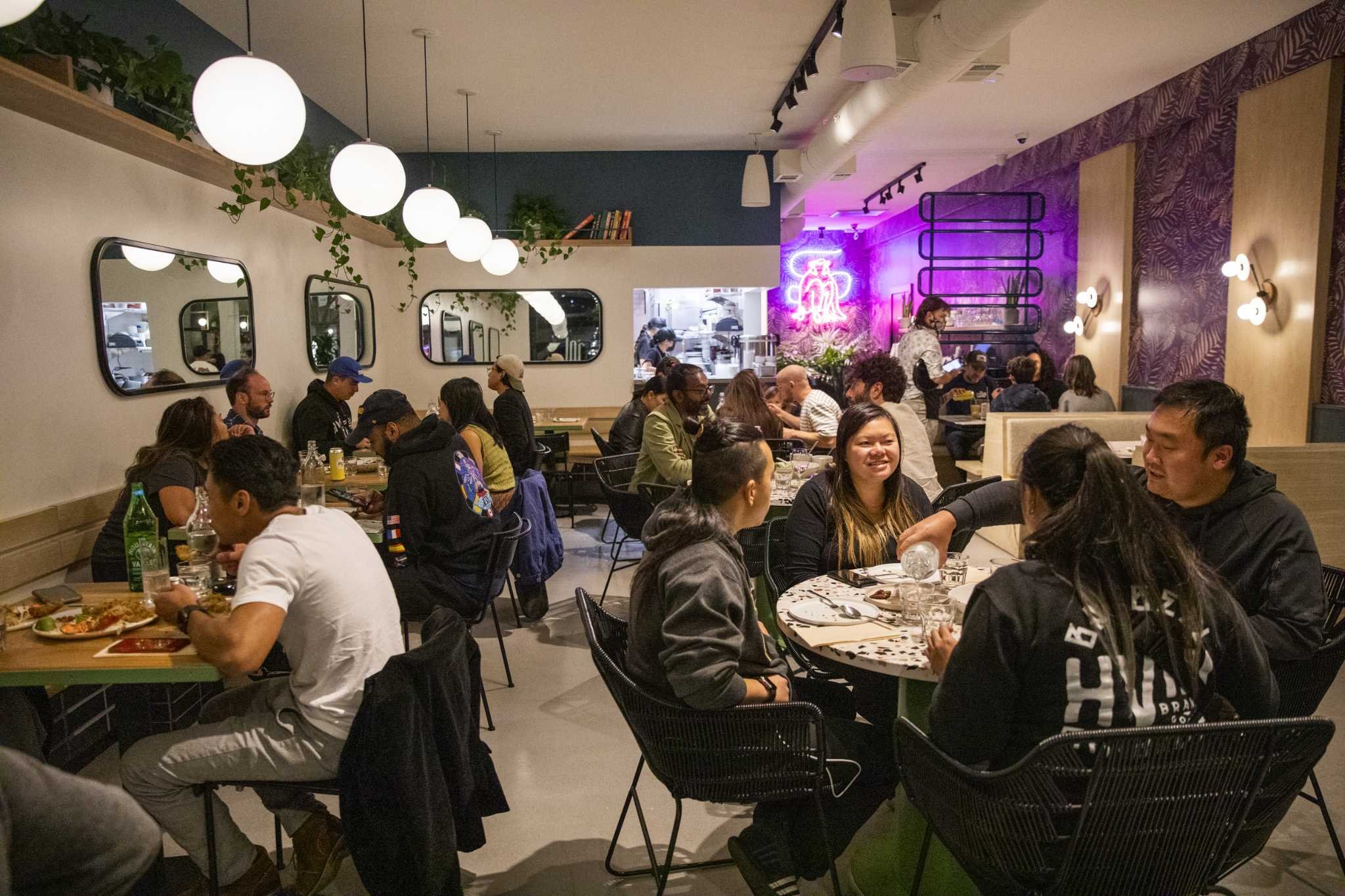
Casual dining room with big bright pictures on the walls depicting the signature dishes.