
Saryo Tsujiri Daimaru tokyo ten puts Kyoto-style tea sweets into a Tokyo Station department-store setting, with matcha, wagashi-cafe formats, and kakigori sitting inside a practical Marunouchi itinerary. Its Tabelog 100 selection for Japanese traditional sweets and sweets cafes in Tokyo in 2023 gives it a clear credential in a category where casual price points can still carry serious craft.
Pearl is the En Primeur Club membership app — saves, bookings, and concierge access live there. Same editors, same standards.
- Address
- Japan, 〒100-0005 Tokyo, Chiyoda City, Marunouchi, 1 Chome−9−1 大丸東京店 10階
- Phone
- +81 3-3214-3322
- Website
- giontsujiri.co.jp
 Saves & bookings on Pearl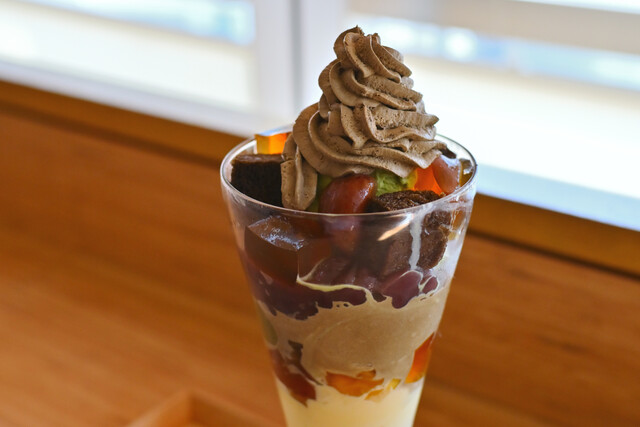
The approach is pure Tokyo Station choreography: ticket gates, department-store elevators, polished retail floors, then a sweets cafe above the rail concourse, not a hushed tea room behind a garden wall. That setting matters. Marunouchi and Yaesu compress business travel, shopping, intercity trains, and gift culture into one dense circuit, making Japanese sweets a scheduled pause and tea-led counterpoint to faster eating, not an after-dinner afterthought.
Saryo Tsujiri Daimaru tokyo ten belongs to a modern Tokyo strength: the department-store wagashi cafe. The format borrows from Kyoto tea-house culture but runs with railway-hub efficiency and visibility. Matcha, Japanese sweets, cafe service, and kakigori share one roof, placing indigenous tea and confectionery traditions inside a contemporary urban machine. For travelers, that is the point: a clearer read on Japanese dessert culture than a generic cafe stop, without a formal kaiseki meal or cross-town detour.
Kyoto tea culture translated for a Tokyo Station crowd
The defining idea is tea as the organizing principle for sweets, not one named dish. Tokyo dessert splits between French-influenced patisserie, convenience-led parfait culture, and older wagashi traditions shaped by tea ceremony, seasonal motifs, and restrained sweetness. This cafe sits in the last camp while using a retail-friendly model: counter seats, table seats, take-out, and a menu category covering kakigori as well as Japanese sweets.
That hybrid explains why the venue reads differently from a destination restaurant. It is not competing with high-spend dining rooms such as Piacere or French rooms such as La Rochelle Minami Aoyama. It is closer to the city’s serious casual tier, where a low ticket can still signal precision if the core ingredient is handled with discipline. CARA AURELIA Daimaru toukyou ten, also inside the Tokyo department-store orbit, reflects the same retail-dining logic, but bakery and sweets-cafe expectations differ. Here, tea is the anchor, and the sweets exist around it.
The Tabelog 100 selection for Japanese traditional sweets and sweets cafes in Tokyo in 2023 is the useful credential because it identifies the category correctly. Tokyo has countless cafes; far fewer are judged inside the wagashi and Japanese-sweets frame. A 3.63 Tabelog score also places it in a credible zone for a casual sweets stop, especially in a city where high scores are not casually given. The award does not turn a department-store cafe into a ceremony, but it separates the address from a convenience choice made only because a train is nearby.
The room works because the city around it never slows down
Department-store dining in Japan has its own etiquette: accessible, orderly, and often more serious than first-time visitors expect. The Daimaru Tokyo location fits that tradition: an upper-floor pause with 80 seats divided between counter and tables, non-smoking service, wheelchair access, and a family-friendly posture. Those details shape the experience as much as the sweets. This is a room for mixed itineraries: solo travelers between trains, friends meeting in Marunouchi, families using the station as a base, and visitors wanting Japanese tea culture without formal-reservation friction.
The absence of reservations is not a flaw; it is part of the urban rhythm. Tokyo’s higher-ceremony dining often requires weeks of planning, while department-store sweets counters depend on timing and patience. Treat it as a flexible stop, not the anchor of an evening. Daily opening from 10 AM to 8 PM gives it a broad window, but station-adjacent dining follows commuter and shopping flows. Mid-afternoon and post-lunch can be more useful than meal peaks, especially for travelers moving through Tokyo Station with luggage or onward rail plans.
Price keeps the proposition grounded. The listed lunch and dinner range is JPY 1,000 to JPY 1,999, a narrow band for a precise purpose: tea and sweets credible enough to choose over a chain cafe, without the financial commitment of a full restaurant booking. Credit cards, electronic money, and QR payments are accepted, matching the station setting. Paid contract parking is associated with Yaesu Underground Parking and Marunouchi Park-in, though rail is the more natural way to use the address.
How to place it in a Tokyo eating day
Saryo Tsujiri Daimaru tokyo ten is strongest as a hinge in the day rather than a finale. It can sit between a morning arrival and a Ginza appointment, after a Marunouchi lunch, or before a Shinkansen departure. The category rewards focus: come for Japanese tea sweets, not a broad cafe menu trying to satisfy every craving. Travelers building a wider Tokyo plan can pair this stop with specialized meals elsewhere, from yakitori at 124. KAGURAZAKA (Yakitori) to curry at 3 Chome no Curry Ya San, or a Shinjuku counter format such as 12/10 Shinjuku ten.
For a city as large as Tokyo, the value is not only what is served but where the format fits. A cafe such as 2D Cafe answers a different impulse, closer to visual novelty and casual social dining. Grill and seafood addresses such as . 鮪と炭火焼き うお炭 秋葉原店 pull the day toward savory drinking food. A tea-sweets stop in Daimaru gives the itinerary a lighter register without abandoning specificity. It is a Tokyo Station answer to a Kyoto inheritance, shaped by rail schedules, retail floors, and the city’s appetite for precise categories.
Readers planning beyond one address should use Our full Tokyo restaurants guide for dining context, then cross-check sleep, drinking, wine, and cultural planning through Our full Tokyo hotels guide, Our full Tokyo bars guide, Our full Tokyo wineries guide, and Our full Tokyo experiences guide. For a broader Japan circuit, compare how casual formats shift outside the capital: sukiyaki in Kamakura at -Grilled beef Sukiyaki- KAMAKURA TANUKIAN 鎌倉 たぬき庵 in Kamakura, cafe culture at.cafe in Osaka, Kumamoto dining at.know in Kumamoto, Vietnamese cooking in Kawasaki at (Shoku) Vietnam in Kawasaki, Sapporo curry at [Curry Senmon Ten] Maruyama Kyoju. in Sapporo, and Kyoto minimalism at [ki:] in Kyoto. Japanese food culture also travels well abroad, though context changes sharply, as seen at Jōdo Saké Bar in Los Angeles and Onigiri Time in Pasadena.
Category Peers
Comparable options at the same price tier.
| Venue | Cuisine | Price | Notes |
|---|---|---|---|
| Saryo Tsujiri Daimaru tokyo tenThis venue — the venue you are viewing | Traditional Japanese matcha café & parfaits | $$ | Not listed |
| Re:s Cafe Bar & Sweets | Japanese Dessert Cafe | $$ | Nishi Waseda |
| Kajitsuen Riberu | Fruit Parlor | $$ | Meguro |
| Tomita at NRT | Tsukemen Ramen | $$ | Narita Airport |
| Kitsune An | Traditional Udon Noodle Bar | $$ | Chūō |
| Umatama Ya | Omurice-focused Yoshoku (Japanese-style Western) counter | $$ | Chiyoda |
Recognition history
Dated appearances from independent guides and award organizations, with the underlying list record or original source where available.
Tabelog 100 #9 · No. 9
Tabelog · Tabelog 100 - Japanese traditional sweets / Japanese sweets cafe - TOKYO - 2023








At a Glance
- Cozy
- Classic
- Well Known
- Quiet
- Solo
- Casual Hangout
- After Work
- Family
- Design Destination
- Standalone
- Skyline
Current opening hours
- Monday
- 10 AM–8 PM
- Tuesday
- 10 AM–8 PM
- Wednesday
- 10 AM–8 PM
- Thursday
- 10 AM–8 PM
- Friday
- 10 AM–8 PM
- Saturday
- 10 AM–8 PM
- Sunday
- 10 AM–8 PM
Hours can change for holidays and private events. Last verified .
Bright department-store café setting with clean, classic decor that evokes Kyoto’s Gion teahouse atmosphere; relaxed and orderly with the gentle hum of shoppers and a calm, tea-focused feel rather than a bustling restaurant vibe.