
Sakou brings Akasaka’s quieter side into Tokyo’s Japanese dining conversation: counter seating, fish-led cooking, and a drinks list that spans sake, shochu, and wine. Its selection for Tabelog’s Japanese cuisine TOKYO “Tabelog 100” in 2023 and 2025 places it among the city’s closely watched Japanese restaurants without pushing it into grand-occasion theatre.
 Request Booking on Pearl
Pearl is the En Primeur Club membership app — saves, bookings, and concierge access live there. Same editors, same standards.
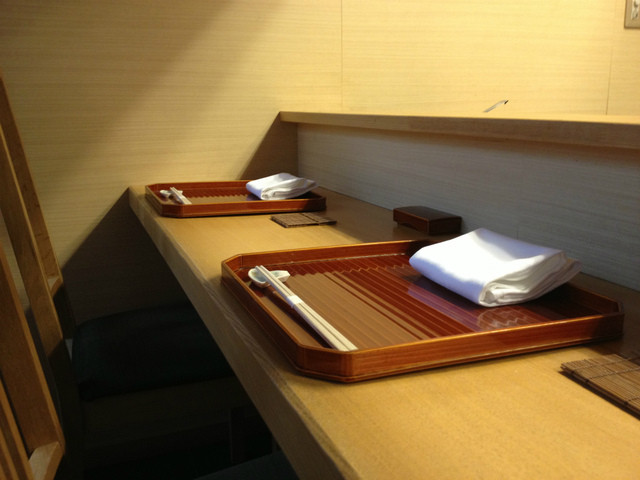
Akasaka has a way of making restaurants feel withdrawn from the city without leaving central Tokyo. Office towers, political addresses, hotel bars and late-night dining rooms sit close together, but the stronger Japanese counters here tend to lower the volume rather than perform for it. Sakou belongs to that register: counter seating, non-smoking room, fish-led Japanese cooking and a mood better suited to attentive eating than spectacle.
That restraint matters in Tokyo, where premium Japanese dining can split between formal kaiseki, sushi-counter precision and looser creative formats. The useful reading of Sakou is not as a temple of chef mythology, because no chef narrative is needed to understand the appeal. It sits in the smaller band of Japanese restaurants where seasonality, fish handling, vegetable-led balance and drink pairing logic do the work, with enough structure for serious diners and enough ease for solo meals or small groups.
Fish, sake and creative Japanese cooking without the grand-room script
Tokyo’s Japanese cuisine category is broad enough to hide several dining cultures under one label. At one end are ceremonial rooms built around procession and private-room choreography; at the other are counters where the kitchen’s decisions are easier to read course by course. Sakou is listed across Japanese Cuisine and Creative categories, a useful distinction because it signals room for interpretation without breaking from the grammar of washoku.
The sustainability angle here is less about slogans than about the way this category can reward lower-waste cooking. Fish-focused Japanese restaurants often rely on disciplined purchasing, precise portioning and preparations that use trim, bones and seasonal vegetables intelligently. Sakou’s public positioning around fish and a health-and-wellness menu points toward that quieter form of environmental consciousness: less excess on the plate, closer attention to product, and a format where the counter can keep production tighter than a sprawling dining room.
The drinks program also reads as part of that same discipline. Sake and shochu remain central to Japanese dining because they can meet grilled, simmered, raw and fermented flavors without forcing the meal into a Western wine sequence. Sakou also lists wine, which places it inside a contemporary Tokyo pattern: Japanese restaurants increasingly serve guests who want nihonshu with one course, shochu with another and wine when acidity or texture calls for it. The point is not breadth for its own sake, but flexibility around the food.
Akasaka's discreet dining culture suits a counter of this scale
Akasaka is often misread by visitors as a business district between more obvious dining destinations. That misses how the neighbourhood functions after office hours. Its restaurants serve regulars, political-adjacent diners, hotel guests and Tokyo residents who prefer central access without the visibility of Ginza or the nightlife charge of Roppongi. A restaurant described as a hideout makes sense here because the area rewards discretion.
Recognition sharpens the signal. Sakou was selected for Tabelog’s Japanese cuisine TOKYO “Tabelog 100” in 2023 and again in 2025, and carries a Tabelog score of 3.75. In Tokyo, that combination is meaningful because user-score gravity is severe: Japanese cuisine rooms can be technically strong, locally loved and still sit below numbers that would look modest in other cities. The repeated selection says more than a single-season spike; it suggests that the restaurant has held attention within a crowded category.
The room details support the editorial reading. Counter seating keeps the meal closer to the kitchen and usually reduces the distance between product and diner. Private rooms and private use are not part of the format, which nudges expectations away from corporate entertaining and toward focused meals. Non-smoking status is also relevant in Tokyo, where older drinking and dining culture has not always moved at the same pace as international guest expectations.
How to place it within a Tokyo dining itinerary
Sakou makes the strongest sense for travelers who already understand that Tokyo dining is not a single hierarchy. A sushi counter answers one kind of question; a kaiseki room answers another. This address is better read as a fish-aware, creative Japanese counter in Akasaka, with enough recognition to justify planning but not the performative pressure attached to famous-name restaurants.
For a wider view of the city’s dining range, start with Our full Tokyo restaurants guide, then use category contrasts rather than chasing one template. Casual and specialist Tokyo entries such as . 鮪と炭火焼き うお炭 秋葉原店, 12/10 Shinjuku ten, 124. KAGURAZAKA (Yakitori), 2D Cafe and 3 Chome no Curry Ya San show how sharply the city divides by format and occasion.
Planning beyond dinner matters in Tokyo because restaurants are only one layer of the trip. Pair the meal with Our full Tokyo hotels guide, Our full Tokyo bars guide, Our full Tokyo wineries guide and Our full Tokyo experiences guide. For Japan-wide contrasts, see -Grilled beef Sukiyaki- KAMAKURA TANUKIAN 鎌倉 たぬき庵 in Kamakura.cafe in Osaka.know in Kumamoto, (Shoku) Vietnam in Kawasaki, [Curry Senmon Ten] Maruyama Kyoju. in Sapporo and [ki:] in Kyoto. Japanese dining culture also travels well abroad, though in different forms, as seen at Jōdo Saké Bar in Los Angeles and Onigiri Time in Pasadena.
Comparable venues nearby, for context on price, style, and recognition.
| Venue | Cuisine | Price | Notes |
|---|---|---|---|
| SakouThis venue — the venue you are viewing | Creative Japanese Cuisine in Akasaka | $$$ | Not listed |
| はなぶさ 麻布十番店 | Kansai-Style Charcoal-Grilled Unagi | $$$ | Azabu-Juban |
| Manten Sushi (まんてん鮨) | Edomae Omakase Sushi | $$$ | Marunouchi |
| たんたん亭 本店 | Traditional Japanese Ramen | $$ | Hamadayama |
| らぁめん家 69'N' ROLL ONE 赤坂本店 | Chicken Clear Soy Ramen | $$ | Akasaka |
| Sushi Mitani (鮨 三谷) | Edomae-style Omakase | $$$$ | Yotsuya |
Recognition history
Dated appearances from independent guides and award organizations, with the underlying list record or original source where available.
Tabelog 100 #32 · No. 32
Tabelog · Tabelog 100 - Japanese cuisine - TOKYO - 2025
Continue exploring
More in Tokyo
At a Glance
- Cozy
- Elegant
- Intimate
- Modern
- Solo
- Date Night
- Special Occasion
- Business Dinner
- After Work
- Chefs Counter
- Standalone
- Design Destination
- Sake Program
- Extensive Wine List
- Sustainable Seafood
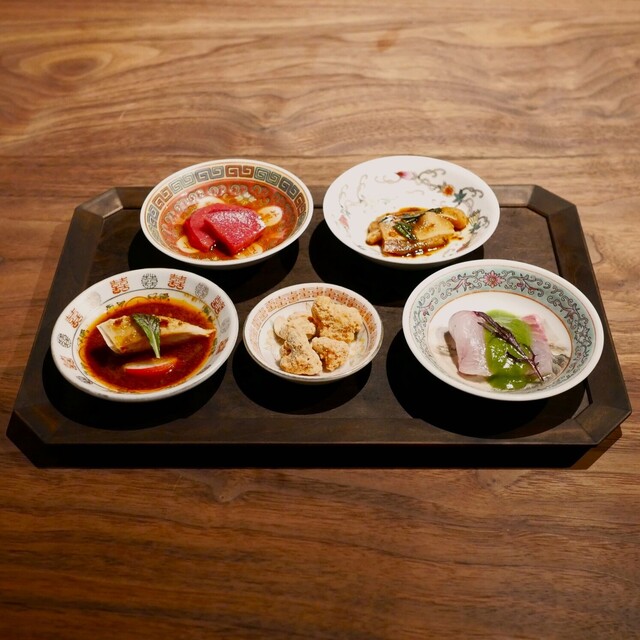
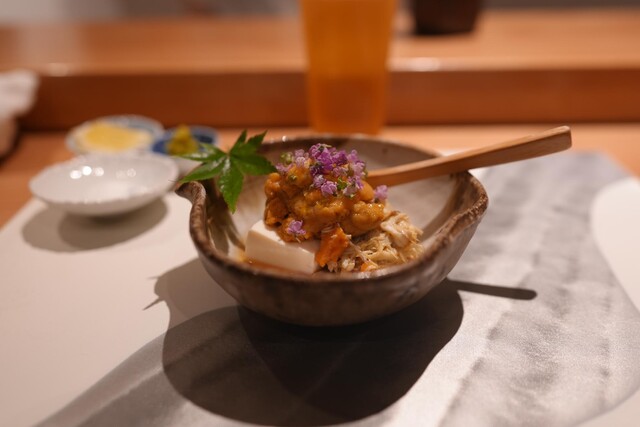
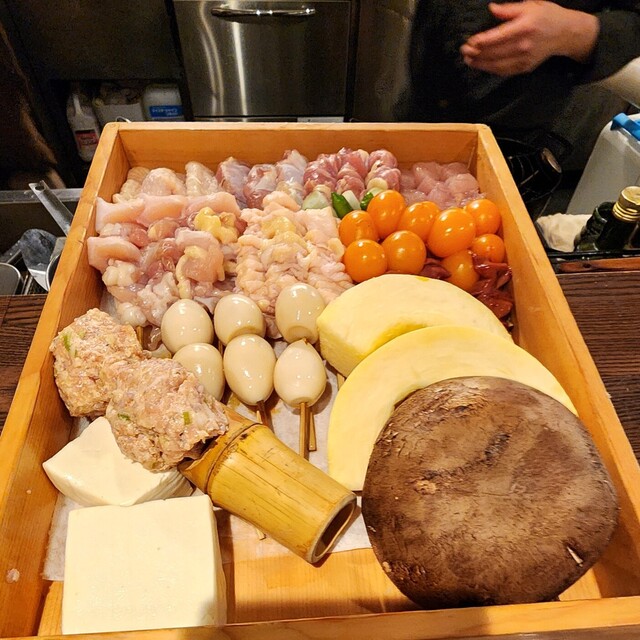
Small, non-smoking hideout near Akasaka Mitsuke with counter seating in a stylish yet relaxed space; lighting and mood skew calm and quiet, suiting solo diners and small parties rather than large, lively groups.