
Shunzen Wada belongs to Nagoya’s quieter school of high-detail Japanese cooking, where fish sourcing, counter service, sake and shochu matter more than spectacle. Its 2025 Tabelog 100 selection for Japanese cuisine in East Japan and 3.76 Tabelog score place it in a serious regional tier, with a reservation-only format that suits diners planning a focused dinner rather than a casual stop.
Pearl is the En Primeur Club membership app — saves, bookings, and concierge access live there. Same editors, same standards.
- Address
- 愛知県名古屋市
- Website
- syunzen-wada.com
 Saves & bookings on Pearl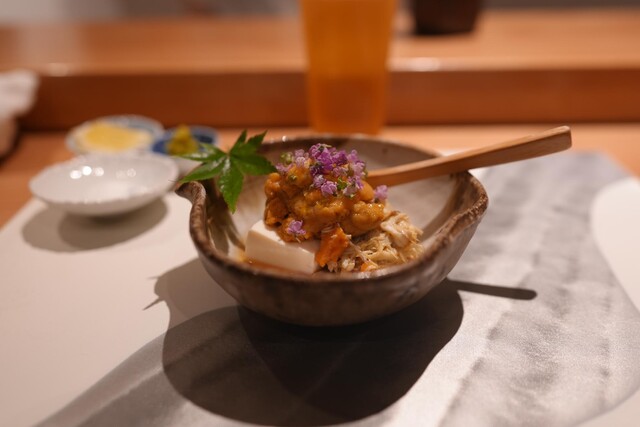
Approach Japanese dining in Nagoya with Tokyo expectations and the city can read too quietly at first. The rhythm is different: fewer international headlines, less theatre at the door, and a stronger reliance on regulars, reservations and small rooms where the counter frames the meal. Shunzen Wada fits that pattern. The room is built around counter seating, the cooking is categorized as Japanese cuisine, and the house emphasis is explicitly fish-led, with sake and shochu treated as part of the meal rather than an afterthought.
That matters in Aichi. Nagoya is often reduced to miso katsu, hitsumabushi and tebasaki in travel shorthand, but its higher-end Japanese restaurants operate in a broader Chubu context: access to Pacific seafood, river fish traditions, mountain vegetables and a drinking culture that rewards careful pairing. In that setting, a fish-focused counter is not chasing novelty. It is working inside a regional logic where procurement, prep and temperature control decide the evening more than menu rhetoric.
Fish-led Japanese cooking in a city better known for stronger flavours
Nagoya’s public food identity leans bold: red miso, glazed eel, peppered wings, thick sauces. Serious washoku rooms pull in another direction. They ask diners to pay attention to seasonality, knife work, broth, rice, grilled fish and the sequence of drinking. Shunzen Wada’s stated focus on fish places it in that quieter register, closer to kappo and counter-led Japanese dining than to the city’s casual local specialties.
The 2025 Tabelog 100 listing for Japanese cuisine in East Japan gives the restaurant a useful external marker. Tabelog’s Hyakumeiten selections are not Michelin stars and should not be read as the same kind of inspection system, but they are meaningful inside Japan because they reflect a category-specific field rather than a generic popularity contest. A 3.76 Tabelog score in Japanese cuisine is also not casual traffic noise; Japanese scoring culture is compressed, and restaurants above the mid-3s often carry serious local credibility.
The sourcing angle is the editorial key here. A restaurant can call itself seasonal without telling the diner much. A fish-led Japanese counter, by contrast, is forced to show discipline in procurement and handling every day: what arrives, what is held back, what is paired with sake, and what is allowed to stay simple. The presence of sake, shochu, and stated attention to both drinks suggests a meal format that rewards diners who drink with the sequence rather than treating beverages as separate from the cooking.
The counter format keeps the meal narrow, not casual
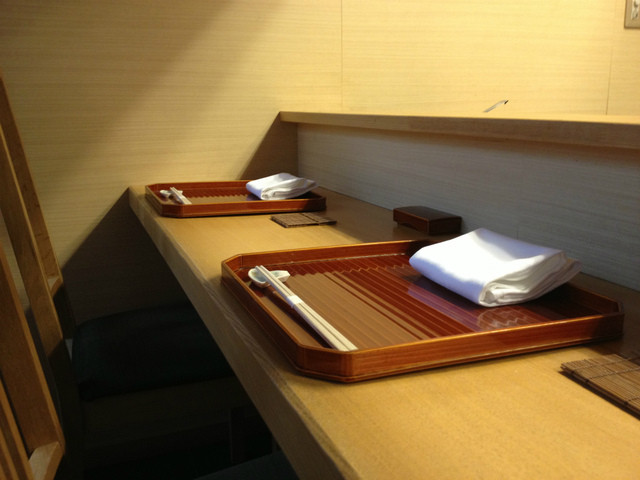
Counter seating changes the contract between kitchen and guest. It compresses the dining room, shortens the distance between preparation and service, and makes pacing more visible. In Japanese cuisine, that can be a strength when the kitchen is dealing with fish, broths and grilled items that suffer when delayed. It also means the room is better suited to diners who want concentration rather than a long, social dining-room sprawl.
The format also explains why the restaurant reads as a serious dinner choice without needing the signals that international visitors often look for first. There is no need for an expansive chef biography to understand the proposition. The evidence sits in the category, the award selection, the fish focus, the counter arrangement and the drinks program. For a visitor building a Nagoya itinerary, this is the kind of room that balances the city’s heavier local classics with a more restrained expression of Japanese cooking.
Use the broader city guides to place it properly. Our full Nagoya restaurants guide gives the dining context; Our full Nagoya hotels guide, Our full Nagoya bars guide, Our full Nagoya wineries guide and Our full Nagoya experiences guide help shape the rest of the trip. For readers comparing how Japanese dining formats translate across regions and abroad, EP Club also tracks entries such as 1022, 451, Aaron, Alan., All Day Dining Montmartre, -Grilled beef Sukiyaki- KAMAKURA TANUKIAN 鎌倉 たぬき庵 in Kamakura. 鮪と炭火焼き うお炭 秋葉原店 in Tokyo.cafe in Osaka.know in Kumamoto, (Shoku) Vietnam in Kawasaki, [Curry Senmon Ten] Maruyama Kyoju. in Sapporo, Jōdo Saké Bar in Los Angeles and Onigiri Time in Pasadena.
Who should prioritize this Nagoya dinner
Shunzen Wada makes sense for diners who want a controlled Japanese meal built around fish, counter pacing and traditional drinks. It is less suited to travelers seeking a quick survey of Nagoya’s famous casual dishes. The smarter read is to treat it as a counterpoint to the city’s louder food vocabulary: a dinner where Aichi’s place between coast, inland produce and serious drinking culture becomes the frame.
The practical judgment is simple. Put this in an itinerary when dinner is the main event and the group is comfortable with reservation-only dining, no private rooms and a non-smoking setting. The restaurant opened in 2016, and the 2025 Tabelog 100 recognition shows that its reputation has moved beyond novelty. In a city often underread by international diners, that combination is persuasive.
Comparable Venues Nearby
Comparable venues nearby, for context on price, style, and recognition.
| Venue | Cuisine | Price | Notes |
|---|---|---|---|
| Shunzen WadaThis venue — the venue you are viewing | Seasonal Japanese Counter Dining | $$$$ | Not listed |
| Atsuta Horaiken (あつた蓬莱軒 本店) | Traditional Nagoya Hitsumabushi (Grilled Eel) | $$ | Atsuta-ku |
| Tempura Niitome (天風良 にい留) | Modern Tempura Omakase | $$$ | Naka |
| Nagano Meijitei | Nagano Sauce Katsudon | $$ | Nagano Station |
| Yakitori Kanda | High-end Yakitori | $$$$ | Nagoya Castle Area |
| ビストロ ダイア | Neo French Bistro | $$$ | Shinei |
Recognition history
Dated appearances from independent guides and award organizations, with the underlying list record or original source where available.
Tabelog 100 #100 · No. 100
Tabelog · Tabelog 100 - Japanese cuisine - EAST - 2025
Continue exploring
More in Nagoya
Restaurants in Nagoya
Browse all →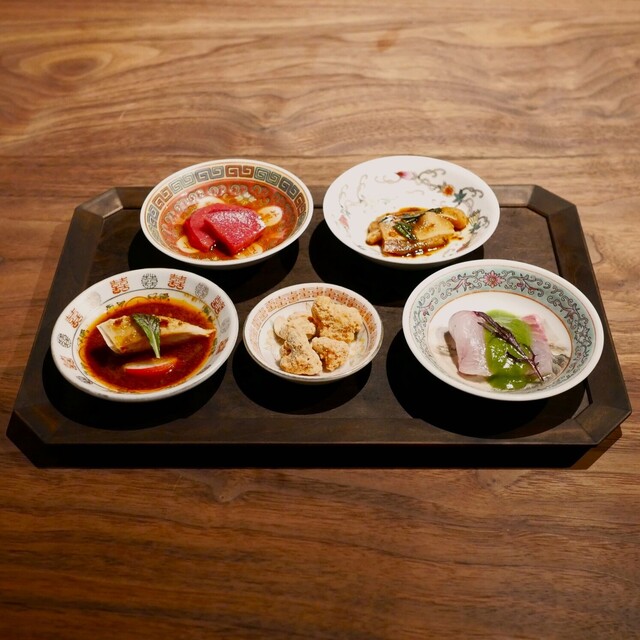
At a Glance
- Intimate
- Cozy
- Elegant
- Date Night
- Business Dinner
- Celebration
- Special Occasion
- Solo
- Chefs Counter
- Design Destination
- Standalone
- Private Dining
- Extensive Wine List
- Local Sourcing
- Farm To Table
Refined and tranquil counter-only space with an elegant, design-conscious interior by TORII DESIGN OFFICE, focused on calm conversation and close interaction with the chef rather than bustle or scenery.